
HydPy-H-HBV96-PREVAH (fusion of SMHI-IHMS-HBV96 and PREVAH)
hland_96p combines HBV96’s Lindström et al. (1997) and PREVAH’s
Viviroli et al. (2009) process equations. We implemented it on behalf of the
German Federal Institute of Hydrology (BfG) as an alternative to hland_96 for
modelling large river basins in central Europe. All processes “above the soil” (input
data correction, interception, snowmelt) and “inside the soil” (evaporation, generation
of effective precipitation), as well as the handling of water areas, are identical with
hland_96 (and so with HBV96). Most processes “below the soil” agree with PREVAH
(runoff generation and runoff concentration).
The following figure shows the general structure of hland_96p:
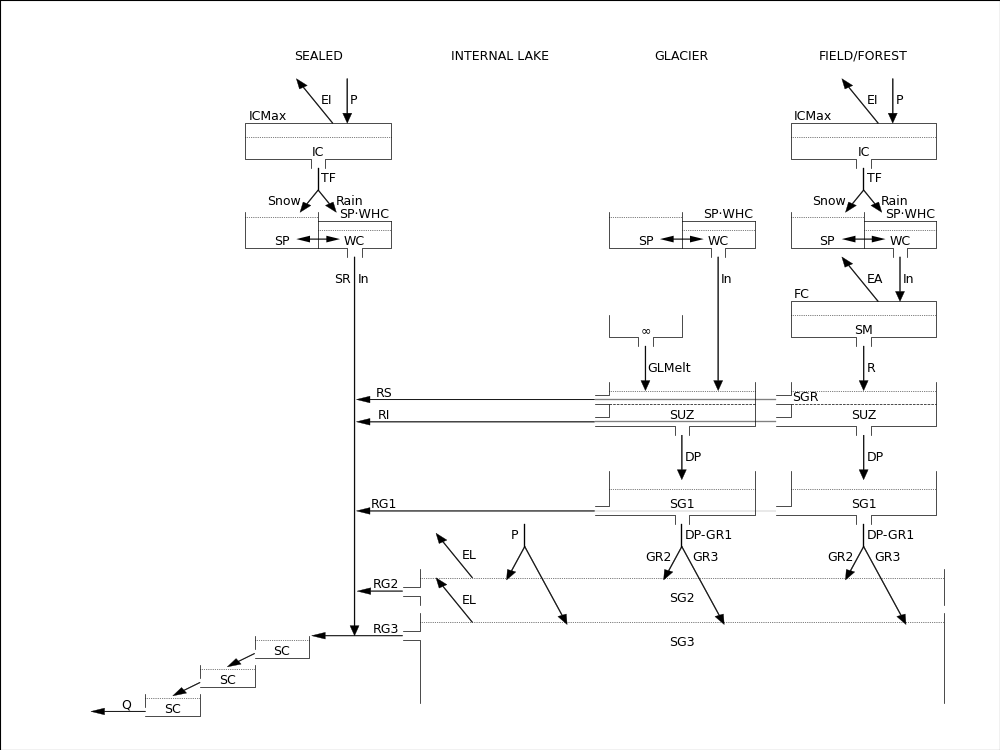
Comparing the above figure with the analogue figure of hland_96 reveals that
hland_96p models five instead of two runoff components, requiring a larger number of
vertically arranged storages. The two upper storages (SUZ, related to the soil, and
SG1, related to dynamic groundwater aquifers) are zone-specific. In comparison, the
upper zone layer (UZ) of hland_96 is subbasin-specific. hland_96p models the two
lower storages (SG2 and SG3), dealing with slow and slowest groundwater responses,
slightly different from PREVAH. First, their outflows (RG2 and RG3) are
individually accessible (PREVAH handles their outflow as one runoff component). Second,
it represents internal lakes as an “extension” of the groundwater (like in
hland_96/HBV96). Like all hland application models, hland_96p optionally allows
using a submodel for additional consideration of runoff concentration. While the figure
of hland_96 relies on rconc_uh, the figure of hland_96p selects rconc_nash as
an example.
Integration tests
Note
When new to HydPy, consider reading section Integration Tests first.
We define the settings of the following test calculations as similar to the ones of
application model hland_96 as possible. Hence, comparing the test results gives a
good impression of the functional differences of both models.
The following settings are identical:
>>> from hydpy import pub
>>> pub.timegrids = "01.01.2000", "05.01.2000", "1h"
>>> from hydpy.models.hland_96p import *
>>> parameterstep("1h")
>>> from hydpy import Node, Element
>>> outlet = Node("outlet")
>>> land = Element("land", outlets=outlet)
>>> land.model = model
>>> nmbzones(1)
>>> sclass(1)
>>> area(1.0)
>>> zonearea(1.0)
>>> zonez(1.0)
>>> psi(1.0)
We assign identical values to all parameters, besides those that are specific to
hland_96p (SGR, SG1Max, K0, K1, K2, and K3). Also, we use the same
submodels to simulate evaporation but select rconc_nash instead of rconc_uh for
extending the simulation of runoff concentration processes:
>>> zonetype(FIELD)
>>> pcorr(1.1)
>>> pcalt(0.1)
>>> rfcf(1.1)
>>> sfcf(1.3)
>>> tcorr(0.6)
>>> tcalt(0.6)
>>> icmax(2.0)
>>> sfdist(1.0)
>>> smax(inf)
>>> sred(0.0)
>>> tt(0.0)
>>> ttint(2.0)
>>> dttm(1.0)
>>> cfmax(0.5)
>>> cfvar(0.1)
>>> gmelt(1.0)
>>> gvar(0.2)
>>> cfr(0.1)
>>> whc(0.4)
>>> fc(200.0)
>>> beta(2.0)
>>> percmax(2.0)
>>> sgr(20.0)
>>> sg1max(50.0)
>>> k0(2.0)
>>> k1(10.0)
>>> k2(20.0)
>>> k3(100.0)
>>> with model.add_aetmodel_v1("evap_aet_hbv96"):
...     temperaturethresholdice(0.0)
...     soilmoisturelimit(0.8)
...     excessreduction(0.5)
...     with model.add_petmodel_v1("evap_pet_hbv96"):
...         evapotranspirationfactor(0.7)
...         airtemperaturefactor(0.1)
...         altitudefactor(-0.1)
...         precipitationfactor(0.1)
>>> with model.add_rconcmodel_v1("rconc_nash"):
...     retentiontime(3.0)
...     nmbstorages(5)
...     nmbsteps(100)
>>> from hydpy import IntegrationTest
>>> IntegrationTest.plotting_options.axis1 = (
...     inputs.p, fluxes.rs, fluxes.ri, fluxes.rg1, fluxes.rg2, fluxes.rg3, fluxes.rt)
>>> IntegrationTest.plotting_options.axis2 = inputs.t
>>> test = IntegrationTest(land)
>>> test.dateformat = '%d/%m %H:00'
The same holds for the initial conditions.
>>> test.inits = ((states.ic, 0.0),
...               (states.sp, 0.0),
...               (states.wc, 0.0),
...               (states.sm, 100.0),
...               (states.suz, 0.0),
...               (states.sg1, 10.0),
...               (states.sg2, 10.0),
...               (states.sg3, 10.0),
...               (model.rconcmodel.sequences.states.sc, 0.05))
All input time series are identical:
>>> inputs.p.series = (
...     0.0, 0.0, 0.0, 0.0, 0.0, 0.0, 0.0, 0.0, 0.0, 0.0, 0.0, 0.0, 0.0, 0.0, 0.0,
...     0.2, 0.0, 0.0, 1.3, 5.6, 2.9, 4.9, 10.6, 0.1, 0.7, 3.0, 2.1, 10.4, 3.5, 3.4,
...     1.2, 0.1, 0.0, 0.0, 0.4, 0.1, 3.6, 5.9, 1.1, 20.7, 37.9, 8.2, 3.6, 7.5, 18.5,
...     15.4, 6.3, 1.9, 4.9, 2.7, 0.5, 0.2, 0.5, 2.4, 0.4, 0.2, 0.0, 0.0, 0.3, 2.6,
...     0.7, 0.3, 0.3, 0.0, 0.0, 0.0, 0.0, 0.0, 0.0, 0.0, 0.0, 0.0, 0.0, 0.0, 0.0,
...     1.3, 0.0, 0.0, 0.0, 0.7, 0.4, 0.1, 0.4, 0.0, 0.0, 0.0, 0.0, 0.0, 0.0, 0.0,
...     0.0, 0.0, 0.0, 0.0, 0.0, 0.0)
>>> inputs.t.series = (
...     21.2, 19.4, 18.9, 18.3, 18.9, 22.5, 25.1, 28.3, 27.8, 31.4, 32.2, 35.2, 37.1,
...     31.2, 24.3, 25.4, 25.9, 23.7, 21.6, 21.2, 20.4, 19.8, 19.6, 19.2, 19.2, 19.2,
...     18.9, 18.7, 18.5, 18.3, 18.5, 18.8, 18.8, 19.0, 19.2, 19.3, 19.0, 18.8, 18.7,
...     17.8, 17.4, 17.3, 16.8, 16.5, 16.3, 16.2, 15.5, 14.6, 14.7, 14.6, 14.1, 14.3,
...     14.9, 15.7, 16.0, 16.7, 17.1, 16.2, 15.9, 16.3, 16.3, 16.4, 16.5, 18.4, 18.3,
...     18.1, 16.7, 15.2, 13.4, 12.4, 11.6, 11.0, 10.5, 11.7, 11.9, 11.2, 11.1, 11.9,
...     12.2, 11.8, 11.4, 11.6, 13.0, 17.1, 18.2, 22.4, 21.4, 21.8, 22.2, 20.1, 17.8,
...     15.2, 14.5, 12.4, 11.7, 11.9)
>>> petinputs = model.aetmodel.petmodel.sequences.inputs
>>> petinputs.normalairtemperature.series = inputs.t.series - 1.0
>>> petinputs.normalevapotranspiration.series = (
...     0.100707, 0.097801, 0.096981, 0.09599, 0.096981, 0.102761, 0.291908, 1.932875,
...     4.369536, 7.317556, 8.264362, 9.369867, 5.126178, 6.62503, 7.397619, 2.39151,
...     1.829834, 1.136569, 0.750986, 0.223895, 0.099425, 0.098454, 0.098128, 0.097474,
...     0.097474, 0.097474, 0.096981, 0.096652, 0.096321, 0.09599, 0.187298, 1.264612,
...     3.045538, 1.930758, 2.461001, 6.215945, 3.374783, 8.821555, 4.046025, 2.110757,
...     2.239257, 2.877848, 1.591452, 0.291604, 0.092622, 0.092451, 0.091248, 0.089683,
...     0.089858, 0.089683, 0.088805, 0.089157, 0.090207, 0.091593, 0.154861, 0.470369,
...     1.173726, 4.202296, 4.359715, 5.305753, 5.376027, 4.658915, 7.789594, 4.851567,
...     5.30692, 3.286036, 1.506216, 0.274762, 0.087565, 0.085771, 0.084317, 0.083215,
...     0.082289, 0.0845, 0.084864, 0.083584, 0.0834, 0.084864, 0.310229, 1.391958,
...     3.195876, 5.191651, 7.155036, 8.391432, 8.391286, 10.715238, 9.383394, 7.861915,
...     6.298329, 2.948416, 1.309232, 0.32955, 0.089508, 0.085771, 0.0845, 0.084864)
>>> test.reset_inits()
>>> conditions = model.conditions
field
hland_96p neither implements an approach analogue to HBV96’s contributing area
concept nor a substep mechanism controlling the numerical accuracy of the runoff
generation module. Hence, we provide only a single “field” example that is comparable
both with the first and the second
example of hland_96:
>>> test('hland_96p_field')
Click to see the table
| date | p | t | tc | fracrain | cfact | swe | gact | pc | ei | tf | spl | wcl | spg | wcg | glmelt | melt | refr | in_ | r | sr | ea | dp | el | rs | ri | gr1 | rg1 | gr2 | rg2 | gr3 | rg3 | inrc | outrc | rt | qt | ic | sp | wc | sm | suz | sg1 | sg2 | sg3 | outlet |
----------------------------------------------------------------------------------------------------------------------------------------------------------------------------------------------------------------------------------------------------------------------------------------------------------------------------------------------------------------------------------------------------------------------------------------------------
| 01/01 00:00 | 0.0 | 21.2 | 21.8 | 1.0 | 0.450977 | 0.0 | 0.0 | 0.0 | 0.0 | 0.0 | 0.0 | 0.0 | 0.0 | 0.0 | 0.0 | 0.0 | 0.0 | 0.0 | 0.0 | 0.0 | 0.048465 | 0.0 | 0.0 | 0.0 | 0.0 | 0.0 | 0.487706 | 0.0 | 0.099502 | 0.0 | 0.011105 | 0.598312 | 0.202814 | 0.202814 | 0.056337 | 0.0 | 0.0 | 0.0 | 99.951535 | 0.0 | 9.512294 | 9.900498 | 9.988895 | 0.056337 |
| 01/01 01:00 | 0.0 | 19.4 | 20.0 | 1.0 | 0.450977 | 0.0 | 0.0 | 0.0 | 0.0 | 0.0 | 0.0 | 0.0 | 0.0 | 0.0 | 0.0 | 0.0 | 0.0 | 0.0 | 0.0 | 0.0 | 0.047044 | 0.0 | 0.0 | 0.0 | 0.0 | 0.0 | 0.46392 | 0.0 | 0.098512 | 0.0 | 0.011093 | 0.573524 | 0.414293 | 0.414293 | 0.115081 | 0.0 | 0.0 | 0.0 | 99.904491 | 0.0 | 9.048374 | 9.801987 | 9.977802 | 0.115081 |
| 01/01 02:00 | 0.0 | 18.9 | 19.5 | 1.0 | 0.450977 | 0.0 | 0.0 | 0.0 | 0.0 | 0.0 | 0.0 | 0.0 | 0.0 | 0.0 | 0.0 | 0.0 | 0.0 | 0.0 | 0.0 | 0.0 | 0.046628 | 0.0 | 0.0 | 0.0 | 0.0 | 0.0 | 0.441294 | 0.0 | 0.097531 | 0.0 | 0.01108 | 0.549906 | 0.547167 | 0.547167 | 0.151991 | 0.0 | 0.0 | 0.0 | 99.857863 | 0.0 | 8.60708 | 9.704455 | 9.966722 | 0.151991 |
| 01/01 03:00 | 0.0 | 18.3 | 18.9 | 1.0 | 0.450977 | 0.0 | 0.0 | 0.0 | 0.0 | 0.0 | 0.0 | 0.0 | 0.0 | 0.0 | 0.0 | 0.0 | 0.0 | 0.0 | 0.0 | 0.0 | 0.04613 | 0.0 | 0.0 | 0.0 | 0.0 | 0.0 | 0.419772 | 0.0 | 0.096561 | 0.0 | 0.011068 | 0.527401 | 0.556325 | 0.556325 | 0.154535 | 0.0 | 0.0 | 0.0 | 99.811734 | 0.0 | 8.187308 | 9.607894 | 9.955654 | 0.154535 |
| 01/01 04:00 | 0.0 | 18.9 | 19.5 | 1.0 | 0.450977 | 0.0 | 0.0 | 0.0 | 0.0 | 0.0 | 0.0 | 0.0 | 0.0 | 0.0 | 0.0 | 0.0 | 0.0 | 0.0 | 0.0 | 0.0 | 0.046584 | 0.0 | 0.0 | 0.0 | 0.0 | 0.0 | 0.3993 | 0.0 | 0.0956 | 0.0 | 0.011056 | 0.505956 | 0.537334 | 0.537334 | 0.14926 | 0.0 | 0.0 | 0.0 | 99.76515 | 0.0 | 7.788008 | 9.512294 | 9.944598 | 0.14926 |
| 01/01 05:00 | 0.0 | 22.5 | 23.1 | 1.0 | 0.450977 | 0.0 | 0.0 | 0.0 | 0.0 | 0.0 | 0.0 | 0.0 | 0.0 | 0.0 | 0.0 | 0.0 | 0.0 | 0.0 | 0.0 | 0.0 | 0.049338 | 0.0 | 0.0 | 0.0 | 0.0 | 0.0 | 0.379826 | 0.0 | 0.094649 | 0.0 | 0.011043 | 0.485518 | 0.515762 | 0.515762 | 0.143267 | 0.0 | 0.0 | 0.0 | 99.715812 | 0.0 | 7.408182 | 9.417645 | 9.933555 | 0.143267 |
| 01/01 06:00 | 0.0 | 25.1 | 25.7 | 1.0 | 0.450977 | 0.0 | 0.0 | 0.0 | 0.0 | 0.0 | 0.0 | 0.0 | 0.0 | 0.0 | 0.0 | 0.0 | 0.0 | 0.0 | 0.0 | 0.0 | 0.140081 | 0.0 | 0.0 | 0.0 | 0.0 | 0.0 | 0.361301 | 0.0 | 0.093707 | 0.0 | 0.011031 | 0.46604 | 0.494888 | 0.494888 | 0.137469 | 0.0 | 0.0 | 0.0 | 99.57573 | 0.0 | 7.046881 | 9.323938 | 9.922524 | 0.137469 |
| 01/01 07:00 | 0.0 | 28.3 | 28.9 | 1.0 | 0.450977 | 0.0 | 0.0 | 0.0 | 0.0 | 0.0 | 0.0 | 0.0 | 0.0 | 0.0 | 0.0 | 0.0 | 0.0 | 0.0 | 0.0 | 0.0 | 0.92625 | 0.0 | 0.0 | 0.0 | 0.0 | 0.0 | 0.34368 | 0.0 | 0.092775 | 0.0 | 0.011019 | 0.447474 | 0.474971 | 0.474971 | 0.131936 | 0.0 | 0.0 | 0.0 | 98.649481 | 0.0 | 6.7032 | 9.231163 | 9.911505 | 0.131936 |
| 01/01 08:00 | 0.0 | 27.8 | 28.4 | 1.0 | 0.450977 | 0.0 | 0.0 | 0.0 | 0.0 | 0.0 | 0.0 | 0.0 | 0.0 | 0.0 | 0.0 | 0.0 | 0.0 | 0.0 | 0.0 | 0.0 | 2.07444 | 0.0 | 0.0 | 0.0 | 0.0 | 0.0 | 0.326919 | 0.0 | 0.091852 | 0.0 | 0.011007 | 0.429777 | 0.455987 | 0.455987 | 0.126663 | 0.0 | 0.0 | 0.0 | 96.575041 | 0.0 | 6.376282 | 9.139312 | 9.900498 | 0.126663 |
| 01/01 09:00 | 0.0 | 31.4 | 32.0 | 1.0 | 0.450977 | 0.0 | 0.0 | 0.0 | 0.0 | 0.0 | 0.0 | 0.0 | 0.0 | 0.0 | 0.0 | 0.0 | 0.0 | 0.0 | 0.0 | 0.0 | 3.400961 | 0.0 | 0.0 | 0.0 | 0.0 | 0.0 | 0.310975 | 0.0 | 0.090938 | 0.0 | 0.010994 | 0.412907 | 0.437892 | 0.437892 | 0.121637 | 0.0 | 0.0 | 0.0 | 93.17408 | 0.0 | 6.065307 | 9.048374 | 9.889504 | 0.121637 |
| 01/01 10:00 | 0.0 | 32.2 | 32.8 | 1.0 | 0.450977 | 0.0 | 0.0 | 0.0 | 0.0 | 0.0 | 0.0 | 0.0 | 0.0 | 0.0 | 0.0 | 0.0 | 0.0 | 0.0 | 0.0 | 0.0 | 3.705742 | 0.0 | 0.0 | 0.0 | 0.0 | 0.0 | 0.295808 | 0.0 | 0.090033 | 0.0 | 0.010982 | 0.396824 | 0.420642 | 0.420642 | 0.116845 | 0.0 | 0.0 | 0.0 | 89.468338 | 0.0 | 5.769498 | 8.958341 | 9.878522 | 0.116845 |
| 01/01 11:00 | 0.0 | 35.2 | 35.8 | 1.0 | 0.450977 | 0.0 | 0.0 | 0.0 | 0.0 | 0.0 | 0.0 | 0.0 | 0.0 | 0.0 | 0.0 | 0.0 | 0.0 | 0.0 | 0.0 | 0.0 | 4.03435 | 0.0 | 0.0 | 0.0 | 0.0 | 0.0 | 0.281382 | 0.0 | 0.089137 | 0.0 | 0.01097 | 0.381489 | 0.404198 | 0.404198 | 0.112277 | 0.0 | 0.0 | 0.0 | 85.433988 | 0.0 | 5.488116 | 8.869204 | 9.867552 | 0.112277 |
| 01/01 12:00 | 0.0 | 37.1 | 37.7 | 1.0 | 0.450977 | 0.0 | 0.0 | 0.0 | 0.0 | 0.0 | 0.0 | 0.0 | 0.0 | 0.0 | 0.0 | 0.0 | 0.0 | 0.0 | 0.0 | 0.0 | 2.107634 | 0.0 | 0.0 | 0.0 | 0.0 | 0.0 | 0.267659 | 0.0 | 0.08825 | 0.0 | 0.010958 | 0.366867 | 0.388519 | 0.388519 | 0.107922 | 0.0 | 0.0 | 0.0 | 83.326354 | 0.0 | 5.220458 | 8.780954 | 9.856594 | 0.107922 |
| 01/01 13:00 | 0.0 | 31.2 | 31.8 | 1.0 | 0.450977 | 0.0 | 0.0 | 0.0 | 0.0 | 0.0 | 0.0 | 0.0 | 0.0 | 0.0 | 0.0 | 0.0 | 0.0 | 0.0 | 0.0 | 0.0 | 2.656691 | 0.0 | 0.0 | 0.0 | 0.0 | 0.0 | 0.254605 | 0.0 | 0.087372 | 0.0 | 0.010946 | 0.352922 | 0.37357 | 0.37357 | 0.10377 | 0.0 | 0.0 | 0.0 | 80.669664 | 0.0 | 4.965853 | 8.693582 | 9.845648 | 0.10377 |
| 01/01 14:00 | 0.0 | 24.3 | 24.9 | 1.0 | 0.450977 | 0.0 | 0.0 | 0.0 | 0.0 | 0.0 | 0.0 | 0.0 | 0.0 | 0.0 | 0.0 | 0.0 | 0.0 | 0.0 | 0.0 | 0.0 | 2.871924 | 0.0 | 0.0 | 0.0 | 0.0 | 0.0 | 0.242188 | 0.0 | 0.086503 | 0.0 | 0.010934 | 0.339624 | 0.359315 | 0.359315 | 0.09981 | 0.0 | 0.0 | 0.0 | 77.79774 | 0.0 | 4.723666 | 8.60708 | 9.834715 | 0.09981 |
| 01/01 15:00 | 0.2 | 25.4 | 26.0 | 1.0 | 0.450977 | 0.0 | 0.0 | 0.242 | 0.242 | 0.0 | 0.0 | 0.0 | 0.0 | 0.0 | 0.0 | 0.0 | 0.0 | 0.0 | 0.0 | 0.0 | 0.873977 | 0.0 | 0.0 | 0.0 | 0.0 | 0.0 | 0.230376 | 0.0 | 0.085642 | 0.0 | 0.010921 | 0.326939 | 0.34572 | 0.34572 | 0.096033 | 0.0 | 0.0 | 0.0 | 76.923763 | 0.0 | 4.49329 | 8.521438 | 9.823793 | 0.096033 |
| 01/01 16:00 | 0.0 | 25.9 | 26.5 | 1.0 | 0.450977 | 0.0 | 0.0 | 0.0 | 0.0 | 0.0 | 0.0 | 0.0 | 0.0 | 0.0 | 0.0 | 0.0 | 0.0 | 0.0 | 0.0 | 0.0 | 0.677397 | 0.0 | 0.0 | 0.0 | 0.0 | 0.0 | 0.21914 | 0.0 | 0.08479 | 0.0 | 0.010909 | 0.314839 | 0.332754 | 0.332754 | 0.092432 | 0.0 | 0.0 | 0.0 | 76.246366 | 0.0 | 4.274149 | 8.436648 | 9.812884 | 0.092432 |
| 01/01 17:00 | 0.0 | 23.7 | 24.3 | 1.0 | 0.450977 | 0.0 | 0.0 | 0.0 | 0.0 | 0.0 | 0.0 | 0.0 | 0.0 | 0.0 | 0.0 | 0.0 | 0.0 | 0.0 | 0.0 | 0.0 | 0.417048 | 0.0 | 0.0 | 0.0 | 0.0 | 0.0 | 0.208453 | 0.0 | 0.083946 | 0.0 | 0.010897 | 0.303296 | 0.320386 | 0.320386 | 0.088996 | 0.0 | 0.0 | 0.0 | 75.829319 | 0.0 | 4.065697 | 8.352702 | 9.801987 | 0.088996 |
| 01/01 18:00 | 1.3 | 21.6 | 22.2 | 1.0 | 0.450977 | 0.0 | 0.0 | 1.573 | 0.494092 | 0.0 | 0.0 | 0.0 | 0.0 | 0.0 | 0.0 | 0.0 | 0.0 | 0.0 | 0.0 | 0.0 | 0.117083 | 0.0 | 0.0 | 0.0 | 0.0 | 0.0 | 0.198286 | 0.0 | 0.083111 | 0.0 | 0.010885 | 0.292282 | 0.308587 | 0.308587 | 0.085719 | 1.078908 | 0.0 | 0.0 | 75.712235 | 0.0 | 3.86741 | 8.269591 | 9.791102 | 0.085719 |
| 01/01 19:00 | 5.6 | 21.2 | 21.8 | 1.0 | 0.450977 | 0.0 | 0.0 | 6.776 | 0.08755 | 5.854908 | 0.0 | 0.0 | 0.0 | 0.0 | 0.0 | 0.0 | 0.0 | 5.854908 | 0.839058 | 0.0 | 0.022087 | 0.839058 | 0.0 | 0.0 | 0.0 | 0.839058 | 0.209247 | 0.0 | 0.082284 | 0.0 | 0.010873 | 0.302404 | 0.298803 | 0.298803 | 0.083001 | 1.91245 | 0.0 | 0.0 | 80.705998 | 0.0 | 4.497222 | 8.187308 | 9.780229 | 0.083001 |
| 01/01 20:00 | 2.9 | 20.4 | 21.0 | 1.0 | 0.450977 | 0.0 | 0.0 | 3.509 | 0.0539 | 3.42145 | 0.0 | 0.0 | 0.0 | 0.0 | 0.0 | 0.0 | 0.0 | 3.42145 | 0.557137 | 0.0 | 0.014076 | 0.557137 | 0.0 | 0.0 | 0.0 | 0.557137 | 0.233031 | 0.0 | 0.081465 | 0.0 | 0.010861 | 0.325357 | 0.300746 | 0.300746 | 0.083541 | 1.9461 | 0.0 | 0.0 | 83.556234 | 0.0 | 4.821327 | 8.105842 | 9.769368 | 0.083541 |
| 01/01 21:00 | 4.9 | 19.8 | 20.4 | 1.0 | 0.450977 | 0.0 | 0.0 | 5.929 | 0.041902 | 5.8751 | 0.0 | 0.0 | 0.0 | 0.0 | 0.0 | 0.0 | 0.0 | 5.8751 | 1.025446 | 0.0 | 0.011576 | 1.025446 | 0.0 | 0.0 | 0.0 | 1.025446 | 0.260353 | 0.0 | 0.080654 | 0.0 | 0.010849 | 0.351856 | 0.316706 | 0.316706 | 0.087974 | 1.958098 | 0.0 | 0.0 | 88.394311 | 0.0 | 5.58642 | 8.025188 | 9.758519 | 0.087974 |
| 01/01 22:00 | 10.6 | 19.6 | 20.2 | 1.0 | 0.450977 | 0.0 | 0.0 | 12.826 | 0.020954 | 12.784098 | 0.0 | 0.0 | 0.0 | 0.0 | 0.0 | 0.0 | 0.0 | 12.784098 | 2.497231 | 0.0 | 0.006462 | 2.0 | 0.0 | 0.0 | 0.047318 | 2.0 | 0.32163 | 0.0 | 0.079852 | 0.0 | 0.010837 | 0.459636 | 0.346221 | 0.346221 | 0.096172 | 1.979046 | 0.0 | 0.0 | 98.674717 | 0.449913 | 7.264791 | 7.945336 | 9.747682 | 0.096172 |
| 01/01 23:00 | 0.1 | 19.2 | 19.8 | 1.0 | 0.450977 | 0.0 | 0.0 | 0.121 | 0.074152 | 0.100046 | 0.0 | 0.0 | 0.0 | 0.0 | 0.0 | 0.0 | 0.0 | 0.100046 | 0.024353 | 0.0 | 0.022883 | 0.474266 | 0.0 | 0.0 | 0.0 | 0.474266 | 0.36597 | 0.0 | 0.079057 | 0.0 | 0.010825 | 0.455852 | 0.410819 | 0.410819 | 0.114117 | 1.925848 | 0.0 | 0.0 | 98.727527 | 0.0 | 7.373087 | 7.866279 | 9.736857 | 0.114117 |
| 02/01 00:00 | 0.7 | 19.2 | 19.8 | 1.0 | 0.451153 | 0.0 | 0.0 | 0.847 | 0.06896 | 0.772848 | 0.0 | 0.0 | 0.0 | 0.0 | 0.0 | 0.0 | 0.0 | 0.772848 | 0.188326 | 0.0 | 0.021402 | 0.188326 | 0.0 | 0.0 | 0.0 | 0.188326 | 0.36422 | 0.0 | 0.078271 | 0.0 | 0.010813 | 0.453304 | 0.448084 | 0.448084 | 0.124468 | 1.93104 | 0.0 | 0.0 | 99.290647 | 0.0 | 7.197193 | 7.788008 | 9.726045 | 0.124468 |
| 02/01 01:00 | 3.0 | 19.2 | 19.8 | 1.0 | 0.451153 | 0.0 | 0.0 | 3.63 | 0.052207 | 3.56104 | 0.0 | 0.0 | 0.0 | 0.0 | 0.0 | 0.0 | 0.0 | 3.56104 | 0.877675 | 0.0 | 0.016637 | 0.877675 | 0.0 | 0.0 | 0.0 | 0.877675 | 0.372592 | 0.0 | 0.077492 | 0.0 | 0.010801 | 0.460885 | 0.454178 | 0.454178 | 0.126161 | 1.947793 | 0.0 | 0.0 | 101.957376 | 0.0 | 7.702276 | 7.710516 | 9.715244 | 0.126161 |
| 02/01 02:00 | 2.1 | 18.9 | 19.5 | 1.0 | 0.451153 | 0.0 | 0.0 | 2.541 | 0.057919 | 2.488793 | 0.0 | 0.0 | 0.0 | 0.0 | 0.0 | 0.0 | 0.0 | 2.488793 | 0.646794 | 0.0 | 0.018787 | 0.646794 | 0.0 | 0.0 | 0.0 | 0.646794 | 0.391548 | 0.0 | 0.076721 | 0.0 | 0.010789 | 0.479058 | 0.459092 | 0.459092 | 0.127526 | 1.942081 | 0.0 | 0.0 | 103.780587 | 0.0 | 7.957522 | 7.633795 | 9.704455 | 0.127526 |
| 02/01 03:00 | 10.4 | 18.7 | 19.3 | 1.0 | 0.451153 | 0.0 | 0.0 | 12.584 | 0.021144 | 12.526081 | 0.0 | 0.0 | 0.0 | 0.0 | 0.0 | 0.0 | 0.0 | 12.526081 | 3.372776 | 0.0 | 0.007462 | 2.0 | 0.0 | 0.0 | 0.130637 | 2.0 | 0.43727 | 0.0 | 0.075958 | 0.0 | 0.010777 | 0.654641 | 0.483207 | 0.483207 | 0.134224 | 1.978856 | 0.0 | 0.0 | 112.92643 | 1.242139 | 9.520252 | 7.557837 | 9.693679 | 0.134224 |
| 02/01 04:00 | 3.5 | 18.5 | 19.1 | 1.0 | 0.451153 | 0.0 | 0.0 | 4.235 | 0.048561 | 4.213856 | 0.0 | 0.0 | 0.0 | 0.0 | 0.0 | 0.0 | 0.0 | 4.213856 | 1.343417 | 0.0 | 0.017573 | 2.0 | 0.0 | 0.0 | 0.055723 | 2.0 | 0.513485 | 0.0 | 0.075202 | 0.0 | 0.010765 | 0.655175 | 0.577967 | 0.577967 | 0.160546 | 1.951439 | 0.0 | 0.0 | 115.779297 | 0.529833 | 11.006767 | 7.482636 | 9.682914 | 0.160546 |
| 02/01 05:00 | 3.4 | 18.3 | 18.9 | 1.0 | 0.451153 | 0.0 | 0.0 | 4.114 | 0.048983 | 4.065439 | 0.0 | 0.0 | 0.0 | 0.0 | 0.0 | 0.0 | 0.0 | 4.065439 | 1.362415 | 0.0 | 0.018136 | 1.892248 | 0.0 | 0.0 | 0.0 | 1.892248 | 0.583334 | 0.0 | 0.074453 | 0.0 | 0.010753 | 0.66854 | 0.641174 | 0.641174 | 0.178104 | 1.951017 | 0.0 | 0.0 | 118.464185 | 0.0 | 12.315681 | 7.408182 | 9.672161 | 0.178104 |
| 02/01 06:00 | 1.2 | 18.5 | 19.1 | 1.0 | 0.451153 | 0.0 | 0.0 | 1.452 | 0.124728 | 1.403017 | 0.0 | 0.0 | 0.0 | 0.0 | 0.0 | 0.0 | 0.0 | 1.403017 | 0.49224 | 0.0 | 0.046529 | 0.49224 | 0.0 | 0.0 | 0.0 | 0.49224 | 0.612746 | 0.0 | 0.073713 | 0.0 | 0.010741 | 0.6972 | 0.663102 | 0.663102 | 0.184195 | 1.875272 | 0.0 | 0.0 | 119.328432 | 0.0 | 12.195174 | 7.33447 | 9.66142 | 0.184195 |
| 02/01 07:00 | 0.1 | 18.8 | 19.4 | 1.0 | 0.451153 | 0.0 | 0.0 | 0.121 | 0.96204 | 0.0 | 0.0 | 0.0 | 0.0 | 0.0 | 0.0 | 0.0 | 0.0 | 0.0 | 0.0 | 0.0 | 0.358746 | 0.0 | 0.0 | 0.0 | 0.0 | 0.0 | 0.594766 | 0.0 | 0.072979 | 0.0 | 0.010729 | 0.678474 | 0.682336 | 0.682336 | 0.189538 | 1.034232 | 0.0 | 0.0 | 118.969686 | 0.0 | 11.600409 | 7.26149 | 9.650691 | 0.189538 |
| 02/01 08:00 | 0.0 | 18.8 | 19.4 | 1.0 | 0.451153 | 0.0 | 0.0 | 0.0 | 1.034232 | 0.0 | 0.0 | 0.0 | 0.0 | 0.0 | 0.0 | 0.0 | 0.0 | 0.0 | 0.0 | 0.0 | 1.527265 | 0.0 | 0.0 | 0.0 | 0.0 | 0.0 | 0.565759 | 0.0 | 0.072253 | 0.0 | 0.010717 | 0.648729 | 0.681849 | 0.681849 | 0.189402 | 0.0 | 0.0 | 0.0 | 117.442421 | 0.0 | 11.03465 | 7.189237 | 9.639974 | 0.189402 |
| 02/01 09:00 | 0.0 | 19.0 | 19.6 | 1.0 | 0.451153 | 0.0 | 0.0 | 0.0 | 0.0 | 0.0 | 0.0 | 0.0 | 0.0 | 0.0 | 0.0 | 0.0 | 0.0 | 0.0 | 0.0 | 0.0 | 1.091248 | 0.0 | 0.0 | 0.0 | 0.0 | 0.0 | 0.538166 | 0.0 | 0.071534 | 0.0 | 0.010705 | 0.620405 | 0.660696 | 0.660696 | 0.183527 | 0.0 | 0.0 | 0.0 | 116.351173 | 0.0 | 10.496484 | 7.117703 | 9.629269 | 0.183527 |
| 02/01 10:00 | 0.4 | 19.2 | 19.8 | 1.0 | 0.451153 | 0.0 | 0.0 | 0.484 | 0.484 | 0.0 | 0.0 | 0.0 | 0.0 | 0.0 | 0.0 | 0.0 | 0.0 | 0.0 | 0.0 | 0.0 | 1.312905 | 0.0 | 0.0 | 0.0 | 0.0 | 0.0 | 0.51192 | 0.0 | 0.070822 | 0.0 | 0.010693 | 0.593435 | 0.633221 | 0.633221 | 0.175895 | 0.0 | 0.0 | 0.0 | 115.038267 | 0.0 | 9.984564 | 7.046881 | 9.618576 | 0.175895 |
| 02/01 11:00 | 0.1 | 19.3 | 19.9 | 1.0 | 0.451153 | 0.0 | 0.0 | 0.121 | 0.121 | 0.0 | 0.0 | 0.0 | 0.0 | 0.0 | 0.0 | 0.0 | 0.0 | 0.0 | 0.0 | 0.0 | 3.399893 | 0.0 | 0.0 | 0.0 | 0.0 | 0.0 | 0.486953 | 0.0 | 0.070118 | 0.0 | 0.010681 | 0.567752 | 0.605792 | 0.605792 | 0.168276 | 0.0 | 0.0 | 0.0 | 111.638374 | 0.0 | 9.497611 | 6.976763 | 9.607894 | 0.168276 |
| 02/01 12:00 | 3.6 | 19.0 | 19.6 | 1.0 | 0.451153 | 0.0 | 0.0 | 4.356 | 1.680962 | 2.356 | 0.0 | 0.0 | 0.0 | 0.0 | 0.0 | 0.0 | 0.0 | 2.356 | 0.734078 | 0.0 | 0.594957 | 0.734078 | 0.0 | 0.0 | 0.0 | 0.734078 | 0.481254 | 0.0 | 0.06942 | 0.0 | 0.01067 | 0.561343 | 0.58082 | 0.58082 | 0.161339 | 0.319038 | 0.0 | 0.0 | 112.665339 | 0.0 | 9.750436 | 6.907343 | 9.597225 | 0.161339 |
| 02/01 13:00 | 5.9 | 18.8 | 19.4 | 1.0 | 0.451153 | 0.0 | 0.0 | 7.139 | 2.0 | 5.458038 | 0.0 | 0.0 | 0.0 | 0.0 | 0.0 | 0.0 | 0.0 | 5.458038 | 1.732037 | 0.0 | 1.873211 | 1.732037 | 0.0 | 0.0 | 0.0 | 1.732037 | 0.518123 | 0.0 | 0.068729 | 0.0 | 0.010658 | 0.597509 | 0.569083 | 0.569083 | 0.158078 | 0.0 | 0.0 | 0.0 | 114.518129 | 0.0 | 10.96435 | 6.838614 | 9.586567 | 0.158078 |
| 02/01 14:00 | 1.1 | 18.7 | 19.3 | 1.0 | 0.451153 | 0.0 | 0.0 | 1.331 | 1.331 | 0.0 | 0.0 | 0.0 | 0.0 | 0.0 | 0.0 | 0.0 | 0.0 | 0.0 | 0.0 | 0.0 | 1.674068 | 0.0 | 0.0 | 0.0 | 0.0 | 0.0 | 0.534738 | 0.0 | 0.068045 | 0.0 | 0.010646 | 0.613429 | 0.583975 | 0.583975 | 0.162215 | 0.0 | 0.0 | 0.0 | 112.844061 | 0.0 | 10.429613 | 6.770569 | 9.575921 | 0.162215 |
| 02/01 15:00 | 20.7 | 17.8 | 18.4 | 1.0 | 0.451153 | 0.0 | 0.0 | 25.047 | 0.132786 | 23.047 | 0.0 | 0.0 | 0.0 | 0.0 | 0.0 | 0.0 | 0.0 | 23.047 | 7.336887 | 0.0 | 0.053344 | 2.0 | 0.0 | 0.0 | 0.507872 | 1.978519 | 0.557307 | 0.019094 | 0.067463 | 0.002387 | 0.010635 | 1.143278 | 0.641527 | 0.641527 | 0.178202 | 1.867214 | 0.0 | 0.0 | 128.500829 | 4.829015 | 11.850825 | 6.722199 | 9.567673 | 0.178202 |
| 02/01 16:00 | 37.9 | 17.4 | 18.0 | 1.0 | 0.451153 | 0.0 | 0.0 | 45.859 | 0.017578 | 45.726214 | 0.0 | 0.0 | 0.0 | 0.0 | 0.0 | 0.0 | 0.0 | 45.726214 | 18.876311 | 0.0 | 0.008533 | 2.0 | 0.0 | 0.670993 | 2.065535 | 1.907459 | 0.624873 | 0.082259 | 0.067297 | 0.010282 | 0.010631 | 3.439329 | 1.078774 | 1.078774 | 0.29966 | 1.982422 | 0.0 | 0.0 | 155.342199 | 18.968797 | 13.133411 | 6.737161 | 9.567325 | 0.29966 |
| 02/01 17:00 | 8.2 | 17.3 | 17.9 | 1.0 | 0.451153 | 0.0 | 0.0 | 9.922 | 0.821583 | 9.904422 | 0.0 | 0.0 | 0.0 | 0.0 | 0.0 | 0.0 | 0.0 | 9.904422 | 5.97514 | 0.0 | 0.408921 | 2.0 | 0.0 | 1.158349 | 2.183404 | 1.843329 | 0.685849 | 0.139263 | 0.06773 | 0.017408 | 0.010634 | 4.105966 | 2.460315 | 2.460315 | 0.683421 | 1.178417 | 0.0 | 0.0 | 158.862561 | 19.602184 | 14.290891 | 6.808694 | 9.574098 | 0.683421 |
| 02/01 18:00 | 3.6 | 16.8 | 17.4 | 1.0 | 0.451153 | 0.0 | 0.0 | 4.356 | 0.792694 | 3.534417 | 0.0 | 0.0 | 0.0 | 0.0 | 0.0 | 0.0 | 0.0 | 3.534417 | 2.22998 | 0.0 | 0.396347 | 2.0 | 0.0 | 0.0 | 1.88728 | 1.785455 | 0.740877 | 0.190706 | 0.068698 | 0.023838 | 0.010645 | 2.7075 | 3.525529 | 3.525529 | 0.979313 | 1.207306 | 0.0 | 0.0 | 159.770651 | 17.944883 | 15.33547 | 6.930702 | 9.587291 | 0.979313 |
| 02/01 19:00 | 7.5 | 16.5 | 17.1 | 1.0 | 0.451153 | 0.0 | 0.0 | 9.075 | 0.090607 | 8.282306 | 0.0 | 0.0 | 0.0 | 0.0 | 0.0 | 0.0 | 0.0 | 8.282306 | 5.28549 | 0.0 | 0.045304 | 2.0 | 0.0 | 0.484114 | 2.020337 | 1.733226 | 0.790537 | 0.237132 | 0.070143 | 0.029642 | 0.010663 | 3.375795 | 3.275671 | 3.275671 | 0.909909 | 1.909393 | 0.0 | 0.0 | 162.722163 | 18.725922 | 16.27816 | 7.097691 | 9.60627 | 0.909909 |
| 02/01 20:00 | 18.5 | 16.3 | 16.9 | 1.0 | 0.451153 | 0.0 | 0.0 | 22.385 | 0.007604 | 22.294393 | 0.0 | 0.0 | 0.0 | 0.0 | 0.0 | 0.0 | 0.0 | 22.294393 | 14.758053 | 0.0 | 0.003802 | 2.0 | 0.0 | 4.518592 | 2.996096 | 1.686092 | 0.835354 | 0.279029 | 0.072014 | 0.034879 | 0.010687 | 8.432743 | 3.558158 | 3.558158 | 0.988377 | 1.992396 | 0.0 | 0.0 | 170.254701 | 23.969287 | 17.128898 | 7.304707 | 9.630461 | 0.988377 |
| 02/01 21:00 | 15.4 | 16.2 | 16.8 | 1.0 | 0.451153 | 0.0 | 0.0 | 18.634 | 0.011044 | 18.626396 | 0.0 | 0.0 | 0.0 | 0.0 | 0.0 | 0.0 | 0.0 | 18.626396 | 13.497927 | 0.0 | 0.005522 | 2.0 | 0.0 | 6.085874 | 3.375152 | 1.643555 | 0.875799 | 0.31684 | 0.074262 | 0.039605 | 0.010717 | 10.421803 | 6.368261 | 6.368261 | 1.768961 | 1.988956 | 0.0 | 0.0 | 175.377648 | 26.006188 | 17.896654 | 7.547284 | 9.65935 | 1.768961 |
| 02/01 22:00 | 6.3 | 15.5 | 16.1 | 1.0 | 0.451153 | 0.0 | 0.0 | 7.623 | 0.032783 | 7.611956 | 0.0 | 0.0 | 0.0 | 0.0 | 0.0 | 0.0 | 0.0 | 7.611956 | 5.853084 | 0.0 | 0.016392 | 2.0 | 0.0 | 3.879321 | 2.841485 | 1.605167 | 0.912299 | 0.350962 | 0.076846 | 0.04387 | 0.010751 | 7.720702 | 8.953614 | 8.953614 | 2.487115 | 1.967217 | 0.0 | 0.0 | 177.120128 | 23.138465 | 18.589523 | 7.821401 | 9.692469 | 2.487115 |
| 02/01 23:00 | 1.9 | 14.6 | 15.2 | 1.0 | 0.451153 | 0.0 | 0.0 | 2.299 | 0.054873 | 2.266217 | 0.0 | 0.0 | 0.0 | 0.0 | 0.0 | 0.0 | 0.0 | 2.266217 | 1.777368 | 0.0 | 0.027436 | 2.0 | 0.0 | 1.147291 | 2.18073 | 1.570524 | 0.945239 | 0.381757 | 0.079727 | 0.04772 | 0.01079 | 4.363776 | 8.422601 | 8.422601 | 2.339611 | 1.945127 | 0.0 | 0.0 | 177.581541 | 19.587812 | 19.214808 | 8.123431 | 9.729399 | 2.339611 |
| 03/01 00:00 | 4.9 | 14.7 | 15.3 | 1.0 | 0.451343 | 0.0 | 0.0 | 5.929 | 0.038243 | 5.874127 | 0.0 | 0.0 | 0.0 | 0.0 | 0.0 | 0.0 | 0.0 | 5.874127 | 4.631045 | 0.0 | 0.019122 | 2.0 | 0.0 | 0.873052 | 2.114404 | 1.53926 | 0.974965 | 0.409547 | 0.08287 | 0.051193 | 0.010833 | 4.056125 | 5.97839 | 5.97839 | 1.660664 | 1.961757 | 0.0 | 0.0 | 178.805502 | 19.231401 | 19.779102 | 8.450108 | 9.769759 | 1.660664 |
| 03/01 01:00 | 2.7 | 14.6 | 15.2 | 1.0 | 0.451343 | 0.0 | 0.0 | 3.267 | 0.04981 | 3.228757 | 0.0 | 0.0 | 0.0 | 0.0 | 0.0 | 0.0 | 0.0 | 3.228757 | 2.580697 | 0.0 | 0.024905 | 2.0 | 0.0 | 0.0 | 1.88537 | 1.511045 | 1.001793 | 0.434627 | 0.086246 | 0.054328 | 0.010879 | 2.984288 | 4.413537 | 4.413537 | 1.225983 | 1.95019 | 0.0 | 0.0 | 179.428656 | 17.926728 | 20.288355 | 8.798489 | 9.813208 | 1.225983 |
| 03/01 02:00 | 0.5 | 14.1 | 14.7 | 1.0 | 0.451343 | 0.0 | 0.0 | 0.605 | 0.064366 | 0.55519 | 0.0 | 0.0 | 0.0 | 0.0 | 0.0 | 0.0 | 0.0 | 0.55519 | 0.446854 | 0.0 | 0.032183 | 2.0 | 0.0 | 0.0 | 1.558152 | 1.485582 | 1.026003 | 0.45726 | 0.089825 | 0.057158 | 0.010929 | 2.68491 | 3.481809 | 3.481809 | 0.967169 | 1.935634 | 0.0 | 0.0 | 179.50481 | 14.815429 | 20.747934 | 9.165924 | 9.859436 | 0.967169 |
| 03/01 03:00 | 0.2 | 14.3 | 14.9 | 1.0 | 0.451343 | 0.0 | 0.0 | 0.242 | 0.067009 | 0.177634 | 0.0 | 0.0 | 0.0 | 0.0 | 0.0 | 0.0 | 0.0 | 0.177634 | 0.143093 | 0.0 | 0.033505 | 2.0 | 0.0 | 0.0 | 1.233166 | 1.462603 | 1.047852 | 0.477686 | 0.093583 | 0.059711 | 0.010982 | 2.385583 | 2.886447 | 2.886447 | 0.801791 | 1.932991 | 0.0 | 0.0 | 179.505846 | 11.725356 | 21.162685 | 9.550027 | 9.908165 | 0.801791 |
| 03/01 04:00 | 0.5 | 14.9 | 15.5 | 1.0 | 0.451343 | 0.0 | 0.0 | 0.605 | 0.065382 | 0.537991 | 0.0 | 0.0 | 0.0 | 0.0 | 0.0 | 0.0 | 0.0 | 0.537991 | 0.433383 | 0.0 | 0.032691 | 2.0 | 0.0 | 0.0 | 0.966732 | 1.441866 | 1.06757 | 0.496119 | 0.097497 | 0.062015 | 0.011037 | 2.142836 | 2.53203 | 2.53203 | 0.703342 | 1.934618 | 0.0 | 0.0 | 179.577763 | 9.192007 | 21.536982 | 9.948649 | 9.959143 | 0.703342 |
| 03/01 05:00 | 2.4 | 15.7 | 16.3 | 1.0 | 0.451343 | 0.0 | 0.0 | 2.904 | 0.052751 | 2.838618 | 0.0 | 0.0 | 0.0 | 0.0 | 0.0 | 0.0 | 0.0 | 2.838618 | 2.288506 | 0.0 | 0.026376 | 2.0 | 0.0 | 0.0 | 0.90219 | 1.423151 | 1.085364 | 0.512755 | 0.101546 | 0.064094 | 0.011095 | 2.100195 | 2.272317 | 2.272317 | 0.631199 | 1.947249 | 0.0 | 0.0 | 180.101499 | 8.578324 | 21.874768 | 10.359858 | 10.012142 | 0.631199 |
| 03/01 06:00 | 0.4 | 16.0 | 16.6 | 1.0 | 0.451343 | 0.0 | 0.0 | 0.484 | 0.113609 | 0.431249 | 0.0 | 0.0 | 0.0 | 0.0 | 0.0 | 0.0 | 0.0 | 0.431249 | 0.349705 | 0.0 | 0.056805 | 2.0 | 0.0 | 0.0 | 0.659289 | 1.406262 | 1.101423 | 0.527767 | 0.105712 | 0.065971 | 0.011155 | 1.877579 | 2.125889 | 2.125889 | 0.590525 | 1.886391 | 0.0 | 0.0 | 180.126238 | 6.26874 | 22.179607 | 10.781913 | 10.066958 | 0.590525 |
| 03/01 07:00 | 0.2 | 16.7 | 17.3 | 1.0 | 0.451343 | 0.0 | 0.0 | 0.242 | 0.353524 | 0.128391 | 0.0 | 0.0 | 0.0 | 0.0 | 0.0 | 0.0 | 0.0 | 0.128391 | 0.104143 | 0.0 | 0.176762 | 2.0 | 0.0 | 0.0 | 0.416135 | 1.39102 | 1.115915 | 0.541316 | 0.109979 | 0.067664 | 0.011217 | 1.653246 | 1.962995 | 1.962995 | 0.545276 | 1.646476 | 0.0 | 0.0 | 179.973724 | 3.956748 | 22.454711 | 11.21325 | 10.123405 | 0.545276 |
| 03/01 08:00 | 0.0 | 17.1 | 17.7 | 1.0 | 0.451343 | 0.0 | 0.0 | 0.0 | 0.903769 | 0.0 | 0.0 | 0.0 | 0.0 | 0.0 | 0.0 | 0.0 | 0.0 | 0.0 | 0.0 | 0.0 | 0.451885 | 2.0 | 0.0 | 0.0 | 0.186209 | 1.377264 | 1.128994 | 0.553543 | 0.114332 | 0.069193 | 0.01128 | 1.440816 | 1.753161 | 1.753161 | 0.486989 | 0.742707 | 0.0 | 0.0 | 179.521839 | 1.770538 | 22.702982 | 11.65246 | 10.181318 | 0.486989 |
| 03/01 09:00 | 0.0 | 16.2 | 16.8 | 1.0 | 0.451343 | 0.0 | 0.0 | 0.0 | 0.742707 | 0.0 | 0.0 | 0.0 | 0.0 | 0.0 | 0.0 | 0.0 | 0.0 | 0.0 | 0.0 | 0.0 | 2.864415 | 1.770538 | 0.0 | 0.0 | 0.0 | 1.364851 | 1.140797 | 0.360611 | 0.117741 | 0.045076 | 0.011331 | 1.269869 | 1.540313 | 1.540313 | 0.427865 | 0.0 | 0.0 | 0.0 | 176.657424 | 0.0 | 22.927036 | 11.89533 | 10.215063 | 0.427865 |
| 03/01 10:00 | 0.3 | 15.9 | 16.5 | 1.0 | 0.451343 | 0.0 | 0.0 | 0.363 | 0.363 | 0.0 | 0.0 | 0.0 | 0.0 | 0.0 | 0.0 | 0.0 | 0.0 | 0.0 | 0.0 | 0.0 | 3.055807 | 0.0 | 0.0 | 0.0 | 0.0 | 0.0 | 1.118165 | 0.0 | 0.118361 | 0.0 | 0.011344 | 1.247869 | 1.361418 | 1.361418 | 0.378172 | 0.0 | 0.0 | 0.0 | 173.601617 | 0.0 | 21.808871 | 11.77697 | 10.203719 | 0.378172 |
| 03/01 11:00 | 2.6 | 16.3 | 16.9 | 1.0 | 0.451343 | 0.0 | 0.0 | 3.146 | 2.0 | 1.146 | 0.0 | 0.0 | 0.0 | 0.0 | 0.0 | 0.0 | 0.0 | 1.146 | 0.86344 | 0.0 | 1.982694 | 0.86344 | 0.0 | 0.0 | 0.0 | 0.86344 | 1.084862 | 0.0 | 0.117183 | 0.0 | 0.011331 | 1.213376 | 1.271249 | 1.271249 | 0.353125 | 0.0 | 0.0 | 0.0 | 171.901483 | 0.0 | 21.587449 | 11.659787 | 10.192388 | 0.353125 |
| 03/01 12:00 | 0.7 | 16.3 | 16.9 | 1.0 | 0.451343 | 0.0 | 0.0 | 0.847 | 0.847 | 0.0 | 0.0 | 0.0 | 0.0 | 0.0 | 0.0 | 0.0 | 0.0 | 0.0 | 0.0 | 0.0 | 3.37986 | 0.0 | 0.0 | 0.0 | 0.0 | 0.0 | 1.052832 | 0.0 | 0.116017 | 0.0 | 0.011319 | 1.180168 | 1.229444 | 1.229444 | 0.341512 | 0.0 | 0.0 | 0.0 | 168.521623 | 0.0 | 20.534617 | 11.54377 | 10.181069 | 0.341512 |
| 03/01 13:00 | 0.3 | 16.4 | 17.0 | 1.0 | 0.451343 | 0.0 | 0.0 | 0.363 | 0.363 | 0.0 | 0.0 | 0.0 | 0.0 | 0.0 | 0.0 | 0.0 | 0.0 | 0.0 | 0.0 | 0.0 | 3.277978 | 0.0 | 0.0 | 0.0 | 0.0 | 0.0 | 1.001485 | 0.0 | 0.114862 | 0.0 | 0.011306 | 1.127654 | 1.19386 | 1.19386 | 0.331628 | 0.0 | 0.0 | 0.0 | 165.243645 | 0.0 | 19.533132 | 11.428908 | 10.169763 | 0.331628 |
| 03/01 14:00 | 0.3 | 16.5 | 17.1 | 1.0 | 0.451343 | 0.0 | 0.0 | 0.363 | 0.363 | 0.0 | 0.0 | 0.0 | 0.0 | 0.0 | 0.0 | 0.0 | 0.0 | 0.0 | 0.0 | 0.0 | 5.602665 | 0.0 | 0.0 | 0.0 | 0.0 | 0.0 | 0.952642 | 0.0 | 0.11372 | 0.0 | 0.011293 | 1.077655 | 1.149672 | 1.149672 | 0.319353 | 0.0 | 0.0 | 0.0 | 159.64098 | 0.0 | 18.58049 | 11.315188 | 10.15847 | 0.319353 |
| 03/01 15:00 | 0.0 | 18.4 | 19.0 | 1.0 | 0.451343 | 0.0 | 0.0 | 0.0 | 0.0 | 0.0 | 0.0 | 0.0 | 0.0 | 0.0 | 0.0 | 0.0 | 0.0 | 0.0 | 0.0 | 0.0 | 3.727324 | 0.0 | 0.0 | 0.0 | 0.0 | 0.0 | 0.906181 | 0.0 | 0.112588 | 0.0 | 0.011281 | 1.03005 | 1.100356 | 1.100356 | 0.305654 | 0.0 | 0.0 | 0.0 | 155.913656 | 0.0 | 17.674308 | 11.2026 | 10.147189 | 0.305654 |
| 03/01 16:00 | 0.0 | 18.3 | 18.9 | 1.0 | 0.451343 | 0.0 | 0.0 | 0.0 | 0.0 | 0.0 | 0.0 | 0.0 | 0.0 | 0.0 | 0.0 | 0.0 | 0.0 | 0.0 | 0.0 | 0.0 | 3.981965 | 0.0 | 0.0 | 0.0 | 0.0 | 0.0 | 0.861986 | 0.0 | 0.111468 | 0.0 | 0.011268 | 0.984722 | 1.051868 | 1.051868 | 0.292185 | 0.0 | 0.0 | 0.0 | 151.931691 | 0.0 | 16.812322 | 11.091133 | 10.135921 | 0.292185 |
| 03/01 17:00 | 0.0 | 18.1 | 18.7 | 1.0 | 0.451343 | 0.0 | 0.0 | 0.0 | 0.0 | 0.0 | 0.0 | 0.0 | 0.0 | 0.0 | 0.0 | 0.0 | 0.0 | 0.0 | 0.0 | 0.0 | 2.402655 | 0.0 | 0.0 | 0.0 | 0.0 | 0.0 | 0.819947 | 0.0 | 0.110359 | 0.0 | 0.011256 | 0.941561 | 1.005514 | 1.005514 | 0.279309 | 0.0 | 0.0 | 0.0 | 149.529036 | 0.0 | 15.992376 | 10.980774 | 10.124665 | 0.279309 |
| 03/01 18:00 | 0.0 | 16.7 | 17.3 | 1.0 | 0.451343 | 0.0 | 0.0 | 0.0 | 0.0 | 0.0 | 0.0 | 0.0 | 0.0 | 0.0 | 0.0 | 0.0 | 0.0 | 0.0 | 0.0 | 0.0 | 1.083886 | 0.0 | 0.0 | 0.0 | 0.0 | 0.0 | 0.779957 | 0.0 | 0.109261 | 0.0 | 0.011243 | 0.900461 | 0.96136 | 0.96136 | 0.267044 | 0.0 | 0.0 | 0.0 | 148.44515 | 0.0 | 15.212418 | 10.871513 | 10.113421 | 0.267044 |
| 03/01 19:00 | 0.0 | 15.2 | 15.8 | 1.0 | 0.451343 | 0.0 | 0.0 | 0.0 | 0.0 | 0.0 | 0.0 | 0.0 | 0.0 | 0.0 | 0.0 | 0.0 | 0.0 | 0.0 | 0.0 | 0.0 | 0.196288 | 0.0 | 0.0 | 0.0 | 0.0 | 0.0 | 0.741918 | 0.0 | 0.108173 | 0.0 | 0.011231 | 0.861323 | 0.919314 | 0.919314 | 0.255365 | 0.0 | 0.0 | 0.0 | 148.248862 | 0.0 | 14.4705 | 10.76334 | 10.10219 | 0.255365 |
| 03/01 20:00 | 0.0 | 13.4 | 14.0 | 1.0 | 0.451343 | 0.0 | 0.0 | 0.0 | 0.0 | 0.0 | 0.0 | 0.0 | 0.0 | 0.0 | 0.0 | 0.0 | 0.0 | 0.0 | 0.0 | 0.0 | 0.062473 | 0.0 | 0.0 | 0.0 | 0.0 | 0.0 | 0.705735 | 0.0 | 0.107097 | 0.0 | 0.011218 | 0.82405 | 0.879276 | 0.879276 | 0.244243 | 0.0 | 0.0 | 0.0 | 148.186389 | 0.0 | 13.764765 | 10.656243 | 10.090972 | 0.244243 |
| 03/01 21:00 | 0.0 | 12.4 | 13.0 | 1.0 | 0.451343 | 0.0 | 0.0 | 0.0 | 0.0 | 0.0 | 0.0 | 0.0 | 0.0 | 0.0 | 0.0 | 0.0 | 0.0 | 0.0 | 0.0 | 0.0 | 0.061167 | 0.0 | 0.0 | 0.0 | 0.0 | 0.0 | 0.671316 | 0.0 | 0.106031 | 0.0 | 0.011206 | 0.788553 | 0.841147 | 0.841147 | 0.233652 | 0.0 | 0.0 | 0.0 | 148.125222 | 0.0 | 13.09345 | 10.550212 | 10.079766 | 0.233652 |
| 03/01 22:00 | 0.0 | 11.6 | 12.2 | 1.0 | 0.451343 | 0.0 | 0.0 | 0.0 | 0.0 | 0.0 | 0.0 | 0.0 | 0.0 | 0.0 | 0.0 | 0.0 | 0.0 | 0.0 | 0.0 | 0.0 | 0.060106 | 0.0 | 0.0 | 0.0 | 0.0 | 0.0 | 0.638575 | 0.0 | 0.104976 | 0.0 | 0.011194 | 0.754745 | 0.804835 | 0.804835 | 0.223565 | 0.0 | 0.0 | 0.0 | 148.065116 | 0.0 | 12.454875 | 10.445235 | 10.068572 | 0.223565 |
| 03/01 23:00 | 0.0 | 11.0 | 11.6 | 1.0 | 0.451343 | 0.0 | 0.0 | 0.0 | 0.0 | 0.0 | 0.0 | 0.0 | 0.0 | 0.0 | 0.0 | 0.0 | 0.0 | 0.0 | 0.0 | 0.0 | 0.059296 | 0.0 | 0.0 | 0.0 | 0.0 | 0.0 | 0.607431 | 0.0 | 0.103932 | 0.0 | 0.011181 | 0.722544 | 0.770252 | 0.770252 | 0.213959 | 0.0 | 0.0 | 0.0 | 148.00582 | 0.0 | 11.847443 | 10.341303 | 10.057391 | 0.213959 |
| 04/01 00:00 | 0.0 | 10.5 | 11.1 | 1.0 | 0.451548 | 0.0 | 0.0 | 0.0 | 0.0 | 0.0 | 0.0 | 0.0 | 0.0 | 0.0 | 0.0 | 0.0 | 0.0 | 0.0 | 0.0 | 0.0 | 0.058613 | 0.0 | 0.0 | 0.0 | 0.0 | 0.0 | 0.577807 | 0.0 | 0.102898 | 0.0 | 0.011169 | 0.691873 | 0.737314 | 0.737314 | 0.204809 | 0.0 | 0.0 | 0.0 | 147.947208 | 0.0 | 11.269637 | 10.238406 | 10.046223 | 0.204809 |
| 04/01 01:00 | 0.0 | 11.7 | 12.3 | 1.0 | 0.451548 | 0.0 | 0.0 | 0.0 | 0.0 | 0.0 | 0.0 | 0.0 | 0.0 | 0.0 | 0.0 | 0.0 | 0.0 | 0.0 | 0.0 | 0.0 | 0.060164 | 0.0 | 0.0 | 0.0 | 0.0 | 0.0 | 0.549627 | 0.0 | 0.101874 | 0.0 | 0.011156 | 0.662657 | 0.705941 | 0.705941 | 0.196095 | 0.0 | 0.0 | 0.0 | 147.887044 | 0.0 | 10.72001 | 10.136532 | 10.035066 | 0.196095 |
| 04/01 02:00 | 0.0 | 11.9 | 12.5 | 1.0 | 0.451548 | 0.0 | 0.0 | 0.0 | 0.0 | 0.0 | 0.0 | 0.0 | 0.0 | 0.0 | 0.0 | 0.0 | 0.0 | 0.0 | 0.0 | 0.0 | 0.060398 | 0.0 | 0.0 | 0.0 | 0.0 | 0.0 | 0.522821 | 0.0 | 0.10086 | 0.0 | 0.011144 | 0.634825 | 0.676057 | 0.676057 | 0.187794 | 0.0 | 0.0 | 0.0 | 147.826646 | 0.0 | 10.197189 | 10.035672 | 10.023923 | 0.187794 |
| 04/01 03:00 | 1.3 | 11.2 | 11.8 | 1.0 | 0.451548 | 0.0 | 0.0 | 1.573 | 0.054992 | 0.0 | 0.0 | 0.0 | 0.0 | 0.0 | 0.0 | 0.0 | 0.0 | 0.0 | 0.0 | 0.0 | 0.025404 | 0.0 | 0.0 | 0.0 | 0.0 | 0.0 | 0.497323 | 0.0 | 0.099857 | 0.0 | 0.011132 | 0.608311 | 0.64759 | 0.64759 | 0.179886 | 1.518008 | 0.0 | 0.0 | 147.801242 | 0.0 | 9.699866 | 9.935815 | 10.012791 | 0.179886 |
| 04/01 04:00 | 0.0 | 11.1 | 11.7 | 1.0 | 0.451548 | 0.0 | 0.0 | 0.0 | 0.064218 | 0.0 | 0.0 | 0.0 | 0.0 | 0.0 | 0.0 | 0.0 | 0.0 | 0.0 | 0.0 | 0.0 | 0.029661 | 0.0 | 0.0 | 0.0 | 0.0 | 0.0 | 0.473068 | 0.0 | 0.098863 | 0.0 | 0.011119 | 0.58305 | 0.620471 | 0.620471 | 0.172353 | 1.45379 | 0.0 | 0.0 | 147.771581 | 0.0 | 9.226798 | 9.836952 | 10.001672 | 0.172353 |
| 04/01 05:00 | 0.0 | 11.9 | 12.5 | 1.0 | 0.451548 | 0.0 | 0.0 | 0.0 | 0.065345 | 0.0 | 0.0 | 0.0 | 0.0 | 0.0 | 0.0 | 0.0 | 0.0 | 0.0 | 0.0 | 0.0 | 0.030176 | 0.0 | 0.0 | 0.0 | 0.0 | 0.0 | 0.449996 | 0.0 | 0.097879 | 0.0 | 0.011107 | 0.558982 | 0.594635 | 0.594635 | 0.165176 | 1.388445 | 0.0 | 0.0 | 147.741405 | 0.0 | 8.776802 | 9.739073 | 9.990565 | 0.165176 |
| 04/01 06:00 | 0.0 | 12.2 | 12.8 | 1.0 | 0.451548 | 0.0 | 0.0 | 0.0 | 0.238876 | 0.0 | 0.0 | 0.0 | 0.0 | 0.0 | 0.0 | 0.0 | 0.0 | 0.0 | 0.0 | 0.0 | 0.110287 | 0.0 | 0.0 | 0.0 | 0.0 | 0.0 | 0.42805 | 0.0 | 0.096905 | 0.0 | 0.011094 | 0.53605 | 0.57002 | 0.57002 | 0.158339 | 1.149568 | 0.0 | 0.0 | 147.631118 | 0.0 | 8.348752 | 9.642167 | 9.979471 | 0.158339 |
| 04/01 07:00 | 0.7 | 11.8 | 12.4 | 1.0 | 0.451548 | 0.0 | 0.0 | 0.847 | 0.984764 | 0.0 | 0.0 | 0.0 | 0.0 | 0.0 | 0.0 | 0.0 | 0.0 | 0.0 | 0.0 | 0.0 | 0.454318 | 0.0 | 0.0 | 0.0 | 0.0 | 0.0 | 0.407173 | 0.0 | 0.095941 | 0.0 | 0.011082 | 0.514197 | 0.546566 | 0.546566 | 0.151824 | 1.011805 | 0.0 | 0.0 | 147.1768 | 0.0 | 7.941579 | 9.546226 | 9.968389 | 0.151824 |
| 04/01 08:00 | 0.4 | 11.4 | 12.0 | 1.0 | 0.451548 | 0.0 | 0.0 | 0.484 | 1.495805 | 0.0 | 0.0 | 0.0 | 0.0 | 0.0 | 0.0 | 0.0 | 0.0 | 0.0 | 0.0 | 0.0 | 1.502702 | 0.0 | 0.0 | 0.0 | 0.0 | 0.0 | 0.387315 | 0.0 | 0.094987 | 0.0 | 0.01107 | 0.493372 | 0.524218 | 0.524218 | 0.145616 | 0.0 | 0.0 | 0.0 | 145.674097 | 0.0 | 7.554263 | 9.45124 | 9.957319 | 0.145616 |
| 04/01 09:00 | 0.1 | 11.6 | 12.2 | 1.0 | 0.451548 | 0.0 | 0.0 | 0.121 | 0.121 | 0.0 | 0.0 | 0.0 | 0.0 | 0.0 | 0.0 | 0.0 | 0.0 | 0.0 | 0.0 | 0.0 | 3.595867 | 0.0 | 0.0 | 0.0 | 0.0 | 0.0 | 0.368426 | 0.0 | 0.094041 | 0.0 | 0.011058 | 0.473525 | 0.502921 | 0.502921 | 0.1397 | 0.0 | 0.0 | 0.0 | 142.07823 | 0.0 | 7.185838 | 9.357198 | 9.946261 | 0.1397 |
| 04/01 10:00 | 0.4 | 13.0 | 13.6 | 1.0 | 0.451548 | 0.0 | 0.0 | 0.484 | 0.484 | 0.0 | 0.0 | 0.0 | 0.0 | 0.0 | 0.0 | 0.0 | 0.0 | 0.0 | 0.0 | 0.0 | 4.66112 | 0.0 | 0.0 | 0.0 | 0.0 | 0.0 | 0.350457 | 0.0 | 0.093106 | 0.0 | 0.011045 | 0.454608 | 0.482626 | 0.482626 | 0.134063 | 0.0 | 0.0 | 0.0 | 137.417111 | 0.0 | 6.83538 | 9.264093 | 9.935216 | 0.134063 |
| 04/01 11:00 | 0.0 | 17.1 | 17.7 | 1.0 | 0.451548 | 0.0 | 0.0 | 0.0 | 0.0 | 0.0 | 0.0 | 0.0 | 0.0 | 0.0 | 0.0 | 0.0 | 0.0 | 0.0 | 0.0 | 0.0 | 5.549421 | 0.0 | 0.0 | 0.0 | 0.0 | 0.0 | 0.333365 | 0.0 | 0.092179 | 0.0 | 0.011033 | 0.436578 | 0.463282 | 0.463282 | 0.12869 | 0.0 | 0.0 | 0.0 | 131.86769 | 0.0 | 6.502015 | 9.171913 | 9.924183 | 0.12869 |
| 04/01 12:00 | 0.0 | 18.2 | 18.8 | 1.0 | 0.451548 | 0.0 | 0.0 | 0.0 | 0.0 | 0.0 | 0.0 | 0.0 | 0.0 | 0.0 | 0.0 | 0.0 | 0.0 | 0.0 | 0.0 | 0.0 | 5.325221 | 0.0 | 0.0 | 0.0 | 0.0 | 0.0 | 0.317107 | 0.0 | 0.091262 | 0.0 | 0.011021 | 0.41939 | 0.444845 | 0.444845 | 0.123568 | 0.0 | 0.0 | 0.0 | 126.542469 | 0.0 | 6.184908 | 9.080651 | 9.913162 | 0.123568 |
| 04/01 13:00 | 0.0 | 22.4 | 23.0 | 1.0 | 0.451548 | 0.0 | 0.0 | 0.0 | 0.0 | 0.0 | 0.0 | 0.0 | 0.0 | 0.0 | 0.0 | 0.0 | 0.0 | 0.0 | 0.0 | 0.0 | 6.525426 | 0.0 | 0.0 | 0.0 | 0.0 | 0.0 | 0.301642 | 0.0 | 0.090354 | 0.0 | 0.011009 | 0.403004 | 0.427271 | 0.427271 | 0.118686 | 0.0 | 0.0 | 0.0 | 120.017043 | 0.0 | 5.883266 | 8.990297 | 9.902154 | 0.118686 |
| 04/01 14:00 | 0.0 | 21.4 | 22.0 | 1.0 | 0.451548 | 0.0 | 0.0 | 0.0 | 0.0 | 0.0 | 0.0 | 0.0 | 0.0 | 0.0 | 0.0 | 0.0 | 0.0 | 0.0 | 0.0 | 0.0 | 5.41968 | 0.0 | 0.0 | 0.0 | 0.0 | 0.0 | 0.28693 | 0.0 | 0.089455 | 0.0 | 0.010996 | 0.387382 | 0.410517 | 0.410517 | 0.114032 | 0.0 | 0.0 | 0.0 | 114.597363 | 0.0 | 5.596336 | 8.900842 | 9.891157 | 0.114032 |
| 04/01 15:00 | 0.0 | 21.8 | 22.4 | 1.0 | 0.451548 | 0.0 | 0.0 | 0.0 | 0.0 | 0.0 | 0.0 | 0.0 | 0.0 | 0.0 | 0.0 | 0.0 | 0.0 | 0.0 | 0.0 | 0.0 | 4.335845 | 0.0 | 0.0 | 0.0 | 0.0 | 0.0 | 0.272937 | 0.0 | 0.088565 | 0.0 | 0.010984 | 0.372485 | 0.394544 | 0.394544 | 0.109596 | 0.0 | 0.0 | 0.0 | 110.261519 | 0.0 | 5.323399 | 8.812277 | 9.880173 | 0.109596 |
| 04/01 16:00 | 0.0 | 22.2 | 22.8 | 1.0 | 0.451548 | 0.0 | 0.0 | 0.0 | 0.0 | 0.0 | 0.0 | 0.0 | 0.0 | 0.0 | 0.0 | 0.0 | 0.0 | 0.0 | 0.0 | 0.0 | 3.342105 | 0.0 | 0.0 | 0.0 | 0.0 | 0.0 | 0.259625 | 0.0 | 0.087684 | 0.0 | 0.010972 | 0.358281 | 0.379315 | 0.379315 | 0.105365 | 0.0 | 0.0 | 0.0 | 106.919414 | 0.0 | 5.063774 | 8.724594 | 9.869201 | 0.105365 |
| 04/01 17:00 | 0.0 | 20.1 | 20.7 | 1.0 | 0.451548 | 0.0 | 0.0 | 0.0 | 0.0 | 0.0 | 0.0 | 0.0 | 0.0 | 0.0 | 0.0 | 0.0 | 0.0 | 0.0 | 0.0 | 0.0 | 1.517107 | 0.0 | 0.0 | 0.0 | 0.0 | 0.0 | 0.246963 | 0.0 | 0.086811 | 0.0 | 0.01096 | 0.344734 | 0.364793 | 0.364793 | 0.101331 | 0.0 | 0.0 | 0.0 | 105.402307 | 0.0 | 4.816811 | 8.637783 | 9.858242 | 0.101331 |
| 04/01 18:00 | 0.0 | 17.8 | 18.4 | 1.0 | 0.451548 | 0.0 | 0.0 | 0.0 | 0.0 | 0.0 | 0.0 | 0.0 | 0.0 | 0.0 | 0.0 | 0.0 | 0.0 | 0.0 | 0.0 | 0.0 | 0.664106 | 0.0 | 0.0 | 0.0 | 0.0 | 0.0 | 0.234919 | 0.0 | 0.085947 | 0.0 | 0.010948 | 0.331814 | 0.350944 | 0.350944 | 0.097485 | 0.0 | 0.0 | 0.0 | 104.738201 | 0.0 | 4.581892 | 8.551835 | 9.847294 | 0.097485 |
| 04/01 19:00 | 0.0 | 15.2 | 15.8 | 1.0 | 0.451548 | 0.0 | 0.0 | 0.0 | 0.0 | 0.0 | 0.0 | 0.0 | 0.0 | 0.0 | 0.0 | 0.0 | 0.0 | 0.0 | 0.0 | 0.0 | 0.166111 | 0.0 | 0.0 | 0.0 | 0.0 | 0.0 | 0.223462 | 0.0 | 0.085092 | 0.0 | 0.010935 | 0.319489 | 0.337737 | 0.337737 | 0.093816 | 0.0 | 0.0 | 0.0 | 104.572091 | 0.0 | 4.358431 | 8.466743 | 9.836359 | 0.093816 |
| 04/01 20:00 | 0.0 | 14.5 | 15.1 | 1.0 | 0.451548 | 0.0 | 0.0 | 0.0 | 0.0 | 0.0 | 0.0 | 0.0 | 0.0 | 0.0 | 0.0 | 0.0 | 0.0 | 0.0 | 0.0 | 0.0 | 0.045045 | 0.0 | 0.0 | 0.0 | 0.0 | 0.0 | 0.212563 | 0.0 | 0.084246 | 0.0 | 0.010923 | 0.307732 | 0.325139 | 0.325139 | 0.090316 | 0.0 | 0.0 | 0.0 | 104.527046 | 0.0 | 4.145868 | 8.382498 | 9.825436 | 0.090316 |
| 04/01 21:00 | 0.0 | 12.4 | 13.0 | 1.0 | 0.451548 | 0.0 | 0.0 | 0.0 | 0.0 | 0.0 | 0.0 | 0.0 | 0.0 | 0.0 | 0.0 | 0.0 | 0.0 | 0.0 | 0.0 | 0.0 | 0.043146 | 0.0 | 0.0 | 0.0 | 0.0 | 0.0 | 0.202196 | 0.0 | 0.083407 | 0.0 | 0.010911 | 0.296515 | 0.313121 | 0.313121 | 0.086978 | 0.0 | 0.0 | 0.0 | 104.4839 | 0.0 | 3.943671 | 8.29909 | 9.814525 | 0.086978 |
| 04/01 22:00 | 0.0 | 11.7 | 12.3 | 1.0 | 0.451548 | 0.0 | 0.0 | 0.0 | 0.0 | 0.0 | 0.0 | 0.0 | 0.0 | 0.0 | 0.0 | 0.0 | 0.0 | 0.0 | 0.0 | 0.0 | 0.042489 | 0.0 | 0.0 | 0.0 | 0.0 | 0.0 | 0.192335 | 0.0 | 0.082577 | 0.0 | 0.010899 | 0.285811 | 0.301656 | 0.301656 | 0.083793 | 0.0 | 0.0 | 0.0 | 104.441411 | 0.0 | 3.751336 | 8.216513 | 9.803626 | 0.083793 |
| 04/01 23:00 | 0.0 | 11.9 | 12.5 | 1.0 | 0.451548 | 0.0 | 0.0 | 0.0 | 0.0 | 0.0 | 0.0 | 0.0 | 0.0 | 0.0 | 0.0 | 0.0 | 0.0 | 0.0 | 0.0 | 0.0 | 0.042655 | 0.0 | 0.0 | 0.0 | 0.0 | 0.0 | 0.182955 | 0.0 | 0.081756 | 0.0 | 0.010887 | 0.275597 | 0.290717 | 0.290717 | 0.080755 | 0.0 | 0.0 | 0.0 | 104.398756 | 0.0 | 3.568381 | 8.134757 | 9.792739 | 0.080755 |
There is no indication of an error in the water balance:
>>> from hydpy import round_
>>> round_(model.check_waterbalance(conditions))
0.0
internal lake
Like in the internal lake example of hland_96, we now focus on ILAKE zones.
We understand the combination of the slow-response groundwater reservoirs SG2 and
SG3 as the surrogate for HBV96’s lower zone storage (LZ). Hence, we add
precipitation falling on “internal lakes” to both storages and remove lake evaporation
from both storages. As for percolation, parameter FSG determines how hland_96p
divides precipitation and evaporation between both storages:
>>> zonetype(ILAKE)
>>> model.aetmodel.parameters.control.temperaturethresholdice(13.0)
>>> test('hland_96p_ilake')
Click to see the table
| date | p | t | tc | fracrain | cfact | swe | gact | pc | ei | tf | spl | wcl | spg | wcg | glmelt | melt | refr | in_ | r | sr | ea | dp | el | rs | ri | gr1 | rg1 | gr2 | rg2 | gr3 | rg3 | inrc | outrc | rt | qt | ic | sp | wc | sm | suz | sg1 | sg2 | sg3 | outlet |
-----------------------------------------------------------------------------------------------------------------------------------------------------------------------------------------------------------------------------------------------------------------------------------------------------------------------------------------------------------------------------------
| 01/01 00:00 | 0.0 | 21.2 | 21.8 | 1.0 | 0.0 | 0.0 | 0.0 | 0.0 | 0.0 | 0.0 | 0.0 | 0.0 | 0.0 | 0.0 | 0.0 | 0.0 | 0.0 | 0.0 | 0.0 | 0.0 | 0.0 | 0.0 | 0.077544 | 0.0 | 0.0 | 0.0 | 0.0 | 0.0 | 0.099502 | 0.0 | 0.011105 | 0.110607 | 0.168002 | 0.168002 | 0.046667 | 0.0 | 0.0 | 0.0 | 0.0 | 0.0 | 0.0 | 9.83157 | 9.980279 | 0.046667 |
| 01/01 01:00 | 0.0 | 19.4 | 20.0 | 1.0 | 0.0 | 0.0 | 0.0 | 0.0 | 0.0 | 0.0 | 0.0 | 0.0 | 0.0 | 0.0 | 0.0 | 0.0 | 0.0 | 0.0 | 0.0 | 0.0 | 0.0 | 0.0 | 0.075307 | 0.0 | 0.0 | 0.0 | 0.0 | 0.0 | 0.097826 | 0.0 | 0.011083 | 0.108909 | 0.136934 | 0.136934 | 0.038037 | 0.0 | 0.0 | 0.0 | 0.0 | 0.0 | 0.0 | 9.666805 | 9.960829 | 0.038037 |
| 01/01 02:00 | 0.0 | 18.9 | 19.5 | 1.0 | 0.0 | 0.0 | 0.0 | 0.0 | 0.0 | 0.0 | 0.0 | 0.0 | 0.0 | 0.0 | 0.0 | 0.0 | 0.0 | 0.0 | 0.0 | 0.0 | 0.0 | 0.0 | 0.074675 | 0.0 | 0.0 | 0.0 | 0.0 | 0.0 | 0.096186 | 0.0 | 0.011061 | 0.107248 | 0.114636 | 0.114636 | 0.031843 | 0.0 | 0.0 | 0.0 | 0.0 | 0.0 | 0.0 | 9.50424 | 9.94147 | 0.031843 |
| 01/01 03:00 | 0.0 | 18.3 | 18.9 | 1.0 | 0.0 | 0.0 | 0.0 | 0.0 | 0.0 | 0.0 | 0.0 | 0.0 | 0.0 | 0.0 | 0.0 | 0.0 | 0.0 | 0.0 | 0.0 | 0.0 | 0.0 | 0.0 | 0.073912 | 0.0 | 0.0 | 0.0 | 0.0 | 0.0 | 0.094569 | 0.0 | 0.01104 | 0.105609 | 0.108582 | 0.108582 | 0.030162 | 0.0 | 0.0 | 0.0 | 0.0 | 0.0 | 0.0 | 9.343972 | 9.922217 | 0.030162 |
| 01/01 04:00 | 0.0 | 18.9 | 19.5 | 1.0 | 0.0 | 0.0 | 0.0 | 0.0 | 0.0 | 0.0 | 0.0 | 0.0 | 0.0 | 0.0 | 0.0 | 0.0 | 0.0 | 0.0 | 0.0 | 0.0 | 0.0 | 0.0 | 0.074675 | 0.0 | 0.0 | 0.0 | 0.0 | 0.0 | 0.092974 | 0.0 | 0.011019 | 0.103993 | 0.106402 | 0.106402 | 0.029556 | 0.0 | 0.0 | 0.0 | 0.0 | 0.0 | 0.0 | 9.18462 | 9.902902 | 0.029556 |
| 01/01 05:00 | 0.0 | 22.5 | 23.1 | 1.0 | 0.0 | 0.0 | 0.0 | 0.0 | 0.0 | 0.0 | 0.0 | 0.0 | 0.0 | 0.0 | 0.0 | 0.0 | 0.0 | 0.0 | 0.0 | 0.0 | 0.0 | 0.0 | 0.079126 | 0.0 | 0.0 | 0.0 | 0.0 | 0.0 | 0.091388 | 0.0 | 0.010997 | 0.102386 | 0.104727 | 0.104727 | 0.029091 | 0.0 | 0.0 | 0.0 | 0.0 | 0.0 | 0.0 | 9.022897 | 9.883113 | 0.029091 |
| 01/01 06:00 | 0.0 | 25.1 | 25.7 | 1.0 | 0.0 | 0.0 | 0.0 | 0.0 | 0.0 | 0.0 | 0.0 | 0.0 | 0.0 | 0.0 | 0.0 | 0.0 | 0.0 | 0.0 | 0.0 | 0.0 | 0.0 | 0.0 | 0.224769 | 0.0 | 0.0 | 0.0 | 0.0 | 0.0 | 0.089779 | 0.0 | 0.010975 | 0.100754 | 0.103108 | 0.103108 | 0.028641 | 0.0 | 0.0 | 0.0 | 0.0 | 0.0 | 0.0 | 8.733323 | 9.847163 | 0.028641 |
| 01/01 07:00 | 0.0 | 28.3 | 28.9 | 1.0 | 0.0 | 0.0 | 0.0 | 0.0 | 0.0 | 0.0 | 0.0 | 0.0 | 0.0 | 0.0 | 0.0 | 0.0 | 0.0 | 0.0 | 0.0 | 0.0 | 0.0 | 0.0 | 1.488314 | 0.0 | 0.0 | 0.0 | 0.0 | 0.0 | 0.086898 | 0.0 | 0.010935 | 0.097833 | 0.101394 | 0.101394 | 0.028165 | 0.0 | 0.0 | 0.0 | 0.0 | 0.0 | 0.0 | 7.323479 | 9.67086 | 0.028165 |
| 01/01 08:00 | 0.0 | 27.8 | 28.4 | 1.0 | 0.0 | 0.0 | 0.0 | 0.0 | 0.0 | 0.0 | 0.0 | 0.0 | 0.0 | 0.0 | 0.0 | 0.0 | 0.0 | 0.0 | 0.0 | 0.0 | 0.0 | 0.0 | 3.364543 | 0.0 | 0.0 | 0.0 | 0.0 | 0.0 | 0.07287 | 0.0 | 0.010739 | 0.083609 | 0.09822 | 0.09822 | 0.027283 | 0.0 | 0.0 | 0.0 | 0.0 | 0.0 | 0.0 | 4.259905 | 9.286282 | 0.027283 |
| 01/01 09:00 | 0.0 | 31.4 | 32.0 | 1.0 | 0.0 | 0.0 | 0.0 | 0.0 | 0.0 | 0.0 | 0.0 | 0.0 | 0.0 | 0.0 | 0.0 | 0.0 | 0.0 | 0.0 | 0.0 | 0.0 | 0.0 | 0.0 | 5.634518 | 0.0 | 0.0 | 0.0 | 0.0 | 0.0 | 0.042387 | 0.0 | 0.010312 | 0.052699 | 0.087749 | 0.087749 | 0.024375 | 0.0 | 0.0 | 0.0 | 0.0 | 0.0 | 0.0 | -0.790942 | 8.649912 | 0.024375 |
| 01/01 10:00 | 0.0 | 32.2 | 32.8 | 1.0 | 0.0 | 0.0 | 0.0 | 0.0 | 0.0 | 0.0 | 0.0 | 0.0 | 0.0 | 0.0 | 0.0 | 0.0 | 0.0 | 0.0 | 0.0 | 0.0 | 0.0 | 0.0 | 6.363559 | 0.0 | 0.0 | 0.0 | 0.0 | 0.0 | 0.0 | 0.0 | 0.009606 | 0.009606 | 0.064058 | 0.064058 | 0.017794 | 0.0 | 0.0 | 0.0 | 0.0 | 0.0 | 0.0 | -6.447439 | 7.933245 | 0.017794 |
| 01/01 11:00 | 0.0 | 35.2 | 35.8 | 1.0 | 0.0 | 0.0 | 0.0 | 0.0 | 0.0 | 0.0 | 0.0 | 0.0 | 0.0 | 0.0 | 0.0 | 0.0 | 0.0 | 0.0 | 0.0 | 0.0 | 0.0 | 0.0 | 7.214798 | 0.0 | 0.0 | 0.0 | 0.0 | 0.0 | 0.0 | 0.0 | 0.00881 | 0.00881 | 0.03069 | 0.03069 | 0.008525 | 0.0 | 0.0 | 0.0 | 0.0 | 0.0 | 0.0 | -12.860593 | 7.122791 | 0.008525 |
| 01/01 12:00 | 0.0 | 37.1 | 37.7 | 1.0 | 0.0 | 0.0 | 0.0 | 0.0 | 0.0 | 0.0 | 0.0 | 0.0 | 0.0 | 0.0 | 0.0 | 0.0 | 0.0 | 0.0 | 0.0 | 0.0 | 0.0 | 0.0 | 3.947157 | 0.0 | 0.0 | 0.0 | 0.0 | 0.0 | 0.0 | 0.0 | 0.00791 | 0.00791 | 0.012968 | 0.012968 | 0.003602 | 0.0 | 0.0 | 0.0 | 0.0 | 0.0 | 0.0 | -16.369177 | 6.676308 | 0.003602 |
| 01/01 13:00 | 0.0 | 31.2 | 31.8 | 1.0 | 0.0 | 0.0 | 0.0 | 0.0 | 0.0 | 0.0 | 0.0 | 0.0 | 0.0 | 0.0 | 0.0 | 0.0 | 0.0 | 0.0 | 0.0 | 0.0 | 0.0 | 0.0 | 5.101273 | 0.0 | 0.0 | 0.0 | 0.0 | 0.0 | 0.0 | 0.0 | 0.007414 | 0.007414 | 0.008771 | 0.008771 | 0.002436 | 0.0 | 0.0 | 0.0 | 0.0 | 0.0 | 0.0 | -20.903642 | 6.102086 | 0.002436 |
| 01/01 14:00 | 0.0 | 24.3 | 24.9 | 1.0 | 0.0 | 0.0 | 0.0 | 0.0 | 0.0 | 0.0 | 0.0 | 0.0 | 0.0 | 0.0 | 0.0 | 0.0 | 0.0 | 0.0 | 0.0 | 0.0 | 0.0 | 0.0 | 5.696167 | 0.0 | 0.0 | 0.0 | 0.0 | 0.0 | 0.0 | 0.0 | 0.006776 | 0.006776 | 0.007702 | 0.007702 | 0.002139 | 0.0 | 0.0 | 0.0 | 0.0 | 0.0 | 0.0 | -25.966901 | 5.462402 | 0.002139 |
| 01/01 15:00 | 0.2 | 25.4 | 26.0 | 1.0 | 0.0 | 0.0 | 0.0 | 0.242 | 0.0 | 0.242 | 0.0 | 0.0 | 0.0 | 0.0 | 0.0 | 0.0 | 0.0 | 0.242 | 0.242 | 0.0 | 0.0 | 0.0 | 1.797434 | 0.0 | 0.0 | 0.0 | 0.0 | 0.215111 | 0.0 | 0.026889 | 0.006081 | 0.006081 | 0.007053 | 0.007053 | 0.001959 | 0.0 | 0.0 | 0.0 | 0.0 | 0.0 | 0.0 | -27.349509 | 5.283495 | 0.001959 |
| 01/01 16:00 | 0.0 | 25.9 | 26.5 | 1.0 | 0.0 | 0.0 | 0.0 | 0.0 | 0.0 | 0.0 | 0.0 | 0.0 | 0.0 | 0.0 | 0.0 | 0.0 | 0.0 | 0.0 | 0.0 | 0.0 | 0.0 | 0.0 | 1.408972 | 0.0 | 0.0 | 0.0 | 0.0 | 0.0 | 0.0 | 0.0 | 0.005867 | 0.005867 | 0.006422 | 0.006422 | 0.001784 | 0.0 | 0.0 | 0.0 | 0.0 | 0.0 | 0.0 | -28.601929 | 5.121075 | 0.001784 |
| 01/01 17:00 | 0.0 | 23.7 | 24.3 | 1.0 | 0.0 | 0.0 | 0.0 | 0.0 | 0.0 | 0.0 | 0.0 | 0.0 | 0.0 | 0.0 | 0.0 | 0.0 | 0.0 | 0.0 | 0.0 | 0.0 | 0.0 | 0.0 | 0.875158 | 0.0 | 0.0 | 0.0 | 0.0 | 0.0 | 0.0 | 0.0 | 0.005687 | 0.005687 | 0.00601 | 0.00601 | 0.001669 | 0.0 | 0.0 | 0.0 | 0.0 | 0.0 | 0.0 | -29.379847 | 5.018149 | 0.001669 |
| 01/01 18:00 | 1.3 | 21.6 | 22.2 | 1.0 | 0.0 | 0.0 | 0.0 | 1.573 | 0.0 | 1.573 | 0.0 | 0.0 | 0.0 | 0.0 | 0.0 | 0.0 | 0.0 | 1.573 | 1.573 | 0.0 | 0.0 | 0.0 | 0.494092 | 0.0 | 0.0 | 0.0 | 0.0 | 1.398222 | 0.0 | 0.174778 | 0.00567 | 0.00567 | 0.005788 | 0.005788 | 0.001608 | 0.0 | 0.0 | 0.0 | 0.0 | 0.0 | 0.0 | -28.420818 | 5.132358 | 0.001608 |
| 01/01 19:00 | 5.6 | 21.2 | 21.8 | 1.0 | 0.0 | 0.0 | 0.0 | 6.776 | 0.0 | 6.776 | 0.0 | 0.0 | 0.0 | 0.0 | 0.0 | 0.0 | 0.0 | 6.776 | 6.776 | 0.0 | 0.0 | 0.0 | 0.08755 | 0.0 | 0.0 | 0.0 | 0.0 | 6.023111 | 0.0 | 0.752889 | 0.006118 | 0.006118 | 0.005727 | 0.005727 | 0.001591 | 0.0 | 0.0 | 0.0 | 0.0 | 0.0 | 0.0 | -22.475529 | 5.869401 | 0.001591 |
| 01/01 20:00 | 2.9 | 20.4 | 21.0 | 1.0 | 0.0 | 0.0 | 0.0 | 3.509 | 0.0 | 3.509 | 0.0 | 0.0 | 0.0 | 0.0 | 0.0 | 0.0 | 0.0 | 3.509 | 3.509 | 0.0 | 0.0 | 0.0 | 0.0539 | 0.0 | 0.0 | 0.0 | 0.0 | 3.119111 | 0.0 | 0.389889 | 0.006734 | 0.006734 | 0.005973 | 0.005973 | 0.001659 | 0.0 | 0.0 | 0.0 | 0.0 | 0.0 | 0.0 | -19.40433 | 6.246567 | 0.001659 |
| 01/01 21:00 | 4.9 | 19.8 | 20.4 | 1.0 | 0.0 | 0.0 | 0.0 | 5.929 | 0.0 | 5.929 | 0.0 | 0.0 | 0.0 | 0.0 | 0.0 | 0.0 | 0.0 | 5.929 | 5.929 | 0.0 | 0.0 | 0.0 | 0.041902 | 0.0 | 0.0 | 0.0 | 0.0 | 5.270222 | 0.0 | 0.658778 | 0.007303 | 0.007303 | 0.006474 | 0.006474 | 0.001798 | 0.0 | 0.0 | 0.0 | 0.0 | 0.0 | 0.0 | -14.171353 | 6.893386 | 0.001798 |
| 01/01 22:00 | 10.6 | 19.6 | 20.2 | 1.0 | 0.0 | 0.0 | 0.0 | 12.826 | 0.0 | 12.826 | 0.0 | 0.0 | 0.0 | 0.0 | 0.0 | 0.0 | 0.0 | 12.826 | 12.826 | 0.0 | 0.0 | 0.0 | 0.020954 | 0.0 | 0.0 | 0.0 | 0.0 | 11.400889 | 0.0 | 1.425111 | 0.008446 | 0.008446 | 0.007086 | 0.007086 | 0.001968 | 0.0 | 0.0 | 0.0 | 0.0 | 0.0 | 0.0 | -2.78909 | 8.307722 | 0.001968 |
| 01/01 23:00 | 0.1 | 19.2 | 19.8 | 1.0 | 0.0 | 0.0 | 0.0 | 0.121 | 0.0 | 0.121 | 0.0 | 0.0 | 0.0 | 0.0 | 0.0 | 0.0 | 0.0 | 0.121 | 0.121 | 0.0 | 0.0 | 0.0 | 0.074152 | 0.0 | 0.0 | 0.0 | 0.0 | 0.107556 | 0.0 | 0.013444 | 0.009233 | 0.009233 | 0.00796 | 0.00796 | 0.002211 | 0.0 | 0.0 | 0.0 | 0.0 | 0.0 | 0.0 | -2.747447 | 8.303695 | 0.002211 |
| 02/01 00:00 | 0.7 | 19.2 | 19.8 | 1.0 | 0.0 | 0.0 | 0.0 | 0.847 | 0.0 | 0.847 | 0.0 | 0.0 | 0.0 | 0.0 | 0.0 | 0.0 | 0.0 | 0.847 | 0.847 | 0.0 | 0.0 | 0.0 | 0.06896 | 0.0 | 0.0 | 0.0 | 0.0 | 0.752889 | 0.0 | 0.094111 | 0.009273 | 0.009273 | 0.008799 | 0.008799 | 0.002444 | 0.0 | 0.0 | 0.0 | 0.0 | 0.0 | 0.0 | -2.055856 | 8.38087 | 0.002444 |
| 02/01 01:00 | 3.0 | 19.2 | 19.8 | 1.0 | 0.0 | 0.0 | 0.0 | 3.63 | 0.0 | 3.63 | 0.0 | 0.0 | 0.0 | 0.0 | 0.0 | 0.0 | 0.0 | 3.63 | 3.63 | 0.0 | 0.0 | 0.0 | 0.052207 | 0.0 | 0.0 | 0.0 | 0.0 | 3.226667 | 0.003722 | 0.403333 | 0.009531 | 0.013253 | 0.009463 | 0.009463 | 0.002629 | 0.0 | 0.0 | 0.0 | 0.0 | 0.0 | 0.0 | 1.120682 | 8.768872 | 0.002629 |
| 02/01 02:00 | 2.1 | 18.9 | 19.5 | 1.0 | 0.0 | 0.0 | 0.0 | 2.541 | 0.0 | 2.541 | 0.0 | 0.0 | 0.0 | 0.0 | 0.0 | 0.0 | 0.0 | 2.541 | 2.541 | 0.0 | 0.0 | 0.0 | 0.057919 | 0.0 | 0.0 | 0.0 | 0.0 | 2.258667 | 0.022407 | 0.282333 | 0.009895 | 0.032301 | 0.012898 | 0.012898 | 0.003583 | 0.0 | 0.0 | 0.0 | 0.0 | 0.0 | 0.0 | 3.305458 | 9.034875 | 0.003583 |
| 02/01 03:00 | 10.4 | 18.7 | 19.3 | 1.0 | 0.0 | 0.0 | 0.0 | 12.584 | 0.0 | 12.584 | 0.0 | 0.0 | 0.0 | 0.0 | 0.0 | 0.0 | 0.0 | 12.584 | 12.584 | 0.0 | 0.0 | 0.0 | 0.021144 | 0.0 | 0.0 | 0.0 | 0.0 | 11.185778 | 0.088633 | 1.398222 | 0.01081 | 0.099442 | 0.028612 | 0.028612 | 0.007948 | 0.0 | 0.0 | 0.0 | 0.0 | 0.0 | 0.0 | 14.383809 | 10.419938 | 0.007948 |
| 02/01 04:00 | 3.5 | 18.5 | 19.1 | 1.0 | 0.0 | 0.0 | 0.0 | 4.235 | 0.0 | 4.235 | 0.0 | 0.0 | 0.0 | 0.0 | 0.0 | 0.0 | 0.0 | 4.235 | 4.235 | 0.0 | 0.0 | 0.0 | 0.048561 | 0.0 | 0.0 | 0.0 | 0.0 | 3.764444 | 0.161881 | 0.470556 | 0.011833 | 0.173714 | 0.074396 | 0.074396 | 0.020666 | 0.0 | 0.0 | 0.0 | 0.0 | 0.0 | 0.0 | 17.943207 | 10.873265 | 0.020666 |
| 02/01 05:00 | 3.4 | 18.3 | 18.9 | 1.0 | 0.0 | 0.0 | 0.0 | 4.114 | 0.0 | 4.114 | 0.0 | 0.0 | 0.0 | 0.0 | 0.0 | 0.0 | 0.0 | 4.114 | 4.114 | 0.0 | 0.0 | 0.0 | 0.048983 | 0.0 | 0.0 | 0.0 | 0.0 | 3.656889 | 0.196762 | 0.457111 | 0.012329 | 0.20909 | 0.138707 | 0.138707 | 0.03853 | 0.0 | 0.0 | 0.0 | 0.0 | 0.0 | 0.0 | 21.359794 | 11.312605 | 0.03853 |
| 02/01 06:00 | 1.2 | 18.5 | 19.1 | 1.0 | 0.0 | 0.0 | 0.0 | 1.452 | 0.0 | 1.452 | 0.0 | 0.0 | 0.0 | 0.0 | 0.0 | 0.0 | 0.0 | 1.452 | 1.452 | 0.0 | 0.0 | 0.0 | 0.124728 | 0.0 | 0.0 | 0.0 | 0.0 | 1.290667 | 0.218965 | 0.161333 | 0.012652 | 0.231618 | 0.188739 | 0.188739 | 0.052428 | 0.0 | 0.0 | 0.0 | 0.0 | 0.0 | 0.0 | 22.320626 | 11.447428 | 0.052428 |
| 02/01 07:00 | 0.1 | 18.8 | 19.4 | 1.0 | 0.0 | 0.0 | 0.0 | 0.121 | 0.0 | 0.121 | 0.0 | 0.0 | 0.0 | 0.0 | 0.0 | 0.0 | 0.0 | 0.121 | 0.121 | 0.0 | 0.0 | 0.0 | 0.96204 | 0.0 | 0.0 | 0.0 | 0.0 | 0.107556 | 0.22263 | 0.013444 | 0.01272 | 0.23535 | 0.218534 | 0.218534 | 0.060704 | 0.0 | 0.0 | 0.0 | 0.0 | 0.0 | 0.0 | 21.350405 | 11.341259 | 0.060704 |
| 02/01 08:00 | 0.0 | 18.8 | 19.4 | 1.0 | 0.0 | 0.0 | 0.0 | 0.0 | 0.0 | 0.0 | 0.0 | 0.0 | 0.0 | 0.0 | 0.0 | 0.0 | 0.0 | 0.0 | 0.0 | 0.0 | 0.0 | 0.0 | 2.345064 | 0.0 | 0.0 | 0.0 | 0.0 | 0.0 | 0.21244 | 0.0 | 0.012594 | 0.225034 | 0.230739 | 0.230739 | 0.064094 | 0.0 | 0.0 | 0.0 | 0.0 | 0.0 | 0.0 | 19.053463 | 11.068102 | 0.064094 |
| 02/01 09:00 | 0.0 | 19.0 | 19.6 | 1.0 | 0.0 | 0.0 | 0.0 | 0.0 | 0.0 | 0.0 | 0.0 | 0.0 | 0.0 | 0.0 | 0.0 | 0.0 | 0.0 | 0.0 | 0.0 | 0.0 | 0.0 | 0.0 | 1.486684 | 0.0 | 0.0 | 0.0 | 0.0 | 0.0 | 0.189585 | 0.0 | 0.012291 | 0.201876 | 0.227233 | 0.227233 | 0.06312 | 0.0 | 0.0 | 0.0 | 0.0 | 0.0 | 0.0 | 17.542381 | 10.890624 | 0.06312 |
| 02/01 10:00 | 0.4 | 19.2 | 19.8 | 1.0 | 0.0 | 0.0 | 0.0 | 0.484 | 0.0 | 0.484 | 0.0 | 0.0 | 0.0 | 0.0 | 0.0 | 0.0 | 0.0 | 0.484 | 0.484 | 0.0 | 0.0 | 0.0 | 1.805438 | 0.0 | 0.0 | 0.0 | 0.0 | 0.430222 | 0.176694 | 0.053778 | 0.012124 | 0.188817 | 0.21165 | 0.21165 | 0.058792 | 0.0 | 0.0 | 0.0 | 0.0 | 0.0 | 0.0 | 16.191076 | 10.731674 | 0.058792 |
| 02/01 11:00 | 0.1 | 19.3 | 19.9 | 1.0 | 0.0 | 0.0 | 0.0 | 0.121 | 0.0 | 0.121 | 0.0 | 0.0 | 0.0 | 0.0 | 0.0 | 0.0 | 0.0 | 0.121 | 0.121 | 0.0 | 0.0 | 0.0 | 4.728713 | 0.0 | 0.0 | 0.0 | 0.0 | 0.107556 | 0.16164 | 0.013444 | 0.011925 | 0.173565 | 0.19533 | 0.19533 | 0.054258 | 0.0 | 0.0 | 0.0 | 0.0 | 0.0 | 0.0 | 11.933691 | 10.207781 | 0.054258 |
| 02/01 12:00 | 3.6 | 19.0 | 19.6 | 1.0 | 0.0 | 0.0 | 0.0 | 4.356 | 0.0 | 4.356 | 0.0 | 0.0 | 0.0 | 0.0 | 0.0 | 0.0 | 0.0 | 4.356 | 4.356 | 0.0 | 0.0 | 0.0 | 1.680962 | 0.0 | 0.0 | 0.0 | 0.0 | 3.872 | 0.138038 | 0.484 | 0.011604 | 0.149642 | 0.179699 | 0.179699 | 0.049916 | 0.0 | 0.0 | 0.0 | 0.0 | 0.0 | 0.0 | 14.173465 | 10.493403 | 0.049916 |
| 02/01 13:00 | 5.9 | 18.8 | 19.4 | 1.0 | 0.0 | 0.0 | 0.0 | 7.139 | 0.0 | 7.139 | 0.0 | 0.0 | 0.0 | 0.0 | 0.0 | 0.0 | 0.0 | 7.139 | 7.139 | 0.0 | 0.0 | 0.0 | 3.326542 | 0.0 | 0.0 | 0.0 | 0.0 | 6.345778 | 0.172652 | 0.793222 | 0.012093 | 0.184745 | 0.163795 | 0.163795 | 0.045499 | 0.0 | 0.0 | 0.0 | 0.0 | 0.0 | 0.0 | 17.389665 | 10.904916 | 0.045499 |
| 02/01 14:00 | 1.1 | 18.7 | 19.3 | 1.0 | 0.0 | 0.0 | 0.0 | 1.331 | 0.0 | 1.331 | 0.0 | 0.0 | 0.0 | 0.0 | 0.0 | 0.0 | 0.0 | 1.331 | 1.331 | 0.0 | 0.0 | 0.0 | 2.727186 | 0.0 | 0.0 | 0.0 | 0.0 | 1.183111 | 0.178926 | 0.147889 | 0.012192 | 0.191118 | 0.172321 | 0.172321 | 0.047867 | 0.0 | 0.0 | 0.0 | 0.0 | 0.0 | 0.0 | 15.969685 | 10.737592 | 0.047867 |
| 02/01 15:00 | 20.7 | 17.8 | 18.4 | 1.0 | 0.0 | 0.0 | 0.0 | 25.047 | 0.0 | 25.047 | 0.0 | 0.0 | 0.0 | 0.0 | 0.0 | 0.0 | 0.0 | 25.047 | 25.047 | 0.0 | 0.0 | 0.0 | 0.132786 | 0.0 | 0.0 | 0.0 | 0.0 | 22.264 | 0.269851 | 2.783 | 0.01347 | 0.28332 | 0.192311 | 0.192311 | 0.05342 | 0.0 | 0.0 | 0.0 | 0.0 | 0.0 | 0.0 | 37.845802 | 13.492368 | 0.05342 |
| 02/01 16:00 | 37.9 | 17.4 | 18.0 | 1.0 | 0.0 | 0.0 | 0.0 | 45.859 | 0.0 | 45.859 | 0.0 | 0.0 | 0.0 | 0.0 | 0.0 | 0.0 | 0.0 | 45.859 | 45.859 | 0.0 | 0.0 | 0.0 | 0.017578 | 0.0 | 0.0 | 0.0 | 0.0 | 40.763556 | 0.579712 | 5.095444 | 0.017813 | 0.597525 | 0.265446 | 0.265446 | 0.073735 | 0.0 | 0.0 | 0.0 | 0.0 | 0.0 | 0.0 | 78.014021 | 18.568047 | 0.073735 |
| 02/01 17:00 | 8.2 | 17.3 | 17.9 | 1.0 | 0.0 | 0.0 | 0.0 | 9.922 | 0.0 | 9.922 | 0.0 | 0.0 | 0.0 | 0.0 | 0.0 | 0.0 | 0.0 | 9.922 | 9.922 | 0.0 | 0.0 | 0.0 | 0.821583 | 0.0 | 0.0 | 0.0 | 0.0 | 8.819556 | 0.820204 | 1.102444 | 0.021232 | 0.841436 | 0.472753 | 0.472753 | 0.13132 | 0.0 | 0.0 | 0.0 | 0.0 | 0.0 | 0.0 | 85.283077 | 19.557972 | 0.13132 |
| 02/01 18:00 | 3.6 | 16.8 | 17.4 | 1.0 | 0.0 | 0.0 | 0.0 | 4.356 | 0.0 | 4.356 | 0.0 | 0.0 | 0.0 | 0.0 | 0.0 | 0.0 | 0.0 | 4.356 | 4.356 | 0.0 | 0.0 | 0.0 | 0.792694 | 0.0 | 0.0 | 0.0 | 0.0 | 3.872 | 0.867876 | 0.484 | 0.021988 | 0.889864 | 0.713589 | 0.713589 | 0.198219 | 0.0 | 0.0 | 0.0 | 0.0 | 0.0 | 0.0 | 87.582583 | 19.931907 | 0.198219 |
| 02/01 19:00 | 7.5 | 16.5 | 17.1 | 1.0 | 0.0 | 0.0 | 0.0 | 9.075 | 0.0 | 9.075 | 0.0 | 0.0 | 0.0 | 0.0 | 0.0 | 0.0 | 0.0 | 9.075 | 9.075 | 0.0 | 0.0 | 0.0 | 0.090607 | 0.0 | 0.0 | 0.0 | 0.0 | 8.066667 | 0.91166 | 1.008333 | 0.022694 | 0.934355 | 0.848983 | 0.848983 | 0.235829 | 0.0 | 0.0 | 0.0 | 0.0 | 0.0 | 0.0 | 94.65705 | 20.907479 | 0.235829 |
| 02/01 20:00 | 18.5 | 16.3 | 16.9 | 1.0 | 0.0 | 0.0 | 0.0 | 22.385 | 0.0 | 22.385 | 0.0 | 0.0 | 0.0 | 0.0 | 0.0 | 0.0 | 0.0 | 22.385 | 22.385 | 0.0 | 0.0 | 0.0 | 0.007604 | 0.0 | 0.0 | 0.0 | 0.0 | 19.897778 | 1.041011 | 2.487222 | 0.024599 | 1.06561 | 0.918032 | 0.918032 | 0.255009 | 0.0 | 0.0 | 0.0 | 0.0 | 0.0 | 0.0 | 113.507057 | 23.369257 | 0.255009 |
| 02/01 21:00 | 15.4 | 16.2 | 16.8 | 1.0 | 0.0 | 0.0 | 0.0 | 18.634 | 0.0 | 18.634 | 0.0 | 0.0 | 0.0 | 0.0 | 0.0 | 0.0 | 0.0 | 18.634 | 18.634 | 0.0 | 0.0 | 0.0 | 0.011044 | 0.0 | 0.0 | 0.0 | 0.0 | 16.563556 | 1.211956 | 2.070444 | 0.027101 | 1.239058 | 1.017441 | 1.017441 | 0.282622 | 0.0 | 0.0 | 0.0 | 0.0 | 0.0 | 0.0 | 128.848839 | 25.411374 | 0.282622 |
| 02/01 22:00 | 6.3 | 15.5 | 16.1 | 1.0 | 0.0 | 0.0 | 0.0 | 7.623 | 0.0 | 7.623 | 0.0 | 0.0 | 0.0 | 0.0 | 0.0 | 0.0 | 0.0 | 7.623 | 7.623 | 0.0 | 0.0 | 0.0 | 0.032783 | 0.0 | 0.0 | 0.0 | 0.0 | 6.776 | 1.315835 | 0.847 | 0.02869 | 1.344524 | 1.161002 | 1.161002 | 0.322501 | 0.0 | 0.0 | 0.0 | 0.0 | 0.0 | 0.0 | 134.279864 | 26.226041 | 0.322501 |
| 02/01 23:00 | 1.9 | 14.6 | 15.2 | 1.0 | 0.0 | 0.0 | 0.0 | 2.299 | 0.0 | 2.299 | 0.0 | 0.0 | 0.0 | 0.0 | 0.0 | 0.0 | 0.0 | 2.299 | 2.299 | 0.0 | 0.0 | 0.0 | 0.054873 | 0.0 | 0.0 | 0.0 | 0.0 | 2.043556 | 1.346291 | 0.255444 | 0.029266 | 1.375556 | 1.285925 | 1.285925 | 0.357201 | 0.0 | 0.0 | 0.0 | 0.0 | 0.0 | 0.0 | 134.928353 | 26.446123 | 0.357201 |
| 03/01 00:00 | 4.9 | 14.7 | 15.3 | 1.0 | 0.0 | 0.0 | 0.0 | 5.929 | 0.0 | 5.929 | 0.0 | 0.0 | 0.0 | 0.0 | 0.0 | 0.0 | 0.0 | 5.929 | 5.929 | 0.0 | 0.0 | 0.0 | 0.038243 | 0.0 | 0.0 | 0.0 | 0.0 | 5.270222 | 1.368823 | 0.658778 | 0.029734 | 1.398557 | 1.353384 | 1.353384 | 0.37594 | 0.0 | 0.0 | 0.0 | 0.0 | 0.0 | 0.0 | 138.795758 | 27.070918 | 0.37594 |
| 03/01 01:00 | 2.7 | 14.6 | 15.2 | 1.0 | 0.0 | 0.0 | 0.0 | 3.267 | 0.0 | 3.267 | 0.0 | 0.0 | 0.0 | 0.0 | 0.0 | 0.0 | 0.0 | 3.267 | 3.267 | 0.0 | 0.0 | 0.0 | 0.04981 | 0.0 | 0.0 | 0.0 | 0.0 | 2.904 | 1.395513 | 0.363 | 0.030264 | 1.425776 | 1.386907 | 1.386907 | 0.385252 | 0.0 | 0.0 | 0.0 | 0.0 | 0.0 | 0.0 | 140.25997 | 27.398119 | 0.385252 |
| 03/01 02:00 | 0.5 | 14.1 | 14.7 | 1.0 | 0.0 | 0.0 | 0.0 | 0.605 | 0.0 | 0.605 | 0.0 | 0.0 | 0.0 | 0.0 | 0.0 | 0.0 | 0.0 | 0.605 | 0.605 | 0.0 | 0.0 | 0.0 | 0.064366 | 0.0 | 0.0 | 0.0 | 0.0 | 0.537778 | 1.39829 | 0.067222 | 0.030463 | 1.428753 | 1.412033 | 1.412033 | 0.392231 | 0.0 | 0.0 | 0.0 | 0.0 | 0.0 | 0.0 | 139.342244 | 27.427727 | 0.392231 |
| 03/01 03:00 | 0.2 | 14.3 | 14.9 | 1.0 | 0.0 | 0.0 | 0.0 | 0.242 | 0.0 | 0.242 | 0.0 | 0.0 | 0.0 | 0.0 | 0.0 | 0.0 | 0.0 | 0.242 | 0.242 | 0.0 | 0.0 | 0.0 | 0.067009 | 0.0 | 0.0 | 0.0 | 0.0 | 0.215111 | 1.38755 | 0.026889 | 0.030473 | 1.418024 | 1.424201 | 1.424201 | 0.395612 | 0.0 | 0.0 | 0.0 | 0.0 | 0.0 | 0.0 | 138.11024 | 27.416697 | 0.395612 |
| 03/01 04:00 | 0.5 | 14.9 | 15.5 | 1.0 | 0.0 | 0.0 | 0.0 | 0.605 | 0.0 | 0.605 | 0.0 | 0.0 | 0.0 | 0.0 | 0.0 | 0.0 | 0.0 | 0.605 | 0.605 | 0.0 | 0.0 | 0.0 | 0.065382 | 0.0 | 0.0 | 0.0 | 0.0 | 0.537778 | 1.3769 | 0.067222 | 0.030483 | 1.407383 | 1.421323 | 1.421323 | 0.394812 | 0.0 | 0.0 | 0.0 | 0.0 | 0.0 | 0.0 | 137.213001 | 27.446171 | 0.394812 |
| 03/01 05:00 | 2.4 | 15.7 | 16.3 | 1.0 | 0.0 | 0.0 | 0.0 | 2.904 | 0.0 | 2.904 | 0.0 | 0.0 | 0.0 | 0.0 | 0.0 | 0.0 | 0.0 | 2.904 | 2.904 | 0.0 | 0.0 | 0.0 | 0.052751 | 0.0 | 0.0 | 0.0 | 0.0 | 2.581333 | 1.378156 | 0.322667 | 0.030658 | 1.408814 | 1.412874 | 1.412874 | 0.392465 | 0.0 | 0.0 | 0.0 | 0.0 | 0.0 | 0.0 | 138.369289 | 27.732319 | 0.392465 |
| 03/01 06:00 | 0.4 | 16.0 | 16.6 | 1.0 | 0.0 | 0.0 | 0.0 | 0.484 | 0.0 | 0.484 | 0.0 | 0.0 | 0.0 | 0.0 | 0.0 | 0.0 | 0.0 | 0.484 | 0.484 | 0.0 | 0.0 | 0.0 | 0.113609 | 0.0 | 0.0 | 0.0 | 0.0 | 0.430222 | 1.378941 | 0.053778 | 0.030826 | 1.409768 | 1.409251 | 1.409251 | 0.391459 | 0.0 | 0.0 | 0.0 | 0.0 | 0.0 | 0.0 | 137.319584 | 27.742647 | 0.391459 |
| 03/01 07:00 | 0.2 | 16.7 | 17.3 | 1.0 | 0.0 | 0.0 | 0.0 | 0.242 | 0.0 | 0.242 | 0.0 | 0.0 | 0.0 | 0.0 | 0.0 | 0.0 | 0.0 | 0.242 | 0.242 | 0.0 | 0.0 | 0.0 | 0.353524 | 0.0 | 0.0 | 0.0 | 0.0 | 0.215111 | 1.367425 | 0.026889 | 0.030823 | 1.398248 | 1.408531 | 1.408531 | 0.391259 | 0.0 | 0.0 | 0.0 | 0.0 | 0.0 | 0.0 | 135.853026 | 27.699432 | 0.391259 |
| 03/01 08:00 | 0.0 | 17.1 | 17.7 | 1.0 | 0.0 | 0.0 | 0.0 | 0.0 | 0.0 | 0.0 | 0.0 | 0.0 | 0.0 | 0.0 | 0.0 | 0.0 | 0.0 | 0.0 | 0.0 | 0.0 | 0.0 | 0.0 | 0.903769 | 0.0 | 0.0 | 0.0 | 0.0 | 0.0 | 1.35176 | 0.0 | 0.03076 | 1.38252 | 1.401972 | 1.401972 | 0.389437 | 0.0 | 0.0 | 0.0 | 0.0 | 0.0 | 0.0 | 133.697916 | 27.568254 | 0.389437 |
| 03/01 09:00 | 0.0 | 16.2 | 16.8 | 1.0 | 0.0 | 0.0 | 0.0 | 0.0 | 0.0 | 0.0 | 0.0 | 0.0 | 0.0 | 0.0 | 0.0 | 0.0 | 0.0 | 0.0 | 0.0 | 0.0 | 0.0 | 0.0 | 3.235768 | 0.0 | 0.0 | 0.0 | 0.0 | 0.0 | 1.330316 | 0.0 | 0.030614 | 1.360931 | 1.388654 | 1.388654 | 0.385737 | 0.0 | 0.0 | 0.0 | 0.0 | 0.0 | 0.0 | 129.491361 | 27.178109 | 0.385737 |
| 03/01 10:00 | 0.3 | 15.9 | 16.5 | 1.0 | 0.0 | 0.0 | 0.0 | 0.363 | 0.0 | 0.363 | 0.0 | 0.0 | 0.0 | 0.0 | 0.0 | 0.0 | 0.0 | 0.363 | 0.363 | 0.0 | 0.0 | 0.0 | 3.237307 | 0.0 | 0.0 | 0.0 | 0.0 | 0.322667 | 1.290069 | 0.040333 | 0.030204 | 1.320272 | 1.368681 | 1.368681 | 0.380189 | 0.0 | 0.0 | 0.0 | 0.0 | 0.0 | 0.0 | 125.646353 | 26.828538 | 0.380189 |
| 03/01 11:00 | 2.6 | 16.3 | 16.9 | 1.0 | 0.0 | 0.0 | 0.0 | 3.146 | 0.0 | 3.146 | 0.0 | 0.0 | 0.0 | 0.0 | 0.0 | 0.0 | 0.0 | 3.146 | 3.146 | 0.0 | 0.0 | 0.0 | 2.982694 | 0.0 | 0.0 | 0.0 | 0.0 | 2.796444 | 1.264138 | 0.349556 | 0.029987 | 1.294125 | 1.337755 | 1.337755 | 0.371599 | 0.0 | 0.0 | 0.0 | 0.0 | 0.0 | 0.0 | 124.527376 | 26.816696 | 0.371599 |
| 03/01 12:00 | 0.7 | 16.3 | 16.9 | 1.0 | 0.0 | 0.0 | 0.0 | 0.847 | 0.0 | 0.847 | 0.0 | 0.0 | 0.0 | 0.0 | 0.0 | 0.0 | 0.0 | 0.847 | 0.847 | 0.0 | 0.0 | 0.0 | 3.80336 | 0.0 | 0.0 | 0.0 | 0.0 | 0.752889 | 1.24282 | 0.094111 | 0.029832 | 1.272652 | 1.307373 | 1.307373 | 0.363159 | 0.0 | 0.0 | 0.0 | 0.0 | 0.0 | 0.0 | 120.65668 | 26.45838 | 0.363159 |
| 03/01 13:00 | 0.3 | 16.4 | 17.0 | 1.0 | 0.0 | 0.0 | 0.0 | 0.363 | 0.0 | 0.363 | 0.0 | 0.0 | 0.0 | 0.0 | 0.0 | 0.0 | 0.0 | 0.363 | 0.363 | 0.0 | 0.0 | 0.0 | 3.459478 | 0.0 | 0.0 | 0.0 | 0.0 | 0.322667 | 1.202162 | 0.040333 | 0.029404 | 1.231566 | 1.281488 | 1.281488 | 0.355969 | 0.0 | 0.0 | 0.0 | 0.0 | 0.0 | 0.0 | 116.702093 | 26.084923 | 0.355969 |
| 03/01 14:00 | 0.3 | 16.5 | 17.1 | 1.0 | 0.0 | 0.0 | 0.0 | 0.363 | 0.0 | 0.363 | 0.0 | 0.0 | 0.0 | 0.0 | 0.0 | 0.0 | 0.0 | 0.363 | 0.363 | 0.0 | 0.0 | 0.0 | 5.784165 | 0.0 | 0.0 | 0.0 | 0.0 | 0.322667 | 1.162813 | 0.040333 | 0.02899 | 1.191803 | 1.248378 | 1.248378 | 0.346772 | 0.0 | 0.0 | 0.0 | 0.0 | 0.0 | 0.0 | 110.720467 | 25.453581 | 0.346772 |
| 03/01 15:00 | 0.0 | 18.4 | 19.0 | 1.0 | 0.0 | 0.0 | 0.0 | 0.0 | 0.0 | 0.0 | 0.0 | 0.0 | 0.0 | 0.0 | 0.0 | 0.0 | 0.0 | 0.0 | 0.0 | 0.0 | 0.0 | 0.0 | 3.735707 | 0.0 | 0.0 | 0.0 | 0.0 | 0.0 | 1.101687 | 0.0 | 0.028266 | 1.129953 | 1.20804 | 1.20804 | 0.335567 | 0.0 | 0.0 | 0.0 | 0.0 | 0.0 | 0.0 | 106.298151 | 25.010237 | 0.335567 |
| 03/01 16:00 | 0.0 | 18.3 | 18.9 | 1.0 | 0.0 | 0.0 | 0.0 | 0.0 | 0.0 | 0.0 | 0.0 | 0.0 | 0.0 | 0.0 | 0.0 | 0.0 | 0.0 | 0.0 | 0.0 | 0.0 | 0.0 | 0.0 | 4.086328 | 0.0 | 0.0 | 0.0 | 0.0 | 0.0 | 1.057684 | 0.0 | 0.027774 | 1.085458 | 1.156956 | 1.156956 | 0.321377 | 0.0 | 0.0 | 0.0 | 0.0 | 0.0 | 0.0 | 101.608175 | 24.528427 | 0.321377 |
| 03/01 17:00 | 0.0 | 18.1 | 18.7 | 1.0 | 0.0 | 0.0 | 0.0 | 0.0 | 0.0 | 0.0 | 0.0 | 0.0 | 0.0 | 0.0 | 0.0 | 0.0 | 0.0 | 0.0 | 0.0 | 0.0 | 0.0 | 0.0 | 2.530248 | 0.0 | 0.0 | 0.0 | 0.0 | 0.0 | 1.011018 | 0.0 | 0.027239 | 1.038257 | 1.106675 | 1.106675 | 0.30741 | 0.0 | 0.0 | 0.0 | 0.0 | 0.0 | 0.0 | 98.348048 | 24.220049 | 0.30741 |
| 03/01 18:00 | 0.0 | 16.7 | 17.3 | 1.0 | 0.0 | 0.0 | 0.0 | 0.0 | 0.0 | 0.0 | 0.0 | 0.0 | 0.0 | 0.0 | 0.0 | 0.0 | 0.0 | 0.0 | 0.0 | 0.0 | 0.0 | 0.0 | 1.159786 | 0.0 | 0.0 | 0.0 | 0.0 | 0.0 | 0.978579 | 0.0 | 0.026896 | 1.005476 | 1.060438 | 1.060438 | 0.294566 | 0.0 | 0.0 | 0.0 | 0.0 | 0.0 | 0.0 | 96.338547 | 24.064288 | 0.294566 |
| 03/01 19:00 | 0.0 | 15.2 | 15.8 | 1.0 | 0.0 | 0.0 | 0.0 | 0.0 | 0.0 | 0.0 | 0.0 | 0.0 | 0.0 | 0.0 | 0.0 | 0.0 | 0.0 | 0.0 | 0.0 | 0.0 | 0.0 | 0.0 | 0.211567 | 0.0 | 0.0 | 0.0 | 0.0 | 0.0 | 0.958585 | 0.0 | 0.026723 | 0.985308 | 1.022461 | 1.022461 | 0.284017 | 0.0 | 0.0 | 0.0 | 0.0 | 0.0 | 0.0 | 95.191903 | 24.014057 | 0.284017 |
| 03/01 20:00 | 0.0 | 13.4 | 14.0 | 1.0 | 0.0 | 0.0 | 0.0 | 0.0 | 0.0 | 0.0 | 0.0 | 0.0 | 0.0 | 0.0 | 0.0 | 0.0 | 0.0 | 0.0 | 0.0 | 0.0 | 0.0 | 0.0 | 0.067425 | 0.0 | 0.0 | 0.0 | 0.0 | 0.0 | 0.947175 | 0.0 | 0.026667 | 0.973843 | 0.996335 | 0.996335 | 0.27676 | 0.0 | 0.0 | 0.0 | 0.0 | 0.0 | 0.0 | 94.184795 | 23.979898 | 0.27676 |
| 03/01 21:00 | 0.0 | 12.4 | 13.0 | 1.0 | 0.0 | 0.0 | 0.0 | 0.0 | 0.0 | 0.0 | 0.0 | 0.0 | 0.0 | 0.0 | 0.0 | 0.0 | 0.0 | 0.0 | 0.0 | 0.0 | 0.0 | 0.0 | 0.0 | 0.0 | 0.0 | 0.0 | 0.0 | 0.0 | 0.937154 | 0.0 | 0.02663 | 0.963784 | 0.980063 | 0.980063 | 0.27224 | 0.0 | 0.0 | 0.0 | 0.0 | 0.0 | 0.0 | 93.24764 | 23.953269 | 0.27224 |
| 03/01 22:00 | 0.0 | 11.6 | 12.2 | 1.0 | 0.0 | 0.0 | 0.0 | 0.0 | 0.0 | 0.0 | 0.0 | 0.0 | 0.0 | 0.0 | 0.0 | 0.0 | 0.0 | 0.0 | 0.0 | 0.0 | 0.0 | 0.0 | 0.0 | 0.0 | 0.0 | 0.0 | 0.0 | 0.0 | 0.92783 | 0.0 | 0.0266 | 0.954429 | 0.968597 | 0.968597 | 0.269055 | 0.0 | 0.0 | 0.0 | 0.0 | 0.0 | 0.0 | 92.319811 | 23.926669 | 0.269055 |
| 03/01 23:00 | 0.0 | 11.0 | 11.6 | 1.0 | 0.0 | 0.0 | 0.0 | 0.0 | 0.0 | 0.0 | 0.0 | 0.0 | 0.0 | 0.0 | 0.0 | 0.0 | 0.0 | 0.0 | 0.0 | 0.0 | 0.0 | 0.0 | 0.0 | 0.0 | 0.0 | 0.0 | 0.0 | 0.0 | 0.918597 | 0.0 | 0.02657 | 0.945168 | 0.958735 | 0.958735 | 0.266315 | 0.0 | 0.0 | 0.0 | 0.0 | 0.0 | 0.0 | 91.401213 | 23.900098 | 0.266315 |
| 04/01 00:00 | 0.0 | 10.5 | 11.1 | 1.0 | 0.0 | 0.0 | 0.0 | 0.0 | 0.0 | 0.0 | 0.0 | 0.0 | 0.0 | 0.0 | 0.0 | 0.0 | 0.0 | 0.0 | 0.0 | 0.0 | 0.0 | 0.0 | 0.0 | 0.0 | 0.0 | 0.0 | 0.0 | 0.0 | 0.909457 | 0.0 | 0.026541 | 0.935998 | 0.94936 | 0.94936 | 0.263711 | 0.0 | 0.0 | 0.0 | 0.0 | 0.0 | 0.0 | 90.491756 | 23.873557 | 0.263711 |
| 04/01 01:00 | 0.0 | 11.7 | 12.3 | 1.0 | 0.0 | 0.0 | 0.0 | 0.0 | 0.0 | 0.0 | 0.0 | 0.0 | 0.0 | 0.0 | 0.0 | 0.0 | 0.0 | 0.0 | 0.0 | 0.0 | 0.0 | 0.0 | 0.0 | 0.0 | 0.0 | 0.0 | 0.0 | 0.0 | 0.900408 | 0.0 | 0.026511 | 0.926919 | 0.940141 | 0.940141 | 0.26115 | 0.0 | 0.0 | 0.0 | 0.0 | 0.0 | 0.0 | 89.591348 | 23.847046 | 0.26115 |
| 04/01 02:00 | 0.0 | 11.9 | 12.5 | 1.0 | 0.0 | 0.0 | 0.0 | 0.0 | 0.0 | 0.0 | 0.0 | 0.0 | 0.0 | 0.0 | 0.0 | 0.0 | 0.0 | 0.0 | 0.0 | 0.0 | 0.0 | 0.0 | 0.0 | 0.0 | 0.0 | 0.0 | 0.0 | 0.0 | 0.891449 | 0.0 | 0.026482 | 0.917931 | 0.931021 | 0.931021 | 0.258617 | 0.0 | 0.0 | 0.0 | 0.0 | 0.0 | 0.0 | 88.699899 | 23.820564 | 0.258617 |
| 04/01 03:00 | 1.3 | 11.2 | 11.8 | 1.0 | 0.0 | 0.0 | 0.0 | 1.573 | 0.0 | 1.573 | 0.0 | 0.0 | 0.0 | 0.0 | 0.0 | 0.0 | 0.0 | 1.573 | 1.573 | 0.0 | 0.0 | 0.0 | 0.0 | 0.0 | 0.0 | 0.0 | 0.0 | 1.398222 | 0.889547 | 0.174778 | 0.02655 | 0.916096 | 0.922496 | 0.922496 | 0.256249 | 0.0 | 0.0 | 0.0 | 0.0 | 0.0 | 0.0 | 89.208575 | 23.968792 | 0.256249 |
| 04/01 04:00 | 0.0 | 11.1 | 11.7 | 1.0 | 0.0 | 0.0 | 0.0 | 0.0 | 0.0 | 0.0 | 0.0 | 0.0 | 0.0 | 0.0 | 0.0 | 0.0 | 0.0 | 0.0 | 0.0 | 0.0 | 0.0 | 0.0 | 0.0 | 0.0 | 0.0 | 0.0 | 0.0 | 0.0 | 0.88764 | 0.0 | 0.026617 | 0.914257 | 0.917591 | 0.917591 | 0.254886 | 0.0 | 0.0 | 0.0 | 0.0 | 0.0 | 0.0 | 88.320935 | 23.942175 | 0.254886 |
| 04/01 05:00 | 0.0 | 11.9 | 12.5 | 1.0 | 0.0 | 0.0 | 0.0 | 0.0 | 0.0 | 0.0 | 0.0 | 0.0 | 0.0 | 0.0 | 0.0 | 0.0 | 0.0 | 0.0 | 0.0 | 0.0 | 0.0 | 0.0 | 0.0 | 0.0 | 0.0 | 0.0 | 0.0 | 0.0 | 0.878808 | 0.0 | 0.026588 | 0.905396 | 0.914659 | 0.914659 | 0.254072 | 0.0 | 0.0 | 0.0 | 0.0 | 0.0 | 0.0 | 87.442127 | 23.915587 | 0.254072 |
| 04/01 06:00 | 0.0 | 12.2 | 12.8 | 1.0 | 0.0 | 0.0 | 0.0 | 0.0 | 0.0 | 0.0 | 0.0 | 0.0 | 0.0 | 0.0 | 0.0 | 0.0 | 0.0 | 0.0 | 0.0 | 0.0 | 0.0 | 0.0 | 0.0 | 0.0 | 0.0 | 0.0 | 0.0 | 0.0 | 0.870064 | 0.0 | 0.026558 | 0.896622 | 0.90874 | 0.90874 | 0.252428 | 0.0 | 0.0 | 0.0 | 0.0 | 0.0 | 0.0 | 86.572063 | 23.889029 | 0.252428 |
| 04/01 07:00 | 0.7 | 11.8 | 12.4 | 1.0 | 0.0 | 0.0 | 0.0 | 0.847 | 0.0 | 0.847 | 0.0 | 0.0 | 0.0 | 0.0 | 0.0 | 0.0 | 0.0 | 0.847 | 0.847 | 0.0 | 0.0 | 0.0 | 0.0 | 0.0 | 0.0 | 0.0 | 0.0 | 0.752889 | 0.865158 | 0.094111 | 0.026581 | 0.891739 | 0.900782 | 0.900782 | 0.250217 | 0.0 | 0.0 | 0.0 | 0.0 | 0.0 | 0.0 | 86.459794 | 23.956559 | 0.250217 |
| 04/01 08:00 | 0.4 | 11.4 | 12.0 | 1.0 | 0.0 | 0.0 | 0.0 | 0.484 | 0.0 | 0.484 | 0.0 | 0.0 | 0.0 | 0.0 | 0.0 | 0.0 | 0.0 | 0.484 | 0.484 | 0.0 | 0.0 | 0.0 | 0.0 | 0.0 | 0.0 | 0.0 | 0.0 | 0.430222 | 0.862433 | 0.053778 | 0.026633 | 0.889067 | 0.894452 | 0.894452 | 0.248459 | 0.0 | 0.0 | 0.0 | 0.0 | 0.0 | 0.0 | 86.027583 | 23.983703 | 0.248459 |
| 04/01 09:00 | 0.1 | 11.6 | 12.2 | 1.0 | 0.0 | 0.0 | 0.0 | 0.121 | 0.0 | 0.121 | 0.0 | 0.0 | 0.0 | 0.0 | 0.0 | 0.0 | 0.0 | 0.121 | 0.121 | 0.0 | 0.0 | 0.0 | 0.0 | 0.0 | 0.0 | 0.0 | 0.0 | 0.107556 | 0.856525 | 0.013444 | 0.026641 | 0.883166 | 0.890286 | 0.890286 | 0.247302 | 0.0 | 0.0 | 0.0 | 0.0 | 0.0 | 0.0 | 85.278613 | 23.970507 | 0.247302 |
| 04/01 10:00 | 0.4 | 13.0 | 13.6 | 1.0 | 0.0 | 0.0 | 0.0 | 0.484 | 0.0 | 0.484 | 0.0 | 0.0 | 0.0 | 0.0 | 0.0 | 0.0 | 0.0 | 0.484 | 0.484 | 0.0 | 0.0 | 0.0 | 5.249074 | 0.0 | 0.0 | 0.0 | 0.0 | 0.430222 | 0.85068 | 0.053778 | 0.026649 | 0.877329 | 0.885551 | 0.885551 | 0.245986 | 0.0 | 0.0 | 0.0 | 0.0 | 0.0 | 0.0 | 80.192312 | 23.414405 | 0.245986 |
| 04/01 11:00 | 0.0 | 17.1 | 17.7 | 1.0 | 0.0 | 0.0 | 0.0 | 0.0 | 0.0 | 0.0 | 0.0 | 0.0 | 0.0 | 0.0 | 0.0 | 0.0 | 0.0 | 0.0 | 0.0 | 0.0 | 0.0 | 0.0 | 6.461403 | 0.0 | 0.0 | 0.0 | 0.0 | 0.0 | 0.797927 | 0.0 | 0.026002 | 0.823928 | 0.876535 | 0.876535 | 0.243482 | 0.0 | 0.0 | 0.0 | 0.0 | 0.0 | 0.0 | 73.650916 | 22.67047 | 0.243482 |
| 04/01 12:00 | 0.0 | 18.2 | 18.8 | 1.0 | 0.0 | 0.0 | 0.0 | 0.0 | 0.0 | 0.0 | 0.0 | 0.0 | 0.0 | 0.0 | 0.0 | 0.0 | 0.0 | 0.0 | 0.0 | 0.0 | 0.0 | 0.0 | 6.46129 | 0.0 | 0.0 | 0.0 | 0.0 | 0.0 | 0.732839 | 0.0 | 0.025175 | 0.758014 | 0.842618 | 0.842618 | 0.234061 | 0.0 | 0.0 | 0.0 | 0.0 | 0.0 | 0.0 | 67.174708 | 21.927373 | 0.234061 |
| 04/01 13:00 | 0.0 | 22.4 | 23.0 | 1.0 | 0.0 | 0.0 | 0.0 | 0.0 | 0.0 | 0.0 | 0.0 | 0.0 | 0.0 | 0.0 | 0.0 | 0.0 | 0.0 | 0.0 | 0.0 | 0.0 | 0.0 | 0.0 | 8.250733 | 0.0 | 0.0 | 0.0 | 0.0 | 0.0 | 0.6684 | 0.0 | 0.02435 | 0.69275 | 0.786047 | 0.786047 | 0.218346 | 0.0 | 0.0 | 0.0 | 0.0 | 0.0 | 0.0 | 59.172323 | 20.986275 | 0.218346 |
| 04/01 14:00 | 0.0 | 21.4 | 22.0 | 1.0 | 0.0 | 0.0 | 0.0 | 0.0 | 0.0 | 0.0 | 0.0 | 0.0 | 0.0 | 0.0 | 0.0 | 0.0 | 0.0 | 0.0 | 0.0 | 0.0 | 0.0 | 0.0 | 7.225213 | 0.0 | 0.0 | 0.0 | 0.0 | 0.0 | 0.588774 | 0.0 | 0.023305 | 0.61208 | 0.720903 | 0.720903 | 0.200251 | 0.0 | 0.0 | 0.0 | 0.0 | 0.0 | 0.0 | 52.161137 | 20.160168 | 0.200251 |
| 04/01 15:00 | 0.0 | 21.8 | 22.4 | 1.0 | 0.0 | 0.0 | 0.0 | 0.0 | 0.0 | 0.0 | 0.0 | 0.0 | 0.0 | 0.0 | 0.0 | 0.0 | 0.0 | 0.0 | 0.0 | 0.0 | 0.0 | 0.0 | 6.053675 | 0.0 | 0.0 | 0.0 | 0.0 | 0.0 | 0.519012 | 0.0 | 0.022388 | 0.5414 | 0.647647 | 0.647647 | 0.179902 | 0.0 | 0.0 | 0.0 | 0.0 | 0.0 | 0.0 | 46.261081 | 19.46515 | 0.179902 |
| 04/01 16:00 | 0.0 | 22.2 | 22.8 | 1.0 | 0.0 | 0.0 | 0.0 | 0.0 | 0.0 | 0.0 | 0.0 | 0.0 | 0.0 | 0.0 | 0.0 | 0.0 | 0.0 | 0.0 | 0.0 | 0.0 | 0.0 | 0.0 | 4.849713 | 0.0 | 0.0 | 0.0 | 0.0 | 0.0 | 0.460305 | 0.0 | 0.021616 | 0.481921 | 0.574775 | 0.574775 | 0.15966 | 0.0 | 0.0 | 0.0 | 0.0 | 0.0 | 0.0 | 41.489919 | 18.904677 | 0.15966 |
| 04/01 17:00 | 0.0 | 20.1 | 20.7 | 1.0 | 0.0 | 0.0 | 0.0 | 0.0 | 0.0 | 0.0 | 0.0 | 0.0 | 0.0 | 0.0 | 0.0 | 0.0 | 0.0 | 0.0 | 0.0 | 0.0 | 0.0 | 0.0 | 2.27028 | 0.0 | 0.0 | 0.0 | 0.0 | 0.0 | 0.412832 | 0.0 | 0.020994 | 0.433825 | 0.510638 | 0.510638 | 0.141844 | 0.0 | 0.0 | 0.0 | 0.0 | 0.0 | 0.0 | 39.059061 | 18.63143 | 0.141844 |
| 04/01 18:00 | 0.0 | 17.8 | 18.4 | 1.0 | 0.0 | 0.0 | 0.0 | 0.0 | 0.0 | 0.0 | 0.0 | 0.0 | 0.0 | 0.0 | 0.0 | 0.0 | 0.0 | 0.0 | 0.0 | 0.0 | 0.0 | 0.0 | 1.008109 | 0.0 | 0.0 | 0.0 | 0.0 | 0.0 | 0.388644 | 0.0 | 0.02069 | 0.409334 | 0.458344 | 0.458344 | 0.127318 | 0.0 | 0.0 | 0.0 | 0.0 | 0.0 | 0.0 | 37.77432 | 18.498728 | 0.127318 |
| 04/01 19:00 | 0.0 | 15.2 | 15.8 | 1.0 | 0.0 | 0.0 | 0.0 | 0.0 | 0.0 | 0.0 | 0.0 | 0.0 | 0.0 | 0.0 | 0.0 | 0.0 | 0.0 | 0.0 | 0.0 | 0.0 | 0.0 | 0.0 | 0.253754 | 0.0 | 0.0 | 0.0 | 0.0 | 0.0 | 0.375861 | 0.0 | 0.020543 | 0.396403 | 0.423518 | 0.423518 | 0.117644 | 0.0 | 0.0 | 0.0 | 0.0 | 0.0 | 0.0 | 37.172901 | 18.44999 | 0.117644 |
| 04/01 20:00 | 0.0 | 14.5 | 15.1 | 1.0 | 0.0 | 0.0 | 0.0 | 0.0 | 0.0 | 0.0 | 0.0 | 0.0 | 0.0 | 0.0 | 0.0 | 0.0 | 0.0 | 0.0 | 0.0 | 0.0 | 0.0 | 0.0 | 0.068921 | 0.0 | 0.0 | 0.0 | 0.0 | 0.0 | 0.369877 | 0.0 | 0.020489 | 0.390365 | 0.404057 | 0.404057 | 0.112238 | 0.0 | 0.0 | 0.0 | 0.0 | 0.0 | 0.0 | 36.741761 | 18.421844 | 0.112238 |
| 04/01 21:00 | 0.0 | 12.4 | 13.0 | 1.0 | 0.0 | 0.0 | 0.0 | 0.0 | 0.0 | 0.0 | 0.0 | 0.0 | 0.0 | 0.0 | 0.0 | 0.0 | 0.0 | 0.0 | 0.0 | 0.0 | 0.0 | 0.0 | 0.0 | 0.0 | 0.0 | 0.0 | 0.0 | 0.0 | 0.365587 | 0.0 | 0.020457 | 0.386044 | 0.393995 | 0.393995 | 0.109443 | 0.0 | 0.0 | 0.0 | 0.0 | 0.0 | 0.0 | 36.376174 | 18.401387 | 0.109443 |
| 04/01 22:00 | 0.0 | 11.7 | 12.3 | 1.0 | 0.0 | 0.0 | 0.0 | 0.0 | 0.0 | 0.0 | 0.0 | 0.0 | 0.0 | 0.0 | 0.0 | 0.0 | 0.0 | 0.0 | 0.0 | 0.0 | 0.0 | 0.0 | 0.0 | 0.0 | 0.0 | 0.0 | 0.0 | 0.0 | 0.361949 | 0.0 | 0.020435 | 0.382384 | 0.388282 | 0.388282 | 0.107856 | 0.0 | 0.0 | 0.0 | 0.0 | 0.0 | 0.0 | 36.014225 | 18.380952 | 0.107856 |
| 04/01 23:00 | 0.0 | 11.9 | 12.5 | 1.0 | 0.0 | 0.0 | 0.0 | 0.0 | 0.0 | 0.0 | 0.0 | 0.0 | 0.0 | 0.0 | 0.0 | 0.0 | 0.0 | 0.0 | 0.0 | 0.0 | 0.0 | 0.0 | 0.0 | 0.0 | 0.0 | 0.0 | 0.0 | 0.0 | 0.358348 | 0.0 | 0.020412 | 0.378759 | 0.384121 | 0.384121 | 0.1067 | 0.0 | 0.0 | 0.0 | 0.0 | 0.0 | 0.0 | 35.655878 | 18.36054 | 0.1067 |
There is no indication of an error in the water balance:
>>> round_(model.check_waterbalance(conditions))
0.0
snow classes
Regarding snow simulation, all functionalities of hland_96p are identical with the
ones of hland_96. Hence, all snow data in the following table agrees with the
snow classes example of hland_96:
>>> sclass(2)
>>> sfdist(linear=0.2)
>>> zonetype(FIELD)
>>> t_series = inputs.t.series.copy()
>>> tn_series = petinputs.normalairtemperature.series.copy()
>>> inputs.t.series[:48] = -20.0
>>> inputs.t.series[48:] = 20.0
>>> petinputs.normalairtemperature.series = inputs.t.series
>>> test("hland_96p_snow_classes")
Click to see the table
| date | p | t | tc | fracrain | cfact | swe | gact | pc | ei | tf | spl | wcl | spg | wcg | glmelt | melt | refr | in_ | r | sr | ea | dp | el | rs | ri | gr1 | rg1 | gr2 | rg2 | gr3 | rg3 | inrc | outrc | rt | qt | ic | sp | wc | sm | suz | sg1 | sg2 | sg3 | outlet |
------------------------------------------------------------------------------------------------------------------------------------------------------------------------------------------------------------------------------------------------------------------------------------------------------------------------------------------------------------------------------------------------------------------------------------------------------------------------------------------------------------------------------
| 01/01 00:00 | 0.0 | -20.0 | -19.4 | 0.0 | 0.450977 | 0.0 0.0 | 0.0 | 0.0 | 0.0 | 0.0 | 0.0 | 0.0 | 0.0 | 0.0 | 0.0 | 0.0 0.0 | 0.0 0.0 | 0.0 | 0.0 | 0.0 | 0.044059 | 0.0 | 0.0 | 0.0 | 0.0 | 0.0 | 0.487706 | 0.0 | 0.099502 | 0.0 | 0.011105 | 0.598312 | 0.202814 | 0.202814 | 0.056337 | 0.0 | 0.0 0.0 | 0.0 0.0 | 99.955941 | 0.0 | 9.512294 | 9.900498 | 9.988895 | 0.056337 |
| 01/01 01:00 | 0.0 | -20.0 | -19.4 | 0.0 | 0.450977 | 0.0 0.0 | 0.0 | 0.0 | 0.0 | 0.0 | 0.0 | 0.0 | 0.0 | 0.0 | 0.0 | 0.0 0.0 | 0.0 0.0 | 0.0 | 0.0 | 0.0 | 0.042769 | 0.0 | 0.0 | 0.0 | 0.0 | 0.0 | 0.46392 | 0.0 | 0.098512 | 0.0 | 0.011093 | 0.573524 | 0.414293 | 0.414293 | 0.115081 | 0.0 | 0.0 0.0 | 0.0 0.0 | 99.913172 | 0.0 | 9.048374 | 9.801987 | 9.977802 | 0.115081 |
| 01/01 02:00 | 0.0 | -20.0 | -19.4 | 0.0 | 0.450977 | 0.0 0.0 | 0.0 | 0.0 | 0.0 | 0.0 | 0.0 | 0.0 | 0.0 | 0.0 | 0.0 | 0.0 0.0 | 0.0 0.0 | 0.0 | 0.0 | 0.0 | 0.042392 | 0.0 | 0.0 | 0.0 | 0.0 | 0.0 | 0.441294 | 0.0 | 0.097531 | 0.0 | 0.01108 | 0.549906 | 0.547167 | 0.547167 | 0.151991 | 0.0 | 0.0 0.0 | 0.0 0.0 | 99.870779 | 0.0 | 8.60708 | 9.704455 | 9.966722 | 0.151991 |
| 01/01 03:00 | 0.0 | -20.0 | -19.4 | 0.0 | 0.450977 | 0.0 0.0 | 0.0 | 0.0 | 0.0 | 0.0 | 0.0 | 0.0 | 0.0 | 0.0 | 0.0 | 0.0 0.0 | 0.0 0.0 | 0.0 | 0.0 | 0.0 | 0.041941 | 0.0 | 0.0 | 0.0 | 0.0 | 0.0 | 0.419772 | 0.0 | 0.096561 | 0.0 | 0.011068 | 0.527401 | 0.556325 | 0.556325 | 0.154535 | 0.0 | 0.0 0.0 | 0.0 0.0 | 99.828838 | 0.0 | 8.187308 | 9.607894 | 9.955654 | 0.154535 |
| 01/01 04:00 | 0.0 | -20.0 | -19.4 | 0.0 | 0.450977 | 0.0 0.0 | 0.0 | 0.0 | 0.0 | 0.0 | 0.0 | 0.0 | 0.0 | 0.0 | 0.0 | 0.0 0.0 | 0.0 0.0 | 0.0 | 0.0 | 0.0 | 0.042357 | 0.0 | 0.0 | 0.0 | 0.0 | 0.0 | 0.3993 | 0.0 | 0.0956 | 0.0 | 0.011056 | 0.505956 | 0.537334 | 0.537334 | 0.14926 | 0.0 | 0.0 0.0 | 0.0 0.0 | 99.786481 | 0.0 | 7.788008 | 9.512294 | 9.944598 | 0.14926 |
| 01/01 05:00 | 0.0 | -20.0 | -19.4 | 0.0 | 0.450977 | 0.0 0.0 | 0.0 | 0.0 | 0.0 | 0.0 | 0.0 | 0.0 | 0.0 | 0.0 | 0.0 | 0.0 0.0 | 0.0 0.0 | 0.0 | 0.0 | 0.0 | 0.044862 | 0.0 | 0.0 | 0.0 | 0.0 | 0.0 | 0.379826 | 0.0 | 0.094649 | 0.0 | 0.011043 | 0.485518 | 0.515762 | 0.515762 | 0.143267 | 0.0 | 0.0 0.0 | 0.0 0.0 | 99.741619 | 0.0 | 7.408182 | 9.417645 | 9.933555 | 0.143267 |
| 01/01 06:00 | 0.0 | -20.0 | -19.4 | 0.0 | 0.450977 | 0.0 0.0 | 0.0 | 0.0 | 0.0 | 0.0 | 0.0 | 0.0 | 0.0 | 0.0 | 0.0 | 0.0 0.0 | 0.0 0.0 | 0.0 | 0.0 | 0.0 | 0.12738 | 0.0 | 0.0 | 0.0 | 0.0 | 0.0 | 0.361301 | 0.0 | 0.093707 | 0.0 | 0.011031 | 0.46604 | 0.494888 | 0.494888 | 0.137469 | 0.0 | 0.0 0.0 | 0.0 0.0 | 99.61424 | 0.0 | 7.046881 | 9.323938 | 9.922524 | 0.137469 |
| 01/01 07:00 | 0.0 | -20.0 | -19.4 | 0.0 | 0.450977 | 0.0 0.0 | 0.0 | 0.0 | 0.0 | 0.0 | 0.0 | 0.0 | 0.0 | 0.0 | 0.0 | 0.0 0.0 | 0.0 0.0 | 0.0 | 0.0 | 0.0 | 0.842371 | 0.0 | 0.0 | 0.0 | 0.0 | 0.0 | 0.34368 | 0.0 | 0.092775 | 0.0 | 0.011019 | 0.447474 | 0.474971 | 0.474971 | 0.131936 | 0.0 | 0.0 0.0 | 0.0 0.0 | 98.771869 | 0.0 | 6.7032 | 9.231163 | 9.911505 | 0.131936 |
| 01/01 08:00 | 0.0 | -20.0 | -19.4 | 0.0 | 0.450977 | 0.0 0.0 | 0.0 | 0.0 | 0.0 | 0.0 | 0.0 | 0.0 | 0.0 | 0.0 | 0.0 | 0.0 0.0 | 0.0 0.0 | 0.0 | 0.0 | 0.0 | 1.888194 | 0.0 | 0.0 | 0.0 | 0.0 | 0.0 | 0.326919 | 0.0 | 0.091852 | 0.0 | 0.011007 | 0.429777 | 0.455987 | 0.455987 | 0.126663 | 0.0 | 0.0 0.0 | 0.0 0.0 | 96.883675 | 0.0 | 6.376282 | 9.139312 | 9.900498 | 0.126663 |
| 01/01 09:00 | 0.0 | -20.0 | -19.4 | 0.0 | 0.450977 | 0.0 0.0 | 0.0 | 0.0 | 0.0 | 0.0 | 0.0 | 0.0 | 0.0 | 0.0 | 0.0 | 0.0 0.0 | 0.0 0.0 | 0.0 | 0.0 | 0.0 | 3.101664 | 0.0 | 0.0 | 0.0 | 0.0 | 0.0 | 0.310975 | 0.0 | 0.090938 | 0.0 | 0.010994 | 0.412907 | 0.437892 | 0.437892 | 0.121637 | 0.0 | 0.0 0.0 | 0.0 0.0 | 93.782011 | 0.0 | 6.065307 | 9.048374 | 9.889504 | 0.121637 |
| 01/01 10:00 | 0.0 | -20.0 | -19.4 | 0.0 | 0.450977 | 0.0 0.0 | 0.0 | 0.0 | 0.0 | 0.0 | 0.0 | 0.0 | 0.0 | 0.0 | 0.0 | 0.0 0.0 | 0.0 0.0 | 0.0 | 0.0 | 0.0 | 3.390837 | 0.0 | 0.0 | 0.0 | 0.0 | 0.0 | 0.295808 | 0.0 | 0.090033 | 0.0 | 0.010982 | 0.396824 | 0.420642 | 0.420642 | 0.116845 | 0.0 | 0.0 0.0 | 0.0 0.0 | 90.391174 | 0.0 | 5.769498 | 8.958341 | 9.878522 | 0.116845 |
| 01/01 11:00 | 0.0 | -20.0 | -19.4 | 0.0 | 0.450977 | 0.0 0.0 | 0.0 | 0.0 | 0.0 | 0.0 | 0.0 | 0.0 | 0.0 | 0.0 | 0.0 | 0.0 0.0 | 0.0 0.0 | 0.0 | 0.0 | 0.0 | 3.705421 | 0.0 | 0.0 | 0.0 | 0.0 | 0.0 | 0.281382 | 0.0 | 0.089137 | 0.0 | 0.01097 | 0.381489 | 0.404198 | 0.404198 | 0.112277 | 0.0 | 0.0 0.0 | 0.0 0.0 | 86.685753 | 0.0 | 5.488116 | 8.869204 | 9.867552 | 0.112277 |
| 01/01 12:00 | 0.0 | -20.0 | -19.4 | 0.0 | 0.450977 | 0.0 0.0 | 0.0 | 0.0 | 0.0 | 0.0 | 0.0 | 0.0 | 0.0 | 0.0 | 0.0 | 0.0 0.0 | 0.0 0.0 | 0.0 | 0.0 | 0.0 | 1.944104 | 0.0 | 0.0 | 0.0 | 0.0 | 0.0 | 0.267659 | 0.0 | 0.08825 | 0.0 | 0.010958 | 0.366867 | 0.388519 | 0.388519 | 0.107922 | 0.0 | 0.0 0.0 | 0.0 0.0 | 84.741649 | 0.0 | 5.220458 | 8.780954 | 9.856594 | 0.107922 |
| 01/01 13:00 | 0.0 | -20.0 | -19.4 | 0.0 | 0.450977 | 0.0 0.0 | 0.0 | 0.0 | 0.0 | 0.0 | 0.0 | 0.0 | 0.0 | 0.0 | 0.0 | 0.0 0.0 | 0.0 0.0 | 0.0 | 0.0 | 0.0 | 2.456195 | 0.0 | 0.0 | 0.0 | 0.0 | 0.0 | 0.254605 | 0.0 | 0.087372 | 0.0 | 0.010946 | 0.352922 | 0.37357 | 0.37357 | 0.10377 | 0.0 | 0.0 0.0 | 0.0 0.0 | 82.285455 | 0.0 | 4.965853 | 8.693582 | 9.845648 | 0.10377 |
| 01/01 14:00 | 0.0 | -20.0 | -19.4 | 0.0 | 0.450977 | 0.0 0.0 | 0.0 | 0.0 | 0.0 | 0.0 | 0.0 | 0.0 | 0.0 | 0.0 | 0.0 | 0.0 0.0 | 0.0 0.0 | 0.0 | 0.0 | 0.0 | 2.663134 | 0.0 | 0.0 | 0.0 | 0.0 | 0.0 | 0.242188 | 0.0 | 0.086503 | 0.0 | 0.010934 | 0.339624 | 0.359315 | 0.359315 | 0.09981 | 0.0 | 0.0 0.0 | 0.0 0.0 | 79.62232 | 0.0 | 4.723666 | 8.60708 | 9.834715 | 0.09981 |
| 01/01 15:00 | 0.2 | -20.0 | -19.4 | 0.0 | 0.450977 | 0.0 0.0 | 0.0 | 0.286 | 0.286 | 0.0 | 0.0 | 0.0 | 0.0 | 0.0 | 0.0 | 0.0 0.0 | 0.0 0.0 | 0.0 | 0.0 | 0.0 | 0.809588 | 0.0 | 0.0 | 0.0 | 0.0 | 0.0 | 0.230376 | 0.0 | 0.085642 | 0.0 | 0.010921 | 0.326939 | 0.34572 | 0.34572 | 0.096033 | 0.0 | 0.0 0.0 | 0.0 0.0 | 78.812732 | 0.0 | 4.49329 | 8.521438 | 9.823793 | 0.096033 |
| 01/01 16:00 | 0.0 | -20.0 | -19.4 | 0.0 | 0.450977 | 0.0 0.0 | 0.0 | 0.0 | 0.0 | 0.0 | 0.0 | 0.0 | 0.0 | 0.0 | 0.0 | 0.0 0.0 | 0.0 0.0 | 0.0 | 0.0 | 0.0 | 0.630937 | 0.0 | 0.0 | 0.0 | 0.0 | 0.0 | 0.21914 | 0.0 | 0.08479 | 0.0 | 0.010909 | 0.314839 | 0.332754 | 0.332754 | 0.092432 | 0.0 | 0.0 0.0 | 0.0 0.0 | 78.181795 | 0.0 | 4.274149 | 8.436648 | 9.812884 | 0.092432 |
| 01/01 17:00 | 0.0 | -20.0 | -19.4 | 0.0 | 0.450977 | 0.0 0.0 | 0.0 | 0.0 | 0.0 | 0.0 | 0.0 | 0.0 | 0.0 | 0.0 | 0.0 | 0.0 0.0 | 0.0 0.0 | 0.0 | 0.0 | 0.0 | 0.388758 | 0.0 | 0.0 | 0.0 | 0.0 | 0.0 | 0.208453 | 0.0 | 0.083946 | 0.0 | 0.010897 | 0.303296 | 0.320386 | 0.320386 | 0.088996 | 0.0 | 0.0 0.0 | 0.0 0.0 | 77.793036 | 0.0 | 4.065697 | 8.352702 | 9.801987 | 0.088996 |
| 01/01 18:00 | 1.3 | -20.0 | -19.4 | 0.0 | 0.450977 | 0.0 0.0 | 0.0 | 1.859 | 0.43651 | 0.0 | 0.0 | 0.0 | 0.0 | 0.0 | 0.0 | 0.0 0.0 | 0.0 0.0 | 0.0 | 0.0 | 0.0 | 0.106117 | 0.0 | 0.0 | 0.0 | 0.0 | 0.0 | 0.198286 | 0.0 | 0.083111 | 0.0 | 0.010885 | 0.292282 | 0.308587 | 0.308587 | 0.085719 | 1.42249 | 0.0 0.0 | 0.0 0.0 | 77.686919 | 0.0 | 3.86741 | 8.269591 | 9.791102 | 0.085719 |
| 01/01 19:00 | 5.6 | -20.0 | -19.4 | 0.0 | 0.450977 | 5.944392 8.916588 | 0.0 | 8.008 | 0.070365 | 7.43049 | 0.0 | 0.0 | 0.0 | 0.0 | 0.0 | 0.0 0.0 | 0.0 0.0 | 0.0 | 0.0 | 0.0 | 0.0 | 0.0 | 0.0 | 0.0 | 0.0 | 0.0 | 0.188616 | 0.0 | 0.082284 | 0.0 | 0.010873 | 0.281773 | 0.29733 | 0.29733 | 0.082592 | 1.929635 | 5.944392 8.916588 | 0.0 0.0 | 77.686919 | 0.0 | 3.678794 | 8.187308 | 9.780229 | 0.082592 |
| 01/01 20:00 | 2.9 | -20.0 | -19.4 | 0.0 | 0.450977 | 9.205699 13.808549 | 0.0 | 4.147 | 0.045972 | 4.076635 | 0.0 | 0.0 | 0.0 | 0.0 | 0.0 | 0.0 0.0 | 0.0 0.0 | 0.0 | 0.0 | 0.0 | 0.0 | 0.0 | 0.0 | 0.0 | 0.0 | 0.0 | 0.179417 | 0.0 | 0.081465 | 0.0 | 0.010861 | 0.271743 | 0.286589 | 0.286589 | 0.079608 | 1.954028 | 9.205699 13.808549 | 0.0 0.0 | 77.686919 | 0.0 | 3.499377 | 8.105842 | 9.769368 | 0.079608 |
| 01/01 21:00 | 4.9 | -20.0 | -19.4 | 0.0 | 0.450977 | 14.774522 22.161783 | 0.0 | 7.007 | 0.0342 | 6.961028 | 0.0 | 0.0 | 0.0 | 0.0 | 0.0 | 0.0 0.0 | 0.0 0.0 | 0.0 | 0.0 | 0.0 | 0.0 | 0.0 | 0.0 | 0.0 | 0.0 | 0.0 | 0.170667 | 0.0 | 0.080654 | 0.0 | 0.010849 | 0.26217 | 0.27634 | 0.27634 | 0.076761 | 1.9658 | 14.774522 22.161783 | 0.0 0.0 | 77.686919 | 0.0 | 3.328711 | 8.025188 | 9.758519 | 0.076761 |
| 01/01 22:00 | 10.6 | -20.0 | -19.4 | 0.0 | 0.450977 | 26.873562 40.310343 | 0.0 | 15.158 | 0.015086 | 15.1238 | 0.0 | 0.0 | 0.0 | 0.0 | 0.0 | 0.0 0.0 | 0.0 0.0 | 0.0 | 0.0 | 0.0 | 0.0 | 0.0 | 0.0 | 0.0 | 0.0 | 0.0 | 0.162343 | 0.0 | 0.079852 | 0.0 | 0.010837 | 0.253032 | 0.266557 | 0.266557 | 0.074044 | 1.984914 | 26.873562 40.310343 | 0.0 0.0 | 77.686919 | 0.0 | 3.166368 | 7.945336 | 9.747682 | 0.074044 |
| 01/01 23:00 | 0.1 | -20.0 | -19.4 | 0.0 | 0.450977 | 26.975893 40.46384 | 0.0 | 0.143 | 0.067263 | 0.127914 | 0.0 | 0.0 | 0.0 | 0.0 | 0.0 | 0.0 0.0 | 0.0 0.0 | 0.0 | 0.0 | 0.0 | 0.0 | 0.0 | 0.0 | 0.0 | 0.0 | 0.0 | 0.154426 | 0.0 | 0.079057 | 0.0 | 0.010825 | 0.244308 | 0.25722 | 0.25722 | 0.07145 | 1.932737 | 26.975893 40.46384 | 0.0 0.0 | 77.686919 | 0.0 | 3.011942 | 7.866279 | 9.736857 | 0.07145 |
| 02/01 00:00 | 0.7 | -20.0 | -19.4 | 0.0 | 0.451153 | 27.722883 41.584324 | 0.0 | 1.001 | 0.061733 | 0.933737 | 0.0 | 0.0 | 0.0 | 0.0 | 0.0 | 0.0 0.0 | 0.0 0.0 | 0.0 | 0.0 | 0.0 | 0.0 | 0.0 | 0.0 | 0.0 | 0.0 | 0.0 | 0.146894 | 0.0 | 0.078271 | 0.0 | 0.010813 | 0.235978 | 0.248305 | 0.248305 | 0.068974 | 1.938267 | 27.722883 41.584324 | 0.0 0.0 | 77.686919 | 0.0 | 2.865048 | 7.788008 | 9.726045 | 0.068974 |
| 02/01 01:00 | 3.0 | -20.0 | -19.4 | 0.0 | 0.451153 | 31.105497 46.658245 | 0.0 | 4.29 | 0.04443 | 4.228267 | 0.0 | 0.0 | 0.0 | 0.0 | 0.0 | 0.0 0.0 | 0.0 0.0 | 0.0 | 0.0 | 0.0 | 0.0 | 0.0 | 0.0 | 0.0 | 0.0 | 0.0 | 0.13973 | 0.0 | 0.077492 | 0.0 | 0.010801 | 0.228023 | 0.239795 | 0.239795 | 0.06661 | 1.95557 | 31.105497 46.658245 | 0.0 0.0 | 77.686919 | 0.0 | 2.725318 | 7.710516 | 9.715244 | 0.06661 |
| 02/01 02:00 | 2.1 | -20.0 | -19.4 | 0.0 | 0.451153 | 33.472353 50.208529 | 0.0 | 3.003 | 0.050277 | 2.95857 | 0.0 | 0.0 | 0.0 | 0.0 | 0.0 | 0.0 0.0 | 0.0 0.0 | 0.0 | 0.0 | 0.0 | 0.0 | 0.0 | 0.0 | 0.0 | 0.0 | 0.0 | 0.132915 | 0.0 | 0.076721 | 0.0 | 0.010789 | 0.220425 | 0.231668 | 0.231668 | 0.064352 | 1.949723 | 33.472353 50.208529 | 0.0 0.0 | 77.686919 | 0.0 | 2.592403 | 7.633795 | 9.704455 | 0.064352 |
| 02/01 03:00 | 10.4 | -20.0 | -19.4 | 0.0 | 0.451153 | 45.329731 67.994597 | 0.0 | 14.872 | 0.015291 | 14.821723 | 0.0 | 0.0 | 0.0 | 0.0 | 0.0 | 0.0 0.0 | 0.0 0.0 | 0.0 | 0.0 | 0.0 | 0.0 | 0.0 | 0.0 | 0.0 | 0.0 | 0.0 | 0.126433 | 0.0 | 0.075958 | 0.0 | 0.010777 | 0.213167 | 0.223906 | 0.223906 | 0.062196 | 1.984709 | 45.329731 67.994597 | 0.0 0.0 | 77.686919 | 0.0 | 2.46597 | 7.557837 | 9.693679 | 0.062196 |
| 02/01 04:00 | 3.5 | -20.0 | -19.4 | 0.0 | 0.451153 | 49.321499 73.982248 | 0.0 | 5.005 | 0.040875 | 4.989709 | 0.0 | 0.0 | 0.0 | 0.0 | 0.0 | 0.0 0.0 | 0.0 0.0 | 0.0 | 0.0 | 0.0 | 0.0 | 0.0 | 0.0 | 0.0 | 0.0 | 0.0 | 0.120267 | 0.0 | 0.075202 | 0.0 | 0.010765 | 0.206233 | 0.216492 | 0.216492 | 0.060137 | 1.959125 | 49.321499 73.982248 | 0.0 0.0 | 77.686919 | 0.0 | 2.345703 | 7.482636 | 9.682914 | 0.060137 |
| 02/01 05:00 | 3.4 | -20.0 | -19.4 | 0.0 | 0.451153 | 53.178399 79.767599 | 0.0 | 4.862 | 0.041321 | 4.821125 | 0.0 | 0.0 | 0.0 | 0.0 | 0.0 | 0.0 0.0 | 0.0 0.0 | 0.0 | 0.0 | 0.0 | 0.0 | 0.0 | 0.0 | 0.0 | 0.0 | 0.0 | 0.114401 | 0.0 | 0.074453 | 0.0 | 0.010753 | 0.199608 | 0.20941 | 0.20941 | 0.058169 | 1.958679 | 53.178399 79.767599 | 0.0 0.0 | 77.686919 | 0.0 | 2.231302 | 7.408182 | 9.672161 | 0.058169 |
| 02/01 06:00 | 1.2 | -20.0 | -19.4 | 0.0 | 0.451153 | 54.518142 81.777214 | 0.0 | 1.716 | 0.110435 | 1.674679 | 0.0 | 0.0 | 0.0 | 0.0 | 0.0 | 0.0 0.0 | 0.0 0.0 | 0.0 | 0.0 | 0.0 | 0.0 | 0.0 | 0.0 | 0.0 | 0.0 | 0.0 | 0.108822 | 0.0 | 0.073713 | 0.0 | 0.010741 | 0.193275 | 0.202643 | 0.202643 | 0.05629 | 1.889565 | 54.518142 81.777214 | 0.0 0.0 | 77.686919 | 0.0 | 2.12248 | 7.33447 | 9.66142 | 0.05629 |
| 02/01 07:00 | 0.1 | -20.0 | -19.4 | 0.0 | 0.451153 | 54.544195 81.816292 | 0.0 | 0.143 | 0.87266 | 0.032565 | 0.0 | 0.0 | 0.0 | 0.0 | 0.0 | 0.0 0.0 | 0.0 0.0 | 0.0 | 0.0 | 0.0 | 0.0 | 0.0 | 0.0 | 0.0 | 0.0 | 0.0 | 0.103515 | 0.0 | 0.072979 | 0.0 | 0.010729 | 0.187223 | 0.196176 | 0.196176 | 0.054493 | 1.12734 | 54.544195 81.816292 | 0.0 0.0 | 77.686919 | 0.0 | 2.018965 | 7.26149 | 9.650691 | 0.054493 |
| 02/01 08:00 | 0.0 | -20.0 | -19.4 | 0.0 | 0.451153 | 54.544195 81.816292 | 0.0 | 0.0 | 1.12734 | 0.0 | 0.0 | 0.0 | 0.0 | 0.0 | 0.0 | 0.0 0.0 | 0.0 0.0 | 0.0 | 0.0 | 0.0 | 0.0 | 0.0 | 0.0 | 0.0 | 0.0 | 0.0 | 0.098466 | 0.0 | 0.072253 | 0.0 | 0.010717 | 0.181436 | 0.189995 | 0.189995 | 0.052776 | 0.0 | 54.544195 81.816292 | 0.0 0.0 | 77.686919 | 0.0 | 1.920499 | 7.189237 | 9.639974 | 0.052776 |
| 02/01 09:00 | 0.0 | -20.0 | -19.4 | 0.0 | 0.451153 | 54.544195 81.816292 | 0.0 | 0.0 | 0.0 | 0.0 | 0.0 | 0.0 | 0.0 | 0.0 | 0.0 | 0.0 0.0 | 0.0 0.0 | 0.0 | 0.0 | 0.0 | 0.0 | 0.0 | 0.0 | 0.0 | 0.0 | 0.0 | 0.093664 | 0.0 | 0.071534 | 0.0 | 0.010705 | 0.175903 | 0.184086 | 0.184086 | 0.051135 | 0.0 | 54.544195 81.816292 | 0.0 0.0 | 77.686919 | 0.0 | 1.826835 | 7.117703 | 9.629269 | 0.051135 |
| 02/01 10:00 | 0.4 | -20.0 | -19.4 | 0.0 | 0.451153 | 54.544195 81.816292 | 0.0 | 0.572 | 0.572 | 0.0 | 0.0 | 0.0 | 0.0 | 0.0 | 0.0 | 0.0 0.0 | 0.0 0.0 | 0.0 | 0.0 | 0.0 | 0.0 | 0.0 | 0.0 | 0.0 | 0.0 | 0.0 | 0.089096 | 0.0 | 0.070822 | 0.0 | 0.010693 | 0.170611 | 0.178437 | 0.178437 | 0.049566 | 0.0 | 54.544195 81.816292 | 0.0 0.0 | 77.686919 | 0.0 | 1.737739 | 7.046881 | 9.618576 | 0.049566 |
| 02/01 11:00 | 0.1 | -20.0 | -19.4 | 0.0 | 0.451153 | 54.544195 81.816292 | 0.0 | 0.143 | 0.143 | 0.0 | 0.0 | 0.0 | 0.0 | 0.0 | 0.0 | 0.0 0.0 | 0.0 0.0 | 0.0 | 0.0 | 0.0 | 0.0 | 0.0 | 0.0 | 0.0 | 0.0 | 0.0 | 0.084751 | 0.0 | 0.070118 | 0.0 | 0.010681 | 0.16555 | 0.173035 | 0.173035 | 0.048065 | 0.0 | 54.544195 81.816292 | 0.0 0.0 | 77.686919 | 0.0 | 1.652989 | 6.976763 | 9.607894 | 0.048065 |
| 02/01 12:00 | 3.6 | -20.0 | -19.4 | 0.0 | 0.451153 | 57.062595 85.593892 | 0.0 | 5.148 | 1.411787 | 3.148 | 0.0 | 0.0 | 0.0 | 0.0 | 0.0 | 0.0 0.0 | 0.0 0.0 | 0.0 | 0.0 | 0.0 | 0.0 | 0.0 | 0.0 | 0.0 | 0.0 | 0.0 | 0.080617 | 0.0 | 0.06942 | 0.0 | 0.01067 | 0.160707 | 0.167867 | 0.167867 | 0.04663 | 0.588213 | 57.062595 85.593892 | 0.0 0.0 | 77.686919 | 0.0 | 1.572372 | 6.907343 | 9.597225 | 0.04663 |
| 02/01 13:00 | 5.9 | -20.0 | -19.4 | 0.0 | 0.451153 | 62.682765 94.024148 | 0.0 | 8.437 | 2.0 | 7.025213 | 0.0 | 0.0 | 0.0 | 0.0 | 0.0 | 0.0 0.0 | 0.0 0.0 | 0.0 | 0.0 | 0.0 | 0.0 | 0.0 | 0.0 | 0.0 | 0.0 | 0.0 | 0.076685 | 0.0 | 0.068729 | 0.0 | 0.010658 | 0.156072 | 0.162924 | 0.162924 | 0.045257 | 0.0 | 62.682765 94.024148 | 0.0 0.0 | 77.686919 | 0.0 | 1.495686 | 6.838614 | 9.586567 | 0.045257 |
| 02/01 14:00 | 1.1 | -20.0 | -19.4 | 0.0 | 0.451153 | 62.682765 94.024148 | 0.0 | 1.573 | 1.573 | 0.0 | 0.0 | 0.0 | 0.0 | 0.0 | 0.0 | 0.0 0.0 | 0.0 0.0 | 0.0 | 0.0 | 0.0 | 0.0 | 0.0 | 0.0 | 0.0 | 0.0 | 0.0 | 0.072945 | 0.0 | 0.068045 | 0.0 | 0.010646 | 0.151637 | 0.158194 | 0.158194 | 0.043943 | 0.0 | 62.682765 94.024148 | 0.0 0.0 | 77.686919 | 0.0 | 1.422741 | 6.770569 | 9.575921 | 0.043943 |
| 02/01 15:00 | 20.7 | -20.0 | -19.4 | 0.0 | 0.451153 | 84.763565 127.145348 | 0.0 | 29.601 | 0.076556 | 27.601 | 0.0 | 0.0 | 0.0 | 0.0 | 0.0 | 0.0 0.0 | 0.0 0.0 | 0.0 | 0.0 | 0.0 | 0.0 | 0.0 | 0.0 | 0.0 | 0.0 | 0.0 | 0.069388 | 0.0 | 0.067368 | 0.0 | 0.010634 | 0.14739 | 0.153667 | 0.153667 | 0.042685 | 1.923444 | 84.763565 127.145348 | 0.0 0.0 | 77.686919 | 0.0 | 1.353353 | 6.7032 | 9.565287 | 0.042685 |
| 02/01 16:00 | 37.9 | -20.0 | -19.4 | 0.0 | 0.451153 | 128.05992 192.08988 | 0.0 | 54.197 | 0.006942 | 54.120444 | 0.0 | 0.0 | 0.0 | 0.0 | 0.0 | 0.0 0.0 | 0.0 0.0 | 0.0 | 0.0 | 0.0 | 0.0 | 0.0 | 0.0 | 0.0 | 0.0 | 0.0 | 0.066004 | 0.0 | 0.066698 | 0.0 | 0.010622 | 0.143324 | 0.149334 | 0.149334 | 0.041482 | 1.993058 | 128.05992 192.08988 | 0.0 0.0 | 77.686919 | 0.0 | 1.287349 | 6.636503 | 9.554665 | 0.041482 |
| 02/01 17:00 | 8.2 | -20.0 | -19.4 | 0.0 | 0.451153 | 137.435167 206.15275 | 0.0 | 11.726 | 0.623609 | 11.719058 | 0.0 | 0.0 | 0.0 | 0.0 | 0.0 | 0.0 0.0 | 0.0 0.0 | 0.0 | 0.0 | 0.0 | 0.0 | 0.0 | 0.0 | 0.0 | 0.0 | 0.0 | 0.062785 | 0.0 | 0.066034 | 0.0 | 0.01061 | 0.139429 | 0.145185 | 0.145185 | 0.040329 | 1.376391 | 137.435167 206.15275 | 0.0 0.0 | 77.686919 | 0.0 | 1.224564 | 6.570468 | 9.544055 | 0.040329 |
| 02/01 18:00 | 3.6 | -20.0 | -19.4 | 0.0 | 0.451153 | 141.05468 211.58202 | 0.0 | 5.148 | 0.665759 | 4.524391 | 0.0 | 0.0 | 0.0 | 0.0 | 0.0 | 0.0 0.0 | 0.0 0.0 | 0.0 | 0.0 | 0.0 | 0.0 | 0.0 | 0.0 | 0.0 | 0.0 | 0.0 | 0.059723 | 0.0 | 0.065377 | 0.0 | 0.010599 | 0.135699 | 0.141212 | 0.141212 | 0.039226 | 1.334241 | 141.05468 211.58202 | 0.0 0.0 | 77.686919 | 0.0 | 1.164842 | 6.505091 | 9.533456 | 0.039226 |
| 02/01 19:00 | 7.5 | -20.0 | -19.4 | 0.0 | 0.451153 | 149.102073 223.653109 | 0.0 | 10.725 | 0.069841 | 10.059241 | 0.0 | 0.0 | 0.0 | 0.0 | 0.0 | 0.0 0.0 | 0.0 0.0 | 0.0 | 0.0 | 0.0 | 0.0 | 0.0 | 0.0 | 0.0 | 0.0 | 0.0 | 0.05681 | 0.0 | 0.064727 | 0.0 | 0.010587 | 0.132124 | 0.137406 | 0.137406 | 0.038168 | 1.930159 | 149.102073 223.653109 | 0.0 0.0 | 77.686919 | 0.0 | 1.108032 | 6.440364 | 9.522869 | 0.038168 |
| 02/01 20:00 | 18.5 | -20.0 | -19.4 | 0.0 | 0.451153 | 170.2102 255.3153 | 0.0 | 26.455 | 0.004601 | 26.385159 | 0.0 | 0.0 | 0.0 | 0.0 | 0.0 | 0.0 0.0 | 0.0 0.0 | 0.0 | 0.0 | 0.0 | 0.0 | 0.0 | 0.0 | 0.0 | 0.0 | 0.0 | 0.054039 | 0.0 | 0.064083 | 0.0 | 0.010575 | 0.128697 | 0.133759 | 0.133759 | 0.037155 | 1.995399 | 170.2102 255.3153 | 0.0 0.0 | 77.686919 | 0.0 | 1.053992 | 6.376282 | 9.512294 | 0.037155 |
| 02/01 21:00 | 15.4 | -20.0 | -19.4 | 0.0 | 0.451153 | 187.824119 281.736179 | 0.0 | 22.022 | 0.007155 | 22.017399 | 0.0 | 0.0 | 0.0 | 0.0 | 0.0 | 0.0 0.0 | 0.0 0.0 | 0.0 | 0.0 | 0.0 | 0.0 | 0.0 | 0.0 | 0.0 | 0.0 | 0.0 | 0.051404 | 0.0 | 0.063445 | 0.0 | 0.010563 | 0.125412 | 0.130265 | 0.130265 | 0.036185 | 1.992845 | 187.824119 281.736179 | 0.0 0.0 | 77.686919 | 0.0 | 1.002588 | 6.312836 | 9.501731 | 0.036185 |
| 02/01 22:00 | 6.3 | -20.0 | -19.4 | 0.0 | 0.451153 | 195.025595 292.538393 | 0.0 | 9.009 | 0.025946 | 9.001845 | 0.0 | 0.0 | 0.0 | 0.0 | 0.0 | 0.0 0.0 | 0.0 0.0 | 0.0 | 0.0 | 0.0 | 0.0 | 0.0 | 0.0 | 0.0 | 0.0 | 0.0 | 0.048897 | 0.0 | 0.062814 | 0.0 | 0.010552 | 0.122262 | 0.126915 | 0.126915 | 0.035254 | 1.974054 | 195.025595 292.538393 | 0.0 0.0 | 77.686919 | 0.0 | 0.953692 | 6.250023 | 9.491179 | 0.035254 |
| 02/01 23:00 | 1.9 | -20.0 | -19.4 | 0.0 | 0.451153 | 197.178439 295.767658 | 0.0 | 2.717 | 0.047842 | 2.691054 | 0.0 | 0.0 | 0.0 | 0.0 | 0.0 | 0.0 0.0 | 0.0 0.0 | 0.0 | 0.0 | 0.0 | 0.0 | 0.0 | 0.0 | 0.0 | 0.0 | 0.0 | 0.046512 | 0.0 | 0.062189 | 0.0 | 0.01054 | 0.119241 | 0.123703 | 0.123703 | 0.034362 | 1.952158 | 197.178439 295.767658 | 0.0 0.0 | 77.686919 | 0.0 | 0.90718 | 6.187834 | 9.480639 | 0.034362 |
| 03/01 00:00 | 4.9 | 20.0 | 20.6 | 1.0 | 0.451343 | 201.883365 302.825047 | 0.0 | 5.929 | 0.034767 | 5.881158 | 0.0 | 0.0 | 0.0 | 0.0 | 0.0 | 8.846323 8.846323 | 0.0 0.0 | 0.0 | 0.0 | 0.0 | 0.0 | 0.0 | 0.0 | 0.0 | 0.0 | 0.0 | 0.044244 | 0.0 | 0.06157 | 0.0 | 0.010528 | 0.116342 | 0.120623 | 0.120623 | 0.033506 | 1.965233 | 188.332116 286.921335 | 13.551249 15.903712 | 77.686919 | 0.0 | 0.862936 | 6.126264 | 9.470111 | 0.033506 |
| 03/01 01:00 | 2.7 | 20.0 | 20.6 | 1.0 | 0.451343 | 204.469152 306.703727 | 0.0 | 3.267 | 0.045282 | 3.232233 | 0.0 | 0.0 | 0.0 | 0.0 | 0.0 | 8.846323 8.846323 | 0.0 0.0 | 0.0 | 0.0 | 0.0 | 0.0 | 0.0 | 0.0 | 0.0 | 0.0 | 0.0 | 0.042086 | 0.0 | 0.060957 | 0.0 | 0.010517 | 0.11356 | 0.117668 | 0.117668 | 0.032685 | 1.954718 | 179.485793 278.075012 | 24.983359 28.628715 | 77.686919 | 0.0 | 0.82085 | 6.065307 | 9.459595 | 0.032685 |
| 03/01 02:00 | 0.5 | 20.0 | 20.6 | 1.0 | 0.451343 | 204.916926 307.375389 | 0.0 | 0.605 | 0.058514 | 0.559718 | 0.0 | 0.0 | 0.0 | 0.0 | 0.0 | 8.846323 8.846323 | 0.0 0.0 | 0.0 | 0.0 | 0.0 | 0.0 | 0.0 | 0.0 | 0.0 | 0.0 | 0.0 | 0.040033 | 0.0 | 0.060351 | 0.0 | 0.010505 | 0.110889 | 0.114832 | 0.114832 | 0.031898 | 1.941486 | 170.63947 269.228689 | 34.277456 38.1467 | 77.686919 | 0.0 | 0.780817 | 6.004956 | 9.44909 | 0.031898 |
| 03/01 03:00 | 0.2 | 20.0 | 20.6 | 1.0 | 0.451343 | 205.063715 307.595572 | 0.0 | 0.242 | 0.060918 | 0.183486 | 0.0 | 0.0 | 0.0 | 0.0 | 0.0 | 8.846323 8.846323 | 0.0 0.0 | 0.0 | 0.0 | 0.0 | 0.0 | 0.0 | 0.0 | 0.0 | 0.0 | 0.0 | 0.038081 | 0.0 | 0.05975 | 0.0 | 0.010493 | 0.108324 | 0.11211 | 0.11211 | 0.031142 | 1.939082 | 161.793147 260.382367 | 43.270568 47.213206 | 77.686919 | 0.0 | 0.742736 | 5.945205 | 9.438597 | 0.031142 |
| 03/01 04:00 | 0.5 | 20.0 | 20.6 | 1.0 | 0.451343 | 205.498981 308.248471 | 0.0 | 0.605 | 0.059438 | 0.544082 | 0.0 | 0.0 | 0.0 | 0.0 | 0.0 | 8.846323 8.846323 | 0.0 0.0 | 0.0 | 0.0 | 0.0 | 0.0 | 0.0 | 0.0 | 0.0 | 0.0 | 0.0 | 0.036224 | 0.0 | 0.059156 | 0.0 | 0.010482 | 0.105861 | 0.109497 | 0.109497 | 0.030416 | 1.940562 | 152.946824 251.536044 | 52.552156 56.712427 | 77.686919 | 0.0 | 0.706512 | 5.88605 | 9.428115 | 0.030416 |
| 03/01 05:00 | 2.4 | 20.0 | 20.6 | 1.0 | 0.451343 | 201.740702 311.661946 | 0.0 | 2.904 | 0.047956 | 2.844562 | 0.0 | 0.0 | 0.0 | 0.0 | 0.0 | 8.846323 8.846323 | 0.0 0.0 | 3.016964 | 0.455204 | 0.0 | 0.0 | 0.455204 | 0.0 | 0.0 | 0.0 | 0.455204 | 0.04565 | 0.0 | 0.058567 | 0.0 | 0.01047 | 0.114687 | 0.107786 | 0.107786 | 0.029941 | 1.952044 | 144.100502 242.689721 | 57.640201 68.972225 | 80.24868 | 0.0 | 1.116066 | 5.827483 | 9.417645 | 0.029941 |
| 03/01 06:00 | 0.4 | 20.0 | 20.6 | 1.0 | 0.451343 | 189.35585 312.185199 | 0.0 | 0.484 | 0.103281 | 0.436044 | 0.0 | 0.0 | 0.0 | 0.0 | 0.0 | 8.846323 8.846323 | 0.0 0.0 | 6.366844 | 1.025038 | 0.0 | 0.0 | 1.025038 | 0.0 | 0.0 | 0.0 | 1.025038 | 0.079635 | 0.0 | 0.057984 | 0.0 | 0.010458 | 0.148078 | 0.113525 | 0.113525 | 0.031535 | 1.896719 | 135.254179 233.843398 | 54.101671 78.341801 | 85.590485 | 0.0 | 2.061469 | 5.769498 | 9.407187 | 0.031535 |
| 03/01 07:00 | 0.2 | 20.0 | 20.6 | 1.0 | 0.451343 | 176.970998 312.351661 | 0.0 | 0.242 | 0.321386 | 0.138719 | 0.0 | 0.0 | 0.0 | 0.0 | 0.0 | 8.846323 8.846323 | 0.0 0.0 | 6.247914 | 1.144263 | 0.0 | 0.0 | 1.144263 | 0.0 | 0.0 | 0.0 | 1.144263 | 0.128675 | 0.0 | 0.057407 | 0.0 | 0.010447 | 0.196529 | 0.136543 | 0.136543 | 0.037929 | 1.678614 | 126.407856 224.997075 | 50.563142 87.354586 | 90.694135 | 0.0 | 3.077058 | 5.712091 | 9.39674 | 0.037929 |
| 03/01 08:00 | 0.0 | 20.0 | 20.6 | 1.0 | 0.451343 | 164.586146 302.611053 | 0.0 | 0.0 | 0.821608 | 0.0 | 0.0 | 0.0 | 0.0 | 0.0 | 0.0 | 8.846323 8.846323 | 0.0 0.0 | 11.06273 | 2.274892 | 0.0 | 0.0 | 2.0 | 0.0 | 0.0 | 0.026159 | 2.0 | 0.199247 | 0.0 | 0.056836 | 0.0 | 0.010435 | 0.292678 | 0.17981 | 0.17981 | 0.049947 | 0.857006 | 117.561533 216.150752 | 47.024613 86.460301 | 99.481974 | 0.248732 | 4.877811 | 5.655254 | 9.386305 | 0.049947 |
| 03/01 09:00 | 0.0 | 20.0 | 20.6 | 1.0 | 0.451343 | 152.201294 290.226201 | 0.0 | 0.0 | 0.857006 | 0.0 | 0.0 | 0.0 | 0.0 | 0.0 | 0.0 | 8.846323 8.846323 | 0.0 0.0 | 12.384852 | 3.064218 | 0.0 | 0.0 | 2.0 | 0.0 | 0.0 | 0.124944 | 2.0 | 0.287071 | 0.0 | 0.056271 | 0.0 | 0.010423 | 0.478708 | 0.260468 | 0.260468 | 0.072352 | 0.0 | 108.71521 207.30443 | 43.486084 82.921772 | 108.802608 | 1.188006 | 6.59074 | 5.598984 | 9.375882 | 0.072352 |
| 03/01 10:00 | 0.3 | 20.0 | 20.6 | 1.0 | 0.451343 | 139.816442 277.841349 | 0.0 | 0.363 | 0.363 | 0.0 | 0.0 | 0.0 | 0.0 | 0.0 | 0.0 | 8.846323 8.846323 | 0.0 0.0 | 12.384852 | 3.665299 | 0.0 | 0.0 | 2.0 | 0.0 | 0.0 | 0.271528 | 2.0 | 0.370611 | 0.0 | 0.055711 | 0.0 | 0.010412 | 0.708262 | 0.407024 | 0.407024 | 0.113062 | 0.0 | 99.868887 198.458107 | 39.947555 79.383243 | 117.522161 | 2.581778 | 8.220129 | 5.543273 | 9.36547 | 0.113062 |
| 03/01 11:00 | 2.6 | 20.0 | 20.6 | 1.0 | 0.451343 | 127.43159 265.456497 | 0.0 | 3.146 | 2.0 | 1.146 | 0.0 | 0.0 | 0.0 | 0.0 | 0.0 | 8.846323 8.846323 | 0.0 0.0 | 13.530852 | 4.67202 | 0.0 | 0.0 | 2.0 | 0.0 | 0.0 | 0.499965 | 2.0 | 0.450077 | 0.0 | 0.055156 | 0.0 | 0.0104 | 1.015599 | 0.615583 | 0.615583 | 0.170995 | 0.0 | 91.022565 189.611784 | 36.409026 75.844714 | 126.380993 | 4.753833 | 9.770052 | 5.488116 | 9.35507 | 0.170995 |
| 03/01 12:00 | 0.7 | 20.0 | 20.6 | 1.0 | 0.451343 | 115.046738 253.071645 | 0.0 | 0.847 | 0.847 | 0.0 | 0.0 | 0.0 | 0.0 | 0.0 | 0.0 | 8.846323 8.846323 | 0.0 0.0 | 12.384852 | 4.945319 | 0.0 | 0.0 | 2.0 | 0.0 | 0.0 | 0.732671 | 2.0 | 0.525668 | 0.0 | 0.054608 | 0.0 | 0.010389 | 1.323336 | 0.885144 | 0.885144 | 0.245873 | 0.0 | 82.176242 180.765461 | 32.870497 72.306184 | 133.820525 | 6.966481 | 11.244384 | 5.433509 | 9.344681 | 0.245873 |
| 03/01 13:00 | 0.3 | 20.0 | 20.6 | 1.0 | 0.451343 | 102.661886 240.686793 | 0.0 | 0.363 | 0.363 | 0.0 | 0.0 | 0.0 | 0.0 | 0.0 | 0.0 | 8.846323 8.846323 | 0.0 0.0 | 12.384852 | 5.544677 | 0.0 | 0.0 | 2.0 | 0.0 | 0.0 | 1.000269 | 1.937781 | 0.596042 | 0.055306 | 0.05434 | 0.006913 | 0.010381 | 1.661032 | 1.187903 | 1.187903 | 0.329973 | 0.0 | 73.329919 171.919138 | 29.331968 68.767655 | 140.6607 | 9.510889 | 12.586122 | 5.434475 | 9.341213 | 0.329973 |
| 03/01 14:00 | 0.3 | 20.0 | 20.6 | 1.0 | 0.451343 | 90.277035 228.301941 | 0.0 | 0.363 | 0.363 | 0.0 | 0.0 | 0.0 | 0.0 | 0.0 | 0.0 | 8.846323 8.846323 | 0.0 0.0 | 12.384852 | 6.125991 | 0.0 | 0.0 | 2.0 | 0.0 | 0.0 | 1.297721 | 1.870694 | 0.65983 | 0.114939 | 0.054647 | 0.014367 | 0.010381 | 2.022579 | 1.51365 | 1.51365 | 0.420458 | 0.0 | 64.483596 163.072815 | 25.793438 65.229126 | 146.91956 | 12.33916 | 13.796986 | 5.494767 | 9.345199 | 0.420458 |
| 03/01 15:00 | 0.0 | 20.0 | 20.6 | 1.0 | 0.451343 | 77.892183 215.91709 | 0.0 | 0.0 | 0.0 | 0.0 | 0.0 | 0.0 | 0.0 | 0.0 | 0.0 | 8.846323 8.846323 | 0.0 0.0 | 12.384852 | 6.683286 | 0.0 | 0.0 | 2.0 | 0.0 | 0.0 | 1.6199 | 1.810151 | 0.717396 | 0.168755 | 0.055515 | 0.021094 | 0.01039 | 2.4032 | 1.863798 | 1.863798 | 0.517722 | 0.0 | 55.637273 154.226493 | 22.254909 61.690597 | 152.621126 | 15.402546 | 14.889741 | 5.608007 | 9.355904 | 0.517722 |
| 03/01 16:00 | 0.0 | 20.0 | 20.6 | 1.0 | 0.451343 | 65.507331 203.532238 | 0.0 | 0.0 | 0.0 | 0.0 | 0.0 | 0.0 | 0.0 | 0.0 | 0.0 | 8.846323 8.846323 | 0.0 0.0 | 12.384852 | 7.212073 | 0.0 | 0.0 | 2.0 | 0.0 | 0.241834 | 1.96174 | 1.755513 | 0.769347 | 0.217322 | 0.056884 | 0.027165 | 0.010405 | 3.040209 | 2.252286 | 2.252286 | 0.625635 | 0.0 | 46.79095 145.38017 | 18.71638 58.152068 | 157.793905 | 18.411045 | 15.875907 | 5.768445 | 9.372665 | 0.625635 |
| 03/01 17:00 | 0.0 | 20.0 | 20.6 | 1.0 | 0.451343 | 53.122479 191.147386 | 0.0 | 0.0 | 0.0 | 0.0 | 0.0 | 0.0 | 0.0 | 0.0 | 0.0 | 8.846323 8.846323 | 0.0 0.0 | 12.384852 | 7.709235 | 0.0 | 0.0 | 2.0 | 0.0 | 1.621204 | 2.295348 | 1.706205 | 0.81623 | 0.261151 | 0.058698 | 0.032644 | 0.010426 | 4.801907 | 2.858024 | 2.858024 | 0.793896 | 0.0 | 37.944628 136.533847 | 15.177851 54.613539 | 162.469522 | 20.203728 | 16.765882 | 5.970898 | 9.394882 | 0.793896 |
| 03/01 18:00 | 0.0 | 20.0 | 20.6 | 1.0 | 0.451343 | 40.737627 178.762534 | 0.0 | 0.0 | 0.0 | 0.0 | 0.0 | 0.0 | 0.0 | 0.0 | 0.0 | 8.846323 8.846323 | 0.0 0.0 | 12.384852 | 8.172871 | 0.0 | 0.0 | 2.0 | 0.0 | 2.508996 | 2.510065 | 1.661706 | 0.858541 | 0.300706 | 0.06091 | 0.037588 | 0.010454 | 5.948966 | 4.073128 | 4.073128 | 1.131425 | 0.0 | 29.098305 127.687524 | 11.639322 51.07501 | 166.681503 | 21.357537 | 17.569047 | 6.210694 | 9.422017 | 1.131425 |
| 03/01 19:00 | 0.0 | 20.0 | 20.6 | 1.0 | 0.451343 | 28.352775 166.377682 | 0.0 | 0.0 | 0.0 | 0.0 | 0.0 | 0.0 | 0.0 | 0.0 | 0.0 | 8.846323 8.846323 | 0.0 0.0 | 12.384852 | 8.602123 | 0.0 | 0.0 | 2.0 | 0.0 | 3.131882 | 2.660713 | 1.621548 | 0.896724 | 0.336402 | 0.063474 | 0.04205 | 0.010486 | 6.76328 | 5.363783 | 5.363783 | 1.48994 | 0.0 | 20.251982 118.841201 | 8.100793 47.53648 | 170.464232 | 22.167065 | 18.293871 | 6.483622 | 9.45358 | 1.48994 |
| 03/01 20:00 | 0.0 | 20.0 | 20.6 | 1.0 | 0.451343 | 15.967923 153.99283 | 0.0 | 0.0 | 0.0 | 0.0 | 0.0 | 0.0 | 0.0 | 0.0 | 0.0 | 8.846323 8.846323 | 0.0 0.0 | 12.384852 | 8.996993 | 0.0 | 0.0 | 2.0 | 0.0 | 3.605776 | 2.775327 | 1.585306 | 0.931183 | 0.368616 | 0.06635 | 0.046077 | 0.010524 | 7.389159 | 6.346809 | 6.346809 | 1.763003 | 0.0 | 11.405659 109.994878 | 4.562264 43.997951 | 173.852091 | 22.782955 | 18.947994 | 6.785889 | 9.489134 | 1.763003 |
| 03/01 21:00 | 0.0 | 20.0 | 20.6 | 1.0 | 0.451343 | 3.583071 141.607978 | 0.0 | 0.0 | 0.0 | 0.0 | 0.0 | 0.0 | 0.0 | 0.0 | 0.0 | 8.846323 8.846323 | 0.0 0.0 | 12.384852 | 9.358164 | 0.0 | 0.0 | 2.0 | 0.0 | 3.990219 | 2.868307 | 1.5526 | 0.962281 | 0.397689 | 0.069503 | 0.049711 | 0.010565 | 7.900875 | 7.077728 | 7.077728 | 1.966036 | 0.0 | 2.559336 101.148556 | 1.023735 40.459422 | 176.878779 | 23.282593 | 19.538314 | 7.114075 | 9.52828 | 1.966036 |
| 03/01 22:00 | 0.0 | 20.0 | 20.6 | 1.0 | 0.451343 | 0.0 129.223126 | 0.0 | 0.0 | 0.0 | 0.0 | 0.0 | 0.0 | 0.0 | 0.0 | 0.0 | 2.559336 8.846323 | 0.0 0.0 | 7.983961 | 6.244676 | 0.0 | 0.029511 | 2.0 | 0.0 | 2.961749 | 2.619566 | 1.523084 | 0.990345 | 0.423925 | 0.072899 | 0.052991 | 0.010611 | 6.65517 | 7.532144 | 7.532144 | 2.092262 | 0.0 | 0.0 92.302233 | 0.0 36.920893 | 178.588554 | 21.945953 | 20.071053 | 7.465101 | 9.57066 | 2.092262 |
| 03/01 23:00 | 0.0 | 20.0 | 20.6 | 1.0 | 0.451343 | 0.0 116.838274 | 0.0 | 0.0 | 0.0 | 0.0 | 0.0 | 0.0 | 0.0 | 0.0 | 0.0 | 0.0 8.846323 | 0.0 0.0 | 6.192426 | 4.937511 | 0.0 | 0.029125 | 2.0 | 0.0 | 1.921493 | 2.367975 | 1.496447 | 1.015672 | 0.447602 | 0.07651 | 0.05595 | 0.010659 | 5.392309 | 7.048852 | 7.048852 | 1.958014 | 0.0 | 0.0 83.45591 | 0.0 33.382364 | 179.814343 | 20.593996 | 20.551828 | 7.836194 | 9.615951 | 1.958014 |
| 04/01 00:00 | 0.0 | 20.0 | 20.6 | 1.0 | 0.451548 | 0.0 104.447803 | 0.0 | 0.0 | 0.0 | 0.0 | 0.0 | 0.0 | 0.0 | 0.0 | 0.0 | 0.0 8.850336 | 0.0 0.0 | 6.195235 | 5.007794 | 0.0 | 0.028801 | 2.0 | 0.0 | 1.417194 | 2.246007 | 1.472409 | 1.038529 | 0.46897 | 0.080308 | 0.058621 | 0.010711 | 4.79275 | 5.987543 | 5.987543 | 1.663206 | 0.0 | 0.0 74.605574 | 0.0 29.842229 | 180.972983 | 19.938589 | 20.985708 | 8.224855 | 9.663861 | 1.663206 |
| 04/01 01:00 | 0.0 | 20.0 | 20.6 | 1.0 | 0.451548 | 0.0 92.057332 | 0.0 | 0.0 | 0.0 | 0.0 | 0.0 | 0.0 | 0.0 | 0.0 | 0.0 | 0.0 8.850336 | 0.0 0.0 | 6.195235 | 5.072538 | 0.0 | 0.029575 | 2.0 | 0.0 | 1.184786 | 2.189798 | 1.450715 | 1.059156 | 0.488254 | 0.084272 | 0.061032 | 0.010766 | 4.528778 | 5.146691 | 5.146691 | 1.429636 | 0.0 | 0.0 65.755237 | 0.0 26.302095 | 182.066106 | 19.636543 | 21.377267 | 8.628837 | 9.714127 | 1.429636 |
| 04/01 02:00 | 0.0 | 20.0 | 20.6 | 1.0 | 0.451548 | 0.0 79.666862 | 0.0 | 0.0 | 0.0 | 0.0 | 0.0 | 0.0 | 0.0 | 0.0 | 0.0 | 0.0 8.850336 | 0.0 0.0 | 6.195235 | 5.134002 | 0.0 | 0.029702 | 2.0 | 0.0 | 1.090124 | 2.166904 | 1.431137 | 1.077771 | 0.505656 | 0.088378 | 0.063207 | 0.010823 | 4.434 | 4.697922 | 4.697922 | 1.304978 | 0.0 | 0.0 56.904901 | 0.0 22.76196 | 183.097637 | 19.513516 | 21.730632 | 9.046115 | 9.766512 | 1.304978 |
| 04/01 03:00 | 1.3 | 20.0 | 20.6 | 1.0 | 0.451548 | 0.0 67.276391 | 0.0 | 1.573 | 0.049993 | 0.0 | 0.0 | 0.0 | 0.0 | 0.0 | 0.0 | 0.0 8.850336 | 0.0 0.0 | 6.195235 | 5.192342 | 0.0 | 0.012498 | 2.0 | 0.0 | 1.064672 | 2.160748 | 1.413468 | 1.09457 | 0.521361 | 0.092608 | 0.06517 | 0.010882 | 4.423481 | 4.502645 | 4.502645 | 1.250735 | 1.523007 | 0.0 48.054565 | 0.0 19.221826 | 184.088032 | 19.480438 | 22.04953 | 9.474868 | 9.8208 | 1.250735 |
| 04/01 04:00 | 0.0 | 20.0 | 20.6 | 1.0 | 0.451548 | 0.0 54.88592 | 0.0 | 0.0 | 0.05838 | 0.0 | 0.0 | 0.0 | 0.0 | 0.0 | 0.0 | 0.0 8.850336 | 0.0 0.0 | 6.195235 | 5.248666 | 0.0 | 0.014595 | 2.0 | 0.0 | 1.073819 | 2.16296 | 1.397523 | 1.109731 | 0.535535 | 0.096945 | 0.066942 | 0.010943 | 4.454399 | 4.441198 | 4.441198 | 1.233666 | 1.464627 | 0.0 39.204229 | 0.0 15.681691 | 185.020006 | 19.492325 | 22.337322 | 9.913458 | 9.876799 | 1.233666 |
| 04/01 05:00 | 0.0 | 20.0 | 20.6 | 1.0 | 0.451548 | 0.0 42.495449 | 0.0 | 0.0 | 0.059405 | 0.0 | 0.0 | 0.0 | 0.0 | 0.0 | 0.0 | 0.0 8.850336 | 0.0 0.0 | 6.195235 | 5.301945 | 0.0 | 0.014851 | 2.0 | 0.0 | 1.099459 | 2.169162 | 1.383134 | 1.123413 | 0.548325 | 0.101373 | 0.068541 | 0.011006 | 4.504414 | 4.446798 | 4.446798 | 1.235222 | 1.405222 | 0.0 30.353892 | 0.0 12.141557 | 185.898446 | 19.525649 | 22.597043 | 10.36041 | 9.934333 | 1.235222 |
| 04/01 06:00 | 0.0 | 20.0 | 20.6 | 1.0 | 0.451548 | 0.0 30.104979 | 0.0 | 0.0 | 0.21716 | 0.0 | 0.0 | 0.0 | 0.0 | 0.0 | 0.0 | 0.0 8.850336 | 0.0 0.0 | 6.195235 | 5.35241 | 0.0 | 0.05429 | 2.0 | 0.0 | 1.132428 | 2.177135 | 1.370148 | 1.135761 | 0.559869 | 0.105878 | 0.069984 | 0.011071 | 4.562272 | 4.484782 | 4.484782 | 1.245773 | 1.188062 | 0.0 21.503556 | 0.0 8.601422 | 186.686981 | 19.568495 | 22.83143 | 10.814401 | 9.993246 | 1.245773 |
| 04/01 07:00 | 0.7 | 20.0 | 20.6 | 1.0 | 0.451548 | 0.0 17.714508 | 0.0 | 0.847 | 0.89524 | 0.035062 | 0.0 | 0.0 | 0.0 | 0.0 | 0.0 | 0.0 8.850336 | 0.0 0.0 | 6.230298 | 5.428463 | 0.0 | 0.22381 | 2.0 | 0.0 | 1.179211 | 2.18845 | 1.358428 | 1.146904 | 0.570286 | 0.110447 | 0.071286 | 0.011137 | 4.636149 | 4.53836 | 4.53836 | 1.260655 | 1.10476 | 0.0 12.65322 | 0.0 5.061288 | 187.265006 | 19.629297 | 23.042955 | 11.27424 | 10.053394 | 1.260655 |
| 04/01 08:00 | 0.4 | 20.0 | 20.6 | 1.0 | 0.451548 | 0.0 5.324037 | 0.0 | 0.484 | 1.58876 | 0.0 | 0.0 | 0.0 | 0.0 | 0.0 | 0.0 | 0.0 8.850336 | 0.0 0.0 | 6.195235 | 5.431391 | 0.0 | 0.668518 | 2.0 | 0.0 | 1.204287 | 2.194515 | 1.347852 | 1.15696 | 0.579687 | 0.115069 | 0.072461 | 0.011204 | 4.682035 | 4.602508 | 4.602508 | 1.278474 | 0.0 | 0.0 3.802884 | 0.0 1.521153 | 187.360333 | 19.661887 | 23.233847 | 11.738857 | 10.114651 | 1.278474 |
| 04/01 09:00 | 0.1 | 20.0 | 20.6 | 1.0 | 0.451548 | 0.0 0.0 | 0.0 | 0.121 | 0.121 | 0.0 | 0.0 | 0.0 | 0.0 | 0.0 | 0.0 | 0.0 3.802884 | 0.0 0.0 | 2.662019 | 2.33618 | 0.0 | 3.529947 | 2.0 | 0.0 | 0.0 | 1.903068 | 1.338308 | 1.166035 | 0.588171 | 0.119735 | 0.073521 | 0.011273 | 3.200111 | 4.549894 | 4.549894 | 1.26386 | 0.0 | 0.0 0.0 | 0.0 0.0 | 184.156223 | 18.094999 | 23.40612 | 12.207293 | 10.176899 | 1.26386 |
| 04/01 10:00 | 0.4 | 20.0 | 20.6 | 1.0 | 0.451548 | 0.0 0.0 | 0.0 | 0.484 | 0.484 | 0.0 | 0.0 | 0.0 | 0.0 | 0.0 | 0.0 | 0.0 0.0 | 0.0 0.0 | 0.0 | 0.0 | 0.0 | 4.529885 | 2.0 | 0.0 | 0.0 | 1.531642 | 1.329694 | 1.174225 | 0.595828 | 0.124434 | 0.074478 | 0.011343 | 2.841643 | 3.804097 | 3.804097 | 1.056693 | 0.0 | 0.0 0.0 | 0.0 0.0 | 179.626338 | 14.563358 | 23.561589 | 12.678687 | 10.240035 | 1.056693 |
| 04/01 11:00 | 0.0 | 20.0 | 20.6 | 1.0 | 0.451548 | 0.0 0.0 | 0.0 | 0.0 | 0.0 | 0.0 | 0.0 | 0.0 | 0.0 | 0.0 | 0.0 | 0.0 0.0 | 0.0 0.0 | 0.0 | 0.0 | 0.0 | 5.874002 | 2.0 | 0.0 | 0.0 | 1.195562 | 1.321921 | 1.181616 | 0.602737 | 0.129159 | 0.075342 | 0.011413 | 2.51775 | 3.094159 | 3.094159 | 0.859489 | 0.0 | 0.0 0.0 | 0.0 0.0 | 173.752336 | 11.367796 | 23.701893 | 13.152266 | 10.303964 | 0.859489 |
| 04/01 12:00 | 0.0 | 20.0 | 20.6 | 1.0 | 0.451548 | 0.0 0.0 | 0.0 | 0.0 | 0.0 | 0.0 | 0.0 | 0.0 | 0.0 | 0.0 | 0.0 | 0.0 0.0 | 0.0 0.0 | 0.0 | 0.0 | 0.0 | 5.8739 | 2.0 | 0.0 | 0.0 | 0.891464 | 1.314905 | 1.188287 | 0.608973 | 0.133902 | 0.076122 | 0.011485 | 2.225137 | 2.679498 | 2.679498 | 0.744305 | 0.0 | 0.0 0.0 | 0.0 0.0 | 167.878435 | 8.476332 | 23.828512 | 13.627337 | 10.368601 | 0.744305 |
| 04/01 13:00 | 0.0 | 20.0 | 20.6 | 1.0 | 0.451548 | 0.0 0.0 | 0.0 | 0.0 | 0.0 | 0.0 | 0.0 | 0.0 | 0.0 | 0.0 | 0.0 | 0.0 0.0 | 0.0 0.0 | 0.0 | 0.0 | 0.0 | 7.500667 | 2.0 | 0.0 | 0.0 | 0.616305 | 1.308574 | 1.194306 | 0.614601 | 0.138657 | 0.076825 | 0.011557 | 1.960825 | 2.363055 | 2.363055 | 0.656404 | 0.0 | 0.0 0.0 | 0.0 0.0 | 160.377769 | 5.860028 | 23.94278 | 14.10328 | 10.433869 | 0.656404 |
| 04/01 14:00 | 0.0 | 20.0 | 20.6 | 1.0 | 0.451548 | 0.0 0.0 | 0.0 | 0.0 | 0.0 | 0.0 | 0.0 | 0.0 | 0.0 | 0.0 | 0.0 | 0.0 0.0 | 0.0 0.0 | 0.0 | 0.0 | 0.0 | 6.568376 | 2.0 | 0.0 | 0.0 | 0.36733 | 1.302861 | 1.199739 | 0.619679 | 0.143418 | 0.07746 | 0.01163 | 1.722117 | 2.08467 | 2.08467 | 0.579075 | 0.0 | 0.0 0.0 | 0.0 0.0 | 153.809393 | 3.492698 | 24.045903 | 14.579541 | 10.499699 | 0.579075 |
| 04/01 15:00 | 0.0 | 20.0 | 20.6 | 1.0 | 0.451548 | 0.0 0.0 | 0.0 | 0.0 | 0.0 | 0.0 | 0.0 | 0.0 | 0.0 | 0.0 | 0.0 | 0.0 0.0 | 0.0 0.0 | 0.0 | 0.0 | 0.0 | 5.290409 | 2.0 | 0.0 | 0.0 | 0.142049 | 1.297705 | 1.204641 | 0.624262 | 0.14818 | 0.078033 | 0.011703 | 1.506573 | 1.833918 | 1.833918 | 0.509422 | 0.0 | 0.0 0.0 | 0.0 0.0 | 148.518984 | 1.350649 | 24.138966 | 15.055624 | 10.566028 | 0.509422 |
| 04/01 16:00 | 0.0 | 20.0 | 20.6 | 1.0 | 0.451548 | 0.0 0.0 | 0.0 | 0.0 | 0.0 | 0.0 | 0.0 | 0.0 | 0.0 | 0.0 | 0.0 | 0.0 0.0 | 0.0 0.0 | 0.0 | 0.0 | 0.0 | 4.092469 | 1.350649 | 0.0 | 0.0 | 0.0 | 1.293052 | 1.209065 | 0.051197 | 0.150061 | 0.0064 | 0.011737 | 1.370864 | 1.611732 | 1.611732 | 0.447703 | 0.0 | 0.0 0.0 | 0.0 0.0 | 144.426515 | 0.0 | 24.222953 | 14.95676 | 10.560691 | 0.447703 |
| 04/01 17:00 | 0.0 | 20.0 | 20.6 | 1.0 | 0.451548 | 0.0 0.0 | 0.0 | 0.0 | 0.0 | 0.0 | 0.0 | 0.0 | 0.0 | 0.0 | 0.0 | 0.0 0.0 | 0.0 0.0 | 0.0 | 0.0 | 0.0 | 1.863004 | 0.0 | 0.0 | 0.0 | 0.0 | 0.0 | 1.181367 | 0.0 | 0.148822 | 0.0 | 0.011728 | 1.341917 | 1.447287 | 1.447287 | 0.402024 | 0.0 | 0.0 0.0 | 0.0 0.0 | 142.563511 | 0.0 | 23.041585 | 14.807938 | 10.548963 | 0.402024 |
| 04/01 18:00 | 0.0 | 20.0 | 20.6 | 1.0 | 0.451548 | 0.0 0.0 | 0.0 | 0.0 | 0.0 | 0.0 | 0.0 | 0.0 | 0.0 | 0.0 | 0.0 | 0.0 0.0 | 0.0 0.0 | 0.0 | 0.0 | 0.0 | 0.816588 | 0.0 | 0.0 | 0.0 | 0.0 | 0.0 | 1.123751 | 0.0 | 0.147341 | 0.0 | 0.011715 | 1.282807 | 1.36364 | 1.36364 | 0.378789 | 0.0 | 0.0 0.0 | 0.0 0.0 | 141.746923 | 0.0 | 21.917834 | 14.660597 | 10.537249 | 0.378789 |
| 04/01 19:00 | 0.0 | 20.0 | 20.6 | 1.0 | 0.451548 | 0.0 0.0 | 0.0 | 0.0 | 0.0 | 0.0 | 0.0 | 0.0 | 0.0 | 0.0 | 0.0 | 0.0 0.0 | 0.0 0.0 | 0.0 | 0.0 | 0.0 | 0.204368 | 0.0 | 0.0 | 0.0 | 0.0 | 0.0 | 1.068945 | 0.0 | 0.145875 | 0.0 | 0.011702 | 1.226522 | 1.307999 | 1.307999 | 0.363333 | 0.0 | 0.0 0.0 | 0.0 0.0 | 141.542555 | 0.0 | 20.848889 | 14.514721 | 10.525547 | 0.363333 |
| 04/01 20:00 | 0.0 | 20.0 | 20.6 | 1.0 | 0.451548 | 0.0 0.0 | 0.0 | 0.0 | 0.0 | 0.0 | 0.0 | 0.0 | 0.0 | 0.0 | 0.0 | 0.0 0.0 | 0.0 0.0 | 0.0 | 0.0 | 0.0 | 0.055428 | 0.0 | 0.0 | 0.0 | 0.0 | 0.0 | 1.016812 | 0.0 | 0.144424 | 0.0 | 0.011689 | 1.172925 | 1.25209 | 1.25209 | 0.347803 | 0.0 | 0.0 0.0 | 0.0 0.0 | 141.487127 | 0.0 | 19.832076 | 14.370297 | 10.513859 | 0.347803 |
| 04/01 21:00 | 0.0 | 20.0 | 20.6 | 1.0 | 0.451548 | 0.0 0.0 | 0.0 | 0.0 | 0.0 | 0.0 | 0.0 | 0.0 | 0.0 | 0.0 | 0.0 | 0.0 0.0 | 0.0 0.0 | 0.0 | 0.0 | 0.0 | 0.053093 | 0.0 | 0.0 | 0.0 | 0.0 | 0.0 | 0.967222 | 0.0 | 0.142987 | 0.0 | 0.011676 | 1.121884 | 1.197487 | 1.197487 | 0.332635 | 0.0 | 0.0 0.0 | 0.0 0.0 | 141.434035 | 0.0 | 18.864855 | 14.22731 | 10.502183 | 0.332635 |
| 04/01 22:00 | 0.0 | 20.0 | 20.6 | 1.0 | 0.451548 | 0.0 0.0 | 0.0 | 0.0 | 0.0 | 0.0 | 0.0 | 0.0 | 0.0 | 0.0 | 0.0 | 0.0 0.0 | 0.0 0.0 | 0.0 | 0.0 | 0.0 | 0.052286 | 0.0 | 0.0 | 0.0 | 0.0 | 0.0 | 0.92005 | 0.0 | 0.141564 | 0.0 | 0.011663 | 1.073277 | 1.145295 | 1.145295 | 0.318137 | 0.0 | 0.0 0.0 | 0.0 0.0 | 141.381748 | 0.0 | 17.944805 | 14.085746 | 10.490521 | 0.318137 |
| 04/01 23:00 | 0.0 | 20.0 | 20.6 | 1.0 | 0.451548 | 0.0 0.0 | 0.0 | 0.0 | 0.0 | 0.0 | 0.0 | 0.0 | 0.0 | 0.0 | 0.0 | 0.0 0.0 | 0.0 0.0 | 0.0 | 0.0 | 0.0 | 0.052492 | 0.0 | 0.0 | 0.0 | 0.0 | 0.0 | 0.875178 | 0.0 | 0.140156 | 0.0 | 0.01165 | 1.026984 | 1.095572 | 1.095572 | 0.304326 | 0.0 | 0.0 0.0 | 0.0 0.0 | 141.329256 | 0.0 | 17.069626 | 13.945591 | 10.478871 | 0.304326 |
There is no indication of an error in the water balance:
>>> round_(model.check_waterbalance(conditions))
0.0
glacier
Regarding glacier simulation, all functionalities of hland_96p are identical with the
ones of hland_96. Hence, all snow data in the following table agrees with the
glacier example of hland_96:
>>> zonetype(GLACIER)
>>> test('hland_96p_glacier')
Click to see the table
| date | p | t | tc | fracrain | cfact | swe | gact | pc | ei | tf | spl | wcl | spg | wcg | glmelt | melt | refr | in_ | r | sr | ea | dp | el | rs | ri | gr1 | rg1 | gr2 | rg2 | gr3 | rg3 | inrc | outrc | rt | qt | ic | sp | wc | sm | suz | sg1 | sg2 | sg3 | outlet |
-----------------------------------------------------------------------------------------------------------------------------------------------------------------------------------------------------------------------------------------------------------------------------------------------------------------------------------------------------------------------------------------------------------------------------------------------------------------------------------------------------------------
| 01/01 00:00 | 0.0 | -20.0 | -19.4 | 0.0 | 0.450977 | 0.0 0.0 | 0.901953 | 0.0 | 0.0 | 0.0 | 0.0 | 0.0 | 0.0 | 0.0 | 0.0 | 0.0 0.0 | 0.0 0.0 | 0.0 | 0.0 | 0.0 | 0.0 | 0.0 | 0.0 | 0.0 | 0.0 | 0.0 | 0.487706 | 0.0 | 0.099502 | 0.0 | 0.011105 | 0.598312 | 0.202814 | 0.202814 | 0.056337 | 0.0 | 0.0 0.0 | 0.0 0.0 | 0.0 | 0.0 | 9.512294 | 9.900498 | 9.988895 | 0.056337 |
| 01/01 01:00 | 0.0 | -20.0 | -19.4 | 0.0 | 0.450977 | 0.0 0.0 | 0.901953 | 0.0 | 0.0 | 0.0 | 0.0 | 0.0 | 0.0 | 0.0 | 0.0 | 0.0 0.0 | 0.0 0.0 | 0.0 | 0.0 | 0.0 | 0.0 | 0.0 | 0.0 | 0.0 | 0.0 | 0.0 | 0.46392 | 0.0 | 0.098512 | 0.0 | 0.011093 | 0.573524 | 0.414293 | 0.414293 | 0.115081 | 0.0 | 0.0 0.0 | 0.0 0.0 | 0.0 | 0.0 | 9.048374 | 9.801987 | 9.977802 | 0.115081 |
| 01/01 02:00 | 0.0 | -20.0 | -19.4 | 0.0 | 0.450977 | 0.0 0.0 | 0.901953 | 0.0 | 0.0 | 0.0 | 0.0 | 0.0 | 0.0 | 0.0 | 0.0 | 0.0 0.0 | 0.0 0.0 | 0.0 | 0.0 | 0.0 | 0.0 | 0.0 | 0.0 | 0.0 | 0.0 | 0.0 | 0.441294 | 0.0 | 0.097531 | 0.0 | 0.01108 | 0.549906 | 0.547167 | 0.547167 | 0.151991 | 0.0 | 0.0 0.0 | 0.0 0.0 | 0.0 | 0.0 | 8.60708 | 9.704455 | 9.966722 | 0.151991 |
| 01/01 03:00 | 0.0 | -20.0 | -19.4 | 0.0 | 0.450977 | 0.0 0.0 | 0.901953 | 0.0 | 0.0 | 0.0 | 0.0 | 0.0 | 0.0 | 0.0 | 0.0 | 0.0 0.0 | 0.0 0.0 | 0.0 | 0.0 | 0.0 | 0.0 | 0.0 | 0.0 | 0.0 | 0.0 | 0.0 | 0.419772 | 0.0 | 0.096561 | 0.0 | 0.011068 | 0.527401 | 0.556325 | 0.556325 | 0.154535 | 0.0 | 0.0 0.0 | 0.0 0.0 | 0.0 | 0.0 | 8.187308 | 9.607894 | 9.955654 | 0.154535 |
| 01/01 04:00 | 0.0 | -20.0 | -19.4 | 0.0 | 0.450977 | 0.0 0.0 | 0.901953 | 0.0 | 0.0 | 0.0 | 0.0 | 0.0 | 0.0 | 0.0 | 0.0 | 0.0 0.0 | 0.0 0.0 | 0.0 | 0.0 | 0.0 | 0.0 | 0.0 | 0.0 | 0.0 | 0.0 | 0.0 | 0.3993 | 0.0 | 0.0956 | 0.0 | 0.011056 | 0.505956 | 0.537334 | 0.537334 | 0.14926 | 0.0 | 0.0 0.0 | 0.0 0.0 | 0.0 | 0.0 | 7.788008 | 9.512294 | 9.944598 | 0.14926 |
| 01/01 05:00 | 0.0 | -20.0 | -19.4 | 0.0 | 0.450977 | 0.0 0.0 | 0.901953 | 0.0 | 0.0 | 0.0 | 0.0 | 0.0 | 0.0 | 0.0 | 0.0 | 0.0 0.0 | 0.0 0.0 | 0.0 | 0.0 | 0.0 | 0.0 | 0.0 | 0.0 | 0.0 | 0.0 | 0.0 | 0.379826 | 0.0 | 0.094649 | 0.0 | 0.011043 | 0.485518 | 0.515762 | 0.515762 | 0.143267 | 0.0 | 0.0 0.0 | 0.0 0.0 | 0.0 | 0.0 | 7.408182 | 9.417645 | 9.933555 | 0.143267 |
| 01/01 06:00 | 0.0 | -20.0 | -19.4 | 0.0 | 0.450977 | 0.0 0.0 | 0.901953 | 0.0 | 0.0 | 0.0 | 0.0 | 0.0 | 0.0 | 0.0 | 0.0 | 0.0 0.0 | 0.0 0.0 | 0.0 | 0.0 | 0.0 | 0.0 | 0.0 | 0.0 | 0.0 | 0.0 | 0.0 | 0.361301 | 0.0 | 0.093707 | 0.0 | 0.011031 | 0.46604 | 0.494888 | 0.494888 | 0.137469 | 0.0 | 0.0 0.0 | 0.0 0.0 | 0.0 | 0.0 | 7.046881 | 9.323938 | 9.922524 | 0.137469 |
| 01/01 07:00 | 0.0 | -20.0 | -19.4 | 0.0 | 0.450977 | 0.0 0.0 | 0.901953 | 0.0 | 0.0 | 0.0 | 0.0 | 0.0 | 0.0 | 0.0 | 0.0 | 0.0 0.0 | 0.0 0.0 | 0.0 | 0.0 | 0.0 | 0.0 | 0.0 | 0.0 | 0.0 | 0.0 | 0.0 | 0.34368 | 0.0 | 0.092775 | 0.0 | 0.011019 | 0.447474 | 0.474971 | 0.474971 | 0.131936 | 0.0 | 0.0 0.0 | 0.0 0.0 | 0.0 | 0.0 | 6.7032 | 9.231163 | 9.911505 | 0.131936 |
| 01/01 08:00 | 0.0 | -20.0 | -19.4 | 0.0 | 0.450977 | 0.0 0.0 | 0.901953 | 0.0 | 0.0 | 0.0 | 0.0 | 0.0 | 0.0 | 0.0 | 0.0 | 0.0 0.0 | 0.0 0.0 | 0.0 | 0.0 | 0.0 | 0.0 | 0.0 | 0.0 | 0.0 | 0.0 | 0.0 | 0.326919 | 0.0 | 0.091852 | 0.0 | 0.011007 | 0.429777 | 0.455987 | 0.455987 | 0.126663 | 0.0 | 0.0 0.0 | 0.0 0.0 | 0.0 | 0.0 | 6.376282 | 9.139312 | 9.900498 | 0.126663 |
| 01/01 09:00 | 0.0 | -20.0 | -19.4 | 0.0 | 0.450977 | 0.0 0.0 | 0.901953 | 0.0 | 0.0 | 0.0 | 0.0 | 0.0 | 0.0 | 0.0 | 0.0 | 0.0 0.0 | 0.0 0.0 | 0.0 | 0.0 | 0.0 | 0.0 | 0.0 | 0.0 | 0.0 | 0.0 | 0.0 | 0.310975 | 0.0 | 0.090938 | 0.0 | 0.010994 | 0.412907 | 0.437892 | 0.437892 | 0.121637 | 0.0 | 0.0 0.0 | 0.0 0.0 | 0.0 | 0.0 | 6.065307 | 9.048374 | 9.889504 | 0.121637 |
| 01/01 10:00 | 0.0 | -20.0 | -19.4 | 0.0 | 0.450977 | 0.0 0.0 | 0.901953 | 0.0 | 0.0 | 0.0 | 0.0 | 0.0 | 0.0 | 0.0 | 0.0 | 0.0 0.0 | 0.0 0.0 | 0.0 | 0.0 | 0.0 | 0.0 | 0.0 | 0.0 | 0.0 | 0.0 | 0.0 | 0.295808 | 0.0 | 0.090033 | 0.0 | 0.010982 | 0.396824 | 0.420642 | 0.420642 | 0.116845 | 0.0 | 0.0 0.0 | 0.0 0.0 | 0.0 | 0.0 | 5.769498 | 8.958341 | 9.878522 | 0.116845 |
| 01/01 11:00 | 0.0 | -20.0 | -19.4 | 0.0 | 0.450977 | 0.0 0.0 | 0.901953 | 0.0 | 0.0 | 0.0 | 0.0 | 0.0 | 0.0 | 0.0 | 0.0 | 0.0 0.0 | 0.0 0.0 | 0.0 | 0.0 | 0.0 | 0.0 | 0.0 | 0.0 | 0.0 | 0.0 | 0.0 | 0.281382 | 0.0 | 0.089137 | 0.0 | 0.01097 | 0.381489 | 0.404198 | 0.404198 | 0.112277 | 0.0 | 0.0 0.0 | 0.0 0.0 | 0.0 | 0.0 | 5.488116 | 8.869204 | 9.867552 | 0.112277 |
| 01/01 12:00 | 0.0 | -20.0 | -19.4 | 0.0 | 0.450977 | 0.0 0.0 | 0.901953 | 0.0 | 0.0 | 0.0 | 0.0 | 0.0 | 0.0 | 0.0 | 0.0 | 0.0 0.0 | 0.0 0.0 | 0.0 | 0.0 | 0.0 | 0.0 | 0.0 | 0.0 | 0.0 | 0.0 | 0.0 | 0.267659 | 0.0 | 0.08825 | 0.0 | 0.010958 | 0.366867 | 0.388519 | 0.388519 | 0.107922 | 0.0 | 0.0 0.0 | 0.0 0.0 | 0.0 | 0.0 | 5.220458 | 8.780954 | 9.856594 | 0.107922 |
| 01/01 13:00 | 0.0 | -20.0 | -19.4 | 0.0 | 0.450977 | 0.0 0.0 | 0.901953 | 0.0 | 0.0 | 0.0 | 0.0 | 0.0 | 0.0 | 0.0 | 0.0 | 0.0 0.0 | 0.0 0.0 | 0.0 | 0.0 | 0.0 | 0.0 | 0.0 | 0.0 | 0.0 | 0.0 | 0.0 | 0.254605 | 0.0 | 0.087372 | 0.0 | 0.010946 | 0.352922 | 0.37357 | 0.37357 | 0.10377 | 0.0 | 0.0 0.0 | 0.0 0.0 | 0.0 | 0.0 | 4.965853 | 8.693582 | 9.845648 | 0.10377 |
| 01/01 14:00 | 0.0 | -20.0 | -19.4 | 0.0 | 0.450977 | 0.0 0.0 | 0.901953 | 0.0 | 0.0 | 0.0 | 0.0 | 0.0 | 0.0 | 0.0 | 0.0 | 0.0 0.0 | 0.0 0.0 | 0.0 | 0.0 | 0.0 | 0.0 | 0.0 | 0.0 | 0.0 | 0.0 | 0.0 | 0.242188 | 0.0 | 0.086503 | 0.0 | 0.010934 | 0.339624 | 0.359315 | 0.359315 | 0.09981 | 0.0 | 0.0 0.0 | 0.0 0.0 | 0.0 | 0.0 | 4.723666 | 8.60708 | 9.834715 | 0.09981 |
| 01/01 15:00 | 0.2 | -20.0 | -19.4 | 0.0 | 0.450977 | 0.2288 0.3432 | 0.901953 | 0.286 | 0.0 | 0.286 | 0.0 | 0.0 | 0.0 | 0.0 | 0.0 | 0.0 0.0 | 0.0 0.0 | 0.0 | 0.0 | 0.0 | 0.0 | 0.0 | 0.0 | 0.0 | 0.0 | 0.0 | 0.230376 | 0.0 | 0.085642 | 0.0 | 0.010921 | 0.326939 | 0.34572 | 0.34572 | 0.096033 | 0.0 | 0.2288 0.3432 | 0.0 0.0 | 0.0 | 0.0 | 4.49329 | 8.521438 | 9.823793 | 0.096033 |
| 01/01 16:00 | 0.0 | -20.0 | -19.4 | 0.0 | 0.450977 | 0.2288 0.3432 | 0.901953 | 0.0 | 0.0 | 0.0 | 0.0 | 0.0 | 0.0 | 0.0 | 0.0 | 0.0 0.0 | 0.0 0.0 | 0.0 | 0.0 | 0.0 | 0.0 | 0.0 | 0.0 | 0.0 | 0.0 | 0.0 | 0.21914 | 0.0 | 0.08479 | 0.0 | 0.010909 | 0.314839 | 0.332754 | 0.332754 | 0.092432 | 0.0 | 0.2288 0.3432 | 0.0 0.0 | 0.0 | 0.0 | 4.274149 | 8.436648 | 9.812884 | 0.092432 |
| 01/01 17:00 | 0.0 | -20.0 | -19.4 | 0.0 | 0.450977 | 0.2288 0.3432 | 0.901953 | 0.0 | 0.0 | 0.0 | 0.0 | 0.0 | 0.0 | 0.0 | 0.0 | 0.0 0.0 | 0.0 0.0 | 0.0 | 0.0 | 0.0 | 0.0 | 0.0 | 0.0 | 0.0 | 0.0 | 0.0 | 0.208453 | 0.0 | 0.083946 | 0.0 | 0.010897 | 0.303296 | 0.320386 | 0.320386 | 0.088996 | 0.0 | 0.2288 0.3432 | 0.0 0.0 | 0.0 | 0.0 | 4.065697 | 8.352702 | 9.801987 | 0.088996 |
| 01/01 18:00 | 1.3 | -20.0 | -19.4 | 0.0 | 0.450977 | 1.716 2.574 | 0.901953 | 1.859 | 0.0 | 1.859 | 0.0 | 0.0 | 0.0 | 0.0 | 0.0 | 0.0 0.0 | 0.0 0.0 | 0.0 | 0.0 | 0.0 | 0.0 | 0.0 | 0.0 | 0.0 | 0.0 | 0.0 | 0.198286 | 0.0 | 0.083111 | 0.0 | 0.010885 | 0.292282 | 0.308587 | 0.308587 | 0.085719 | 0.0 | 1.716 2.574 | 0.0 0.0 | 0.0 | 0.0 | 3.86741 | 8.269591 | 9.791102 | 0.085719 |
| 01/01 19:00 | 5.6 | -20.0 | -19.4 | 0.0 | 0.450977 | 8.1224 12.1836 | 0.901953 | 8.008 | 0.0 | 8.008 | 0.0 | 0.0 | 0.0 | 0.0 | 0.0 | 0.0 0.0 | 0.0 0.0 | 0.0 | 0.0 | 0.0 | 0.0 | 0.0 | 0.0 | 0.0 | 0.0 | 0.0 | 0.188616 | 0.0 | 0.082284 | 0.0 | 0.010873 | 0.281773 | 0.29733 | 0.29733 | 0.082592 | 0.0 | 8.1224 12.1836 | 0.0 0.0 | 0.0 | 0.0 | 3.678794 | 8.187308 | 9.780229 | 0.082592 |
| 01/01 20:00 | 2.9 | -20.0 | -19.4 | 0.0 | 0.450977 | 11.44 17.16 | 0.901953 | 4.147 | 0.0 | 4.147 | 0.0 | 0.0 | 0.0 | 0.0 | 0.0 | 0.0 0.0 | 0.0 0.0 | 0.0 | 0.0 | 0.0 | 0.0 | 0.0 | 0.0 | 0.0 | 0.0 | 0.0 | 0.179417 | 0.0 | 0.081465 | 0.0 | 0.010861 | 0.271743 | 0.286589 | 0.286589 | 0.079608 | 0.0 | 11.44 17.16 | 0.0 0.0 | 0.0 | 0.0 | 3.499377 | 8.105842 | 9.769368 | 0.079608 |
| 01/01 21:00 | 4.9 | -20.0 | -19.4 | 0.0 | 0.450977 | 17.0456 25.5684 | 0.901953 | 7.007 | 0.0 | 7.007 | 0.0 | 0.0 | 0.0 | 0.0 | 0.0 | 0.0 0.0 | 0.0 0.0 | 0.0 | 0.0 | 0.0 | 0.0 | 0.0 | 0.0 | 0.0 | 0.0 | 0.0 | 0.170667 | 0.0 | 0.080654 | 0.0 | 0.010849 | 0.26217 | 0.27634 | 0.27634 | 0.076761 | 0.0 | 17.0456 25.5684 | 0.0 0.0 | 0.0 | 0.0 | 3.328711 | 8.025188 | 9.758519 | 0.076761 |
| 01/01 22:00 | 10.6 | -20.0 | -19.4 | 0.0 | 0.450977 | 29.172 43.758 | 0.901953 | 15.158 | 0.0 | 15.158 | 0.0 | 0.0 | 0.0 | 0.0 | 0.0 | 0.0 0.0 | 0.0 0.0 | 0.0 | 0.0 | 0.0 | 0.0 | 0.0 | 0.0 | 0.0 | 0.0 | 0.0 | 0.162343 | 0.0 | 0.079852 | 0.0 | 0.010837 | 0.253032 | 0.266557 | 0.266557 | 0.074044 | 0.0 | 29.172 43.758 | 0.0 0.0 | 0.0 | 0.0 | 3.166368 | 7.945336 | 9.747682 | 0.074044 |
| 01/01 23:00 | 0.1 | -20.0 | -19.4 | 0.0 | 0.450977 | 29.2864 43.9296 | 0.901953 | 0.143 | 0.0 | 0.143 | 0.0 | 0.0 | 0.0 | 0.0 | 0.0 | 0.0 0.0 | 0.0 0.0 | 0.0 | 0.0 | 0.0 | 0.0 | 0.0 | 0.0 | 0.0 | 0.0 | 0.0 | 0.154426 | 0.0 | 0.079057 | 0.0 | 0.010825 | 0.244308 | 0.25722 | 0.25722 | 0.07145 | 0.0 | 29.2864 43.9296 | 0.0 0.0 | 0.0 | 0.0 | 3.011942 | 7.866279 | 9.736857 | 0.07145 |
| 02/01 00:00 | 0.7 | -20.0 | -19.4 | 0.0 | 0.451153 | 30.0872 45.1308 | 0.902305 | 1.001 | 0.0 | 1.001 | 0.0 | 0.0 | 0.0 | 0.0 | 0.0 | 0.0 0.0 | 0.0 0.0 | 0.0 | 0.0 | 0.0 | 0.0 | 0.0 | 0.0 | 0.0 | 0.0 | 0.0 | 0.146894 | 0.0 | 0.078271 | 0.0 | 0.010813 | 0.235978 | 0.248305 | 0.248305 | 0.068974 | 0.0 | 30.0872 45.1308 | 0.0 0.0 | 0.0 | 0.0 | 2.865048 | 7.788008 | 9.726045 | 0.068974 |
| 02/01 01:00 | 3.0 | -20.0 | -19.4 | 0.0 | 0.451153 | 33.5192 50.2788 | 0.902305 | 4.29 | 0.0 | 4.29 | 0.0 | 0.0 | 0.0 | 0.0 | 0.0 | 0.0 0.0 | 0.0 0.0 | 0.0 | 0.0 | 0.0 | 0.0 | 0.0 | 0.0 | 0.0 | 0.0 | 0.0 | 0.13973 | 0.0 | 0.077492 | 0.0 | 0.010801 | 0.228023 | 0.239795 | 0.239795 | 0.06661 | 0.0 | 33.5192 50.2788 | 0.0 0.0 | 0.0 | 0.0 | 2.725318 | 7.710516 | 9.715244 | 0.06661 |
| 02/01 02:00 | 2.1 | -20.0 | -19.4 | 0.0 | 0.451153 | 35.9216 53.8824 | 0.902305 | 3.003 | 0.0 | 3.003 | 0.0 | 0.0 | 0.0 | 0.0 | 0.0 | 0.0 0.0 | 0.0 0.0 | 0.0 | 0.0 | 0.0 | 0.0 | 0.0 | 0.0 | 0.0 | 0.0 | 0.0 | 0.132915 | 0.0 | 0.076721 | 0.0 | 0.010789 | 0.220425 | 0.231668 | 0.231668 | 0.064352 | 0.0 | 35.9216 53.8824 | 0.0 0.0 | 0.0 | 0.0 | 2.592403 | 7.633795 | 9.704455 | 0.064352 |
| 02/01 03:00 | 10.4 | -20.0 | -19.4 | 0.0 | 0.451153 | 47.8192 71.7288 | 0.902305 | 14.872 | 0.0 | 14.872 | 0.0 | 0.0 | 0.0 | 0.0 | 0.0 | 0.0 0.0 | 0.0 0.0 | 0.0 | 0.0 | 0.0 | 0.0 | 0.0 | 0.0 | 0.0 | 0.0 | 0.0 | 0.126433 | 0.0 | 0.075958 | 0.0 | 0.010777 | 0.213167 | 0.223906 | 0.223906 | 0.062196 | 0.0 | 47.8192 71.7288 | 0.0 0.0 | 0.0 | 0.0 | 2.46597 | 7.557837 | 9.693679 | 0.062196 |
| 02/01 04:00 | 3.5 | -20.0 | -19.4 | 0.0 | 0.451153 | 51.8232 77.7348 | 0.902305 | 5.005 | 0.0 | 5.005 | 0.0 | 0.0 | 0.0 | 0.0 | 0.0 | 0.0 0.0 | 0.0 0.0 | 0.0 | 0.0 | 0.0 | 0.0 | 0.0 | 0.0 | 0.0 | 0.0 | 0.0 | 0.120267 | 0.0 | 0.075202 | 0.0 | 0.010765 | 0.206233 | 0.216492 | 0.216492 | 0.060137 | 0.0 | 51.8232 77.7348 | 0.0 0.0 | 0.0 | 0.0 | 2.345703 | 7.482636 | 9.682914 | 0.060137 |
| 02/01 05:00 | 3.4 | -20.0 | -19.4 | 0.0 | 0.451153 | 55.7128 83.5692 | 0.902305 | 4.862 | 0.0 | 4.862 | 0.0 | 0.0 | 0.0 | 0.0 | 0.0 | 0.0 0.0 | 0.0 0.0 | 0.0 | 0.0 | 0.0 | 0.0 | 0.0 | 0.0 | 0.0 | 0.0 | 0.0 | 0.114401 | 0.0 | 0.074453 | 0.0 | 0.010753 | 0.199608 | 0.20941 | 0.20941 | 0.058169 | 0.0 | 55.7128 83.5692 | 0.0 0.0 | 0.0 | 0.0 | 2.231302 | 7.408182 | 9.672161 | 0.058169 |
| 02/01 06:00 | 1.2 | -20.0 | -19.4 | 0.0 | 0.451153 | 57.0856 85.6284 | 0.902305 | 1.716 | 0.0 | 1.716 | 0.0 | 0.0 | 0.0 | 0.0 | 0.0 | 0.0 0.0 | 0.0 0.0 | 0.0 | 0.0 | 0.0 | 0.0 | 0.0 | 0.0 | 0.0 | 0.0 | 0.0 | 0.108822 | 0.0 | 0.073713 | 0.0 | 0.010741 | 0.193275 | 0.202643 | 0.202643 | 0.05629 | 0.0 | 57.0856 85.6284 | 0.0 0.0 | 0.0 | 0.0 | 2.12248 | 7.33447 | 9.66142 | 0.05629 |
| 02/01 07:00 | 0.1 | -20.0 | -19.4 | 0.0 | 0.451153 | 57.2 85.8 | 0.902305 | 0.143 | 0.0 | 0.143 | 0.0 | 0.0 | 0.0 | 0.0 | 0.0 | 0.0 0.0 | 0.0 0.0 | 0.0 | 0.0 | 0.0 | 0.0 | 0.0 | 0.0 | 0.0 | 0.0 | 0.0 | 0.103515 | 0.0 | 0.072979 | 0.0 | 0.010729 | 0.187223 | 0.196176 | 0.196176 | 0.054493 | 0.0 | 57.2 85.8 | 0.0 0.0 | 0.0 | 0.0 | 2.018965 | 7.26149 | 9.650691 | 0.054493 |
| 02/01 08:00 | 0.0 | -20.0 | -19.4 | 0.0 | 0.451153 | 57.2 85.8 | 0.902305 | 0.0 | 0.0 | 0.0 | 0.0 | 0.0 | 0.0 | 0.0 | 0.0 | 0.0 0.0 | 0.0 0.0 | 0.0 | 0.0 | 0.0 | 0.0 | 0.0 | 0.0 | 0.0 | 0.0 | 0.0 | 0.098466 | 0.0 | 0.072253 | 0.0 | 0.010717 | 0.181436 | 0.189995 | 0.189995 | 0.052776 | 0.0 | 57.2 85.8 | 0.0 0.0 | 0.0 | 0.0 | 1.920499 | 7.189237 | 9.639974 | 0.052776 |
| 02/01 09:00 | 0.0 | -20.0 | -19.4 | 0.0 | 0.451153 | 57.2 85.8 | 0.902305 | 0.0 | 0.0 | 0.0 | 0.0 | 0.0 | 0.0 | 0.0 | 0.0 | 0.0 0.0 | 0.0 0.0 | 0.0 | 0.0 | 0.0 | 0.0 | 0.0 | 0.0 | 0.0 | 0.0 | 0.0 | 0.093664 | 0.0 | 0.071534 | 0.0 | 0.010705 | 0.175903 | 0.184086 | 0.184086 | 0.051135 | 0.0 | 57.2 85.8 | 0.0 0.0 | 0.0 | 0.0 | 1.826835 | 7.117703 | 9.629269 | 0.051135 |
| 02/01 10:00 | 0.4 | -20.0 | -19.4 | 0.0 | 0.451153 | 57.6576 86.4864 | 0.902305 | 0.572 | 0.0 | 0.572 | 0.0 | 0.0 | 0.0 | 0.0 | 0.0 | 0.0 0.0 | 0.0 0.0 | 0.0 | 0.0 | 0.0 | 0.0 | 0.0 | 0.0 | 0.0 | 0.0 | 0.0 | 0.089096 | 0.0 | 0.070822 | 0.0 | 0.010693 | 0.170611 | 0.178437 | 0.178437 | 0.049566 | 0.0 | 57.6576 86.4864 | 0.0 0.0 | 0.0 | 0.0 | 1.737739 | 7.046881 | 9.618576 | 0.049566 |
| 02/01 11:00 | 0.1 | -20.0 | -19.4 | 0.0 | 0.451153 | 57.772 86.658 | 0.902305 | 0.143 | 0.0 | 0.143 | 0.0 | 0.0 | 0.0 | 0.0 | 0.0 | 0.0 0.0 | 0.0 0.0 | 0.0 | 0.0 | 0.0 | 0.0 | 0.0 | 0.0 | 0.0 | 0.0 | 0.0 | 0.084751 | 0.0 | 0.070118 | 0.0 | 0.010681 | 0.16555 | 0.173035 | 0.173035 | 0.048065 | 0.0 | 57.772 86.658 | 0.0 0.0 | 0.0 | 0.0 | 1.652989 | 6.976763 | 9.607894 | 0.048065 |
| 02/01 12:00 | 3.6 | -20.0 | -19.4 | 0.0 | 0.451153 | 61.8904 92.8356 | 0.902305 | 5.148 | 0.0 | 5.148 | 0.0 | 0.0 | 0.0 | 0.0 | 0.0 | 0.0 0.0 | 0.0 0.0 | 0.0 | 0.0 | 0.0 | 0.0 | 0.0 | 0.0 | 0.0 | 0.0 | 0.0 | 0.080617 | 0.0 | 0.06942 | 0.0 | 0.01067 | 0.160707 | 0.167867 | 0.167867 | 0.04663 | 0.0 | 61.8904 92.8356 | 0.0 0.0 | 0.0 | 0.0 | 1.572372 | 6.907343 | 9.597225 | 0.04663 |
| 02/01 13:00 | 5.9 | -20.0 | -19.4 | 0.0 | 0.451153 | 68.64 102.96 | 0.902305 | 8.437 | 0.0 | 8.437 | 0.0 | 0.0 | 0.0 | 0.0 | 0.0 | 0.0 0.0 | 0.0 0.0 | 0.0 | 0.0 | 0.0 | 0.0 | 0.0 | 0.0 | 0.0 | 0.0 | 0.0 | 0.076685 | 0.0 | 0.068729 | 0.0 | 0.010658 | 0.156072 | 0.162924 | 0.162924 | 0.045257 | 0.0 | 68.64 102.96 | 0.0 0.0 | 0.0 | 0.0 | 1.495686 | 6.838614 | 9.586567 | 0.045257 |
| 02/01 14:00 | 1.1 | -20.0 | -19.4 | 0.0 | 0.451153 | 69.8984 104.8476 | 0.902305 | 1.573 | 0.0 | 1.573 | 0.0 | 0.0 | 0.0 | 0.0 | 0.0 | 0.0 0.0 | 0.0 0.0 | 0.0 | 0.0 | 0.0 | 0.0 | 0.0 | 0.0 | 0.0 | 0.0 | 0.0 | 0.072945 | 0.0 | 0.068045 | 0.0 | 0.010646 | 0.151637 | 0.158194 | 0.158194 | 0.043943 | 0.0 | 69.8984 104.8476 | 0.0 0.0 | 0.0 | 0.0 | 1.422741 | 6.770569 | 9.575921 | 0.043943 |
| 02/01 15:00 | 20.7 | -20.0 | -19.4 | 0.0 | 0.451153 | 93.5792 140.3688 | 0.902305 | 29.601 | 0.0 | 29.601 | 0.0 | 0.0 | 0.0 | 0.0 | 0.0 | 0.0 0.0 | 0.0 0.0 | 0.0 | 0.0 | 0.0 | 0.0 | 0.0 | 0.0 | 0.0 | 0.0 | 0.0 | 0.069388 | 0.0 | 0.067368 | 0.0 | 0.010634 | 0.14739 | 0.153667 | 0.153667 | 0.042685 | 0.0 | 93.5792 140.3688 | 0.0 0.0 | 0.0 | 0.0 | 1.353353 | 6.7032 | 9.565287 | 0.042685 |
| 02/01 16:00 | 37.9 | -20.0 | -19.4 | 0.0 | 0.451153 | 136.9368 205.4052 | 0.902305 | 54.197 | 0.0 | 54.197 | 0.0 | 0.0 | 0.0 | 0.0 | 0.0 | 0.0 0.0 | 0.0 0.0 | 0.0 | 0.0 | 0.0 | 0.0 | 0.0 | 0.0 | 0.0 | 0.0 | 0.0 | 0.066004 | 0.0 | 0.066698 | 0.0 | 0.010622 | 0.143324 | 0.149334 | 0.149334 | 0.041482 | 0.0 | 136.9368 205.4052 | 0.0 0.0 | 0.0 | 0.0 | 1.287349 | 6.636503 | 9.554665 | 0.041482 |
| 02/01 17:00 | 8.2 | -20.0 | -19.4 | 0.0 | 0.451153 | 146.3176 219.4764 | 0.902305 | 11.726 | 0.0 | 11.726 | 0.0 | 0.0 | 0.0 | 0.0 | 0.0 | 0.0 0.0 | 0.0 0.0 | 0.0 | 0.0 | 0.0 | 0.0 | 0.0 | 0.0 | 0.0 | 0.0 | 0.0 | 0.062785 | 0.0 | 0.066034 | 0.0 | 0.01061 | 0.139429 | 0.145185 | 0.145185 | 0.040329 | 0.0 | 146.3176 219.4764 | 0.0 0.0 | 0.0 | 0.0 | 1.224564 | 6.570468 | 9.544055 | 0.040329 |
| 02/01 18:00 | 3.6 | -20.0 | -19.4 | 0.0 | 0.451153 | 150.436 225.654 | 0.902305 | 5.148 | 0.0 | 5.148 | 0.0 | 0.0 | 0.0 | 0.0 | 0.0 | 0.0 0.0 | 0.0 0.0 | 0.0 | 0.0 | 0.0 | 0.0 | 0.0 | 0.0 | 0.0 | 0.0 | 0.0 | 0.059723 | 0.0 | 0.065377 | 0.0 | 0.010599 | 0.135699 | 0.141212 | 0.141212 | 0.039226 | 0.0 | 150.436 225.654 | 0.0 0.0 | 0.0 | 0.0 | 1.164842 | 6.505091 | 9.533456 | 0.039226 |
| 02/01 19:00 | 7.5 | -20.0 | -19.4 | 0.0 | 0.451153 | 159.016 238.524 | 0.902305 | 10.725 | 0.0 | 10.725 | 0.0 | 0.0 | 0.0 | 0.0 | 0.0 | 0.0 0.0 | 0.0 0.0 | 0.0 | 0.0 | 0.0 | 0.0 | 0.0 | 0.0 | 0.0 | 0.0 | 0.0 | 0.05681 | 0.0 | 0.064727 | 0.0 | 0.010587 | 0.132124 | 0.137406 | 0.137406 | 0.038168 | 0.0 | 159.016 238.524 | 0.0 0.0 | 0.0 | 0.0 | 1.108032 | 6.440364 | 9.522869 | 0.038168 |
| 02/01 20:00 | 18.5 | -20.0 | -19.4 | 0.0 | 0.451153 | 180.18 270.27 | 0.902305 | 26.455 | 0.0 | 26.455 | 0.0 | 0.0 | 0.0 | 0.0 | 0.0 | 0.0 0.0 | 0.0 0.0 | 0.0 | 0.0 | 0.0 | 0.0 | 0.0 | 0.0 | 0.0 | 0.0 | 0.0 | 0.054039 | 0.0 | 0.064083 | 0.0 | 0.010575 | 0.128697 | 0.133759 | 0.133759 | 0.037155 | 0.0 | 180.18 270.27 | 0.0 0.0 | 0.0 | 0.0 | 1.053992 | 6.376282 | 9.512294 | 0.037155 |
| 02/01 21:00 | 15.4 | -20.0 | -19.4 | 0.0 | 0.451153 | 197.7976 296.6964 | 0.902305 | 22.022 | 0.0 | 22.022 | 0.0 | 0.0 | 0.0 | 0.0 | 0.0 | 0.0 0.0 | 0.0 0.0 | 0.0 | 0.0 | 0.0 | 0.0 | 0.0 | 0.0 | 0.0 | 0.0 | 0.0 | 0.051404 | 0.0 | 0.063445 | 0.0 | 0.010563 | 0.125412 | 0.130265 | 0.130265 | 0.036185 | 0.0 | 197.7976 296.6964 | 0.0 0.0 | 0.0 | 0.0 | 1.002588 | 6.312836 | 9.501731 | 0.036185 |
| 02/01 22:00 | 6.3 | -20.0 | -19.4 | 0.0 | 0.451153 | 205.0048 307.5072 | 0.902305 | 9.009 | 0.0 | 9.009 | 0.0 | 0.0 | 0.0 | 0.0 | 0.0 | 0.0 0.0 | 0.0 0.0 | 0.0 | 0.0 | 0.0 | 0.0 | 0.0 | 0.0 | 0.0 | 0.0 | 0.0 | 0.048897 | 0.0 | 0.062814 | 0.0 | 0.010552 | 0.122262 | 0.126915 | 0.126915 | 0.035254 | 0.0 | 205.0048 307.5072 | 0.0 0.0 | 0.0 | 0.0 | 0.953692 | 6.250023 | 9.491179 | 0.035254 |
| 02/01 23:00 | 1.9 | -20.0 | -19.4 | 0.0 | 0.451153 | 207.1784 310.7676 | 0.902305 | 2.717 | 0.0 | 2.717 | 0.0 | 0.0 | 0.0 | 0.0 | 0.0 | 0.0 0.0 | 0.0 0.0 | 0.0 | 0.0 | 0.0 | 0.0 | 0.0 | 0.0 | 0.0 | 0.0 | 0.0 | 0.046512 | 0.0 | 0.062189 | 0.0 | 0.01054 | 0.119241 | 0.123703 | 0.123703 | 0.034362 | 0.0 | 207.1784 310.7676 | 0.0 0.0 | 0.0 | 0.0 | 0.90718 | 6.187834 | 9.480639 | 0.034362 |
| 03/01 00:00 | 4.9 | 20.0 | 20.6 | 1.0 | 0.451343 | 211.9216 317.8824 | 0.902686 | 5.929 | 0.0 | 5.929 | 0.0 | 0.0 | 0.0 | 0.0 | 0.0 | 8.846323 8.846323 | 0.0 0.0 | 0.0 | 0.0 | 0.0 | 0.0 | 0.0 | 0.0 | 0.0 | 0.0 | 0.0 | 0.044244 | 0.0 | 0.06157 | 0.0 | 0.010528 | 0.116342 | 0.120623 | 0.120623 | 0.033506 | 0.0 | 198.332077 301.921277 | 13.589523 15.961123 | 0.0 | 0.0 | 0.862936 | 6.126264 | 9.470111 | 0.033506 |
| 03/01 01:00 | 2.7 | 20.0 | 20.6 | 1.0 | 0.451343 | 214.5352 321.8028 | 0.902686 | 3.267 | 0.0 | 3.267 | 0.0 | 0.0 | 0.0 | 0.0 | 0.0 | 8.846323 8.846323 | 0.0 0.0 | 0.0 | 0.0 | 0.0 | 0.0 | 0.0 | 0.0 | 0.0 | 0.0 | 0.0 | 0.042086 | 0.0 | 0.060957 | 0.0 | 0.010517 | 0.11356 | 0.117668 | 0.117668 | 0.032685 | 0.0 | 189.485754 293.074954 | 25.049446 28.727846 | 0.0 | 0.0 | 0.82085 | 6.065307 | 9.459595 | 0.032685 |
| 03/01 02:00 | 0.5 | 20.0 | 20.6 | 1.0 | 0.451343 | 215.0192 322.5288 | 0.902686 | 0.605 | 0.0 | 0.605 | 0.0 | 0.0 | 0.0 | 0.0 | 0.0 | 8.846323 8.846323 | 0.0 0.0 | 0.0 | 0.0 | 0.0 | 0.0 | 0.0 | 0.0 | 0.0 | 0.0 | 0.0 | 0.040033 | 0.0 | 0.060351 | 0.0 | 0.010505 | 0.110889 | 0.114832 | 0.114832 | 0.031898 | 0.0 | 180.639432 284.228632 | 34.379768 38.300168 | 0.0 | 0.0 | 0.780817 | 6.004956 | 9.44909 | 0.031898 |
| 03/01 03:00 | 0.2 | 20.0 | 20.6 | 1.0 | 0.451343 | 215.2128 322.8192 | 0.902686 | 0.242 | 0.0 | 0.242 | 0.0 | 0.0 | 0.0 | 0.0 | 0.0 | 8.846323 8.846323 | 0.0 0.0 | 0.0 | 0.0 | 0.0 | 0.0 | 0.0 | 0.0 | 0.0 | 0.0 | 0.0 | 0.038081 | 0.0 | 0.05975 | 0.0 | 0.010493 | 0.108324 | 0.11211 | 0.11211 | 0.031142 | 0.0 | 171.793109 275.382309 | 43.419691 47.436891 | 0.0 | 0.0 | 0.742736 | 5.945205 | 9.438597 | 0.031142 |
| 03/01 04:00 | 0.5 | 20.0 | 20.6 | 1.0 | 0.451343 | 215.6968 323.5452 | 0.902686 | 0.605 | 0.0 | 0.605 | 0.0 | 0.0 | 0.0 | 0.0 | 0.0 | 8.846323 8.846323 | 0.0 0.0 | 0.0 | 0.0 | 0.0 | 0.0 | 0.0 | 0.0 | 0.0 | 0.0 | 0.0 | 0.036224 | 0.0 | 0.059156 | 0.0 | 0.010482 | 0.105861 | 0.109497 | 0.109497 | 0.030416 | 0.0 | 162.946786 266.535986 | 52.750014 57.009214 | 0.0 | 0.0 | 0.706512 | 5.88605 | 9.428115 | 0.030416 |
| 03/01 05:00 | 2.4 | 20.0 | 20.6 | 1.0 | 0.451343 | 215.740648 327.03 | 0.902686 | 2.904 | 0.0 | 2.904 | 0.0 | 0.0 | 0.0 | 0.0 | 0.0 | 8.846323 8.846323 | 0.0 0.0 | 1.139676 | 1.139676 | 0.0 | 0.0 | 1.139676 | 0.0 | 0.0 | 0.0 | 1.139676 | 0.06248 | 0.0 | 0.058567 | 0.0 | 0.01047 | 0.131517 | 0.108987 | 0.108987 | 0.030274 | 0.0 | 154.100463 257.689663 | 61.640185 69.340337 | 0.0 | 0.0 | 1.783708 | 5.827483 | 9.417645 | 0.030274 |
| 03/01 06:00 | 0.4 | 20.0 | 20.6 | 1.0 | 0.451343 | 203.355796 327.6108 | 0.902686 | 0.484 | 0.0 | 0.484 | 0.0 | 0.0 | 0.0 | 0.0 | 0.0 | 8.846323 8.846323 | 0.0 0.0 | 6.386026 | 6.386026 | 0.0 | 0.0 | 2.0 | 0.0 | 0.0 | 0.417386 | 2.0 | 0.136169 | 0.0 | 0.057984 | 0.0 | 0.010458 | 0.621998 | 0.15578 | 0.15578 | 0.043272 | 0.0 | 145.25414 248.84334 | 58.101656 78.76746 | 0.0 | 3.96864 | 3.647539 | 5.769498 | 9.407187 | 0.043272 |
| 03/01 07:00 | 0.2 | 20.0 | 20.6 | 1.0 | 0.451343 | 190.970944 327.9012 | 0.902686 | 0.242 | 0.0 | 0.242 | 0.0 | 0.0 | 0.0 | 0.0 | 0.0 | 8.846323 8.846323 | 0.0 0.0 | 6.289226 | 6.289226 | 0.0 | 0.0 | 2.0 | 0.0 | 0.0 | 0.78584 | 2.0 | 0.22707 | 0.0 | 0.057407 | 0.0 | 0.010447 | 1.080764 | 0.442759 | 0.442759 | 0.122989 | 0.0 | 136.407817 239.997017 | 54.563127 87.904183 | 0.0 | 7.472027 | 5.420469 | 5.712091 | 9.39674 | 0.122989 |
| 03/01 08:00 | 0.0 | 20.0 | 20.6 | 1.0 | 0.451343 | 178.586092 323.610972 | 0.902686 | 0.0 | 0.0 | 0.0 | 0.0 | 0.0 | 0.0 | 0.0 | 0.0 | 8.846323 8.846323 | 0.0 0.0 | 8.33754 | 8.33754 | 0.0 | 0.0 | 2.0 | 0.0 | 0.0 | 1.314154 | 2.0 | 0.313536 | 0.0 | 0.056836 | 0.0 | 0.010435 | 1.694962 | 0.887415 | 0.887415 | 0.246504 | 0.0 | 127.561495 231.150695 | 51.024598 92.460278 | 0.0 | 12.495412 | 7.106933 | 5.655254 | 9.386305 | 0.246504 |
| 03/01 09:00 | 0.0 | 20.0 | 20.6 | 1.0 | 0.451343 | 166.20124 311.22612 | 0.902686 | 0.0 | 0.0 | 0.0 | 0.0 | 0.0 | 0.0 | 0.0 | 0.0 | 8.846323 8.846323 | 0.0 0.0 | 12.384852 | 12.384852 | 0.0 | 0.0 | 2.0 | 0.0 | 1.133296 | 2.177345 | 2.0 | 0.395786 | 0.0 | 0.056271 | 0.0 | 0.010423 | 3.773121 | 1.537689 | 1.537689 | 0.427136 | 0.0 | 118.715172 222.304372 | 47.486069 88.921749 | 0.0 | 19.569624 | 8.711147 | 5.598984 | 9.375882 | 0.427136 |
| 03/01 10:00 | 0.3 | 20.0 | 20.6 | 1.0 | 0.451343 | 153.816388 298.841268 | 0.902686 | 0.363 | 0.0 | 0.363 | 0.0 | 0.0 | 0.0 | 0.0 | 0.0 | 8.846323 8.846323 | 0.0 0.0 | 12.747852 | 12.747852 | 0.0 | 0.0 | 2.0 | 0.0 | 4.05961 | 2.885089 | 2.0 | 0.474025 | 0.0 | 0.055711 | 0.0 | 0.010412 | 7.484847 | 3.09303 | 3.09303 | 0.859175 | 0.0 | 109.868849 213.458049 | 43.94754 85.38322 | 0.0 | 23.372776 | 10.237122 | 5.543273 | 9.36547 | 0.859175 |
| 03/01 11:00 | 2.6 | 20.0 | 20.6 | 1.0 | 0.451343 | 141.431536 286.456416 | 0.902686 | 3.146 | 0.0 | 3.146 | 0.0 | 0.0 | 0.0 | 0.0 | 0.0 | 8.846323 8.846323 | 0.0 0.0 | 15.530852 | 15.530852 | 0.0 | 0.0 | 2.0 | 0.0 | 6.651059 | 3.511845 | 1.988144 | 0.548156 | 0.010539 | 0.055209 | 0.001317 | 0.010401 | 10.77667 | 5.952973 | 5.952973 | 1.653604 | 0.0 | 101.022526 204.611726 | 40.40901 81.84469 | 0.0 | 26.740724 | 11.67711 | 5.498603 | 9.356386 | 1.653604 |
| 03/01 12:00 | 0.7 | 20.0 | 20.6 | 1.0 | 0.451343 | 129.046684 274.071564 | 0.902686 | 0.847 | 0.0 | 0.847 | 0.0 | 0.0 | 0.0 | 0.0 | 0.0 | 8.846323 8.846323 | 0.0 0.0 | 13.231852 | 13.231852 | 0.0 | 0.0 | 2.0 | 0.0 | 7.071658 | 3.613568 | 1.916144 | 0.616614 | 0.074538 | 0.055083 | 0.009317 | 0.010395 | 11.367319 | 9.082014 | 9.082014 | 2.522782 | 0.0 | 92.176203 195.765403 | 36.870481 78.306161 | 0.0 | 27.28735 | 12.97664 | 5.518057 | 9.355308 | 2.522782 |
| 03/01 13:00 | 0.3 | 20.0 | 20.6 | 1.0 | 0.451343 | 116.661833 261.686713 | 0.902686 | 0.363 | 0.0 | 0.363 | 0.0 | 0.0 | 0.0 | 0.0 | 0.0 | 8.846323 8.846323 | 0.0 0.0 | 12.747852 | 12.747852 | 0.0 | 0.0 | 2.0 | 0.0 | 7.096299 | 3.619528 | 1.851168 | 0.678396 | 0.132295 | 0.055565 | 0.016537 | 0.010398 | 11.460186 | 10.810681 | 10.810681 | 3.002967 | 0.0 | 83.32988 186.91908 | 33.331952 74.767632 | 0.0 | 27.319375 | 14.149412 | 5.594788 | 9.361447 | 3.002967 |
| 03/01 14:00 | 0.3 | 20.0 | 20.6 | 1.0 | 0.451343 | 104.276981 249.301861 | 0.902686 | 0.363 | 0.0 | 0.363 | 0.0 | 0.0 | 0.0 | 0.0 | 0.0 | 8.846323 8.846323 | 0.0 0.0 | 12.747852 | 12.747852 | 0.0 | 0.0 | 2.0 | 0.0 | 7.1089 | 3.622576 | 1.792529 | 0.734151 | 0.184418 | 0.056588 | 0.023052 | 0.010409 | 11.532623 | 11.341437 | 11.341437 | 3.150399 | 0.0 | 74.483558 178.072758 | 29.793423 71.229103 | 0.0 | 27.335751 | 15.207791 | 5.722618 | 9.374091 | 3.150399 |
| 03/01 15:00 | 0.0 | 20.0 | 20.6 | 1.0 | 0.451343 | 91.892129 236.917009 | 0.902686 | 0.0 | 0.0 | 0.0 | 0.0 | 0.0 | 0.0 | 0.0 | 0.0 | 8.846323 8.846323 | 0.0 0.0 | 12.384852 | 12.384852 | 0.0 | 0.0 | 2.0 | 0.0 | 6.972514 | 3.58959 | 1.73961 | 0.784467 | 0.231457 | 0.058094 | 0.028932 | 0.010426 | 11.415092 | 11.476761 | 11.476761 | 3.187989 | 0.0 | 65.637235 169.226435 | 26.254894 67.690574 | 0.0 | 27.158499 | 16.162935 | 5.895981 | 9.392597 | 3.187989 |
| 03/01 16:00 | 0.0 | 20.0 | 20.6 | 1.0 | 0.451343 | 79.507277 224.532157 | 0.902686 | 0.0 | 0.0 | 0.0 | 0.0 | 0.0 | 0.0 | 0.0 | 0.0 | 8.846323 8.846323 | 0.0 0.0 | 12.384852 | 12.384852 | 0.0 | 0.0 | 2.0 | 0.0 | 6.902771 | 3.572722 | 1.691853 | 0.829876 | 0.273908 | 0.060031 | 0.034239 | 0.010449 | 11.375849 | 11.454958 | 11.454958 | 3.181933 | 0.0 | 56.790912 160.380112 | 22.716365 64.152045 | 0.0 | 27.067858 | 17.024912 | 6.109858 | 9.416386 | 3.181933 |
| 03/01 17:00 | 0.0 | 20.0 | 20.6 | 1.0 | 0.451343 | 67.122425 212.147305 | 0.902686 | 0.0 | 0.0 | 0.0 | 0.0 | 0.0 | 0.0 | 0.0 | 0.0 | 8.846323 8.846323 | 0.0 0.0 | 12.384852 | 12.384852 | 0.0 | 0.0 | 2.0 | 0.0 | 6.867106 | 3.564097 | 1.648754 | 0.870855 | 0.312218 | 0.06235 | 0.039027 | 0.010479 | 11.374887 | 11.401475 | 11.401475 | 3.167076 | 0.0 | 47.944589 151.533789 | 19.177836 60.613516 | 0.0 | 27.021507 | 17.802811 | 6.359726 | 9.444935 | 3.167076 |
| 03/01 18:00 | 0.0 | 20.0 | 20.6 | 1.0 | 0.451343 | 54.737573 199.762453 | 0.902686 | 0.0 | 0.0 | 0.0 | 0.0 | 0.0 | 0.0 | 0.0 | 0.0 | 8.846323 8.846323 | 0.0 0.0 | 12.384852 | 12.384852 | 0.0 | 0.0 | 2.0 | 0.0 | 6.848869 | 3.559686 | 1.609859 | 0.907837 | 0.346792 | 0.065009 | 0.043349 | 0.010513 | 11.391913 | 11.380835 | 11.380835 | 3.161343 | 0.0 | 39.098266 142.687466 | 15.639306 57.074986 | 0.0 | 26.997805 | 18.504833 | 6.641509 | 9.477771 | 3.161343 |
| 03/01 19:00 | 0.0 | 20.0 | 20.6 | 1.0 | 0.451343 | 42.352721 187.377601 | 0.902686 | 0.0 | 0.0 | 0.0 | 0.0 | 0.0 | 0.0 | 0.0 | 0.0 | 8.846323 8.846323 | 0.0 0.0 | 12.384852 | 12.384852 | 0.0 | 0.0 | 2.0 | 0.0 | 6.839542 | 3.55743 | 1.574758 | 0.941212 | 0.377993 | 0.067968 | 0.047249 | 0.010551 | 11.416704 | 11.386952 | 11.386952 | 3.163042 | 0.0 | 30.251943 133.841143 | 12.100777 53.536457 | 0.0 | 26.985684 | 19.138379 | 6.951534 | 9.514469 | 3.163042 |
| 03/01 20:00 | 0.0 | 20.0 | 20.6 | 1.0 | 0.451343 | 29.967869 174.992749 | 0.902686 | 0.0 | 0.0 | 0.0 | 0.0 | 0.0 | 0.0 | 0.0 | 0.0 | 8.846323 8.846323 | 0.0 0.0 | 12.384852 | 12.384852 | 0.0 | 0.0 | 2.0 | 0.0 | 6.834773 | 3.556277 | 1.543081 | 0.971332 | 0.40615 | 0.071193 | 0.050769 | 0.010594 | 11.444169 | 11.406695 | 11.406695 | 3.168526 | 0.0 | 21.405621 124.994821 | 8.562248 49.997928 | 0.0 | 26.979486 | 19.710129 | 7.286491 | 9.554644 | 3.168526 |
| 03/01 21:00 | 0.0 | 20.0 | 20.6 | 1.0 | 0.451343 | 17.583017 162.607897 | 0.902686 | 0.0 | 0.0 | 0.0 | 0.0 | 0.0 | 0.0 | 0.0 | 0.0 | 8.846323 8.846323 | 0.0 0.0 | 12.384852 | 12.384852 | 0.0 | 0.0 | 2.0 | 0.0 | 6.832335 | 3.555687 | 1.514494 | 0.998513 | 0.431561 | 0.074652 | 0.053945 | 0.01064 | 11.471828 | 11.432175 | 11.432175 | 3.175604 | 0.0 | 12.559298 116.148498 | 5.023719 46.459399 | 0.0 | 26.976316 | 20.226109 | 7.6434 | 9.597949 | 3.175604 |
| 03/01 22:00 | 0.0 | 20.0 | 20.6 | 1.0 | 0.451343 | 5.198165 150.223045 | 0.902686 | 0.0 | 0.0 | 0.0 | 0.0 | 0.0 | 0.0 | 0.0 | 0.0 | 8.846323 8.846323 | 0.0 0.0 | 12.384852 | 12.384852 | 0.0 | 0.0 | 2.0 | 0.0 | 6.831087 | 3.555385 | 1.488695 | 1.023044 | 0.454494 | 0.078318 | 0.056812 | 0.01069 | 11.498525 | 11.459368 | 11.459368 | 3.183158 | 0.0 | 3.712975 107.302175 | 1.48519 42.92087 | 0.0 | 26.974696 | 20.69176 | 8.019576 | 9.64407 | 3.183158 |
| 03/01 23:00 | 0.0 | 20.0 | 20.6 | 1.0 | 0.451343 | 0.0 137.838193 | 0.902686 | 0.0 | 0.0 | 0.0 | 0.0 | 0.0 | 0.0 | 0.0 | 8.846323 | 3.712975 8.846323 | 0.0 0.0 | 17.637831 | 17.637831 | 0.0 | 0.0 | 2.0 | 0.0 | 8.897336 | 4.055118 | 1.465412 | 1.045181 | 0.475189 | 0.082164 | 0.059399 | 0.010743 | 14.090542 | 11.669538 | 11.669538 | 3.241538 | 0.0 | 0.0 98.455852 | 0.0 39.382341 | 0.0 | 29.660073 | 21.11199 | 8.412601 | 9.692726 | 3.241538 |
| 04/01 00:00 | 0.0 | 20.0 | 20.6 | 1.0 | 0.451548 | 0.0 125.447722 | 0.903096 | 0.0 | 0.0 | 0.0 | 0.0 | 0.0 | 0.0 | 0.0 | 8.850336 | 0.0 8.850336 | 0.0 0.0 | 15.045572 | 15.045572 | 0.0 | 0.0 | 2.0 | 0.0 | 8.933975 | 4.063979 | 1.4444 | 1.06516 | 0.493866 | 0.086168 | 0.061733 | 0.010798 | 14.16008 | 12.983827 | 12.983827 | 3.606619 | 0.0 | 0.0 89.605516 | 0.0 35.842206 | 0.0 | 29.70769 | 21.491231 | 8.8203 | 9.743662 | 3.606619 |
| 04/01 01:00 | 0.0 | 20.0 | 20.6 | 1.0 | 0.451548 | 0.0 113.057251 | 0.903096 | 0.0 | 0.0 | 0.0 | 0.0 | 0.0 | 0.0 | 0.0 | 8.850336 | 0.0 8.850336 | 0.0 0.0 | 15.045572 | 15.045572 | 0.0 | 0.0 | 2.0 | 0.0 | 8.952711 | 4.068511 | 1.425438 | 1.083189 | 0.510721 | 0.090309 | 0.06384 | 0.010856 | 14.205575 | 13.918581 | 13.918581 | 3.866273 | 0.0 | 0.0 80.75518 | 0.0 32.302072 | 0.0 | 29.73204 | 21.833481 | 9.240712 | 9.796646 | 3.866273 |
| 04/01 02:00 | 0.0 | 20.0 | 20.6 | 1.0 | 0.451548 | 0.0 100.666781 | 0.903096 | 0.0 | 0.0 | 0.0 | 0.0 | 0.0 | 0.0 | 0.0 | 8.850336 | 0.0 8.850336 | 0.0 0.0 | 15.045572 | 15.045572 | 0.0 | 0.0 | 2.0 | 0.0 | 8.962292 | 4.070828 | 1.408326 | 1.09946 | 0.525932 | 0.094568 | 0.065742 | 0.010916 | 14.238063 | 14.157479 | 14.157479 | 3.932633 | 0.0 | 0.0 71.904843 | 0.0 28.761937 | 0.0 | 29.744492 | 22.142347 | 9.672077 | 9.851472 | 3.932633 |
| 04/01 03:00 | 1.3 | 20.0 | 20.6 | 1.0 | 0.451548 | 0.0 88.27631 | 0.903096 | 1.573 | 0.0 | 1.573 | 0.0 | 0.0 | 0.0 | 0.0 | 8.850336 | 0.0 8.850336 | 0.0 0.0 | 16.618572 | 16.618572 | 0.0 | 0.0 | 2.0 | 0.0 | 9.586119 | 4.221704 | 1.392883 | 1.114144 | 0.53966 | 0.098928 | 0.067457 | 0.010977 | 15.031872 | 14.274166 | 14.274166 | 3.965046 | 0.0 | 0.0 63.054507 | 0.0 25.221803 | 0.0 | 30.555241 | 22.421085 | 10.112809 | 9.907952 | 3.965046 |
| 04/01 04:00 | 0.0 | 20.0 | 20.6 | 1.0 | 0.451548 | 0.0 75.885839 | 0.903096 | 0.0 | 0.0 | 0.0 | 0.0 | 0.0 | 0.0 | 0.0 | 8.850336 | 0.0 8.850336 | 0.0 0.0 | 15.045572 | 15.045572 | 0.0 | 0.0 | 2.0 | 0.0 | 9.286196 | 4.149166 | 1.378946 | 1.127395 | 0.552048 | 0.103375 | 0.069006 | 0.011041 | 14.677174 | 14.663513 | 14.663513 | 4.073198 | 0.0 | 0.0 54.204171 | 0.0 21.681668 | 0.0 | 30.165451 | 22.672636 | 10.561482 | 9.965917 | 4.073198 |
| 04/01 05:00 | 0.0 | 20.0 | 20.6 | 1.0 | 0.451548 | 0.0 63.495368 | 0.903096 | 0.0 | 0.0 | 0.0 | 0.0 | 0.0 | 0.0 | 0.0 | 8.850336 | 0.0 8.850336 | 0.0 0.0 | 15.045572 | 15.045572 | 0.0 | 0.0 | 2.0 | 0.0 | 9.132826 | 4.112072 | 1.366368 | 1.139354 | 0.563228 | 0.107895 | 0.070404 | 0.011106 | 14.503254 | 14.750419 | 14.750419 | 4.097339 | 0.0 | 0.0 45.353835 | 0.0 18.141534 | 0.0 | 29.966124 | 22.899649 | 11.016815 | 10.025214 | 4.097339 |
| 04/01 06:00 | 0.0 | 20.0 | 20.6 | 1.0 | 0.451548 | 0.0 51.104898 | 0.903096 | 0.0 | 0.0 | 0.0 | 0.0 | 0.0 | 0.0 | 0.0 | 8.850336 | 0.0 8.850336 | 0.0 0.0 | 15.045572 | 15.045572 | 0.0 | 0.0 | 2.0 | 0.0 | 9.054397 | 4.093104 | 1.355018 | 1.150147 | 0.573318 | 0.112476 | 0.071665 | 0.011173 | 14.421297 | 14.593471 | 14.593471 | 4.053742 | 0.0 | 0.0 36.503498 | 0.0 14.601399 | 0.0 | 29.864195 | 23.10452 | 11.477657 | 10.085706 | 4.053742 |
| 04/01 07:00 | 0.7 | 20.0 | 20.6 | 1.0 | 0.451548 | 0.0 38.714427 | 0.903096 | 0.847 | 0.0 | 0.847 | 0.0 | 0.0 | 0.0 | 0.0 | 8.850336 | 0.0 8.850336 | 0.0 0.0 | 15.892572 | 15.892572 | 0.0 | 0.0 | 2.0 | 0.0 | 9.347559 | 4.164007 | 1.344774 | 1.159887 | 0.582423 | 0.117107 | 0.072803 | 0.011241 | 14.7998 | 14.500555 | 14.500555 | 4.027932 | 0.0 | 0.0 27.653162 | 0.0 11.061265 | 0.0 | 30.2452 | 23.289407 | 11.942973 | 10.147269 | 4.027932 |
| 04/01 08:00 | 0.4 | 20.0 | 20.6 | 1.0 | 0.451548 | 0.0 26.323956 | 0.903096 | 0.484 | 0.0 | 0.484 | 0.0 | 0.0 | 0.0 | 0.0 | 8.850336 | 0.0 8.850336 | 0.0 0.0 | 15.529572 | 15.529572 | 0.0 | 0.0 | 2.0 | 0.0 | 9.354644 | 4.16572 | 1.33553 | 1.168676 | 0.59064 | 0.121778 | 0.07383 | 0.011309 | 14.822128 | 14.648155 | 14.648155 | 4.068932 | 0.0 | 0.0 18.802826 | 0.0 7.52113 | 0.0 | 30.254408 | 23.456261 | 12.411835 | 10.209789 | 4.068932 |
| 04/01 09:00 | 0.1 | 20.0 | 20.6 | 1.0 | 0.451548 | 0.0 13.933485 | 0.903096 | 0.121 | 0.0 | 0.121 | 0.0 | 0.0 | 0.0 | 0.0 | 8.850336 | 0.0 8.850336 | 0.0 0.0 | 15.166572 | 15.166572 | 0.0 | 0.0 | 2.0 | 0.0 | 9.215437 | 4.132053 | 1.327187 | 1.176609 | 0.598056 | 0.12648 | 0.074757 | 0.011379 | 14.661958 | 14.770751 | 14.770751 | 4.102986 | 0.0 | 0.0 9.95249 | 0.0 3.980996 | 0.0 | 30.07349 | 23.606839 | 12.883411 | 10.273167 | 4.102986 |
| 04/01 10:00 | 0.4 | 20.0 | 20.6 | 1.0 | 0.451548 | 0.0 1.543015 | 0.903096 | 0.484 | 0.0 | 0.484 | 0.0 | 0.0 | 0.0 | 0.0 | 8.850336 | 0.0 8.850336 | 0.0 0.0 | 15.529572 | 15.529572 | 0.0 | 0.0 | 2.0 | 0.0 | 9.287081 | 4.14938 | 1.319658 | 1.183768 | 0.604748 | 0.131206 | 0.075594 | 0.01145 | 14.762884 | 14.73226 | 14.73226 | 4.092295 | 0.0 | 0.0 1.102153 | 0.0 0.440861 | 0.0 | 30.1666 | 23.742729 | 13.356954 | 10.33731 | 4.092295 |
| 04/01 11:00 | 0.0 | 20.0 | 20.6 | 1.0 | 0.451548 | 0.0 0.0 | 0.903096 | 0.0 | 0.0 | 0.0 | 0.0 | 0.0 | 0.0 | 0.0 | 17.700673 | 0.0 1.102153 | 0.0 0.0 | 18.47218 | 18.47218 | 0.0 | 0.0 | 2.0 | 0.0 | 10.481543 | 4.438267 | 1.312864 | 1.190228 | 0.610788 | 0.135948 | 0.076348 | 0.011522 | 16.257508 | 14.839116 | 14.839116 | 4.121977 | 0.0 | 0.0 0.0 | 0.0 0.0 | 0.0 | 31.71897 | 23.865365 | 13.831794 | 10.402137 | 4.121977 |
| 04/01 12:00 | 0.0 | 20.0 | 20.6 | 1.0 | 0.451548 | 0.0 0.0 | 0.903096 | 0.0 | 0.0 | 0.0 | 0.0 | 0.0 | 0.0 | 0.0 | 17.700673 | 0.0 0.0 | 0.0 0.0 | 17.700673 | 17.700673 | 0.0 | 0.0 | 2.0 | 0.0 | 10.788789 | 4.512576 | 1.306732 | 1.196058 | 0.616238 | 0.1407 | 0.07703 | 0.011594 | 16.649716 | 15.639078 | 15.639078 | 4.344188 | 0.0 | 0.0 0.0 | 0.0 0.0 | 0.0 | 32.118278 | 23.976038 | 14.307333 | 10.467572 | 4.344188 |
| 04/01 13:00 | 0.0 | 20.0 | 20.6 | 1.0 | 0.451548 | 0.0 0.0 | 0.903096 | 0.0 | 0.0 | 0.0 | 0.0 | 0.0 | 0.0 | 0.0 | 17.700673 | 0.0 0.0 | 0.0 0.0 | 17.700673 | 17.700673 | 0.0 | 0.0 | 2.0 | 0.0 | 10.945904 | 4.550575 | 1.301198 | 1.20132 | 0.621157 | 0.145456 | 0.077645 | 0.011667 | 16.854922 | 16.37188 | 16.37188 | 4.547744 | 0.0 | 0.0 0.0 | 0.0 0.0 | 0.0 | 32.322472 | 24.075917 | 14.783034 | 10.533549 | 4.547744 |
| 04/01 14:00 | 0.0 | 20.0 | 20.6 | 1.0 | 0.451548 | 0.0 0.0 | 0.903096 | 0.0 | 0.0 | 0.0 | 0.0 | 0.0 | 0.0 | 0.0 | 17.700673 | 0.0 0.0 | 0.0 0.0 | 17.700673 | 17.700673 | 0.0 | 0.0 | 2.0 | 0.0 | 11.026248 | 4.570006 | 1.296204 | 1.206068 | 0.625596 | 0.150211 | 0.0782 | 0.011741 | 16.964275 | 16.727843 | 16.727843 | 4.646623 | 0.0 | 0.0 0.0 | 0.0 0.0 | 0.0 | 32.42689 | 24.166053 | 15.258419 | 10.600008 | 4.646623 |
| 04/01 15:00 | 0.0 | 20.0 | 20.6 | 1.0 | 0.451548 | 0.0 0.0 | 0.903096 | 0.0 | 0.0 | 0.0 | 0.0 | 0.0 | 0.0 | 0.0 | 17.700673 | 0.0 0.0 | 0.0 0.0 | 17.700673 | 17.700673 | 0.0 | 0.0 | 2.0 | 0.0 | 11.067333 | 4.579943 | 1.291697 | 1.210353 | 0.629602 | 0.154961 | 0.0787 | 0.011815 | 17.024406 | 16.899687 | 16.899687 | 4.694357 | 0.0 | 0.0 0.0 | 0.0 0.0 | 0.0 | 32.480286 | 24.247397 | 15.73306 | 10.666893 | 4.694357 |
| 04/01 16:00 | 0.0 | 20.0 | 20.6 | 1.0 | 0.451548 | 0.0 0.0 | 0.903096 | 0.0 | 0.0 | 0.0 | 0.0 | 0.0 | 0.0 | 0.0 | 17.700673 | 0.0 0.0 | 0.0 0.0 | 17.700673 | 17.700673 | 0.0 | 0.0 | 2.0 | 0.0 | 11.088343 | 4.585024 | 1.28763 | 1.21422 | 0.633218 | 0.159702 | 0.079152 | 0.011889 | 17.059179 | 16.989678 | 16.989678 | 4.719355 | 0.0 | 0.0 0.0 | 0.0 0.0 | 0.0 | 32.507591 | 24.320807 | 16.206576 | 10.734156 | 4.719355 |
| 04/01 17:00 | 0.0 | 20.0 | 20.6 | 1.0 | 0.451548 | 0.0 0.0 | 0.903096 | 0.0 | 0.0 | 0.0 | 0.0 | 0.0 | 0.0 | 0.0 | 17.700673 | 0.0 0.0 | 0.0 0.0 | 17.700673 | 17.700673 | 0.0 | 0.0 | 2.0 | 0.0 | 11.099087 | 4.587623 | 1.28396 | 1.21771 | 0.63648 | 0.16443 | 0.07956 | 0.011964 | 17.080814 | 17.039595 | 17.039595 | 4.733221 | 0.0 | 0.0 0.0 | 0.0 0.0 | 0.0 | 32.521554 | 24.387056 | 16.678626 | 10.801752 | 4.733221 |
| 04/01 18:00 | 0.0 | 20.0 | 20.6 | 1.0 | 0.451548 | 0.0 0.0 | 0.903096 | 0.0 | 0.0 | 0.0 | 0.0 | 0.0 | 0.0 | 0.0 | 17.700673 | 0.0 0.0 | 0.0 0.0 | 17.700673 | 17.700673 | 0.0 | 0.0 | 2.0 | 0.0 | 11.104581 | 4.588952 | 1.280647 | 1.22086 | 0.639425 | 0.169142 | 0.079928 | 0.01204 | 17.095574 | 17.069038 | 17.069038 | 4.741399 | 0.0 | 0.0 0.0 | 0.0 0.0 | 0.0 | 32.528694 | 24.446843 | 17.148909 | 10.86964 | 4.741399 |
| 04/01 19:00 | 0.0 | 20.0 | 20.6 | 1.0 | 0.451548 | 0.0 0.0 | 0.903096 | 0.0 | 0.0 | 0.0 | 0.0 | 0.0 | 0.0 | 0.0 | 17.700673 | 0.0 0.0 | 0.0 0.0 | 17.700673 | 17.700673 | 0.0 | 0.0 | 2.0 | 0.0 | 11.10739 | 4.589631 | 1.277658 | 1.223702 | 0.642082 | 0.173834 | 0.08026 | 0.012115 | 17.106673 | 17.087861 | 17.087861 | 4.746628 | 0.0 | 0.0 0.0 | 0.0 0.0 | 0.0 | 32.532345 | 24.500799 | 17.617157 | 10.937785 | 4.746628 |
| 04/01 20:00 | 0.0 | 20.0 | 20.6 | 1.0 | 0.451548 | 0.0 0.0 | 0.903096 | 0.0 | 0.0 | 0.0 | 0.0 | 0.0 | 0.0 | 0.0 | 17.700673 | 0.0 0.0 | 0.0 0.0 | 17.700673 | 17.700673 | 0.0 | 0.0 | 2.0 | 0.0 | 11.108827 | 4.589979 | 1.27496 | 1.226267 | 0.64448 | 0.178505 | 0.08056 | 0.012191 | 17.115769 | 17.101106 | 17.101106 | 4.750307 | 0.0 | 0.0 0.0 | 0.0 0.0 | 0.0 | 32.534212 | 24.549492 | 18.083132 | 11.006154 | 4.750307 |
| 04/01 21:00 | 0.0 | 20.0 | 20.6 | 1.0 | 0.451548 | 0.0 0.0 | 0.903096 | 0.0 | 0.0 | 0.0 | 0.0 | 0.0 | 0.0 | 0.0 | 17.700673 | 0.0 0.0 | 0.0 0.0 | 17.700673 | 17.700673 | 0.0 | 0.0 | 2.0 | 0.0 | 11.109562 | 4.590156 | 1.272525 | 1.228582 | 0.646644 | 0.183153 | 0.080831 | 0.012267 | 17.12372 | 17.111361 | 17.111361 | 4.753156 | 0.0 | 0.0 0.0 | 0.0 0.0 | 0.0 | 32.535167 | 24.593435 | 18.546623 | 11.074718 | 4.753156 |
| 04/01 22:00 | 0.0 | 20.0 | 20.6 | 1.0 | 0.451548 | 0.0 0.0 | 0.903096 | 0.0 | 0.0 | 0.0 | 0.0 | 0.0 | 0.0 | 0.0 | 17.700673 | 0.0 0.0 | 0.0 0.0 | 17.700673 | 17.700673 | 0.0 | 0.0 | 2.0 | 0.0 | 11.109937 | 4.590247 | 1.270328 | 1.230671 | 0.648597 | 0.187774 | 0.081075 | 0.012343 | 17.130973 | 17.11996 | 17.11996 | 4.755544 | 0.0 | 0.0 0.0 | 0.0 0.0 | 0.0 | 32.535655 | 24.633092 | 19.007446 | 11.143449 | 4.755544 |
| 04/01 23:00 | 0.0 | 20.0 | 20.6 | 1.0 | 0.451548 | 0.0 0.0 | 0.903096 | 0.0 | 0.0 | 0.0 | 0.0 | 0.0 | 0.0 | 0.0 | 17.700673 | 0.0 0.0 | 0.0 0.0 | 17.700673 | 17.700673 | 0.0 | 0.0 | 2.0 | 0.0 | 11.110129 | 4.590294 | 1.268345 | 1.232557 | 0.65036 | 0.192368 | 0.081295 | 0.01242 | 17.137768 | 17.127597 | 17.127597 | 4.757666 | 0.0 | 0.0 0.0 | 0.0 0.0 | 0.0 | 32.535905 | 24.66888 | 19.465437 | 11.212324 | 4.757666 |
There is no indication of an error in the water balance:
>>> round_(model.check_waterbalance(conditions))
0.0
multiple zones
This example focuses on the spatial configuration of hland_96p. The most marked
difference to hland_96 is the separate modelling of the faster runoff components
(RS, RI, RG1) for each zone. Hence, there are five distinct values for each
runoff component in the following table. In contrast, the table of the corresponding
multiple zones example of hland_96 contains only a single value for
the only fast runoff component Q0 of hland_96:
>>> name2value = {par.name: par.value for par in control}
>>> nmbzones(5)
>>> sclass(1)
>>> area(15.0)
>>> zonearea(5.0, 4.0, 3.0, 2.0, 1.0)
>>> zonetype(FIELD, FOREST, GLACIER, ILAKE, SEALED)
>>> sfdist(1.0)
>>> for name, value in name2value.items():
... if name not in ("nmbzones", "sclass", "area", "zonearea", "zonetype", "sfdist"):
... control[name].value = value
>>> model.add_aetmodel_v1.update(model, model.aetmodel, refresh=True)
>>> model.aetmodel.add_petmodel_v1.update(model.aetmodel, model.aetmodel.petmodel, refresh=True)
>>> aetcontrol = model.aetmodel.parameters.control
>>> aetcontrol.temperaturethresholdice(0.0)
>>> aetcontrol.soilmoisturelimit(0.8)
>>> aetcontrol.excessreduction(0.5)
>>> petcontrol = model.aetmodel.petmodel.parameters.control
>>> petcontrol.evapotranspirationfactor(0.7)
>>> petcontrol.airtemperaturefactor(0.1)
>>> petcontrol.altitudefactor(-0.1)
>>> petcontrol.precipitationfactor(0.1)
>>> inputs.t.series = t_series
>>> petinputs.normalairtemperature.series = tn_series
>>> test("hland_96p_multiple_zones",
... axis1=(inputs.p, fluxes.rt, fluxes.qt),
... axis2=inputs.t)
Click to see the table
| date | p | t | tc | fracrain | cfact | swe | gact | pc | ei | tf | spl | wcl | spg | wcg | glmelt | melt | refr | in_ | r | sr | ea | dp | el | rs | ri | gr1 | rg1 | gr2 | rg2 | gr3 | rg3 | inrc | outrc | rt | qt | ic | sp | wc | sm | suz | sg1 | sg2 | sg3 | outlet |
---------------------------------------------------------------------------------------------------------------------------------------------------------------------------------------------------------------------------------------------------------------------------------------------------------------------------------------------------------------------------------------------------------------------------------------------------------------------------------------------------------------------------------------------------------------------------------------------------------------------------------------------------------------------------------------------------------------------------------------------------------------------------------------------------------------------------------------------------------------------------------------------------------------------------------------------------------------------------------------------------------------------------------------------------------------------------------------------------------------------------------------------------------------------------------------------------------------------------------------------------------------------------------------------------------------------------
| 01/01 00:00 | 0.0 | 21.2 | 21.8 21.8 21.8 21.8 21.8 | 1.0 1.0 1.0 1.0 1.0 | 0.450977 0.450977 0.450977 0.0 0.450977 | 0.0 0.0 0.0 0.0 0.0 | 0.0 0.0 0.901953 0.0 0.0 | 0.0 0.0 0.0 0.0 0.0 | 0.0 0.0 0.0 0.0 0.0 | 0.0 0.0 0.0 0.0 0.0 | 0.0 0.0 0.0 0.0 0.0 | 0.0 0.0 0.0 0.0 0.0 | 0.0 0.0 0.0 0.0 0.0 | 0.0 0.0 0.0 0.0 0.0 | 0.0 0.0 18.760624 0.0 0.0 | 0.0 0.0 0.0 0.0 0.0 | 0.0 0.0 0.0 0.0 0.0 | 0.0 0.0 18.760624 0.0 0.0 | 0.0 0.0 18.760624 0.0 0.0 | 0.0 0.0 0.0 0.0 0.0 | 0.048465 0.048465 0.0 0.0 0.0 | 0.0 0.0 2.0 0.0 0.0 | 0.0 0.0 0.0 0.077544 0.0 | 0.0 0.0 0.0 0.0 0.0 | 0.0 0.0 1.594984 0.0 0.0 | 0.0 0.0 2.0 0.0 0.0 | 0.487706 0.487706 0.536883 0.0 0.0 | 0.0 | 0.099502 | 0.0 | 0.011105 | 0.82223 | 0.218798 | 0.218798 | 0.911656 | 0.0 0.0 0.0 0.0 0.0 | 0.0 0.0 0.0 0.0 0.0 | 0.0 0.0 0.0 0.0 0.0 | 99.951535 99.951535 0.0 0.0 0.0 | 0.0 0.0 15.16564 0.0 0.0 | 9.512294 9.512294 11.463117 0.0 0.0 | 9.890651 | 9.987664 | 0.911656 |
| 01/01 01:00 | 0.0 | 19.4 | 20.0 20.0 20.0 20.0 20.0 | 1.0 1.0 1.0 1.0 1.0 | 0.450977 0.450977 0.450977 0.0 0.450977 | 0.0 0.0 0.0 0.0 0.0 | 0.0 0.0 0.901953 0.0 0.0 | 0.0 0.0 0.0 0.0 0.0 | 0.0 0.0 0.0 0.0 0.0 | 0.0 0.0 0.0 0.0 0.0 | 0.0 0.0 0.0 0.0 0.0 | 0.0 0.0 0.0 0.0 0.0 | 0.0 0.0 0.0 0.0 0.0 | 0.0 0.0 0.0 0.0 0.0 | 0.0 0.0 17.137109 0.0 0.0 | 0.0 0.0 0.0 0.0 0.0 | 0.0 0.0 0.0 0.0 0.0 | 0.0 0.0 17.137109 0.0 0.0 | 0.0 0.0 17.137109 0.0 0.0 | 0.0 0.0 0.0 0.0 0.0 | 0.047044 0.047044 0.0 0.0 0.0 | 0.0 0.0 2.0 0.0 0.0 | 0.0 0.0 0.0 0.075307 0.0 | 0.0 0.0 4.053816 0.0 0.0 | 0.0 0.0 2.883688 0.0 0.0 | 0.0 0.0 1.926844 0.0 0.0 | 0.46392 0.46392 0.606441 0.0 0.0 | 0.013934 | 0.098483 | 0.001742 | 0.011092 | 1.889411 | 0.620336 | 0.620336 | 2.584734 | 0.0 0.0 0.0 0.0 0.0 | 0.0 0.0 0.0 0.0 0.0 | 0.0 0.0 0.0 0.0 0.0 | 99.904491 99.904491 0.0 0.0 0.0 | 0.0 0.0 23.365245 0.0 0.0 | 9.048374 9.048374 12.78352 0.0 0.0 | 9.79654 | 9.977118 | 2.584734 |
| 01/01 02:00 | 0.0 | 18.9 | 19.5 19.5 19.5 19.5 19.5 | 1.0 1.0 1.0 1.0 1.0 | 0.450977 0.450977 0.450977 0.0 0.450977 | 0.0 0.0 0.0 0.0 0.0 | 0.0 0.0 0.901953 0.0 0.0 | 0.0 0.0 0.0 0.0 0.0 | 0.0 0.0 0.0 0.0 0.0 | 0.0 0.0 0.0 0.0 0.0 | 0.0 0.0 0.0 0.0 0.0 | 0.0 0.0 0.0 0.0 0.0 | 0.0 0.0 0.0 0.0 0.0 | 0.0 0.0 0.0 0.0 0.0 | 0.0 0.0 16.686132 0.0 0.0 | 0.0 0.0 0.0 0.0 0.0 | 0.0 0.0 0.0 0.0 0.0 | 0.0 0.0 16.686132 0.0 0.0 | 0.0 0.0 16.686132 0.0 0.0 | 0.0 0.0 0.0 0.0 0.0 | 0.046628 0.046628 0.0 0.0 0.0 | 0.0 0.0 2.0 0.0 0.0 | 0.0 0.0 0.0 0.074675 0.0 | 0.0 0.0 7.102663 0.0 0.0 | 0.0 0.0 3.621067 0.0 0.0 | 0.0 0.0 1.860824 0.0 0.0 | 0.441294 0.441294 0.669214 0.0 0.0 | 0.02651 | 0.097609 | 0.003314 | 0.011081 | 2.64481 | 1.432838 | 1.432838 | 5.970157 | 0.0 0.0 0.0 0.0 0.0 | 0.0 0.0 0.0 0.0 0.0 | 0.0 0.0 0.0 0.0 0.0 | 99.857863 99.857863 0.0 0.0 0.0 | 0.0 0.0 27.327646 0.0 0.0 | 8.60708 8.60708 13.97513 0.0 0.0 | 9.715958 | 9.968165 | 5.970157 |
| 01/01 03:00 | 0.0 | 18.3 | 18.9 18.9 18.9 18.9 18.9 | 1.0 1.0 1.0 1.0 1.0 | 0.450977 0.450977 0.450977 0.0 0.450977 | 0.0 0.0 0.0 0.0 0.0 | 0.0 0.0 0.901953 0.0 0.0 | 0.0 0.0 0.0 0.0 0.0 | 0.0 0.0 0.0 0.0 0.0 | 0.0 0.0 0.0 0.0 0.0 | 0.0 0.0 0.0 0.0 0.0 | 0.0 0.0 0.0 0.0 0.0 | 0.0 0.0 0.0 0.0 0.0 | 0.0 0.0 0.0 0.0 0.0 | 0.0 0.0 16.14496 0.0 0.0 | 0.0 0.0 0.0 0.0 0.0 | 0.0 0.0 0.0 0.0 0.0 | 0.0 0.0 16.14496 0.0 0.0 | 0.0 0.0 16.14496 0.0 0.0 | 0.0 0.0 0.0 0.0 0.0 | 0.04613 0.04613 0.0 0.0 0.0 | 0.0 0.0 2.0 0.0 0.0 | 0.0 0.0 0.0 0.073912 0.0 | 0.0 0.0 8.448812 0.0 0.0 | 0.0 0.0 3.94664 0.0 0.0 | 0.0 0.0 1.801244 0.0 0.0 | 0.419772 0.419772 0.725865 0.0 0.0 | 0.037858 | 0.096864 | 0.004732 | 0.011072 | 2.976867 | 2.250557 | 2.250557 | 9.377319 | 0.0 0.0 0.0 0.0 0.0 | 0.0 0.0 0.0 0.0 0.0 | 0.0 0.0 0.0 0.0 0.0 | 99.811734 99.811734 0.0 0.0 0.0 | 0.0 0.0 29.077154 0.0 0.0 | 8.187308 8.187308 15.050508 0.0 0.0 | 9.647567 | 9.960652 | 9.377319 |
| 01/01 04:00 | 0.0 | 18.9 | 19.5 19.5 19.5 19.5 19.5 | 1.0 1.0 1.0 1.0 1.0 | 0.450977 0.450977 0.450977 0.0 0.450977 | 0.0 0.0 0.0 0.0 0.0 | 0.0 0.0 0.901953 0.0 0.0 | 0.0 0.0 0.0 0.0 0.0 | 0.0 0.0 0.0 0.0 0.0 | 0.0 0.0 0.0 0.0 0.0 | 0.0 0.0 0.0 0.0 0.0 | 0.0 0.0 0.0 0.0 0.0 | 0.0 0.0 0.0 0.0 0.0 | 0.0 0.0 0.0 0.0 0.0 | 0.0 0.0 16.686132 0.0 0.0 | 0.0 0.0 0.0 0.0 0.0 | 0.0 0.0 0.0 0.0 0.0 | 0.0 0.0 16.686132 0.0 0.0 | 0.0 0.0 16.686132 0.0 0.0 | 0.0 0.0 0.0 0.0 0.0 | 0.046584 0.046584 0.0 0.0 0.0 | 0.0 0.0 2.0 0.0 0.0 | 0.0 0.0 0.0 0.074675 0.0 | 0.0 0.0 9.350124 0.0 0.0 | 0.0 0.0 4.164627 0.0 0.0 | 0.0 0.0 1.747475 0.0 0.0 | 0.3993 0.3993 0.77699 0.0 0.0 | 0.0481 | 0.096235 | 0.006013 | 0.011065 | 3.198074 | 2.777077 | 2.777077 | 11.571155 | 0.0 0.0 0.0 0.0 0.0 | 0.0 0.0 0.0 0.0 0.0 | 0.0 0.0 0.0 0.0 0.0 | 99.76515 99.76515 0.0 0.0 0.0 | 0.0 0.0 30.248534 0.0 0.0 | 7.788008 7.788008 16.020993 0.0 0.0 | 9.589949 | 9.954415 | 11.571155 |
| 01/01 05:00 | 0.0 | 22.5 | 23.1 23.1 23.1 23.1 23.1 | 1.0 1.0 1.0 1.0 1.0 | 0.450977 0.450977 0.450977 0.0 0.450977 | 0.0 0.0 0.0 0.0 0.0 | 0.0 0.0 0.901953 0.0 0.0 | 0.0 0.0 0.0 0.0 0.0 | 0.0 0.0 0.0 0.0 0.0 | 0.0 0.0 0.0 0.0 0.0 | 0.0 0.0 0.0 0.0 0.0 | 0.0 0.0 0.0 0.0 0.0 | 0.0 0.0 0.0 0.0 0.0 | 0.0 0.0 0.0 0.0 0.0 | 0.0 0.0 19.933163 0.0 0.0 | 0.0 0.0 0.0 0.0 0.0 | 0.0 0.0 0.0 0.0 0.0 | 0.0 0.0 19.933163 0.0 0.0 | 0.0 0.0 19.933163 0.0 0.0 | 0.0 0.0 0.0 0.0 0.0 | 0.049338 0.049338 0.0 0.0 0.0 | 0.0 0.0 2.0 0.0 0.0 | 0.0 0.0 0.0 0.079126 0.0 | 0.0 0.0 11.088634 0.0 0.0 | 0.0 0.0 4.585095 0.0 0.0 | 0.0 0.0 1.69895 0.0 0.0 | 0.379826 0.379826 0.823128 0.0 0.0 | 0.057343 | 0.095707 | 0.007168 | 0.011058 | 3.626915 | 3.098236 | 3.098236 | 12.909319 | 0.0 0.0 0.0 0.0 0.0 | 0.0 0.0 0.0 0.0 0.0 | 0.0 0.0 0.0 0.0 0.0 | 99.715812 99.715812 0.0 0.0 0.0 | 0.0 0.0 32.507969 0.0 0.0 | 7.408182 7.408182 16.896816 0.0 0.0 | 9.541537 | 9.949269 | 12.909319 |
| 01/01 06:00 | 0.0 | 25.1 | 25.7 25.7 25.7 25.7 25.7 | 1.0 1.0 1.0 1.0 1.0 | 0.450977 0.450977 0.450977 0.0 0.450977 | 0.0 0.0 0.0 0.0 0.0 | 0.0 0.0 0.901953 0.0 0.0 | 0.0 0.0 0.0 0.0 0.0 | 0.0 0.0 0.0 0.0 0.0 | 0.0 0.0 0.0 0.0 0.0 | 0.0 0.0 0.0 0.0 0.0 | 0.0 0.0 0.0 0.0 0.0 | 0.0 0.0 0.0 0.0 0.0 | 0.0 0.0 0.0 0.0 0.0 | 0.0 0.0 22.278241 0.0 0.0 | 0.0 0.0 0.0 0.0 0.0 | 0.0 0.0 0.0 0.0 0.0 | 0.0 0.0 22.278241 0.0 0.0 | 0.0 0.0 22.278241 0.0 0.0 | 0.0 0.0 0.0 0.0 0.0 | 0.140081 0.140081 0.0 0.0 0.0 | 0.0 0.0 2.0 0.0 0.0 | 0.0 0.0 0.0 0.224769 0.0 | 0.0 0.0 12.900368 0.0 0.0 | 0.0 0.0 5.023272 0.0 0.0 | 0.0 0.0 1.655159 0.0 0.0 | 0.361301 0.361301 0.864765 0.0 0.0 | 0.065684 | 0.095267 | 0.00821 | 0.011053 | 4.073694 | 3.453036 | 3.453036 | 14.38765 | 0.0 0.0 0.0 0.0 0.0 | 0.0 0.0 0.0 0.0 0.0 | 0.0 0.0 0.0 0.0 0.0 | 99.57573 99.57573 0.0 0.0 0.0 | 0.0 0.0 34.86257 0.0 0.0 | 7.046881 7.046881 17.68721 0.0 0.0 | 9.483412 | 9.942858 | 14.38765 |
| 01/01 07:00 | 0.0 | 28.3 | 28.9 28.9 28.9 28.9 28.9 | 1.0 1.0 1.0 1.0 1.0 | 0.450977 0.450977 0.450977 0.0 0.450977 | 0.0 0.0 0.0 0.0 0.0 | 0.0 0.0 0.901953 0.0 0.0 | 0.0 0.0 0.0 0.0 0.0 | 0.0 0.0 0.0 0.0 0.0 | 0.0 0.0 0.0 0.0 0.0 | 0.0 0.0 0.0 0.0 0.0 | 0.0 0.0 0.0 0.0 0.0 | 0.0 0.0 0.0 0.0 0.0 | 0.0 0.0 0.0 0.0 0.0 | 0.0 0.0 25.164491 0.0 0.0 | 0.0 0.0 0.0 0.0 0.0 | 0.0 0.0 0.0 0.0 0.0 | 0.0 0.0 25.164491 0.0 0.0 | 0.0 0.0 25.164491 0.0 0.0 | 0.0 0.0 0.0 0.0 0.0 | 0.92625 0.92625 0.0 0.0 0.0 | 0.0 0.0 2.0 0.0 0.0 | 0.0 0.0 0.0 1.488314 0.0 | 0.0 0.0 14.962482 0.0 0.0 | 0.0 0.0 5.522005 0.0 0.0 | 0.0 0.0 1.61564 0.0 0.0 | 0.34368 0.34368 0.902342 0.0 0.0 | 0.073212 | 0.094726 | 0.009151 | 0.011047 | 4.582295 | 3.880808 | 3.880808 | 16.170033 | 0.0 0.0 0.0 0.0 0.0 | 0.0 0.0 0.0 0.0 0.0 | 0.0 0.0 0.0 0.0 0.0 | 98.649481 98.649481 0.0 0.0 0.0 | 0.0 0.0 37.542573 0.0 0.0 | 6.7032 6.7032 18.400508 0.0 0.0 | 9.272905 | 9.917339 | 16.170033 |
| 01/01 08:00 | 0.0 | 27.8 | 28.4 28.4 28.4 28.4 28.4 | 1.0 1.0 1.0 1.0 1.0 | 0.450977 0.450977 0.450977 0.0 0.450977 | 0.0 0.0 0.0 0.0 0.0 | 0.0 0.0 0.901953 0.0 0.0 | 0.0 0.0 0.0 0.0 0.0 | 0.0 0.0 0.0 0.0 0.0 | 0.0 0.0 0.0 0.0 0.0 | 0.0 0.0 0.0 0.0 0.0 | 0.0 0.0 0.0 0.0 0.0 | 0.0 0.0 0.0 0.0 0.0 | 0.0 0.0 0.0 0.0 0.0 | 0.0 0.0 24.713515 0.0 0.0 | 0.0 0.0 0.0 0.0 0.0 | 0.0 0.0 0.0 0.0 0.0 | 0.0 0.0 24.713515 0.0 0.0 | 0.0 0.0 24.713515 0.0 0.0 | 0.0 0.0 0.0 0.0 0.0 | 2.07444 2.07444 0.0 0.0 0.0 | 0.0 0.0 2.0 0.0 0.0 | 0.0 0.0 0.0 3.364543 0.0 | 0.0 0.0 15.839536 0.0 0.0 | 0.0 0.0 5.734125 0.0 0.0 | 0.0 0.0 1.579975 0.0 0.0 | 0.326919 0.326919 0.936253 0.0 0.0 | 0.080005 | 0.092666 | 0.010001 | 0.011019 | 4.794906 | 4.338447 | 4.338447 | 18.076864 | 0.0 0.0 0.0 0.0 0.0 | 0.0 0.0 0.0 0.0 0.0 | 0.0 0.0 0.0 0.0 0.0 | 96.575041 96.575041 0.0 0.0 0.0 | 0.0 0.0 38.682427 0.0 0.0 | 6.376282 6.376282 19.04423 0.0 0.0 | 8.833 | 9.862915 | 18.076864 |
| 01/01 09:00 | 0.0 | 31.4 | 32.0 32.0 32.0 32.0 32.0 | 1.0 1.0 1.0 1.0 1.0 | 0.450977 0.450977 0.450977 0.0 0.450977 | 0.0 0.0 0.0 0.0 0.0 | 0.0 0.0 0.901953 0.0 0.0 | 0.0 0.0 0.0 0.0 0.0 | 0.0 0.0 0.0 0.0 0.0 | 0.0 0.0 0.0 0.0 0.0 | 0.0 0.0 0.0 0.0 0.0 | 0.0 0.0 0.0 0.0 0.0 | 0.0 0.0 0.0 0.0 0.0 | 0.0 0.0 0.0 0.0 0.0 | 0.0 0.0 27.960546 0.0 0.0 | 0.0 0.0 0.0 0.0 0.0 | 0.0 0.0 0.0 0.0 0.0 | 0.0 0.0 27.960546 0.0 0.0 | 0.0 0.0 27.960546 0.0 0.0 | 0.0 0.0 0.0 0.0 0.0 | 3.400961 3.400961 0.0 0.0 0.0 | 0.0 0.0 2.0 0.0 0.0 | 0.0 0.0 0.0 5.634518 0.0 | 0.0 0.0 17.565641 0.0 0.0 | 0.0 0.0 6.151592 0.0 0.0 | 0.0 0.0 1.547789 0.0 0.0 | 0.310975 0.310975 0.966856 0.0 0.0 | 0.086136 | 0.088319 | 0.010767 | 0.010959 | 5.216062 | 4.687141 | 4.687141 | 19.529752 | 0.0 0.0 0.0 0.0 0.0 | 0.0 0.0 0.0 0.0 0.0 | 0.0 0.0 0.0 0.0 0.0 | 93.17408 93.17408 0.0 0.0 0.0 | 0.0 0.0 40.925739 0.0 0.0 | 6.065307 6.065307 19.625163 0.0 0.0 | 8.115322 | 9.773287 | 19.529752 |
| 01/01 10:00 | 0.0 | 32.2 | 32.8 32.8 32.8 32.8 32.8 | 1.0 1.0 1.0 1.0 1.0 | 0.450977 0.450977 0.450977 0.0 0.450977 | 0.0 0.0 0.0 0.0 0.0 | 0.0 0.0 0.901953 0.0 0.0 | 0.0 0.0 0.0 0.0 0.0 | 0.0 0.0 0.0 0.0 0.0 | 0.0 0.0 0.0 0.0 0.0 | 0.0 0.0 0.0 0.0 0.0 | 0.0 0.0 0.0 0.0 0.0 | 0.0 0.0 0.0 0.0 0.0 | 0.0 0.0 0.0 0.0 0.0 | 0.0 0.0 28.682108 0.0 0.0 | 0.0 0.0 0.0 0.0 0.0 | 0.0 0.0 0.0 0.0 0.0 | 0.0 0.0 28.682108 0.0 0.0 | 0.0 0.0 28.682108 0.0 0.0 | 0.0 0.0 0.0 0.0 0.0 | 3.705742 3.705742 0.0 0.0 0.0 | 0.0 0.0 2.0 0.0 0.0 | 0.0 0.0 0.0 6.363559 0.0 | 0.0 0.0 18.732228 0.0 0.0 | 0.0 0.0 6.433737 0.0 0.0 | 0.0 0.0 1.518742 0.0 0.0 | 0.295808 0.295808 0.994474 0.0 0.0 | 0.091668 | 0.081206 | 0.011459 | 0.01086 | 5.495501 | 5.03283 | 5.03283 | 20.970125 | 0.0 0.0 0.0 0.0 0.0 | 0.0 0.0 0.0 0.0 0.0 | 0.0 0.0 0.0 0.0 0.0 | 89.468338 89.468338 0.0 0.0 0.0 | 0.0 0.0 42.441882 0.0 0.0 | 5.769498 5.769498 20.14943 0.0 0.0 | 7.317714 | 9.672877 | 20.970125 |
| 01/01 11:00 | 0.0 | 35.2 | 35.8 35.8 35.8 35.8 35.8 | 1.0 1.0 1.0 1.0 1.0 | 0.450977 0.450977 0.450977 0.0 0.450977 | 0.0 0.0 0.0 0.0 0.0 | 0.0 0.0 0.901953 0.0 0.0 | 0.0 0.0 0.0 0.0 0.0 | 0.0 0.0 0.0 0.0 0.0 | 0.0 0.0 0.0 0.0 0.0 | 0.0 0.0 0.0 0.0 0.0 | 0.0 0.0 0.0 0.0 0.0 | 0.0 0.0 0.0 0.0 0.0 | 0.0 0.0 0.0 0.0 0.0 | 0.0 0.0 31.387967 0.0 0.0 | 0.0 0.0 0.0 0.0 0.0 | 0.0 0.0 0.0 0.0 0.0 | 0.0 0.0 31.387967 0.0 0.0 | 0.0 0.0 31.387967 0.0 0.0 | 0.0 0.0 0.0 0.0 0.0 | 4.03435 4.03435 0.0 0.0 0.0 | 0.0 0.0 2.0 0.0 0.0 | 0.0 0.0 0.0 7.214798 0.0 | 0.0 0.0 20.393457 0.0 0.0 | 0.0 0.0 6.835514 0.0 0.0 | 0.0 0.0 1.492528 0.0 0.0 | 0.281382 0.281382 1.019398 0.0 0.0 | 0.096661 | 0.073294 | 0.012083 | 0.010748 | 5.896943 | 5.367165 | 5.367165 | 22.363188 | 0.0 0.0 0.0 0.0 0.0 | 0.0 0.0 0.0 0.0 0.0 | 0.0 0.0 0.0 0.0 0.0 | 85.433988 85.433988 0.0 0.0 0.0 | 0.0 0.0 44.600879 0.0 0.0 | 5.488116 5.488116 20.622561 0.0 0.0 | 6.424916 | 9.559691 | 22.363188 |
| 01/01 12:00 | 0.0 | 37.1 | 37.7 37.7 37.7 37.7 37.7 | 1.0 1.0 1.0 1.0 1.0 | 0.450977 0.450977 0.450977 0.0 0.450977 | 0.0 0.0 0.0 0.0 0.0 | 0.0 0.0 0.901953 0.0 0.0 | 0.0 0.0 0.0 0.0 0.0 | 0.0 0.0 0.0 0.0 0.0 | 0.0 0.0 0.0 0.0 0.0 | 0.0 0.0 0.0 0.0 0.0 | 0.0 0.0 0.0 0.0 0.0 | 0.0 0.0 0.0 0.0 0.0 | 0.0 0.0 0.0 0.0 0.0 | 0.0 0.0 33.101678 0.0 0.0 | 0.0 0.0 0.0 0.0 0.0 | 0.0 0.0 0.0 0.0 0.0 | 0.0 0.0 33.101678 0.0 0.0 | 0.0 0.0 33.101678 0.0 0.0 | 0.0 0.0 0.0 0.0 0.0 | 2.107634 2.107634 0.0 0.0 0.0 | 0.0 0.0 2.0 0.0 0.0 | 0.0 0.0 0.0 3.947157 0.0 | 0.0 0.0 21.917248 0.0 0.0 | 0.0 0.0 7.204051 0.0 0.0 | 0.0 0.0 1.468872 0.0 0.0 | 0.267659 0.267659 1.041891 0.0 0.0 | 0.101167 | 0.064433 | 0.012646 | 0.010623 | 6.263286 | 5.723857 | 5.723857 | 23.849404 | 0.0 0.0 0.0 0.0 0.0 | 0.0 0.0 0.0 0.0 0.0 | 0.0 0.0 0.0 0.0 0.0 | 83.326354 83.326354 0.0 0.0 0.0 | 0.0 0.0 46.581258 0.0 0.0 | 5.220458 5.220458 21.049541 0.0 0.0 | 5.960424 | 9.49906 | 23.849404 |
| 01/01 13:00 | 0.0 | 31.2 | 31.8 31.8 31.8 31.8 31.8 | 1.0 1.0 1.0 1.0 1.0 | 0.450977 0.450977 0.450977 0.0 0.450977 | 0.0 0.0 0.0 0.0 0.0 | 0.0 0.0 0.901953 0.0 0.0 | 0.0 0.0 0.0 0.0 0.0 | 0.0 0.0 0.0 0.0 0.0 | 0.0 0.0 0.0 0.0 0.0 | 0.0 0.0 0.0 0.0 0.0 | 0.0 0.0 0.0 0.0 0.0 | 0.0 0.0 0.0 0.0 0.0 | 0.0 0.0 0.0 0.0 0.0 | 0.0 0.0 27.780155 0.0 0.0 | 0.0 0.0 0.0 0.0 0.0 | 0.0 0.0 0.0 0.0 0.0 | 0.0 0.0 27.780155 0.0 0.0 | 0.0 0.0 27.780155 0.0 0.0 | 0.0 0.0 0.0 0.0 0.0 | 2.656691 2.656691 0.0 0.0 0.0 | 0.0 0.0 2.0 0.0 0.0 | 0.0 0.0 0.0 5.101273 0.0 | 0.0 0.0 20.602611 0.0 0.0 | 0.0 0.0 6.886099 0.0 0.0 | 0.0 0.0 1.447523 0.0 0.0 | 0.254605 0.254605 1.062191 0.0 0.0 | 0.105234 | 0.059832 | 0.013154 | 0.010556 | 5.928638 | 6.046293 | 6.046293 | 25.192888 | 0.0 0.0 0.0 0.0 0.0 | 0.0 0.0 0.0 0.0 0.0 | 0.0 0.0 0.0 0.0 0.0 | 80.669664 80.669664 0.0 0.0 0.0 | 0.0 0.0 44.872703 0.0 0.0 | 4.965853 4.965853 21.434873 0.0 0.0 | 5.358046 | 9.420686 | 25.192888 |
| 01/01 14:00 | 0.0 | 24.3 | 24.9 24.9 24.9 24.9 24.9 | 1.0 1.0 1.0 1.0 1.0 | 0.450977 0.450977 0.450977 0.0 0.450977 | 0.0 0.0 0.0 0.0 0.0 | 0.0 0.0 0.901953 0.0 0.0 | 0.0 0.0 0.0 0.0 0.0 | 0.0 0.0 0.0 0.0 0.0 | 0.0 0.0 0.0 0.0 0.0 | 0.0 0.0 0.0 0.0 0.0 | 0.0 0.0 0.0 0.0 0.0 | 0.0 0.0 0.0 0.0 0.0 | 0.0 0.0 0.0 0.0 0.0 | 0.0 0.0 21.556679 0.0 0.0 | 0.0 0.0 0.0 0.0 0.0 | 0.0 0.0 0.0 0.0 0.0 | 0.0 0.0 21.556679 0.0 0.0 | 0.0 0.0 21.556679 0.0 0.0 | 0.0 0.0 0.0 0.0 0.0 | 2.871924 2.871924 0.0 0.0 0.0 | 0.0 0.0 2.0 0.0 0.0 | 0.0 0.0 0.0 5.696167 0.0 | 0.0 0.0 17.4816 0.0 0.0 | 0.0 0.0 6.131266 0.0 0.0 | 0.0 0.0 1.428256 0.0 0.0 | 0.242188 0.242188 1.08051 0.0 0.0 | 0.108904 | 0.053856 | 0.013613 | 0.010469 | 5.144025 | 5.981326 | 5.981326 | 24.922194 | 0.0 0.0 0.0 0.0 0.0 | 0.0 0.0 0.0 0.0 0.0 | 0.0 0.0 0.0 0.0 0.0 | 77.79774 77.79774 0.0 0.0 0.0 | 0.0 0.0 40.816516 0.0 0.0 | 4.723666 4.723666 21.78262 0.0 0.0 | 4.68977 | 9.333414 | 24.922194 |
| 01/01 15:00 | 0.2 | 25.4 | 26.0 26.0 26.0 26.0 26.0 | 1.0 1.0 1.0 1.0 1.0 | 0.450977 0.450977 0.450977 0.0 0.450977 | 0.0 0.0 0.0 0.0 0.0 | 0.0 0.0 0.901953 0.0 0.0 | 0.242 0.242 0.242 0.242 0.242 | 0.242 0.242 0.0 0.0 0.242 | 0.0 0.0 0.242 0.242 0.0 | 0.0 0.0 0.0 0.0 0.0 | 0.0 0.0 0.0 0.0 0.0 | 0.0 0.0 0.0 0.0 0.0 | 0.0 0.0 0.0 0.0 0.0 | 0.0 0.0 22.548827 0.0 0.0 | 0.0 0.0 0.0 0.0 0.0 | 0.0 0.0 0.0 0.0 0.0 | 0.0 0.0 22.790827 0.242 0.0 | 0.0 0.0 22.790827 0.242 0.0 | 0.0 0.0 0.0 0.0 0.0 | 0.873977 0.873977 0.0 0.0 0.0 | 0.0 0.0 2.0 0.0 0.0 | 0.0 0.0 0.0 1.797434 0.0 | 0.0 0.0 16.371214 0.0 0.0 | 0.0 0.0 5.862714 0.0 0.0 | 0.0 0.0 1.410869 0.0 0.0 | 0.230376 0.230376 1.097042 0.0 0.0 | 0.142946 | 0.047376 | 0.017868 | 0.010375 | 4.85832 | 5.483184 | 5.483184 | 22.8466 | 0.0 0.0 0.0 0.0 0.0 | 0.0 0.0 0.0 0.0 0.0 | 0.0 0.0 0.0 0.0 0.0 | 76.923763 76.923763 0.0 0.0 0.0 | 0.0 0.0 39.373416 0.0 0.0 | 4.49329 4.49329 22.096447 0.0 0.0 | 4.557094 | 9.312377 | 22.8466 |
| 01/01 16:00 | 0.0 | 25.9 | 26.5 26.5 26.5 26.5 26.5 | 1.0 1.0 1.0 1.0 1.0 | 0.450977 0.450977 0.450977 0.0 0.450977 | 0.0 0.0 0.0 0.0 0.0 | 0.0 0.0 0.901953 0.0 0.0 | 0.0 0.0 0.0 0.0 0.0 | 0.0 0.0 0.0 0.0 0.0 | 0.0 0.0 0.0 0.0 0.0 | 0.0 0.0 0.0 0.0 0.0 | 0.0 0.0 0.0 0.0 0.0 | 0.0 0.0 0.0 0.0 0.0 | 0.0 0.0 0.0 0.0 0.0 | 0.0 0.0 22.999804 0.0 0.0 | 0.0 0.0 0.0 0.0 0.0 | 0.0 0.0 0.0 0.0 0.0 | 0.0 0.0 22.999804 0.0 0.0 | 0.0 0.0 22.999804 0.0 0.0 | 0.0 0.0 0.0 0.0 0.0 | 0.677397 0.677397 0.0 0.0 0.0 | 0.0 0.0 2.0 0.0 0.0 | 0.0 0.0 0.0 1.408972 0.0 | 0.0 0.0 15.885624 0.0 0.0 | 0.0 0.0 5.745271 0.0 0.0 | 0.0 0.0 1.395178 0.0 0.0 | 0.21914 0.21914 1.111962 0.0 0.0 | 0.115204 | 0.045918 | 0.014401 | 0.010349 | 4.732572 | 5.039505 | 5.039505 | 20.997935 | 0.0 0.0 0.0 0.0 0.0 | 0.0 0.0 0.0 0.0 0.0 | 0.0 0.0 0.0 0.0 0.0 | 76.246366 76.246366 0.0 0.0 0.0 | 0.0 0.0 38.742324 0.0 0.0 | 4.274149 4.274149 22.379663 0.0 0.0 | 4.447463 | 9.294064 | 20.997935 |
| 01/01 17:00 | 0.0 | 23.7 | 24.3 24.3 24.3 24.3 24.3 | 1.0 1.0 1.0 1.0 1.0 | 0.450977 0.450977 0.450977 0.0 0.450977 | 0.0 0.0 0.0 0.0 0.0 | 0.0 0.0 0.901953 0.0 0.0 | 0.0 0.0 0.0 0.0 0.0 | 0.0 0.0 0.0 0.0 0.0 | 0.0 0.0 0.0 0.0 0.0 | 0.0 0.0 0.0 0.0 0.0 | 0.0 0.0 0.0 0.0 0.0 | 0.0 0.0 0.0 0.0 0.0 | 0.0 0.0 0.0 0.0 0.0 | 0.0 0.0 21.015507 0.0 0.0 | 0.0 0.0 0.0 0.0 0.0 | 0.0 0.0 0.0 0.0 0.0 | 0.0 0.0 21.015507 0.0 0.0 | 0.0 0.0 21.015507 0.0 0.0 | 0.0 0.0 0.0 0.0 0.0 | 0.417048 0.417048 0.0 0.0 0.0 | 0.0 0.0 2.0 0.0 0.0 | 0.0 0.0 0.0 0.875158 0.0 | 0.0 0.0 14.856549 0.0 0.0 | 0.0 0.0 5.496384 0.0 0.0 | 0.0 0.0 1.381017 0.0 0.0 | 0.208453 0.208453 1.125426 0.0 0.0 | 0.117902 | 0.044841 | 0.014738 | 0.010329 | 4.472235 | 4.799343 | 4.799343 | 19.997261 | 0.0 0.0 0.0 0.0 0.0 | 0.0 0.0 0.0 0.0 0.0 | 0.0 0.0 0.0 0.0 0.0 | 75.829319 75.829319 0.0 0.0 0.0 | 0.0 0.0 37.404898 0.0 0.0 | 4.065697 4.065697 22.635253 0.0 0.0 | 4.409393 | 9.284581 | 19.997261 |
| 01/01 18:00 | 1.3 | 21.6 | 22.2 22.2 22.2 22.2 22.2 | 1.0 1.0 1.0 1.0 1.0 | 0.450977 0.450977 0.450977 0.0 0.450977 | 0.0 0.0 0.0 0.0 0.0 | 0.0 0.0 0.901953 0.0 0.0 | 1.573 1.573 1.573 1.573 1.573 | 0.494092 0.494092 0.0 0.0 0.494092 | 0.0 0.0 1.573 1.573 0.0 | 0.0 0.0 0.0 0.0 0.0 | 0.0 0.0 0.0 0.0 0.0 | 0.0 0.0 0.0 0.0 0.0 | 0.0 0.0 0.0 0.0 0.0 | 0.0 0.0 19.121405 0.0 0.0 | 0.0 0.0 0.0 0.0 0.0 | 0.0 0.0 0.0 0.0 0.0 | 0.0 0.0 20.694405 1.573 0.0 | 0.0 0.0 20.694405 1.573 0.0 | 0.0 0.0 0.0 0.0 0.0 | 0.117083 0.117083 0.0 0.0 0.0 | 0.0 0.0 2.0 0.0 0.0 | 0.0 0.0 0.0 0.494092 0.0 | 0.0 0.0 14.203969 0.0 0.0 | 0.0 0.0 5.338555 0.0 0.0 | 0.0 0.0 1.368237 0.0 0.0 | 0.198286 0.198286 1.137577 0.0 0.0 | 0.320082 | 0.045469 | 0.04001 | 0.010333 | 4.307074 | 4.585727 | 4.585727 | 19.107198 | 1.078908 1.078908 0.0 0.0 1.078908 | 0.0 0.0 0.0 0.0 0.0 | 0.0 0.0 0.0 0.0 0.0 | 75.712235 75.712235 0.0 0.0 0.0 | 0.0 0.0 36.55678 0.0 0.0 | 3.86741 3.86741 22.865914 0.0 0.0 | 4.621264 | 9.306416 | 19.107198 |
| 01/01 19:00 | 5.6 | 21.2 | 21.8 21.8 21.8 21.8 21.8 | 1.0 1.0 1.0 1.0 1.0 | 0.450977 0.450977 0.450977 0.0 0.450977 | 0.0 0.0 0.0 0.0 0.0 | 0.0 0.0 0.901953 0.0 0.0 | 6.776 6.776 6.776 6.776 6.776 | 0.08755 0.08755 0.0 0.0 0.08755 | 5.854908 5.854908 6.776 6.776 5.854908 | 0.0 0.0 0.0 0.0 0.0 | 0.0 0.0 0.0 0.0 0.0 | 0.0 0.0 0.0 0.0 0.0 | 0.0 0.0 0.0 0.0 0.0 | 0.0 0.0 18.760624 0.0 0.0 | 0.0 0.0 0.0 0.0 0.0 | 0.0 0.0 0.0 0.0 0.0 | 5.854908 5.854908 25.536624 6.776 5.854908 | 0.839058 0.839058 25.536624 6.776 5.854908 | 0.0 0.0 0.0 0.0 5.854908 | 0.022087 0.022087 0.0 0.0 0.0 | 0.839058 0.839058 2.0 0.0 0.0 | 0.0 0.0 0.0 0.08755 0.0 | 0.0 0.0 15.775525 0.0 0.0 | 0.0 0.0 5.718643 0.0 0.0 | 0.839058 0.839058 1.356704 0.0 0.0 | 0.209247 0.209247 1.148543 0.0 0.0 | 0.982977 | 0.050881 | 0.122872 | 0.010403 | 5.101616 | 4.457543 | 4.457543 | 18.573096 | 1.91245 1.91245 0.0 0.0 1.91245 | 0.0 0.0 0.0 0.0 0.0 | 0.0 0.0 0.0 0.0 0.0 | 80.705998 80.705998 0.0 0.0 0.0 | 0.0 0.0 38.599235 0.0 0.0 | 4.497222 4.497222 23.074075 0.0 0.0 | 5.542242 | 9.417495 | 18.573096 |
| 01/01 20:00 | 2.9 | 20.4 | 21.0 21.0 21.0 21.0 21.0 | 1.0 1.0 1.0 1.0 1.0 | 0.450977 0.450977 0.450977 0.0 0.450977 | 0.0 0.0 0.0 0.0 0.0 | 0.0 0.0 0.901953 0.0 0.0 | 3.509 3.509 3.509 3.509 3.509 | 0.0539 0.0539 0.0 0.0 0.0539 | 3.42145 3.42145 3.509 3.509 3.42145 | 0.0 0.0 0.0 0.0 0.0 | 0.0 0.0 0.0 0.0 0.0 | 0.0 0.0 0.0 0.0 0.0 | 0.0 0.0 0.0 0.0 0.0 | 0.0 0.0 18.039062 0.0 0.0 | 0.0 0.0 0.0 0.0 0.0 | 0.0 0.0 0.0 0.0 0.0 | 3.42145 3.42145 21.548062 3.509 3.42145 | 0.557137 0.557137 21.548062 3.509 3.42145 | 0.0 0.0 0.0 0.0 3.42145 | 0.014076 0.014076 0.0 0.0 0.0 | 0.557137 0.557137 2.0 0.0 0.0 | 0.0 0.0 0.0 0.0539 0.0 | 0.0 0.0 15.009792 0.0 0.0 | 0.0 0.0 5.533447 0.0 0.0 | 0.557137 0.557137 1.346296 0.0 0.0 | 0.233031 0.233031 1.158439 0.0 0.0 | 0.570102 | 0.057987 | 0.071263 | 0.010498 | 4.77217 | 4.754437 | 4.754437 | 19.810153 | 1.9461 1.9461 0.0 0.0 1.9461 | 0.0 0.0 0.0 0.0 0.0 | 0.0 0.0 0.0 0.0 0.0 | 83.556234 83.556234 0.0 0.0 0.0 | 0.0 0.0 37.604058 0.0 0.0 | 4.821327 4.821327 23.261932 0.0 0.0 | 6.047513 | 9.477405 | 19.810153 |
| 01/01 21:00 | 4.9 | 19.8 | 20.4 20.4 20.4 20.4 20.4 | 1.0 1.0 1.0 1.0 1.0 | 0.450977 0.450977 0.450977 0.0 0.450977 | 0.0 0.0 0.0 0.0 0.0 | 0.0 0.0 0.901953 0.0 0.0 | 5.929 5.929 5.929 5.929 5.929 | 0.041902 0.041902 0.0 0.0 0.041902 | 5.8751 5.8751 5.929 5.929 5.8751 | 0.0 0.0 0.0 0.0 0.0 | 0.0 0.0 0.0 0.0 0.0 | 0.0 0.0 0.0 0.0 0.0 | 0.0 0.0 0.0 0.0 0.0 | 0.0 0.0 17.49789 0.0 0.0 | 0.0 0.0 0.0 0.0 0.0 | 0.0 0.0 0.0 0.0 0.0 | 5.8751 5.8751 23.42689 5.929 5.8751 | 1.025446 1.025446 23.42689 5.929 5.8751 | 0.0 0.0 0.0 0.0 5.8751 | 0.011576 0.011576 0.0 0.0 0.0 | 1.025446 1.025446 2.0 0.0 0.0 | 0.0 0.0 0.0 0.041902 0.0 | 0.0 0.0 15.357481 0.0 0.0 | 0.0 0.0 5.617537 0.0 0.0 | 1.025446 1.025446 1.336903 0.0 0.0 | 0.260353 0.260353 1.16737 0.0 0.0 | 0.879193 | 0.064555 | 0.109899 | 0.010586 | 5.046494 | 4.868748 | 4.868748 | 20.28645 | 1.958098 1.958098 0.0 0.0 1.958098 | 0.0 0.0 0.0 0.0 0.0 | 0.0 0.0 0.0 0.0 0.0 | 88.394311 88.394311 0.0 0.0 0.0 | 0.0 0.0 38.055929 0.0 0.0 | 5.58642 5.58642 23.431465 0.0 0.0 | 6.85683 | 9.576053 | 20.28645 |
| 01/01 22:00 | 10.6 | 19.6 | 20.2 20.2 20.2 20.2 20.2 | 1.0 1.0 1.0 1.0 1.0 | 0.450977 0.450977 0.450977 0.0 0.450977 | 0.0 0.0 0.0 0.0 0.0 | 0.0 0.0 0.901953 0.0 0.0 | 12.826 12.826 12.826 12.826 12.826 | 0.020954 0.020954 0.0 0.0 0.020954 | 12.784098 12.784098 12.826 12.826 12.784098 | 0.0 0.0 0.0 0.0 0.0 | 0.0 0.0 0.0 0.0 0.0 | 0.0 0.0 0.0 0.0 0.0 | 0.0 0.0 0.0 0.0 0.0 | 0.0 0.0 17.317499 0.0 0.0 | 0.0 0.0 0.0 0.0 0.0 | 0.0 0.0 0.0 0.0 0.0 | 12.784098 12.784098 30.143499 12.826 12.784098 | 2.497231 2.497231 30.143499 12.826 12.784098 | 0.0 0.0 0.0 0.0 12.784098 | 0.006462 0.006462 0.0 0.0 0.0 | 2.0 2.0 2.0 0.0 0.0 | 0.0 0.0 0.0 0.020954 0.0 | 0.0 0.0 18.178059 0.0 0.0 | 0.047318 0.047318 6.299709 0.0 0.0 | 2.0 2.0 1.328427 0.0 0.0 | 0.32163 0.32163 1.17543 0.0 0.0 | 1.756617 | 0.07698 | 0.219577 | 0.010756 | 6.286169 | 5.037327 | 5.037327 | 20.988863 | 1.979046 1.979046 0.0 0.0 1.979046 | 0.0 0.0 0.0 0.0 0.0 | 0.0 0.0 0.0 0.0 0.0 | 98.674717 98.674717 0.0 0.0 0.0 | 0.449913 0.449913 41.721661 0.0 0.0 | 7.264791 7.264791 23.584462 0.0 0.0 | 8.533806 | 9.784542 | 20.988863 |
| 01/01 23:00 | 0.1 | 19.2 | 19.8 19.8 19.8 19.8 19.8 | 1.0 1.0 1.0 1.0 1.0 | 0.450977 0.450977 0.450977 0.0 0.450977 | 0.0 0.0 0.0 0.0 0.0 | 0.0 0.0 0.901953 0.0 0.0 | 0.121 0.121 0.121 0.121 0.121 | 0.074152 0.074152 0.0 0.0 0.074152 | 0.100046 0.100046 0.121 0.121 0.100046 | 0.0 0.0 0.0 0.0 0.0 | 0.0 0.0 0.0 0.0 0.0 | 0.0 0.0 0.0 0.0 0.0 | 0.0 0.0 0.0 0.0 0.0 | 0.0 0.0 16.956718 0.0 0.0 | 0.0 0.0 0.0 0.0 0.0 | 0.0 0.0 0.0 0.0 0.0 | 0.100046 0.100046 17.077718 0.121 0.100046 | 0.024353 0.024353 17.077718 0.121 0.100046 | 0.0 0.0 0.0 0.0 0.100046 | 0.022883 0.022883 0.0 0.0 0.0 | 0.474266 0.474266 2.0 0.0 0.0 | 0.0 0.0 0.0 0.074152 0.0 | 0.0 0.0 14.479428 0.0 0.0 | 0.0 0.0 5.405176 0.0 0.0 | 0.474266 0.474266 1.320777 0.0 0.0 | 0.36597 0.36597 1.182704 0.0 0.0 | 0.144741 | 0.085634 | 0.018093 | 0.010876 | 4.529789 | 5.610127 | 5.610127 | 23.375528 | 1.925848 1.925848 0.0 0.0 1.925848 | 0.0 0.0 0.0 0.0 0.0 | 0.0 0.0 0.0 0.0 0.0 | 98.727527 98.727527 0.0 0.0 0.0 | 0.0 0.0 36.914776 0.0 0.0 | 7.373087 7.373087 23.722535 0.0 0.0 | 8.583496 | 9.790581 | 23.375528 |
| 02/01 00:00 | 0.7 | 19.2 | 19.8 19.8 19.8 19.8 19.8 | 1.0 1.0 1.0 1.0 1.0 | 0.451153 0.451153 0.451153 0.0 0.451153 | 0.0 0.0 0.0 0.0 0.0 | 0.0 0.0 0.902305 0.0 0.0 | 0.847 0.847 0.847 0.847 0.847 | 0.06896 0.06896 0.0 0.0 0.06896 | 0.772848 0.772848 0.847 0.847 0.772848 | 0.0 0.0 0.0 0.0 0.0 | 0.0 0.0 0.0 0.0 0.0 | 0.0 0.0 0.0 0.0 0.0 | 0.0 0.0 0.0 0.0 0.0 | 0.0 0.0 16.963337 0.0 0.0 | 0.0 0.0 0.0 0.0 0.0 | 0.0 0.0 0.0 0.0 0.0 | 0.772848 0.772848 17.810337 0.847 0.772848 | 0.188326 0.188326 17.810337 0.847 0.772848 | 0.0 0.0 0.0 0.0 0.772848 | 0.021402 0.021402 0.0 0.0 0.0 | 0.188326 0.188326 2.0 0.0 0.0 | 0.0 0.0 0.0 0.06896 0.0 | 0.0 0.0 12.876329 0.0 0.0 | 0.0 0.0 5.017458 0.0 0.0 | 0.188326 0.188326 1.313873 0.0 0.0 | 0.36422 0.36422 1.189268 0.0 0.0 | 0.238246 | 0.086594 | 0.029781 | 0.010889 | 4.177651 | 5.151125 | 5.151125 | 21.463021 | 1.93104 1.93104 0.0 0.0 1.93104 | 0.0 0.0 0.0 0.0 0.0 | 0.0 0.0 0.0 0.0 0.0 | 99.290647 99.290647 0.0 0.0 0.0 | 0.0 0.0 34.831327 0.0 0.0 | 7.197193 7.197193 23.84714 0.0 0.0 | 8.726391 | 9.808379 | 21.463021 |
| 02/01 01:00 | 3.0 | 19.2 | 19.8 19.8 19.8 19.8 19.8 | 1.0 1.0 1.0 1.0 1.0 | 0.451153 0.451153 0.451153 0.0 0.451153 | 0.0 0.0 0.0 0.0 0.0 | 0.0 0.0 0.902305 0.0 0.0 | 3.63 3.63 3.63 3.63 3.63 | 0.052207 0.052207 0.0 0.0 0.052207 | 3.56104 3.56104 3.63 3.63 3.56104 | 0.0 0.0 0.0 0.0 0.0 | 0.0 0.0 0.0 0.0 0.0 | 0.0 0.0 0.0 0.0 0.0 | 0.0 0.0 0.0 0.0 0.0 | 0.0 0.0 16.963337 0.0 0.0 | 0.0 0.0 0.0 0.0 0.0 | 0.0 0.0 0.0 0.0 0.0 | 3.56104 3.56104 20.593337 3.63 3.56104 | 0.877675 0.877675 20.593337 3.63 3.56104 | 0.0 0.0 0.0 0.0 3.56104 | 0.016637 0.016637 0.0 0.0 0.0 | 0.877675 0.877675 2.0 0.0 0.0 | 0.0 0.0 0.0 0.052207 0.0 | 0.0 0.0 13.15158 0.0 0.0 | 0.0 0.0 5.084029 0.0 0.0 | 0.877675 0.877675 1.307643 0.0 0.0 | 0.372592 0.372592 1.195192 0.0 0.0 | 0.59283 | 0.089783 | 0.074104 | 0.010933 | 4.44112 | 4.480379 | 4.480379 | 18.668246 | 1.947793 1.947793 0.0 0.0 1.947793 | 0.0 0.0 0.0 0.0 0.0 | 0.0 0.0 0.0 0.0 0.0 | 101.957376 101.957376 0.0 0.0 0.0 | 0.0 0.0 35.189054 0.0 0.0 | 7.702276 7.702276 23.959592 0.0 0.0 | 9.222808 | 9.87072 | 18.668246 |
| 02/01 02:00 | 2.1 | 18.9 | 19.5 19.5 19.5 19.5 19.5 | 1.0 1.0 1.0 1.0 1.0 | 0.451153 0.451153 0.451153 0.0 0.451153 | 0.0 0.0 0.0 0.0 0.0 | 0.0 0.0 0.902305 0.0 0.0 | 2.541 2.541 2.541 2.541 2.541 | 0.057919 0.057919 0.0 0.0 0.057919 | 2.488793 2.488793 2.541 2.541 2.488793 | 0.0 0.0 0.0 0.0 0.0 | 0.0 0.0 0.0 0.0 0.0 | 0.0 0.0 0.0 0.0 0.0 | 0.0 0.0 0.0 0.0 0.0 | 0.0 0.0 16.692645 0.0 0.0 | 0.0 0.0 0.0 0.0 0.0 | 0.0 0.0 0.0 0.0 0.0 | 2.488793 2.488793 19.233645 2.541 2.488793 | 0.646794 0.646794 19.233645 2.541 2.488793 | 0.0 0.0 0.0 0.0 2.488793 | 0.018787 0.018787 0.0 0.0 0.0 | 0.646794 0.646794 2.0 0.0 0.0 | 0.0 0.0 0.0 0.057919 0.0 | 0.0 0.0 12.757338 0.0 0.0 | 0.0 0.0 4.988679 0.0 0.0 | 0.646794 0.646794 1.30202 0.0 0.0 | 0.391548 0.391548 1.200538 0.0 0.0 | 0.455615 | 0.094039 | 0.056952 | 0.010993 | 4.288189 | 4.362606 | 4.362606 | 18.177524 | 1.942081 1.942081 0.0 0.0 1.942081 | 0.0 0.0 0.0 0.0 0.0 | 0.0 0.0 0.0 0.0 0.0 | 103.780587 103.780587 0.0 0.0 0.0 | 0.0 0.0 34.676682 0.0 0.0 | 7.957522 7.957522 24.061074 0.0 0.0 | 9.57703 | 9.91576 | 18.177524 |
| 02/01 03:00 | 10.4 | 18.7 | 19.3 19.3 19.3 19.3 19.3 | 1.0 1.0 1.0 1.0 1.0 | 0.451153 0.451153 0.451153 0.0 0.451153 | 0.0 0.0 0.0 0.0 0.0 | 0.0 0.0 0.902305 0.0 0.0 | 12.584 12.584 12.584 12.584 12.584 | 0.021144 0.021144 0.0 0.0 0.021144 | 12.526081 12.526081 12.584 12.584 12.526081 | 0.0 0.0 0.0 0.0 0.0 | 0.0 0.0 0.0 0.0 0.0 | 0.0 0.0 0.0 0.0 0.0 | 0.0 0.0 0.0 0.0 0.0 | 0.0 0.0 16.512184 0.0 0.0 | 0.0 0.0 0.0 0.0 0.0 | 0.0 0.0 0.0 0.0 0.0 | 12.526081 12.526081 29.096184 12.584 12.526081 | 3.372776 3.372776 29.096184 12.584 12.526081 | 0.0 0.0 0.0 0.0 12.526081 | 0.007462 0.007462 0.0 0.0 0.0 | 2.0 2.0 2.0 0.0 0.0 | 0.0 0.0 0.0 0.021144 0.0 | 0.0 0.0 16.436342 0.0 0.0 | 0.130637 0.130637 5.878465 0.0 0.0 | 2.0 2.0 1.296946 0.0 0.0 | 0.43727 0.43727 1.205362 0.0 0.0 | 1.731883 | 0.103924 | 0.216485 | 0.011132 | 5.987235 | 4.457923 | 4.457923 | 18.574681 | 1.978856 1.978856 0.0 0.0 1.978856 | 0.0 0.0 0.0 0.0 0.0 | 0.0 0.0 0.0 0.0 0.0 | 112.92643 112.92643 0.0 0.0 0.0 | 1.242139 1.242139 39.458059 0.0 0.0 | 9.520252 9.520252 24.152658 0.0 0.0 | 11.202304 | 10.120778 | 18.574681 |
| 02/01 04:00 | 3.5 | 18.5 | 19.1 19.1 19.1 19.1 19.1 | 1.0 1.0 1.0 1.0 1.0 | 0.451153 0.451153 0.451153 0.0 0.451153 | 0.0 0.0 0.0 0.0 0.0 | 0.0 0.0 0.902305 0.0 0.0 | 4.235 4.235 4.235 4.235 4.235 | 0.048561 0.048561 0.0 0.0 0.048561 | 4.213856 4.213856 4.235 4.235 4.213856 | 0.0 0.0 0.0 0.0 0.0 | 0.0 0.0 0.0 0.0 0.0 | 0.0 0.0 0.0 0.0 0.0 | 0.0 0.0 0.0 0.0 0.0 | 0.0 0.0 16.331723 0.0 0.0 | 0.0 0.0 0.0 0.0 0.0 | 0.0 0.0 0.0 0.0 0.0 | 4.213856 4.213856 20.566723 4.235 4.213856 | 1.343417 1.343417 20.566723 4.235 4.213856 | 0.0 0.0 0.0 0.0 4.213856 | 0.017573 0.017573 0.0 0.0 0.0 | 2.0 2.0 2.0 0.0 0.0 | 0.0 0.0 0.0 0.048561 0.0 | 0.0 0.0 14.961586 0.0 0.0 | 0.055723 0.055723 5.521788 0.0 0.0 | 2.0 2.0 1.292367 0.0 0.0 | 0.513485 0.513485 1.209716 0.0 0.0 | 0.672565 | 0.114816 | 0.084071 | 0.011286 | 5.078762 | 5.205849 | 5.205849 | 21.691039 | 1.951439 1.951439 0.0 0.0 1.951439 | 0.0 0.0 0.0 0.0 0.0 | 0.0 0.0 0.0 0.0 0.0 | 115.779297 115.779297 0.0 0.0 0.0 | 0.529833 0.529833 37.541408 0.0 0.0 | 11.006767 11.006767 24.235309 0.0 0.0 | 11.753886 | 10.192792 | 21.691039 |
| 02/01 05:00 | 3.4 | 18.3 | 18.9 18.9 18.9 18.9 18.9 | 1.0 1.0 1.0 1.0 1.0 | 0.451153 0.451153 0.451153 0.0 0.451153 | 0.0 0.0 0.0 0.0 0.0 | 0.0 0.0 0.902305 0.0 0.0 | 4.114 4.114 4.114 4.114 4.114 | 0.048983 0.048983 0.0 0.0 0.048983 | 4.065439 4.065439 4.114 4.114 4.065439 | 0.0 0.0 0.0 0.0 0.0 | 0.0 0.0 0.0 0.0 0.0 | 0.0 0.0 0.0 0.0 0.0 | 0.0 0.0 0.0 0.0 0.0 | 0.0 0.0 16.151262 0.0 0.0 | 0.0 0.0 0.0 0.0 0.0 | 0.0 0.0 0.0 0.0 0.0 | 4.065439 4.065439 20.265262 4.114 4.065439 | 1.362415 1.362415 20.265262 4.114 4.065439 | 0.0 0.0 0.0 0.0 4.065439 | 0.018136 0.018136 0.0 0.0 0.0 | 1.892248 1.892248 2.0 0.0 0.0 | 0.0 0.0 0.0 0.048983 0.0 | 0.0 0.0 14.088827 0.0 0.0 | 0.0 0.0 5.310707 0.0 0.0 | 1.892248 1.892248 1.288235 0.0 0.0 | 0.583334 0.583334 1.213646 0.0 0.0 | 0.657987 | 0.120232 | 0.082248 | 0.011365 | 4.866489 | 5.312915 | 5.312915 | 22.137144 | 1.951017 1.951017 0.0 0.0 1.951017 | 0.0 0.0 0.0 0.0 0.0 | 0.0 0.0 0.0 0.0 0.0 | 118.464185 118.464185 0.0 0.0 0.0 | 0.0 0.0 36.407136 0.0 0.0 | 12.315681 12.315681 24.309898 0.0 0.0 | 12.285421 | 10.262898 | 22.137144 |
| 02/01 06:00 | 1.2 | 18.5 | 19.1 19.1 19.1 19.1 19.1 | 1.0 1.0 1.0 1.0 1.0 | 0.451153 0.451153 0.451153 0.0 0.451153 | 0.0 0.0 0.0 0.0 0.0 | 0.0 0.0 0.902305 0.0 0.0 | 1.452 1.452 1.452 1.452 1.452 | 0.124728 0.124728 0.0 0.0 0.124728 | 1.403017 1.403017 1.452 1.452 1.403017 | 0.0 0.0 0.0 0.0 0.0 | 0.0 0.0 0.0 0.0 0.0 | 0.0 0.0 0.0 0.0 0.0 | 0.0 0.0 0.0 0.0 0.0 | 0.0 0.0 16.331723 0.0 0.0 | 0.0 0.0 0.0 0.0 0.0 | 0.0 0.0 0.0 0.0 0.0 | 1.403017 1.403017 17.783723 1.452 1.403017 | 0.49224 0.49224 17.783723 1.452 1.403017 | 0.0 0.0 0.0 0.0 1.403017 | 0.046529 0.046529 0.0 0.0 0.0 | 0.49224 0.49224 2.0 0.0 0.0 | 0.0 0.0 0.0 0.124728 0.0 | 0.0 0.0 12.666116 0.0 0.0 | 0.0 0.0 4.966617 0.0 0.0 | 0.49224 0.49224 1.284505 0.0 0.0 | 0.612746 0.612746 1.217192 0.0 0.0 | 0.320666 | 0.12384 | 0.040083 | 0.011419 | 4.357409 | 4.97986 | 4.97986 | 20.749418 | 1.875272 1.875272 0.0 0.0 1.875272 | 0.0 0.0 0.0 0.0 0.0 | 0.0 0.0 0.0 0.0 0.0 | 119.328432 119.328432 0.0 0.0 0.0 | 0.0 0.0 34.558126 0.0 0.0 | 12.195174 12.195174 24.377211 0.0 0.0 | 12.466409 | 10.289583 | 20.749418 |
| 02/01 07:00 | 0.1 | 18.8 | 19.4 19.4 19.4 19.4 19.4 | 1.0 1.0 1.0 1.0 1.0 | 0.451153 0.451153 0.451153 0.0 0.451153 | 0.0 0.0 0.0 0.0 0.0 | 0.0 0.0 0.902305 0.0 0.0 | 0.121 0.121 0.121 0.121 0.121 | 0.96204 0.96204 0.0 0.0 0.96204 | 0.0 0.0 0.121 0.121 0.0 | 0.0 0.0 0.0 0.0 0.0 | 0.0 0.0 0.0 0.0 0.0 | 0.0 0.0 0.0 0.0 0.0 | 0.0 0.0 0.0 0.0 0.0 | 0.0 0.0 16.602415 0.0 0.0 | 0.0 0.0 0.0 0.0 0.0 | 0.0 0.0 0.0 0.0 0.0 | 0.0 0.0 16.723415 0.121 0.0 | 0.0 0.0 16.723415 0.121 0.0 | 0.0 0.0 0.0 0.0 0.0 | 0.358746 0.358746 0.0 0.0 0.0 | 0.0 0.0 2.0 0.0 0.0 | 0.0 0.0 0.0 0.96204 0.0 | 0.0 0.0 11.521389 0.0 0.0 | 0.0 0.0 4.689759 0.0 0.0 | 0.0 0.0 1.281139 0.0 0.0 | 0.594766 0.594766 1.220392 0.0 0.0 | 0.152291 | 0.124802 | 0.019036 | 0.011437 | 3.970324 | 4.572586 | 4.572586 | 19.05244 | 1.034232 1.034232 0.0 0.0 1.034232 | 0.0 0.0 0.0 0.0 0.0 | 0.0 0.0 0.0 0.0 0.0 | 118.969686 118.969686 0.0 0.0 0.0 | 0.0 0.0 33.070394 0.0 0.0 | 11.600409 11.600409 24.437959 0.0 0.0 | 12.371734 | 10.281911 | 19.05244 |
| 02/01 08:00 | 0.0 | 18.8 | 19.4 19.4 19.4 19.4 19.4 | 1.0 1.0 1.0 1.0 1.0 | 0.451153 0.451153 0.451153 0.0 0.451153 | 0.0 0.0 0.0 0.0 0.0 | 0.0 0.0 0.902305 0.0 0.0 | 0.0 0.0 0.0 0.0 0.0 | 1.034232 1.034232 0.0 0.0 1.034232 | 0.0 0.0 0.0 0.0 0.0 | 0.0 0.0 0.0 0.0 0.0 | 0.0 0.0 0.0 0.0 0.0 | 0.0 0.0 0.0 0.0 0.0 | 0.0 0.0 0.0 0.0 0.0 | 0.0 0.0 16.602415 0.0 0.0 | 0.0 0.0 0.0 0.0 0.0 | 0.0 0.0 0.0 0.0 0.0 | 0.0 0.0 16.602415 0.0 0.0 | 0.0 0.0 16.602415 0.0 0.0 | 0.0 0.0 0.0 0.0 0.0 | 1.527265 1.527265 0.0 0.0 0.0 | 0.0 0.0 2.0 0.0 0.0 | 0.0 0.0 0.0 2.345064 0.0 | 0.0 0.0 10.888402 0.0 0.0 | 0.0 0.0 4.536668 0.0 0.0 | 0.0 0.0 1.278102 0.0 0.0 | 0.565759 0.565759 1.22328 0.0 0.0 | 0.137504 | 0.123786 | 0.017188 | 0.011428 | 3.795324 | 4.168372 | 4.168372 | 17.368218 | 0.0 0.0 0.0 0.0 0.0 | 0.0 0.0 0.0 0.0 0.0 | 0.0 0.0 0.0 0.0 0.0 | 117.442421 117.442421 0.0 0.0 0.0 | 0.0 0.0 32.247739 0.0 0.0 | 11.03465 11.03465 24.492781 0.0 0.0 | 12.087666 | 10.250449 | 17.368218 |
| 02/01 09:00 | 0.0 | 19.0 | 19.6 19.6 19.6 19.6 19.6 | 1.0 1.0 1.0 1.0 1.0 | 0.451153 0.451153 0.451153 0.0 0.451153 | 0.0 0.0 0.0 0.0 0.0 | 0.0 0.0 0.902305 0.0 0.0 | 0.0 0.0 0.0 0.0 0.0 | 0.0 0.0 0.0 0.0 0.0 | 0.0 0.0 0.0 0.0 0.0 | 0.0 0.0 0.0 0.0 0.0 | 0.0 0.0 0.0 0.0 0.0 | 0.0 0.0 0.0 0.0 0.0 | 0.0 0.0 0.0 0.0 0.0 | 0.0 0.0 16.782876 0.0 0.0 | 0.0 0.0 0.0 0.0 0.0 | 0.0 0.0 0.0 0.0 0.0 | 0.0 0.0 16.782876 0.0 0.0 | 0.0 0.0 16.782876 0.0 0.0 | 0.0 0.0 0.0 0.0 0.0 | 1.091248 1.091248 0.0 0.0 0.0 | 0.0 0.0 2.0 0.0 0.0 | 0.0 0.0 0.0 1.486684 0.0 | 0.0 0.0 10.635718 0.0 0.0 | 0.0 0.0 4.475555 0.0 0.0 | 0.0 0.0 1.275361 0.0 0.0 | 0.538166 0.538166 1.225886 0.0 0.0 | 0.138026 | 0.120962 | 0.017253 | 0.011393 | 3.713863 | 3.901632 | 3.901632 | 16.256798 | 0.0 0.0 0.0 0.0 0.0 | 0.0 0.0 0.0 0.0 0.0 | 0.0 0.0 0.0 0.0 0.0 | 116.351173 116.351173 0.0 0.0 0.0 | 0.0 0.0 31.919342 0.0 0.0 | 10.496484 10.496484 24.542256 0.0 0.0 | 11.915945 | 10.232711 | 16.256798 |
| 02/01 10:00 | 0.4 | 19.2 | 19.8 19.8 19.8 19.8 19.8 | 1.0 1.0 1.0 1.0 1.0 | 0.451153 0.451153 0.451153 0.0 0.451153 | 0.0 0.0 0.0 0.0 0.0 | 0.0 0.0 0.902305 0.0 0.0 | 0.484 0.484 0.484 0.484 0.484 | 0.484 0.484 0.0 0.0 0.484 | 0.0 0.0 0.484 0.484 0.0 | 0.0 0.0 0.0 0.0 0.0 | 0.0 0.0 0.0 0.0 0.0 | 0.0 0.0 0.0 0.0 0.0 | 0.0 0.0 0.0 0.0 0.0 | 0.0 0.0 16.963337 0.0 0.0 | 0.0 0.0 0.0 0.0 0.0 | 0.0 0.0 0.0 0.0 0.0 | 0.0 0.0 17.447337 0.484 0.0 | 0.0 0.0 17.447337 0.484 0.0 | 0.0 0.0 0.0 0.0 0.0 | 1.312905 1.312905 0.0 0.0 0.0 | 0.0 0.0 2.0 0.0 0.0 | 0.0 0.0 0.0 1.805438 0.0 | 0.0 0.0 10.767949 0.0 0.0 | 0.0 0.0 4.507535 0.0 0.0 | 0.0 0.0 1.272887 0.0 0.0 | 0.51192 0.51192 1.228238 0.0 0.0 | 0.199958 | 0.119562 | 0.024995 | 0.011377 | 3.730106 | 3.768585 | 3.768585 | 15.702439 | 0.0 0.0 0.0 0.0 0.0 | 0.0 0.0 0.0 0.0 0.0 | 0.0 0.0 0.0 0.0 0.0 | 115.038267 115.038267 0.0 0.0 0.0 | 0.0 0.0 32.091194 0.0 0.0 | 9.984564 9.984564 24.586904 0.0 0.0 | 11.767079 | 10.217671 | 15.702439 |
| 02/01 11:00 | 0.1 | 19.3 | 19.9 19.9 19.9 19.9 19.9 | 1.0 1.0 1.0 1.0 1.0 | 0.451153 0.451153 0.451153 0.0 0.451153 | 0.0 0.0 0.0 0.0 0.0 | 0.0 0.0 0.902305 0.0 0.0 | 0.121 0.121 0.121 0.121 0.121 | 0.121 0.121 0.0 0.0 0.121 | 0.0 0.0 0.121 0.121 0.0 | 0.0 0.0 0.0 0.0 0.0 | 0.0 0.0 0.0 0.0 0.0 | 0.0 0.0 0.0 0.0 0.0 | 0.0 0.0 0.0 0.0 0.0 | 0.0 0.0 17.053567 0.0 0.0 | 0.0 0.0 0.0 0.0 0.0 | 0.0 0.0 0.0 0.0 0.0 | 0.0 0.0 17.174567 0.121 0.0 | 0.0 0.0 17.174567 0.121 0.0 | 0.0 0.0 0.0 0.0 0.0 | 3.399893 3.399893 0.0 0.0 0.0 | 0.0 0.0 2.0 0.0 0.0 | 0.0 0.0 0.0 4.728713 0.0 | 0.0 0.0 10.728241 0.0 0.0 | 0.0 0.0 4.497932 0.0 0.0 | 0.0 0.0 1.270655 0.0 0.0 | 0.486953 0.486953 1.230361 0.0 0.0 | 0.154288 | 0.117853 | 0.019286 | 0.011357 | 3.704075 | 3.730107 | 3.730107 | 15.542112 | 0.0 0.0 0.0 0.0 0.0 | 0.0 0.0 0.0 0.0 0.0 | 0.0 0.0 0.0 0.0 0.0 | 111.638374 111.638374 0.0 0.0 0.0 | 0.0 0.0 32.039588 0.0 0.0 | 9.497611 9.497611 24.627198 0.0 0.0 | 11.203043 | 10.150541 | 15.542112 |
| 02/01 12:00 | 3.6 | 19.0 | 19.6 19.6 19.6 19.6 19.6 | 1.0 1.0 1.0 1.0 1.0 | 0.451153 0.451153 0.451153 0.0 0.451153 | 0.0 0.0 0.0 0.0 0.0 | 0.0 0.0 0.902305 0.0 0.0 | 4.356 4.356 4.356 4.356 4.356 | 1.680962 1.680962 0.0 0.0 1.680962 | 2.356 2.356 4.356 4.356 2.356 | 0.0 0.0 0.0 0.0 0.0 | 0.0 0.0 0.0 0.0 0.0 | 0.0 0.0 0.0 0.0 0.0 | 0.0 0.0 0.0 0.0 0.0 | 0.0 0.0 16.782876 0.0 0.0 | 0.0 0.0 0.0 0.0 0.0 | 0.0 0.0 0.0 0.0 0.0 | 2.356 2.356 21.138876 4.356 2.356 | 0.734078 0.734078 21.138876 4.356 2.356 | 0.0 0.0 0.0 0.0 2.356 | 0.594957 0.594957 0.0 0.0 0.0 | 0.734078 0.734078 2.0 0.0 0.0 | 0.0 0.0 0.0 1.680962 0.0 | 0.0 0.0 12.26777 0.0 0.0 | 0.0 0.0 4.870275 0.0 0.0 | 0.734078 0.734078 1.26864 0.0 0.0 | 0.481254 0.481254 1.232277 0.0 0.0 | 0.69245 | 0.114923 | 0.086556 | 0.01132 | 4.23771 | 3.752926 | 3.752926 | 15.637192 | 0.319038 0.319038 0.0 0.0 0.319038 | 0.0 0.0 0.0 0.0 0.0 | 0.0 0.0 0.0 0.0 0.0 | 112.665339 112.665339 0.0 0.0 0.0 | 0.0 0.0 34.04042 0.0 0.0 | 9.750436 9.750436 24.663562 0.0 0.0 | 11.567114 | 10.199095 | 15.637192 |
| 02/01 13:00 | 5.9 | 18.8 | 19.4 19.4 19.4 19.4 19.4 | 1.0 1.0 1.0 1.0 1.0 | 0.451153 0.451153 0.451153 0.0 0.451153 | 0.0 0.0 0.0 0.0 0.0 | 0.0 0.0 0.902305 0.0 0.0 | 7.139 7.139 7.139 7.139 7.139 | 2.0 2.0 0.0 0.0 2.0 | 5.458038 5.458038 7.139 7.139 5.458038 | 0.0 0.0 0.0 0.0 0.0 | 0.0 0.0 0.0 0.0 0.0 | 0.0 0.0 0.0 0.0 0.0 | 0.0 0.0 0.0 0.0 0.0 | 0.0 0.0 16.602415 0.0 0.0 | 0.0 0.0 0.0 0.0 0.0 | 0.0 0.0 0.0 0.0 0.0 | 5.458038 5.458038 23.741415 7.139 5.458038 | 1.732037 1.732037 23.741415 7.139 5.458038 | 0.0 0.0 0.0 0.0 5.458038 | 1.873211 1.873211 0.0 0.0 0.0 | 1.732037 1.732037 2.0 0.0 0.0 | 0.0 0.0 0.0 3.326542 0.0 | 0.0 0.0 14.079055 0.0 0.0 | 0.0 0.0 5.308343 0.0 0.0 | 1.732037 1.732037 1.266822 0.0 0.0 | 0.518123 0.518123 1.234005 0.0 0.0 | 1.046193 | 0.120308 | 0.130774 | 0.011399 | 4.92195 | 4.060279 | 4.060279 | 16.917829 | 0.0 0.0 0.0 0.0 0.0 | 0.0 0.0 0.0 0.0 0.0 | 0.0 0.0 0.0 0.0 0.0 | 114.518129 114.518129 0.0 0.0 0.0 | 0.0 0.0 36.394436 0.0 0.0 | 10.96435 10.96435 24.696378 0.0 0.0 | 12.07058 | 10.265668 | 16.917829 |
| 02/01 14:00 | 1.1 | 18.7 | 19.3 19.3 19.3 19.3 19.3 | 1.0 1.0 1.0 1.0 1.0 | 0.451153 0.451153 0.451153 0.0 0.451153 | 0.0 0.0 0.0 0.0 0.0 | 0.0 0.0 0.902305 0.0 0.0 | 1.331 1.331 1.331 1.331 1.331 | 1.331 1.331 0.0 0.0 1.331 | 0.0 0.0 1.331 1.331 0.0 | 0.0 0.0 0.0 0.0 0.0 | 0.0 0.0 0.0 0.0 0.0 | 0.0 0.0 0.0 0.0 0.0 | 0.0 0.0 0.0 0.0 0.0 | 0.0 0.0 16.512184 0.0 0.0 | 0.0 0.0 0.0 0.0 0.0 | 0.0 0.0 0.0 0.0 0.0 | 0.0 0.0 17.843184 1.331 0.0 | 0.0 0.0 17.843184 1.331 0.0 | 0.0 0.0 0.0 0.0 0.0 | 1.674068 1.674068 0.0 0.0 0.0 | 0.0 0.0 2.0 0.0 0.0 | 0.0 0.0 0.0 2.727186 0.0 | 0.0 0.0 12.684515 0.0 0.0 | 0.0 0.0 4.971067 0.0 0.0 | 0.0 0.0 1.265181 0.0 0.0 | 0.534738 0.534738 1.235565 0.0 0.0 | 0.308981 | 0.121644 | 0.038623 | 0.011421 | 4.223267 | 4.535321 | 4.535321 | 18.89717 | 0.0 0.0 0.0 0.0 0.0 | 0.0 0.0 0.0 0.0 0.0 | 0.0 0.0 0.0 0.0 0.0 | 112.844061 112.844061 0.0 0.0 0.0 | 0.0 0.0 34.582038 0.0 0.0 | 10.429613 10.429613 24.725994 0.0 0.0 | 11.911608 | 10.249581 | 18.89717 |
| 02/01 15:00 | 20.7 | 17.8 | 18.4 18.4 18.4 18.4 18.4 | 1.0 1.0 1.0 1.0 1.0 | 0.451153 0.451153 0.451153 0.0 0.451153 | 0.0 0.0 0.0 0.0 0.0 | 0.0 0.0 0.902305 0.0 0.0 | 25.047 25.047 25.047 25.047 25.047 | 0.132786 0.132786 0.0 0.0 0.132786 | 23.047 23.047 25.047 25.047 23.047 | 0.0 0.0 0.0 0.0 0.0 | 0.0 0.0 0.0 0.0 0.0 | 0.0 0.0 0.0 0.0 0.0 | 0.0 0.0 0.0 0.0 0.0 | 0.0 0.0 15.70011 0.0 0.0 | 0.0 0.0 0.0 0.0 0.0 | 0.0 0.0 0.0 0.0 0.0 | 23.047 23.047 40.74711 25.047 23.047 | 7.336887 7.336887 40.74711 25.047 23.047 | 0.0 0.0 0.0 0.0 23.047 | 0.053344 0.053344 0.0 0.0 0.0 | 2.0 2.0 2.0 0.0 0.0 | 0.0 0.0 0.0 0.132786 0.0 | 0.0 0.0 20.983385 0.0 0.0 | 0.507872 0.507872 6.978191 0.0 0.0 | 1.978519 1.978519 1.2637 0.0 0.0 | 0.557307 0.557307 1.236973 0.0 0.0 | 3.333094 | 0.135133 | 0.416637 | 0.011613 | 8.152247 | 4.74086 | 4.74086 | 19.753584 | 1.867214 1.867214 0.0 0.0 1.867214 | 0.0 0.0 0.0 0.0 0.0 | 0.0 0.0 0.0 0.0 0.0 | 128.500829 128.500829 0.0 0.0 0.0 | 4.829015 4.829015 45.367572 0.0 0.0 | 11.850825 11.850825 24.752721 0.0 0.0 | 15.092707 | 10.652496 | 19.753584 |
| 02/01 16:00 | 37.9 | 17.4 | 18.0 18.0 18.0 18.0 18.0 | 1.0 1.0 1.0 1.0 1.0 | 0.451153 0.451153 0.451153 0.0 0.451153 | 0.0 0.0 0.0 0.0 0.0 | 0.0 0.0 0.902305 0.0 0.0 | 45.859 45.859 45.859 45.859 45.859 | 0.017578 0.017578 0.0 0.0 0.017578 | 45.726214 45.726214 45.859 45.859 45.726214 | 0.0 0.0 0.0 0.0 0.0 | 0.0 0.0 0.0 0.0 0.0 | 0.0 0.0 0.0 0.0 0.0 | 0.0 0.0 0.0 0.0 0.0 | 0.0 0.0 15.339188 0.0 0.0 | 0.0 0.0 0.0 0.0 0.0 | 0.0 0.0 0.0 0.0 0.0 | 45.726214 45.726214 61.198188 45.859 45.726214 | 18.876311 18.876311 61.198188 45.859 45.726214 | 0.0 0.0 0.0 0.0 45.726214 | 0.008533 0.008533 0.0 0.0 0.0 | 2.0 2.0 2.0 0.0 0.0 | 0.0 0.0 0.0 0.017578 0.0 | 0.670993 0.670993 33.274034 0.0 0.0 | 2.065535 2.065535 9.950748 0.0 0.0 | 1.907459 1.907459 1.262364 0.0 0.0 | 0.624873 0.624873 1.238244 0.0 0.0 | 6.016748 | 0.180159 | 0.752093 | 0.012247 | 14.137439 | 6.948961 | 6.948961 | 28.954003 | 1.982422 1.982422 0.0 0.0 1.982422 | 0.0 0.0 0.0 0.0 0.0 | 0.0 0.0 0.0 0.0 0.0 | 155.342199 155.342199 0.0 0.0 0.0 | 18.968797 18.968797 61.340978 0.0 0.0 | 13.133411 13.133411 24.776841 0.0 0.0 | 20.927065 | 11.392063 | 28.954003 |
| 02/01 17:00 | 8.2 | 17.3 | 17.9 17.9 17.9 17.9 17.9 | 1.0 1.0 1.0 1.0 1.0 | 0.451153 0.451153 0.451153 0.0 0.451153 | 0.0 0.0 0.0 0.0 0.0 | 0.0 0.0 0.902305 0.0 0.0 | 9.922 9.922 9.922 9.922 9.922 | 0.821583 0.821583 0.0 0.0 0.821583 | 9.904422 9.904422 9.922 9.922 9.904422 | 0.0 0.0 0.0 0.0 0.0 | 0.0 0.0 0.0 0.0 0.0 | 0.0 0.0 0.0 0.0 0.0 | 0.0 0.0 0.0 0.0 0.0 | 0.0 0.0 15.248957 0.0 0.0 | 0.0 0.0 0.0 0.0 0.0 | 0.0 0.0 0.0 0.0 0.0 | 9.904422 9.904422 25.170957 9.922 9.904422 | 5.97514 5.97514 25.170957 9.922 9.904422 | 0.0 0.0 0.0 0.0 9.904422 | 0.408921 0.408921 0.0 0.0 0.0 | 2.0 2.0 2.0 0.0 0.0 | 0.0 0.0 0.0 0.821583 0.0 | 1.158349 1.158349 25.383469 0.0 0.0 | 2.183404 2.183404 8.042374 0.0 0.0 | 1.843329 1.843329 1.261158 0.0 0.0 | 0.685849 0.685849 1.239391 0.0 0.0 | 1.490194 | 0.215654 | 0.186274 | 0.012754 | 10.223084 | 10.977571 | 10.977571 | 45.739877 | 1.178417 1.178417 0.0 0.0 1.178417 | 0.0 0.0 0.0 0.0 0.0 | 0.0 0.0 0.0 0.0 0.0 | 158.862561 158.862561 0.0 0.0 0.0 | 19.602184 19.602184 51.086093 0.0 0.0 | 14.290891 14.290891 24.798608 0.0 0.0 | 22.097277 | 11.552542 | 45.739877 |
| 02/01 18:00 | 3.6 | 16.8 | 17.4 17.4 17.4 17.4 17.4 | 1.0 1.0 1.0 1.0 1.0 | 0.451153 0.451153 0.451153 0.0 0.451153 | 0.0 0.0 0.0 0.0 0.0 | 0.0 0.0 0.902305 0.0 0.0 | 4.356 4.356 4.356 4.356 4.356 | 0.792694 0.792694 0.0 0.0 0.792694 | 3.534417 3.534417 4.356 4.356 3.534417 | 0.0 0.0 0.0 0.0 0.0 | 0.0 0.0 0.0 0.0 0.0 | 0.0 0.0 0.0 0.0 0.0 | 0.0 0.0 0.0 0.0 0.0 | 0.0 0.0 14.797804 0.0 0.0 | 0.0 0.0 0.0 0.0 0.0 | 0.0 0.0 0.0 0.0 0.0 | 3.534417 3.534417 19.153804 4.356 3.534417 | 2.22998 2.22998 19.153804 4.356 3.534417 | 0.0 0.0 0.0 0.0 3.534417 | 0.396347 0.396347 0.0 0.0 0.0 | 2.0 2.0 2.0 0.0 0.0 | 0.0 0.0 0.0 0.792694 0.0 | 0.0 0.0 18.980921 0.0 0.0 | 1.88728 1.88728 6.493885 0.0 0.0 | 1.785455 1.785455 1.26007 0.0 0.0 | 0.740877 0.740877 1.240426 0.0 0.0 | 0.816679 | 0.223941 | 0.102085 | 0.012886 | 7.376607 | 11.161569 | 11.161569 | 46.506536 | 1.207306 1.207306 0.0 0.0 1.207306 | 0.0 0.0 0.0 0.0 0.0 | 0.0 0.0 0.0 0.0 0.0 | 159.770651 159.770651 0.0 0.0 0.0 | 17.944883 17.944883 42.765092 0.0 0.0 | 15.33547 15.33547 24.818252 0.0 0.0 | 22.589355 | 11.629159 | 46.506536 |
| 02/01 19:00 | 7.5 | 16.5 | 17.1 17.1 17.1 17.1 17.1 | 1.0 1.0 1.0 1.0 1.0 | 0.451153 0.451153 0.451153 0.0 0.451153 | 0.0 0.0 0.0 0.0 0.0 | 0.0 0.0 0.902305 0.0 0.0 | 9.075 9.075 9.075 9.075 9.075 | 0.090607 0.090607 0.0 0.0 0.090607 | 8.282306 8.282306 9.075 9.075 8.282306 | 0.0 0.0 0.0 0.0 0.0 | 0.0 0.0 0.0 0.0 0.0 | 0.0 0.0 0.0 0.0 0.0 | 0.0 0.0 0.0 0.0 0.0 | 0.0 0.0 14.527113 0.0 0.0 | 0.0 0.0 0.0 0.0 0.0 | 0.0 0.0 0.0 0.0 0.0 | 8.282306 8.282306 23.602113 9.075 8.282306 | 5.28549 5.28549 23.602113 9.075 8.282306 | 0.0 0.0 0.0 0.0 8.282306 | 0.045304 0.045304 0.0 0.0 0.0 | 2.0 2.0 2.0 0.0 0.0 | 0.0 0.0 0.0 0.090607 0.0 | 0.484114 0.484114 17.457135 0.0 0.0 | 2.020337 2.020337 6.125349 0.0 0.0 | 1.733226 1.733226 1.259087 0.0 0.0 | 0.790537 0.790537 1.241359 0.0 0.0 | 1.445949 | 0.231974 | 0.180744 | 0.013014 | 7.722571 | 8.882188 | 8.882188 | 37.009117 | 1.909393 1.909393 0.0 0.0 1.909393 | 0.0 0.0 0.0 0.0 0.0 | 0.0 0.0 0.0 0.0 0.0 | 162.722163 162.722163 0.0 0.0 0.0 | 18.725922 18.725922 40.784721 0.0 0.0 | 16.27816 16.27816 24.83598 0.0 0.0 | 23.791825 | 11.79545 | 37.009117 |
| 02/01 20:00 | 18.5 | 16.3 | 16.9 16.9 16.9 16.9 16.9 | 1.0 1.0 1.0 1.0 1.0 | 0.451153 0.451153 0.451153 0.0 0.451153 | 0.0 0.0 0.0 0.0 0.0 | 0.0 0.0 0.902305 0.0 0.0 | 22.385 22.385 22.385 22.385 22.385 | 0.007604 0.007604 0.0 0.0 0.007604 | 22.294393 22.294393 22.385 22.385 22.294393 | 0.0 0.0 0.0 0.0 0.0 | 0.0 0.0 0.0 0.0 0.0 | 0.0 0.0 0.0 0.0 0.0 | 0.0 0.0 0.0 0.0 0.0 | 0.0 0.0 14.346652 0.0 0.0 | 0.0 0.0 0.0 0.0 0.0 | 0.0 0.0 0.0 0.0 0.0 | 22.294393 22.294393 36.731652 22.385 22.294393 | 14.758053 14.758053 36.731652 22.385 22.294393 | 0.0 0.0 0.0 0.0 22.294393 | 0.003802 0.003802 0.0 0.0 0.0 | 2.0 2.0 2.0 0.0 0.0 | 0.0 0.0 0.0 0.007604 0.0 | 4.518592 4.518592 21.84399 0.0 0.0 | 2.996096 2.996096 7.186333 0.0 0.0 | 1.686092 1.686092 1.258201 0.0 0.0 | 0.835354 0.835354 1.242202 0.0 0.0 | 3.163211 | 0.252496 | 0.395401 | 0.013318 | 12.798917 | 8.205307 | 8.205307 | 34.188781 | 1.992396 1.992396 0.0 0.0 1.992396 | 0.0 0.0 0.0 0.0 0.0 | 0.0 0.0 0.0 0.0 0.0 | 170.254701 170.254701 0.0 0.0 0.0 | 23.969287 23.969287 46.486049 0.0 0.0 | 17.128898 17.128898 24.851979 0.0 0.0 | 26.701574 | 12.177412 | 34.188781 |
| 02/01 21:00 | 15.4 | 16.2 | 16.8 16.8 16.8 16.8 16.8 | 1.0 1.0 1.0 1.0 1.0 | 0.451153 0.451153 0.451153 0.0 0.451153 | 0.0 0.0 0.0 0.0 0.0 | 0.0 0.0 0.902305 0.0 0.0 | 18.634 18.634 18.634 18.634 18.634 | 0.011044 0.011044 0.0 0.0 0.011044 | 18.626396 18.626396 18.634 18.634 18.626396 | 0.0 0.0 0.0 0.0 0.0 | 0.0 0.0 0.0 0.0 0.0 | 0.0 0.0 0.0 0.0 0.0 | 0.0 0.0 0.0 0.0 0.0 | 0.0 0.0 14.256421 0.0 0.0 | 0.0 0.0 0.0 0.0 0.0 | 0.0 0.0 0.0 0.0 0.0 | 18.626396 18.626396 32.890421 18.634 18.626396 | 13.497927 13.497927 32.890421 18.634 18.626396 | 0.0 0.0 0.0 0.0 18.626396 | 0.005522 0.005522 0.0 0.0 0.0 | 2.0 2.0 2.0 0.0 0.0 | 0.0 0.0 0.0 0.011044 0.0 | 6.085874 6.085874 22.575882 0.0 0.0 | 3.375152 3.375152 7.363345 0.0 0.0 | 1.643555 1.643555 1.257401 0.0 0.0 | 0.875799 0.875799 1.242963 0.0 0.0 | 2.711352 | 0.279197 | 0.338919 | 0.013711 | 13.953673 | 10.711003 | 10.711003 | 44.629178 | 1.988956 1.988956 0.0 0.0 1.988956 | 0.0 0.0 0.0 0.0 0.0 | 0.0 0.0 0.0 0.0 0.0 | 175.377648 175.377648 0.0 0.0 0.0 | 26.006188 26.006188 47.437244 0.0 0.0 | 17.896654 17.896654 24.866417 0.0 0.0 | 29.132327 | 12.502445 | 44.629178 |
| 02/01 22:00 | 6.3 | 15.5 | 16.1 16.1 16.1 16.1 16.1 | 1.0 1.0 1.0 1.0 1.0 | 0.451153 0.451153 0.451153 0.0 0.451153 | 0.0 0.0 0.0 0.0 0.0 | 0.0 0.0 0.902305 0.0 0.0 | 7.623 7.623 7.623 7.623 7.623 | 0.032783 0.032783 0.0 0.0 0.032783 | 7.611956 7.611956 7.623 7.623 7.611956 | 0.0 0.0 0.0 0.0 0.0 | 0.0 0.0 0.0 0.0 0.0 | 0.0 0.0 0.0 0.0 0.0 | 0.0 0.0 0.0 0.0 0.0 | 0.0 0.0 13.624808 0.0 0.0 | 0.0 0.0 0.0 0.0 0.0 | 0.0 0.0 0.0 0.0 0.0 | 7.611956 7.611956 21.247808 7.623 7.611956 | 5.853084 5.853084 21.247808 7.623 7.611956 | 0.0 0.0 0.0 0.0 7.611956 | 0.016392 0.016392 0.0 0.0 0.0 | 2.0 2.0 2.0 0.0 0.0 | 0.0 0.0 0.0 0.032783 0.0 | 3.879321 3.879321 18.369136 0.0 0.0 | 2.841485 2.841485 6.345922 0.0 0.0 | 1.605167 1.605167 1.256679 0.0 0.0 | 0.912299 0.912299 1.243649 0.0 0.0 | 1.335204 | 0.296525 | 0.1669 | 0.013977 | 10.56887 | 12.796724 | 12.796724 | 53.319685 | 1.967217 1.967217 0.0 0.0 1.967217 | 0.0 0.0 0.0 0.0 0.0 | 0.0 0.0 0.0 0.0 0.0 | 177.120128 177.120128 0.0 0.0 0.0 | 23.138465 23.138465 41.969993 0.0 0.0 | 18.589523 18.589523 24.879447 0.0 0.0 | 30.166842 | 12.654848 | 53.319685 |
| 02/01 23:00 | 1.9 | 14.6 | 15.2 15.2 15.2 15.2 15.2 | 1.0 1.0 1.0 1.0 1.0 | 0.451153 0.451153 0.451153 0.0 0.451153 | 0.0 0.0 0.0 0.0 0.0 | 0.0 0.0 0.902305 0.0 0.0 | 2.299 2.299 2.299 2.299 2.299 | 0.054873 0.054873 0.0 0.0 0.054873 | 2.266217 2.266217 2.299 2.299 2.266217 | 0.0 0.0 0.0 0.0 0.0 | 0.0 0.0 0.0 0.0 0.0 | 0.0 0.0 0.0 0.0 0.0 | 0.0 0.0 0.0 0.0 0.0 | 0.0 0.0 12.812733 0.0 0.0 | 0.0 0.0 0.0 0.0 0.0 | 0.0 0.0 0.0 0.0 0.0 | 2.266217 2.266217 15.111733 2.299 2.266217 | 1.777368 1.777368 15.111733 2.299 2.266217 | 0.0 0.0 0.0 0.0 2.266217 | 0.027436 0.027436 0.0 0.0 0.0 | 2.0 2.0 2.0 0.0 0.0 | 0.0 0.0 0.0 0.054873 0.0 | 1.147291 1.147291 13.803584 0.0 0.0 | 2.18073 2.18073 5.241719 0.0 0.0 | 1.570524 1.570524 1.256028 0.0 0.0 | 0.945239 0.945239 1.244269 0.0 0.0 | 0.67906 | 0.303549 | 0.084883 | 0.0141 | 7.069424 | 11.622468 | 11.622468 | 48.42695 | 1.945127 1.945127 0.0 0.0 1.945127 | 0.0 0.0 0.0 0.0 0.0 | 0.0 0.0 0.0 0.0 0.0 | 177.581541 177.581541 0.0 0.0 0.0 | 19.587812 19.587812 36.036423 0.0 0.0 | 19.214808 19.214808 24.891206 0.0 0.0 | 30.535386 | 12.72476 | 48.42695 |
| 03/01 00:00 | 4.9 | 14.7 | 15.3 15.3 15.3 15.3 15.3 | 1.0 1.0 1.0 1.0 1.0 | 0.451343 0.451343 0.451343 0.0 0.451343 | 0.0 0.0 0.0 0.0 0.0 | 0.0 0.0 0.902686 0.0 0.0 | 5.929 5.929 5.929 5.929 5.929 | 0.038243 0.038243 0.0 0.0 0.038243 | 5.874127 5.874127 5.929 5.929 5.874127 | 0.0 0.0 0.0 0.0 0.0 | 0.0 0.0 0.0 0.0 0.0 | 0.0 0.0 0.0 0.0 0.0 | 0.0 0.0 0.0 0.0 0.0 | 0.0 0.0 12.90841 0.0 0.0 | 0.0 0.0 0.0 0.0 0.0 | 0.0 0.0 0.0 0.0 0.0 | 5.874127 5.874127 18.83741 5.929 5.874127 | 4.631045 4.631045 18.83741 5.929 5.874127 | 0.0 0.0 0.0 0.0 5.874127 | 0.019122 0.019122 0.0 0.0 0.0 | 2.0 2.0 2.0 0.0 0.0 | 0.0 0.0 0.0 0.038243 0.0 | 0.873052 0.873052 12.934845 0.0 0.0 | 2.114404 2.114404 5.03161 0.0 0.0 | 1.53926 1.53926 1.25544 0.0 0.0 | 0.974965 0.974965 1.244828 0.0 0.0 | 1.15799 | 0.309603 | 0.144749 | 0.014211 | 6.913545 | 8.820601 | 8.820601 | 36.752503 | 1.961757 1.961757 0.0 0.0 1.961757 | 0.0 0.0 0.0 0.0 0.0 | 0.0 0.0 0.0 0.0 0.0 | 178.805502 178.805502 0.0 0.0 0.0 | 19.231401 19.231401 34.907377 0.0 0.0 | 19.779102 19.779102 24.901817 0.0 0.0 | 31.378917 | 12.85469 | 36.752503 |
| 03/01 01:00 | 2.7 | 14.6 | 15.2 15.2 15.2 15.2 15.2 | 1.0 1.0 1.0 1.0 1.0 | 0.451343 0.451343 0.451343 0.0 0.451343 | 0.0 0.0 0.0 0.0 0.0 | 0.0 0.0 0.902686 0.0 0.0 | 3.267 3.267 3.267 3.267 3.267 | 0.04981 0.04981 0.0 0.0 0.04981 | 3.228757 3.228757 3.267 3.267 3.228757 | 0.0 0.0 0.0 0.0 0.0 | 0.0 0.0 0.0 0.0 0.0 | 0.0 0.0 0.0 0.0 0.0 | 0.0 0.0 0.0 0.0 0.0 | 0.0 0.0 12.818141 0.0 0.0 | 0.0 0.0 0.0 0.0 0.0 | 0.0 0.0 0.0 0.0 0.0 | 3.228757 3.228757 16.085141 3.267 3.228757 | 2.580697 2.580697 16.085141 3.267 3.228757 | 0.0 0.0 0.0 0.0 3.228757 | 0.024905 0.024905 0.0 0.0 0.0 | 2.0 2.0 2.0 0.0 0.0 | 0.0 0.0 0.0 0.04981 0.0 | 0.0 0.0 11.407667 0.0 0.0 | 1.88537 1.88537 4.662255 0.0 0.0 | 1.511045 1.511045 1.254909 0.0 0.0 | 1.001793 1.001793 1.245332 0.0 0.0 | 0.836182 | 0.316392 | 0.104523 | 0.014333 | 5.719276 | 7.216427 | 7.216427 | 30.068445 | 1.95019 1.95019 0.0 0.0 1.95019 | 0.0 0.0 0.0 0.0 0.0 | 0.0 0.0 0.0 0.0 0.0 | 179.428656 179.428656 0.0 0.0 0.0 | 17.926728 17.926728 32.922597 0.0 0.0 | 20.288355 20.288355 24.911394 0.0 0.0 | 31.892381 | 12.944089 | 30.068445 |
| 03/01 02:00 | 0.5 | 14.1 | 14.7 14.7 14.7 14.7 14.7 | 1.0 1.0 1.0 1.0 1.0 | 0.451343 0.451343 0.451343 0.0 0.451343 | 0.0 0.0 0.0 0.0 0.0 | 0.0 0.0 0.902686 0.0 0.0 | 0.605 0.605 0.605 0.605 0.605 | 0.064366 0.064366 0.0 0.0 0.064366 | 0.55519 0.55519 0.605 0.605 0.55519 | 0.0 0.0 0.0 0.0 0.0 | 0.0 0.0 0.0 0.0 0.0 | 0.0 0.0 0.0 0.0 0.0 | 0.0 0.0 0.0 0.0 0.0 | 0.0 0.0 12.366798 0.0 0.0 | 0.0 0.0 0.0 0.0 0.0 | 0.0 0.0 0.0 0.0 0.0 | 0.55519 0.55519 12.971798 0.605 0.55519 | 0.446854 0.446854 12.971798 0.605 0.55519 | 0.0 0.0 0.0 0.0 0.55519 | 0.032183 0.032183 0.0 0.0 0.0 | 2.0 2.0 2.0 0.0 0.0 | 0.0 0.0 0.0 0.064366 0.0 | 0.0 0.0 9.401712 0.0 0.0 | 1.558152 1.558152 4.177104 0.0 0.0 | 1.485582 1.485582 1.25443 0.0 0.0 | 1.026003 1.026003 1.245788 0.0 0.0 | 0.512792 | 0.31989 | 0.064099 | 0.01441 | 4.86444 | 6.218987 | 6.218987 | 25.912445 | 1.935634 1.935634 0.0 0.0 1.935634 | 0.0 0.0 0.0 0.0 0.0 | 0.0 0.0 0.0 0.0 0.0 | 179.50481 179.50481 0.0 0.0 0.0 | 14.815429 14.815429 30.315579 0.0 0.0 | 20.747934 20.747934 24.920037 0.0 0.0 | 32.07711 | 12.992757 | 25.912445 |
| 03/01 03:00 | 0.2 | 14.3 | 14.9 14.9 14.9 14.9 14.9 | 1.0 1.0 1.0 1.0 1.0 | 0.451343 0.451343 0.451343 0.0 0.451343 | 0.0 0.0 0.0 0.0 0.0 | 0.0 0.0 0.902686 0.0 0.0 | 0.242 0.242 0.242 0.242 0.242 | 0.067009 0.067009 0.0 0.0 0.067009 | 0.177634 0.177634 0.242 0.242 0.177634 | 0.0 0.0 0.0 0.0 0.0 | 0.0 0.0 0.0 0.0 0.0 | 0.0 0.0 0.0 0.0 0.0 | 0.0 0.0 0.0 0.0 0.0 | 0.0 0.0 12.547335 0.0 0.0 | 0.0 0.0 0.0 0.0 0.0 | 0.0 0.0 0.0 0.0 0.0 | 0.177634 0.177634 12.789335 0.242 0.177634 | 0.143093 0.143093 12.789335 0.242 0.177634 | 0.0 0.0 0.0 0.0 0.177634 | 0.033505 0.033505 0.0 0.0 0.0 | 2.0 2.0 2.0 0.0 0.0 | 0.0 0.0 0.0 0.067009 0.0 | 0.0 0.0 8.304137 0.0 0.0 | 1.233166 1.233166 3.91165 0.0 0.0 | 1.462603 1.462603 1.253998 0.0 0.0 | 1.047852 1.047852 1.246198 0.0 0.0 | 0.47991 | 0.321564 | 0.059989 | 0.014462 | 4.386474 | 5.299753 | 5.299753 | 22.082304 | 1.932991 1.932991 0.0 0.0 1.932991 | 0.0 0.0 0.0 0.0 0.0 | 0.0 0.0 0.0 0.0 0.0 | 179.505846 179.505846 0.0 0.0 0.0 | 11.725356 11.725356 28.889128 0.0 0.0 | 21.162685 21.162685 24.927837 0.0 0.0 | 32.226946 | 13.03722 | 22.082304 |
| 03/01 04:00 | 0.5 | 14.9 | 15.5 15.5 15.5 15.5 15.5 | 1.0 1.0 1.0 1.0 1.0 | 0.451343 0.451343 0.451343 0.0 0.451343 | 0.0 0.0 0.0 0.0 0.0 | 0.0 0.0 0.902686 0.0 0.0 | 0.605 0.605 0.605 0.605 0.605 | 0.065382 0.065382 0.0 0.0 0.065382 | 0.537991 0.537991 0.605 0.605 0.537991 | 0.0 0.0 0.0 0.0 0.0 | 0.0 0.0 0.0 0.0 0.0 | 0.0 0.0 0.0 0.0 0.0 | 0.0 0.0 0.0 0.0 0.0 | 0.0 0.0 13.088947 0.0 0.0 | 0.0 0.0 0.0 0.0 0.0 | 0.0 0.0 0.0 0.0 0.0 | 0.537991 0.537991 13.693947 0.605 0.537991 | 0.433383 0.433383 13.693947 0.605 0.537991 | 0.0 0.0 0.0 0.0 0.537991 | 0.032691 0.032691 0.0 0.0 0.0 | 2.0 2.0 2.0 0.0 0.0 | 0.0 0.0 0.0 0.065382 0.0 | 0.0 0.0 8.098809 0.0 0.0 | 0.966732 0.966732 3.86199 0.0 0.0 | 1.441866 1.441866 1.253608 0.0 0.0 | 1.06757 1.06757 1.246569 0.0 0.0 | 0.537929 | 0.323344 | 0.067241 | 0.014515 | 4.213256 | 4.661408 | 4.661408 | 19.422533 | 1.934618 1.934618 0.0 0.0 1.934618 | 0.0 0.0 0.0 0.0 0.0 | 0.0 0.0 0.0 0.0 0.0 | 179.577763 179.577763 0.0 0.0 0.0 | 9.192007 9.192007 28.622276 0.0 0.0 | 21.536982 21.536982 24.934876 0.0 0.0 | 32.433229 | 13.088908 | 19.422533 |
| 03/01 05:00 | 2.4 | 15.7 | 16.3 16.3 16.3 16.3 16.3 | 1.0 1.0 1.0 1.0 1.0 | 0.451343 0.451343 0.451343 0.0 0.451343 | 0.0 0.0 0.0 0.0 0.0 | 0.0 0.0 0.902686 0.0 0.0 | 2.904 2.904 2.904 2.904 2.904 | 0.052751 0.052751 0.0 0.0 0.052751 | 2.838618 2.838618 2.904 2.904 2.838618 | 0.0 0.0 0.0 0.0 0.0 | 0.0 0.0 0.0 0.0 0.0 | 0.0 0.0 0.0 0.0 0.0 | 0.0 0.0 0.0 0.0 0.0 | 0.0 0.0 13.811096 0.0 0.0 | 0.0 0.0 0.0 0.0 0.0 | 0.0 0.0 0.0 0.0 0.0 | 2.838618 2.838618 16.715096 2.904 2.838618 | 2.288506 2.288506 16.715096 2.904 2.838618 | 0.0 0.0 0.0 0.0 2.838618 | 0.026376 0.026376 0.0 0.0 0.0 | 2.0 2.0 2.0 0.0 0.0 | 0.0 0.0 0.0 0.052751 0.0 | 0.0 0.0 9.18254 0.0 0.0 | 0.90219 0.90219 4.124096 0.0 0.0 | 1.423151 1.423151 1.253256 0.0 0.0 | 1.085364 1.085364 1.246904 0.0 0.0 | 0.840627 | 0.326905 | 0.105078 | 0.014594 | 4.611214 | 4.364719 | 4.364719 | 18.186329 | 1.947249 1.947249 0.0 0.0 1.947249 | 0.0 0.0 0.0 0.0 0.0 | 0.0 0.0 0.0 0.0 0.0 | 180.101499 180.101499 0.0 0.0 0.0 | 8.578324 8.578324 30.030735 0.0 0.0 | 21.874768 21.874768 24.941228 0.0 0.0 | 32.940252 | 13.178556 | 18.186329 |
| 03/01 06:00 | 0.4 | 16.0 | 16.6 16.6 16.6 16.6 16.6 | 1.0 1.0 1.0 1.0 1.0 | 0.451343 0.451343 0.451343 0.0 0.451343 | 0.0 0.0 0.0 0.0 0.0 | 0.0 0.0 0.902686 0.0 0.0 | 0.484 0.484 0.484 0.484 0.484 | 0.113609 0.113609 0.0 0.0 0.113609 | 0.431249 0.431249 0.484 0.484 0.431249 | 0.0 0.0 0.0 0.0 0.0 | 0.0 0.0 0.0 0.0 0.0 | 0.0 0.0 0.0 0.0 0.0 | 0.0 0.0 0.0 0.0 0.0 | 0.0 0.0 14.081902 0.0 0.0 | 0.0 0.0 0.0 0.0 0.0 | 0.0 0.0 0.0 0.0 0.0 | 0.431249 0.431249 14.565902 0.484 0.431249 | 0.349705 0.349705 14.565902 0.484 0.431249 | 0.0 0.0 0.0 0.0 0.431249 | 0.056805 0.056805 0.0 0.0 0.0 | 2.0 2.0 2.0 0.0 0.0 | 0.0 0.0 0.0 0.113609 0.0 | 0.0 0.0 8.891084 0.0 0.0 | 0.659289 0.659289 4.053606 0.0 0.0 | 1.406262 1.406262 1.252939 0.0 0.0 | 1.101423 1.101423 1.247206 0.0 0.0 | 0.543037 | 0.330467 | 0.06788 | 0.014672 | 4.245686 | 4.434622 | 4.434622 | 18.477593 | 1.886391 1.886391 0.0 0.0 1.886391 | 0.0 0.0 0.0 0.0 0.0 | 0.0 0.0 0.0 0.0 0.0 | 180.126238 180.126238 0.0 0.0 0.0 | 6.26874 6.26874 29.651947 0.0 0.0 | 22.179607 22.179607 24.946961 0.0 0.0 | 33.138395 | 13.22996 | 18.477593 |
| 03/01 07:00 | 0.2 | 16.7 | 17.3 17.3 17.3 17.3 17.3 | 1.0 1.0 1.0 1.0 1.0 | 0.451343 0.451343 0.451343 0.0 0.451343 | 0.0 0.0 0.0 0.0 0.0 | 0.0 0.0 0.902686 0.0 0.0 | 0.242 0.242 0.242 0.242 0.242 | 0.353524 0.353524 0.0 0.0 0.353524 | 0.128391 0.128391 0.242 0.242 0.128391 | 0.0 0.0 0.0 0.0 0.0 | 0.0 0.0 0.0 0.0 0.0 | 0.0 0.0 0.0 0.0 0.0 | 0.0 0.0 0.0 0.0 0.0 | 0.0 0.0 14.713782 0.0 0.0 | 0.0 0.0 0.0 0.0 0.0 | 0.0 0.0 0.0 0.0 0.0 | 0.128391 0.128391 14.955782 0.242 0.128391 | 0.104143 0.104143 14.955782 0.242 0.128391 | 0.0 0.0 0.0 0.0 0.128391 | 0.176762 0.176762 0.0 0.0 0.0 | 2.0 2.0 2.0 0.0 0.0 | 0.0 0.0 0.0 0.353524 0.0 | 0.0 0.0 8.895448 0.0 0.0 | 0.416135 0.416135 4.054662 0.0 0.0 | 1.39102 1.39102 1.252652 0.0 0.0 | 1.115915 1.115915 1.247478 0.0 0.0 | 0.521071 | 0.332329 | 0.065134 | 0.014728 | 4.091227 | 4.360261 | 4.360261 | 18.167754 | 1.646476 1.646476 0.0 0.0 1.646476 | 0.0 0.0 0.0 0.0 0.0 | 0.0 0.0 0.0 0.0 0.0 | 179.973724 179.973724 0.0 0.0 0.0 | 3.956748 3.956748 29.657619 0.0 0.0 | 22.454711 22.454711 24.952134 0.0 0.0 | 33.282245 | 13.274754 | 18.167754 |
| 03/01 08:00 | 0.0 | 17.1 | 17.7 17.7 17.7 17.7 17.7 | 1.0 1.0 1.0 1.0 1.0 | 0.451343 0.451343 0.451343 0.0 0.451343 | 0.0 0.0 0.0 0.0 0.0 | 0.0 0.0 0.902686 0.0 0.0 | 0.0 0.0 0.0 0.0 0.0 | 0.903769 0.903769 0.0 0.0 0.903769 | 0.0 0.0 0.0 0.0 0.0 | 0.0 0.0 0.0 0.0 0.0 | 0.0 0.0 0.0 0.0 0.0 | 0.0 0.0 0.0 0.0 0.0 | 0.0 0.0 0.0 0.0 0.0 | 0.0 0.0 15.074856 0.0 0.0 | 0.0 0.0 0.0 0.0 0.0 | 0.0 0.0 0.0 0.0 0.0 | 0.0 0.0 15.074856 0.0 0.0 | 0.0 0.0 15.074856 0.0 0.0 | 0.0 0.0 0.0 0.0 0.0 | 0.451885 0.451885 0.0 0.0 0.0 | 2.0 2.0 2.0 0.0 0.0 | 0.0 0.0 0.0 0.903769 0.0 | 0.0 0.0 8.944532 0.0 0.0 | 0.186209 0.186209 4.066533 0.0 0.0 | 1.377264 1.377264 1.252393 0.0 0.0 | 1.128994 1.128994 1.247724 0.0 0.0 | 0.49825 | 0.333647 | 0.062281 | 0.014776 | 3.966075 | 4.174986 | 4.174986 | 17.395774 | 0.742707 0.742707 0.0 0.0 0.742707 | 0.0 0.0 0.0 0.0 0.0 | 0.0 0.0 0.0 0.0 0.0 | 179.521839 179.521839 0.0 0.0 0.0 | 1.770538 1.770538 29.721411 0.0 0.0 | 22.702982 22.702982 24.956803 0.0 0.0 | 33.332084 | 13.307914 | 17.395774 |
| 03/01 09:00 | 0.0 | 16.2 | 16.8 16.8 16.8 16.8 16.8 | 1.0 1.0 1.0 1.0 1.0 | 0.451343 0.451343 0.451343 0.0 0.451343 | 0.0 0.0 0.0 0.0 0.0 | 0.0 0.0 0.902686 0.0 0.0 | 0.0 0.0 0.0 0.0 0.0 | 0.742707 0.742707 0.0 0.0 0.742707 | 0.0 0.0 0.0 0.0 0.0 | 0.0 0.0 0.0 0.0 0.0 | 0.0 0.0 0.0 0.0 0.0 | 0.0 0.0 0.0 0.0 0.0 | 0.0 0.0 0.0 0.0 0.0 | 0.0 0.0 14.262439 0.0 0.0 | 0.0 0.0 0.0 0.0 0.0 | 0.0 0.0 0.0 0.0 0.0 | 0.0 0.0 14.262439 0.0 0.0 | 0.0 0.0 14.262439 0.0 0.0 | 0.0 0.0 0.0 0.0 0.0 | 2.864415 2.864415 0.0 0.0 0.0 | 1.770538 1.770538 2.0 0.0 0.0 | 0.0 0.0 0.0 3.235768 0.0 | 0.0 0.0 8.649971 0.0 0.0 | 0.0 0.0 3.995292 0.0 0.0 | 1.364851 1.364851 1.25216 0.0 0.0 | 1.140797 1.140797 1.247946 0.0 0.0 | 0.374267 | 0.333525 | 0.046783 | 0.014804 | 3.788227 | 4.022951 | 4.022951 | 16.762297 | 0.0 0.0 0.0 0.0 0.0 | 0.0 0.0 0.0 0.0 0.0 | 0.0 0.0 0.0 0.0 0.0 | 176.657424 176.657424 0.0 0.0 0.0 | 0.0 0.0 29.338587 0.0 0.0 | 22.927036 22.927036 24.961016 0.0 0.0 | 32.961935 | 13.288531 | 16.762297 |
| 03/01 10:00 | 0.3 | 15.9 | 16.5 16.5 16.5 16.5 16.5 | 1.0 1.0 1.0 1.0 1.0 | 0.451343 0.451343 0.451343 0.0 0.451343 | 0.0 0.0 0.0 0.0 0.0 | 0.0 0.0 0.902686 0.0 0.0 | 0.363 0.363 0.363 0.363 0.363 | 0.363 0.363 0.0 0.0 0.363 | 0.0 0.0 0.363 0.363 0.0 | 0.0 0.0 0.0 0.0 0.0 | 0.0 0.0 0.0 0.0 0.0 | 0.0 0.0 0.0 0.0 0.0 | 0.0 0.0 0.0 0.0 0.0 | 0.0 0.0 13.991633 0.0 0.0 | 0.0 0.0 0.0 0.0 0.0 | 0.0 0.0 0.0 0.0 0.0 | 0.0 0.0 14.354633 0.363 0.0 | 0.0 0.0 14.354633 0.363 0.0 | 0.0 0.0 0.0 0.0 0.0 | 3.055807 3.055807 0.0 0.0 0.0 | 0.0 0.0 2.0 0.0 0.0 | 0.0 0.0 0.0 3.237307 0.0 | 0.0 0.0 8.535617 0.0 0.0 | 0.0 0.0 3.967634 0.0 0.0 | 0.0 0.0 1.251949 0.0 0.0 | 1.118165 1.118165 1.248147 0.0 0.0 | 0.188581 | 0.328917 | 0.023573 | 0.01477 | 3.741952 | 3.873182 | 3.873182 | 16.13826 | 0.0 0.0 0.0 0.0 0.0 | 0.0 0.0 0.0 0.0 0.0 | 0.0 0.0 0.0 0.0 0.0 | 173.601617 173.601617 0.0 0.0 0.0 | 0.0 0.0 29.189969 0.0 0.0 | 21.808871 21.808871 24.964819 0.0 0.0 | 32.410513 | 13.245948 | 16.13826 |
| 03/01 11:00 | 2.6 | 16.3 | 16.9 16.9 16.9 16.9 16.9 | 1.0 1.0 1.0 1.0 1.0 | 0.451343 0.451343 0.451343 0.0 0.451343 | 0.0 0.0 0.0 0.0 0.0 | 0.0 0.0 0.902686 0.0 0.0 | 3.146 3.146 3.146 3.146 3.146 | 2.0 2.0 0.0 0.0 2.0 | 1.146 1.146 3.146 3.146 1.146 | 0.0 0.0 0.0 0.0 0.0 | 0.0 0.0 0.0 0.0 0.0 | 0.0 0.0 0.0 0.0 0.0 | 0.0 0.0 0.0 0.0 0.0 | 0.0 0.0 14.352707 0.0 0.0 | 0.0 0.0 0.0 0.0 0.0 | 0.0 0.0 0.0 0.0 0.0 | 1.146 1.146 17.498707 3.146 1.146 | 0.86344 0.86344 17.498707 3.146 1.146 | 0.0 0.0 0.0 0.0 1.146 | 1.982694 1.982694 0.0 0.0 0.0 | 0.86344 0.86344 2.0 0.0 0.0 | 0.0 0.0 0.0 2.982694 0.0 | 0.0 0.0 9.714237 0.0 0.0 | 0.0 0.0 4.25269 0.0 0.0 | 0.86344 0.86344 1.251759 0.0 0.0 | 1.084862 1.084862 1.248327 0.0 0.0 | 0.542014 | 0.325191 | 0.067752 | 0.014747 | 4.087644 | 3.802529 | 3.802529 | 15.843872 | 0.0 0.0 0.0 0.0 0.0 | 0.0 0.0 0.0 0.0 0.0 | 0.0 0.0 0.0 0.0 0.0 | 171.901483 171.901483 0.0 0.0 0.0 | 0.0 0.0 30.721749 0.0 0.0 | 21.587449 21.587449 24.968251 0.0 0.0 | 32.248581 | 13.251608 | 15.843872 |
| 03/01 12:00 | 0.7 | 16.3 | 16.9 16.9 16.9 16.9 16.9 | 1.0 1.0 1.0 1.0 1.0 | 0.451343 0.451343 0.451343 0.0 0.451343 | 0.0 0.0 0.0 0.0 0.0 | 0.0 0.0 0.902686 0.0 0.0 | 0.847 0.847 0.847 0.847 0.847 | 0.847 0.847 0.0 0.0 0.847 | 0.0 0.0 0.847 0.847 0.0 | 0.0 0.0 0.0 0.0 0.0 | 0.0 0.0 0.0 0.0 0.0 | 0.0 0.0 0.0 0.0 0.0 | 0.0 0.0 0.0 0.0 0.0 | 0.0 0.0 14.352707 0.0 0.0 | 0.0 0.0 0.0 0.0 0.0 | 0.0 0.0 0.0 0.0 0.0 | 0.0 0.0 15.199707 0.847 0.0 | 0.0 0.0 15.199707 0.847 0.0 | 0.0 0.0 0.0 0.0 0.0 | 3.37986 3.37986 0.0 0.0 0.0 | 0.0 0.0 2.0 0.0 0.0 | 0.0 0.0 0.0 3.80336 0.0 | 0.0 0.0 9.41236 0.0 0.0 | 0.0 0.0 4.179679 0.0 0.0 | 0.0 0.0 1.251587 0.0 0.0 | 1.052832 1.052832 1.248491 0.0 0.0 | 0.25011 | 0.322125 | 0.031264 | 0.014733 | 3.914206 | 3.933013 | 3.933013 | 16.387555 | 0.0 0.0 0.0 0.0 0.0 | 0.0 0.0 0.0 0.0 0.0 | 0.0 0.0 0.0 0.0 0.0 | 168.521623 168.521623 0.0 0.0 0.0 | 0.0 0.0 30.329418 0.0 0.0 | 20.534617 20.534617 24.971347 0.0 0.0 | 31.6936 | 13.207768 | 16.387555 |
| 03/01 13:00 | 0.3 | 16.4 | 17.0 17.0 17.0 17.0 17.0 | 1.0 1.0 1.0 1.0 1.0 | 0.451343 0.451343 0.451343 0.0 0.451343 | 0.0 0.0 0.0 0.0 0.0 | 0.0 0.0 0.902686 0.0 0.0 | 0.363 0.363 0.363 0.363 0.363 | 0.363 0.363 0.0 0.0 0.363 | 0.0 0.0 0.363 0.363 0.0 | 0.0 0.0 0.0 0.0 0.0 | 0.0 0.0 0.0 0.0 0.0 | 0.0 0.0 0.0 0.0 0.0 | 0.0 0.0 0.0 0.0 0.0 | 0.0 0.0 14.442976 0.0 0.0 | 0.0 0.0 0.0 0.0 0.0 | 0.0 0.0 0.0 0.0 0.0 | 0.0 0.0 14.805976 0.363 0.0 | 0.0 0.0 14.805976 0.363 0.0 | 0.0 0.0 0.0 0.0 0.0 | 3.277978 3.277978 0.0 0.0 0.0 | 0.0 0.0 2.0 0.0 0.0 | 0.0 0.0 0.0 3.459478 0.0 | 0.0 0.0 9.103068 0.0 0.0 | 0.0 0.0 4.104875 0.0 0.0 | 0.0 0.0 1.251433 0.0 0.0 | 1.001485 1.001485 1.248638 0.0 0.0 | 0.188679 | 0.316297 | 0.023585 | 0.01468 | 3.801119 | 3.952326 | 3.952326 | 16.468026 | 0.0 0.0 0.0 0.0 0.0 | 0.0 0.0 0.0 0.0 0.0 | 0.0 0.0 0.0 0.0 0.0 | 165.243645 165.243645 0.0 0.0 0.0 | 0.0 0.0 29.92745 0.0 0.0 | 19.533132 19.533132 24.974142 0.0 0.0 | 31.126684 | 13.161761 | 16.468026 |
| 03/01 14:00 | 0.3 | 16.5 | 17.1 17.1 17.1 17.1 17.1 | 1.0 1.0 1.0 1.0 1.0 | 0.451343 0.451343 0.451343 0.0 0.451343 | 0.0 0.0 0.0 0.0 0.0 | 0.0 0.0 0.902686 0.0 0.0 | 0.363 0.363 0.363 0.363 0.363 | 0.363 0.363 0.0 0.0 0.363 | 0.0 0.0 0.363 0.363 0.0 | 0.0 0.0 0.0 0.0 0.0 | 0.0 0.0 0.0 0.0 0.0 | 0.0 0.0 0.0 0.0 0.0 | 0.0 0.0 0.0 0.0 0.0 | 0.0 0.0 14.533245 0.0 0.0 | 0.0 0.0 0.0 0.0 0.0 | 0.0 0.0 0.0 0.0 0.0 | 0.0 0.0 14.896245 0.363 0.0 | 0.0 0.0 14.896245 0.363 0.0 | 0.0 0.0 0.0 0.0 0.0 | 5.602665 5.602665 0.0 0.0 0.0 | 0.0 0.0 2.0 0.0 0.0 | 0.0 0.0 0.0 5.784165 0.0 | 0.0 0.0 8.980424 0.0 0.0 | 0.0 0.0 4.075213 0.0 0.0 | 0.0 0.0 1.251293 0.0 0.0 | 0.952642 0.952642 1.248771 0.0 0.0 | 0.188706 | 0.310656 | 0.023588 | 0.014629 | 3.736066 | 3.85593 | 3.85593 | 16.066373 | 0.0 0.0 0.0 0.0 0.0 | 0.0 0.0 0.0 0.0 0.0 | 0.0 0.0 0.0 0.0 0.0 | 159.64098 159.64098 0.0 0.0 0.0 | 0.0 0.0 29.768057 0.0 0.0 | 18.58049 18.58049 24.976664 0.0 0.0 | 30.270237 | 13.078907 | 16.066373 |
| 03/01 15:00 | 0.0 | 18.4 | 19.0 19.0 19.0 19.0 19.0 | 1.0 1.0 1.0 1.0 1.0 | 0.451343 0.451343 0.451343 0.0 0.451343 | 0.0 0.0 0.0 0.0 0.0 | 0.0 0.0 0.902686 0.0 0.0 | 0.0 0.0 0.0 0.0 0.0 | 0.0 0.0 0.0 0.0 0.0 | 0.0 0.0 0.0 0.0 0.0 | 0.0 0.0 0.0 0.0 0.0 | 0.0 0.0 0.0 0.0 0.0 | 0.0 0.0 0.0 0.0 0.0 | 0.0 0.0 0.0 0.0 0.0 | 0.0 0.0 16.248348 0.0 0.0 | 0.0 0.0 0.0 0.0 0.0 | 0.0 0.0 0.0 0.0 0.0 | 0.0 0.0 16.248348 0.0 0.0 | 0.0 0.0 16.248348 0.0 0.0 | 0.0 0.0 0.0 0.0 0.0 | 3.727324 3.727324 0.0 0.0 0.0 | 0.0 0.0 2.0 0.0 0.0 | 0.0 0.0 0.0 3.735707 0.0 | 0.0 0.0 9.449719 0.0 0.0 | 0.0 0.0 4.188715 0.0 0.0 | 0.0 0.0 1.251167 0.0 0.0 | 0.906181 0.906181 1.248891 0.0 0.0 | 0.142635 | 0.301905 | 0.017829 | 0.014534 | 3.816516 | 3.780406 | 3.780406 | 15.751692 | 0.0 0.0 0.0 0.0 0.0 | 0.0 0.0 0.0 0.0 0.0 | 0.0 0.0 0.0 0.0 0.0 | 155.913656 155.913656 0.0 0.0 0.0 | 0.0 0.0 30.377971 0.0 0.0 | 17.674308 17.674308 24.978941 0.0 0.0 | 29.636591 | 13.022906 | 15.751692 |
| 03/01 16:00 | 0.0 | 18.3 | 18.9 18.9 18.9 18.9 18.9 | 1.0 1.0 1.0 1.0 1.0 | 0.451343 0.451343 0.451343 0.0 0.451343 | 0.0 0.0 0.0 0.0 0.0 | 0.0 0.0 0.902686 0.0 0.0 | 0.0 0.0 0.0 0.0 0.0 | 0.0 0.0 0.0 0.0 0.0 | 0.0 0.0 0.0 0.0 0.0 | 0.0 0.0 0.0 0.0 0.0 | 0.0 0.0 0.0 0.0 0.0 | 0.0 0.0 0.0 0.0 0.0 | 0.0 0.0 0.0 0.0 0.0 | 0.0 0.0 16.158079 0.0 0.0 | 0.0 0.0 0.0 0.0 0.0 | 0.0 0.0 0.0 0.0 0.0 | 0.0 0.0 16.158079 0.0 0.0 | 0.0 0.0 16.158079 0.0 0.0 | 0.0 0.0 0.0 0.0 0.0 | 3.981965 3.981965 0.0 0.0 0.0 | 0.0 0.0 2.0 0.0 0.0 | 0.0 0.0 0.0 4.086328 0.0 | 0.0 0.0 9.654184 0.0 0.0 | 0.0 0.0 4.238166 0.0 0.0 | 0.0 0.0 1.251053 0.0 0.0 | 0.861986 0.861986 1.248999 0.0 0.0 | 0.142657 | 0.2956 | 0.017832 | 0.014472 | 3.834862 | 3.790013 | 3.790013 | 15.79172 | 0.0 0.0 0.0 0.0 0.0 | 0.0 0.0 0.0 0.0 0.0 | 0.0 0.0 0.0 0.0 0.0 | 151.931691 151.931691 0.0 0.0 0.0 | 0.0 0.0 30.643702 0.0 0.0 | 16.812322 16.812322 24.980995 0.0 0.0 | 28.964749 | 12.961404 | 15.79172 |
| 03/01 17:00 | 0.0 | 18.1 | 18.7 18.7 18.7 18.7 18.7 | 1.0 1.0 1.0 1.0 1.0 | 0.451343 0.451343 0.451343 0.0 0.451343 | 0.0 0.0 0.0 0.0 0.0 | 0.0 0.0 0.902686 0.0 0.0 | 0.0 0.0 0.0 0.0 0.0 | 0.0 0.0 0.0 0.0 0.0 | 0.0 0.0 0.0 0.0 0.0 | 0.0 0.0 0.0 0.0 0.0 | 0.0 0.0 0.0 0.0 0.0 | 0.0 0.0 0.0 0.0 0.0 | 0.0 0.0 0.0 0.0 0.0 | 0.0 0.0 15.977542 0.0 0.0 | 0.0 0.0 0.0 0.0 0.0 | 0.0 0.0 0.0 0.0 0.0 | 0.0 0.0 15.977542 0.0 0.0 | 0.0 0.0 15.977542 0.0 0.0 | 0.0 0.0 0.0 0.0 0.0 | 2.402655 2.402655 0.0 0.0 0.0 | 0.0 0.0 2.0 0.0 0.0 | 0.0 0.0 0.0 2.530248 0.0 | 0.0 0.0 9.687705 0.0 0.0 | 0.0 0.0 4.246273 0.0 0.0 | 0.0 0.0 1.25095 0.0 0.0 | 0.819947 0.819947 1.249096 0.0 0.0 | 0.142676 | 0.288915 | 0.017835 | 0.014403 | 3.81168 | 3.81943 | 3.81943 | 15.914292 | 0.0 0.0 0.0 0.0 0.0 | 0.0 0.0 0.0 0.0 0.0 | 0.0 0.0 0.0 0.0 0.0 | 149.529036 149.529036 0.0 0.0 0.0 | 0.0 0.0 30.687266 0.0 0.0 | 15.992376 15.992376 24.982849 0.0 0.0 | 28.497209 | 12.924672 | 15.914292 |
| 03/01 18:00 | 0.0 | 16.7 | 17.3 17.3 17.3 17.3 17.3 | 1.0 1.0 1.0 1.0 1.0 | 0.451343 0.451343 0.451343 0.0 0.451343 | 0.0 0.0 0.0 0.0 0.0 | 0.0 0.0 0.902686 0.0 0.0 | 0.0 0.0 0.0 0.0 0.0 | 0.0 0.0 0.0 0.0 0.0 | 0.0 0.0 0.0 0.0 0.0 | 0.0 0.0 0.0 0.0 0.0 | 0.0 0.0 0.0 0.0 0.0 | 0.0 0.0 0.0 0.0 0.0 | 0.0 0.0 0.0 0.0 0.0 | 0.0 0.0 14.713782 0.0 0.0 | 0.0 0.0 0.0 0.0 0.0 | 0.0 0.0 0.0 0.0 0.0 | 0.0 0.0 14.713782 0.0 0.0 | 0.0 0.0 14.713782 0.0 0.0 | 0.0 0.0 0.0 0.0 0.0 | 1.083886 1.083886 0.0 0.0 0.0 | 0.0 0.0 2.0 0.0 0.0 | 0.0 0.0 0.0 1.159786 0.0 | 0.0 0.0 9.207595 0.0 0.0 | 0.0 0.0 4.130156 0.0 0.0 | 0.0 0.0 1.250858 0.0 0.0 | 0.779957 0.779957 1.249185 0.0 0.0 | 0.142694 | 0.284263 | 0.017837 | 0.014363 | 3.664079 | 3.808827 | 3.808827 | 15.870111 | 0.0 0.0 0.0 0.0 0.0 | 0.0 0.0 0.0 0.0 0.0 | 0.0 0.0 0.0 0.0 0.0 | 148.44515 148.44515 0.0 0.0 0.0 | 0.0 0.0 30.063297 0.0 0.0 | 15.212418 15.212418 24.984522 0.0 0.0 | 28.208365 | 12.909737 | 15.870111 |
| 03/01 19:00 | 0.0 | 15.2 | 15.8 15.8 15.8 15.8 15.8 | 1.0 1.0 1.0 1.0 1.0 | 0.451343 0.451343 0.451343 0.0 0.451343 | 0.0 0.0 0.0 0.0 0.0 | 0.0 0.0 0.902686 0.0 0.0 | 0.0 0.0 0.0 0.0 0.0 | 0.0 0.0 0.0 0.0 0.0 | 0.0 0.0 0.0 0.0 0.0 | 0.0 0.0 0.0 0.0 0.0 | 0.0 0.0 0.0 0.0 0.0 | 0.0 0.0 0.0 0.0 0.0 | 0.0 0.0 0.0 0.0 0.0 | 0.0 0.0 13.359753 0.0 0.0 | 0.0 0.0 0.0 0.0 0.0 | 0.0 0.0 0.0 0.0 0.0 | 0.0 0.0 13.359753 0.0 0.0 | 0.0 0.0 13.359753 0.0 0.0 | 0.0 0.0 0.0 0.0 0.0 | 0.196288 0.196288 0.0 0.0 0.0 | 0.0 0.0 2.0 0.0 0.0 | 0.0 0.0 0.0 0.211567 0.0 | 0.0 0.0 8.429313 0.0 0.0 | 0.0 0.0 3.941924 0.0 0.0 | 0.0 0.0 1.250774 0.0 0.0 | 0.741918 0.741918 1.249264 0.0 0.0 | 0.14271 | 0.281389 | 0.017839 | 0.014346 | 3.445271 | 3.7133 | 3.7133 | 15.472083 | 0.0 0.0 0.0 0.0 0.0 | 0.0 0.0 0.0 0.0 0.0 | 0.0 0.0 0.0 0.0 0.0 | 148.248862 148.248862 0.0 0.0 0.0 | 0.0 0.0 29.051812 0.0 0.0 | 14.4705 14.4705 24.986031 0.0 0.0 | 28.04282 | 12.909871 | 15.472083 |
| 03/01 20:00 | 0.0 | 13.4 | 14.0 14.0 14.0 14.0 14.0 | 1.0 1.0 1.0 1.0 1.0 | 0.451343 0.451343 0.451343 0.0 0.451343 | 0.0 0.0 0.0 0.0 0.0 | 0.0 0.0 0.902686 0.0 0.0 | 0.0 0.0 0.0 0.0 0.0 | 0.0 0.0 0.0 0.0 0.0 | 0.0 0.0 0.0 0.0 0.0 | 0.0 0.0 0.0 0.0 0.0 | 0.0 0.0 0.0 0.0 0.0 | 0.0 0.0 0.0 0.0 0.0 | 0.0 0.0 0.0 0.0 0.0 | 0.0 0.0 11.734918 0.0 0.0 | 0.0 0.0 0.0 0.0 0.0 | 0.0 0.0 0.0 0.0 0.0 | 0.0 0.0 11.734918 0.0 0.0 | 0.0 0.0 11.734918 0.0 0.0 | 0.0 0.0 0.0 0.0 0.0 | 0.062473 0.062473 0.0 0.0 0.0 | 0.0 0.0 2.0 0.0 0.0 | 0.0 0.0 0.0 0.067425 0.0 | 0.0 0.0 7.392002 0.0 0.0 | 0.0 0.0 3.691045 0.0 0.0 | 0.0 0.0 1.250698 0.0 0.0 | 0.705735 0.705735 1.249336 0.0 0.0 | 0.142724 | 0.279742 | 0.017841 | 0.014346 | 3.1644 | 3.531285 | 3.531285 | 14.713689 | 0.0 0.0 0.0 0.0 0.0 | 0.0 0.0 0.0 0.0 0.0 | 0.0 0.0 0.0 0.0 0.0 | 148.186389 148.186389 0.0 0.0 0.0 | 0.0 0.0 27.703683 0.0 0.0 | 13.764765 13.764765 24.987394 0.0 0.0 | 27.89724 | 12.912296 | 14.713689 |
| 03/01 21:00 | 0.0 | 12.4 | 13.0 13.0 13.0 13.0 13.0 | 1.0 1.0 1.0 1.0 1.0 | 0.451343 0.451343 0.451343 0.0 0.451343 | 0.0 0.0 0.0 0.0 0.0 | 0.0 0.0 0.902686 0.0 0.0 | 0.0 0.0 0.0 0.0 0.0 | 0.0 0.0 0.0 0.0 0.0 | 0.0 0.0 0.0 0.0 0.0 | 0.0 0.0 0.0 0.0 0.0 | 0.0 0.0 0.0 0.0 0.0 | 0.0 0.0 0.0 0.0 0.0 | 0.0 0.0 0.0 0.0 0.0 | 0.0 0.0 10.832232 0.0 0.0 | 0.0 0.0 0.0 0.0 0.0 | 0.0 0.0 0.0 0.0 0.0 | 0.0 0.0 10.832232 0.0 0.0 | 0.0 0.0 10.832232 0.0 0.0 | 0.0 0.0 0.0 0.0 0.0 | 0.061167 0.061167 0.0 0.0 0.0 | 0.0 0.0 2.0 0.0 0.0 | 0.0 0.0 0.0 0.066044 0.0 | 0.0 0.0 6.506375 0.0 0.0 | 0.0 0.0 3.476852 0.0 0.0 | 0.0 0.0 1.25063 0.0 0.0 | 0.671316 0.671316 1.249401 0.0 0.0 | 0.142737 | 0.278293 | 0.017842 | 0.014349 | 2.922448 | 3.286895 | 3.286895 | 13.695397 | 0.0 0.0 0.0 0.0 0.0 | 0.0 0.0 0.0 0.0 0.0 | 0.0 0.0 0.0 0.0 0.0 | 148.125222 148.125222 0.0 0.0 0.0 | 0.0 0.0 26.552687 0.0 0.0 | 13.09345 13.09345 24.988623 0.0 0.0 | 27.753298 | 12.91474 | 13.695397 |
| 03/01 22:00 | 0.0 | 11.6 | 12.2 12.2 12.2 12.2 12.2 | 1.0 1.0 1.0 1.0 1.0 | 0.451343 0.451343 0.451343 0.0 0.451343 | 0.0 0.0 0.0 0.0 0.0 | 0.0 0.0 0.902686 0.0 0.0 | 0.0 0.0 0.0 0.0 0.0 | 0.0 0.0 0.0 0.0 0.0 | 0.0 0.0 0.0 0.0 0.0 | 0.0 0.0 0.0 0.0 0.0 | 0.0 0.0 0.0 0.0 0.0 | 0.0 0.0 0.0 0.0 0.0 | 0.0 0.0 0.0 0.0 0.0 | 0.0 0.0 10.110083 0.0 0.0 | 0.0 0.0 0.0 0.0 0.0 | 0.0 0.0 0.0 0.0 0.0 | 0.0 0.0 10.110083 0.0 0.0 | 0.0 0.0 10.110083 0.0 0.0 | 0.0 0.0 0.0 0.0 0.0 | 0.060106 0.060106 0.0 0.0 0.0 | 0.0 0.0 2.0 0.0 0.0 | 0.0 0.0 0.0 0.064924 0.0 | 0.0 0.0 5.769351 0.0 0.0 | 0.0 0.0 3.298599 0.0 0.0 | 0.0 0.0 1.250569 0.0 0.0 | 0.638575 0.638575 1.249459 0.0 0.0 | 0.142749 | 0.276861 | 0.017844 | 0.014352 | 2.718425 | 3.036937 | 3.036937 | 12.653906 | 0.0 0.0 0.0 0.0 0.0 | 0.0 0.0 0.0 0.0 0.0 | 0.0 0.0 0.0 0.0 0.0 | 148.065116 148.065116 0.0 0.0 0.0 | 0.0 0.0 25.594821 0.0 0.0 | 12.454875 12.454875 24.989733 0.0 0.0 | 27.610941 | 12.917202 | 12.653906 |
| 03/01 23:00 | 0.0 | 11.0 | 11.6 11.6 11.6 11.6 11.6 | 1.0 1.0 1.0 1.0 1.0 | 0.451343 0.451343 0.451343 0.0 0.451343 | 0.0 0.0 0.0 0.0 0.0 | 0.0 0.0 0.902686 0.0 0.0 | 0.0 0.0 0.0 0.0 0.0 | 0.0 0.0 0.0 0.0 0.0 | 0.0 0.0 0.0 0.0 0.0 | 0.0 0.0 0.0 0.0 0.0 | 0.0 0.0 0.0 0.0 0.0 | 0.0 0.0 0.0 0.0 0.0 | 0.0 0.0 0.0 0.0 0.0 | 0.0 0.0 9.568472 0.0 0.0 | 0.0 0.0 0.0 0.0 0.0 | 0.0 0.0 0.0 0.0 0.0 | 0.0 0.0 9.568472 0.0 0.0 | 0.0 0.0 9.568472 0.0 0.0 | 0.0 0.0 0.0 0.0 0.0 | 0.059296 0.059296 0.0 0.0 0.0 | 0.0 0.0 2.0 0.0 0.0 | 0.0 0.0 0.0 0.064076 0.0 | 0.0 0.0 5.179352 0.0 0.0 | 0.0 0.0 3.155905 0.0 0.0 | 0.0 0.0 1.250513 0.0 0.0 | 0.607431 0.607431 1.249512 0.0 0.0 | 0.142759 | 0.275445 | 0.017845 | 0.014354 | 2.551892 | 2.816808 | 2.816808 | 11.736699 | 0.0 0.0 0.0 0.0 0.0 | 0.0 0.0 0.0 0.0 0.0 | 0.0 0.0 0.0 0.0 0.0 | 148.00582 148.00582 0.0 0.0 0.0 | 0.0 0.0 24.828036 0.0 0.0 | 11.847443 11.847443 24.990735 0.0 0.0 | 27.470119 | 12.919675 | 11.736699 |
| 04/01 00:00 | 0.0 | 10.5 | 11.1 11.1 11.1 11.1 11.1 | 1.0 1.0 1.0 1.0 1.0 | 0.451548 0.451548 0.451548 0.0 0.451548 | 0.0 0.0 0.0 0.0 0.0 | 0.0 0.0 0.903096 0.0 0.0 | 0.0 0.0 0.0 0.0 0.0 | 0.0 0.0 0.0 0.0 0.0 | 0.0 0.0 0.0 0.0 0.0 | 0.0 0.0 0.0 0.0 0.0 | 0.0 0.0 0.0 0.0 0.0 | 0.0 0.0 0.0 0.0 0.0 | 0.0 0.0 0.0 0.0 0.0 | 0.0 0.0 9.121265 0.0 0.0 | 0.0 0.0 0.0 0.0 0.0 | 0.0 0.0 0.0 0.0 0.0 | 0.0 0.0 9.121265 0.0 0.0 | 0.0 0.0 9.121265 0.0 0.0 | 0.0 0.0 0.0 0.0 0.0 | 0.058613 0.058613 0.0 0.0 0.0 | 0.0 0.0 2.0 0.0 0.0 | 0.0 0.0 0.0 0.063363 0.0 | 0.0 0.0 4.701684 0.0 0.0 | 0.0 0.0 3.040378 0.0 0.0 | 0.0 0.0 1.250463 0.0 0.0 | 0.577807 0.577807 1.24956 0.0 0.0 | 0.142769 | 0.274044 | 0.017846 | 0.014357 | 2.414182 | 2.632828 | 2.632828 | 10.970115 | 0.0 0.0 0.0 0.0 0.0 | 0.0 0.0 0.0 0.0 0.0 | 0.0 0.0 0.0 0.0 0.0 | 147.947208 147.947208 0.0 0.0 0.0 | 0.0 0.0 24.207239 0.0 0.0 | 11.269637 11.269637 24.991638 0.0 0.0 | 27.330798 | 12.922158 | 10.970115 |
| 04/01 01:00 | 0.0 | 11.7 | 12.3 12.3 12.3 12.3 12.3 | 1.0 1.0 1.0 1.0 1.0 | 0.451548 0.451548 0.451548 0.0 0.451548 | 0.0 0.0 0.0 0.0 0.0 | 0.0 0.0 0.903096 0.0 0.0 | 0.0 0.0 0.0 0.0 0.0 | 0.0 0.0 0.0 0.0 0.0 | 0.0 0.0 0.0 0.0 0.0 | 0.0 0.0 0.0 0.0 0.0 | 0.0 0.0 0.0 0.0 0.0 | 0.0 0.0 0.0 0.0 0.0 | 0.0 0.0 0.0 0.0 0.0 | 0.0 0.0 10.20498 0.0 0.0 | 0.0 0.0 0.0 0.0 0.0 | 0.0 0.0 0.0 0.0 0.0 | 0.0 0.0 10.20498 0.0 0.0 | 0.0 0.0 10.20498 0.0 0.0 | 0.0 0.0 0.0 0.0 0.0 | 0.060164 0.060164 0.0 0.0 0.0 | 0.0 0.0 2.0 0.0 0.0 | 0.0 0.0 0.0 0.065065 0.0 | 0.0 0.0 4.883828 0.0 0.0 | 0.0 0.0 3.08443 0.0 0.0 | 0.0 0.0 1.250418 0.0 0.0 | 0.549627 0.549627 1.249602 0.0 0.0 | 0.142778 | 0.272657 | 0.017847 | 0.01436 | 2.441231 | 2.491042 | 2.491042 | 10.37934 | 0.0 0.0 0.0 0.0 0.0 | 0.0 0.0 0.0 0.0 0.0 | 0.0 0.0 0.0 0.0 0.0 | 147.887044 147.887044 0.0 0.0 0.0 | 0.0 0.0 24.443961 0.0 0.0 | 10.72001 10.72001 24.992454 0.0 0.0 | 27.192656 | 12.924613 | 10.37934 |
| 04/01 02:00 | 0.0 | 11.9 | 12.5 12.5 12.5 12.5 12.5 | 1.0 1.0 1.0 1.0 1.0 | 0.451548 0.451548 0.451548 0.0 0.451548 | 0.0 0.0 0.0 0.0 0.0 | 0.0 0.0 0.903096 0.0 0.0 | 0.0 0.0 0.0 0.0 0.0 | 0.0 0.0 0.0 0.0 0.0 | 0.0 0.0 0.0 0.0 0.0 | 0.0 0.0 0.0 0.0 0.0 | 0.0 0.0 0.0 0.0 0.0 | 0.0 0.0 0.0 0.0 0.0 | 0.0 0.0 0.0 0.0 0.0 | 0.0 0.0 10.385599 0.0 0.0 | 0.0 0.0 0.0 0.0 0.0 | 0.0 0.0 0.0 0.0 0.0 | 0.0 0.0 10.385599 0.0 0.0 | 0.0 0.0 10.385599 0.0 0.0 | 0.0 0.0 0.0 0.0 0.0 | 0.060398 0.060398 0.0 0.0 0.0 | 0.0 0.0 2.0 0.0 0.0 | 0.0 0.0 0.0 0.065345 0.0 | 0.0 0.0 5.048038 0.0 0.0 | 0.0 0.0 3.124146 0.0 0.0 | 0.0 0.0 1.250377 0.0 0.0 | 0.522821 0.522821 1.249641 0.0 0.0 | 0.142785 | 0.271283 | 0.017848 | 0.014363 | 2.46466 | 2.444543 | 2.444543 | 10.185594 | 0.0 0.0 0.0 0.0 0.0 | 0.0 0.0 0.0 0.0 0.0 | 0.0 0.0 0.0 0.0 0.0 | 147.826646 147.826646 0.0 0.0 0.0 | 0.0 0.0 24.657376 0.0 0.0 | 10.197189 10.197189 24.99319 0.0 0.0 | 27.05586 | 12.927061 | 10.185594 |
| 04/01 03:00 | 1.3 | 11.2 | 11.8 11.8 11.8 11.8 11.8 | 1.0 1.0 1.0 1.0 1.0 | 0.451548 0.451548 0.451548 0.0 0.451548 | 0.0 0.0 0.0 0.0 0.0 | 0.0 0.0 0.903096 0.0 0.0 | 1.573 1.573 1.573 1.573 1.573 | 0.054992 0.054992 0.0 0.0 0.054992 | 0.0 0.0 1.573 1.573 0.0 | 0.0 0.0 0.0 0.0 0.0 | 0.0 0.0 0.0 0.0 0.0 | 0.0 0.0 0.0 0.0 0.0 | 0.0 0.0 0.0 0.0 0.0 | 0.0 0.0 9.753432 0.0 0.0 | 0.0 0.0 0.0 0.0 0.0 | 0.0 0.0 0.0 0.0 0.0 | 0.0 0.0 11.326432 1.573 0.0 | 0.0 0.0 11.326432 1.573 0.0 | 0.0 0.0 0.0 0.0 0.0 | 0.025404 0.025404 0.0 0.0 0.0 | 0.0 0.0 2.0 0.0 0.0 | 0.0 0.0 0.0 0.054992 0.0 | 0.0 0.0 5.502199 0.0 0.0 | 0.0 0.0 3.233987 0.0 0.0 | 0.0 0.0 1.25034 0.0 0.0 | 0.497323 0.497323 1.249676 0.0 0.0 | 0.342538 | 0.270917 | 0.042817 | 0.014379 | 2.561843 | 2.460823 | 2.460823 | 10.253431 | 1.518008 1.518008 0.0 0.0 1.518008 | 0.0 0.0 0.0 0.0 0.0 | 0.0 0.0 0.0 0.0 0.0 | 147.801242 147.801242 0.0 0.0 0.0 | 0.0 0.0 25.247621 0.0 0.0 | 9.699866 9.699866 24.993854 0.0 0.0 | 27.120498 | 12.954627 | 10.253431 |
| 04/01 04:00 | 0.0 | 11.1 | 11.7 11.7 11.7 11.7 11.7 | 1.0 1.0 1.0 1.0 1.0 | 0.451548 0.451548 0.451548 0.0 0.451548 | 0.0 0.0 0.0 0.0 0.0 | 0.0 0.0 0.903096 0.0 0.0 | 0.0 0.0 0.0 0.0 0.0 | 0.064218 0.064218 0.0 0.0 0.064218 | 0.0 0.0 0.0 0.0 0.0 | 0.0 0.0 0.0 0.0 0.0 | 0.0 0.0 0.0 0.0 0.0 | 0.0 0.0 0.0 0.0 0.0 | 0.0 0.0 0.0 0.0 0.0 | 0.0 0.0 9.663122 0.0 0.0 | 0.0 0.0 0.0 0.0 0.0 | 0.0 0.0 0.0 0.0 0.0 | 0.0 0.0 9.663122 0.0 0.0 | 0.0 0.0 9.663122 0.0 0.0 | 0.0 0.0 0.0 0.0 0.0 | 0.029661 0.029661 0.0 0.0 0.0 | 0.0 0.0 2.0 0.0 0.0 | 0.0 0.0 0.0 0.064218 0.0 | 0.0 0.0 5.079982 0.0 0.0 | 0.0 0.0 3.131871 0.0 0.0 | 0.0 0.0 1.250307 0.0 0.0 | 0.473068 0.473068 1.249708 0.0 0.0 | 0.142799 | 0.270565 | 0.01785 | 0.014396 | 2.442117 | 2.509636 | 2.509636 | 10.456817 | 1.45379 1.45379 0.0 0.0 1.45379 | 0.0 0.0 0.0 0.0 0.0 | 0.0 0.0 0.0 0.0 0.0 | 147.771581 147.771581 0.0 0.0 0.0 | 0.0 0.0 24.69889 0.0 0.0 | 9.226798 9.226798 24.994454 0.0 0.0 | 26.984577 | 12.957061 | 10.456817 |
| 04/01 05:00 | 0.0 | 11.9 | 12.5 12.5 12.5 12.5 12.5 | 1.0 1.0 1.0 1.0 1.0 | 0.451548 0.451548 0.451548 0.0 0.451548 | 0.0 0.0 0.0 0.0 0.0 | 0.0 0.0 0.903096 0.0 0.0 | 0.0 0.0 0.0 0.0 0.0 | 0.065345 0.065345 0.0 0.0 0.065345 | 0.0 0.0 0.0 0.0 0.0 | 0.0 0.0 0.0 0.0 0.0 | 0.0 0.0 0.0 0.0 0.0 | 0.0 0.0 0.0 0.0 0.0 | 0.0 0.0 0.0 0.0 0.0 | 0.0 0.0 10.385599 0.0 0.0 | 0.0 0.0 0.0 0.0 0.0 | 0.0 0.0 0.0 0.0 0.0 | 0.0 0.0 10.385599 0.0 0.0 | 0.0 0.0 10.385599 0.0 0.0 | 0.0 0.0 0.0 0.0 0.0 | 0.030176 0.030176 0.0 0.0 0.0 | 0.0 0.0 2.0 0.0 0.0 | 0.0 0.0 0.0 0.065345 0.0 | 0.0 0.0 5.148345 0.0 0.0 | 0.0 0.0 3.148405 0.0 0.0 | 0.0 0.0 1.250277 0.0 0.0 | 0.449996 0.449996 1.249736 0.0 0.0 | 0.142804 | 0.269213 | 0.017851 | 0.014399 | 2.443999 | 2.485193 | 2.485193 | 10.354971 | 1.388445 1.388445 0.0 0.0 1.388445 | 0.0 0.0 0.0 0.0 0.0 | 0.0 0.0 0.0 0.0 0.0 | 147.741405 147.741405 0.0 0.0 0.0 | 0.0 0.0 24.787738 0.0 0.0 | 8.776802 8.776802 24.994995 0.0 0.0 | 26.849871 | 12.959476 | 10.354971 |
| 04/01 06:00 | 0.0 | 12.2 | 12.8 12.8 12.8 12.8 12.8 | 1.0 1.0 1.0 1.0 1.0 | 0.451548 0.451548 0.451548 0.0 0.451548 | 0.0 0.0 0.0 0.0 0.0 | 0.0 0.0 0.903096 0.0 0.0 | 0.0 0.0 0.0 0.0 0.0 | 0.238876 0.238876 0.0 0.0 0.238876 | 0.0 0.0 0.0 0.0 0.0 | 0.0 0.0 0.0 0.0 0.0 | 0.0 0.0 0.0 0.0 0.0 | 0.0 0.0 0.0 0.0 0.0 | 0.0 0.0 0.0 0.0 0.0 | 0.0 0.0 10.656527 0.0 0.0 | 0.0 0.0 0.0 0.0 0.0 | 0.0 0.0 0.0 0.0 0.0 | 0.0 0.0 10.656527 0.0 0.0 | 0.0 0.0 10.656527 0.0 0.0 | 0.0 0.0 0.0 0.0 0.0 | 0.110287 0.110287 0.0 0.0 0.0 | 0.0 0.0 2.0 0.0 0.0 | 0.0 0.0 0.0 0.238876 0.0 | 0.0 0.0 5.289906 0.0 0.0 | 0.0 0.0 3.182643 0.0 0.0 | 0.0 0.0 1.25025 0.0 0.0 | 0.42805 0.42805 1.249762 0.0 0.0 | 0.142809 | 0.267872 | 0.017851 | 0.014401 | 2.464747 | 2.453627 | 2.453627 | 10.223447 | 1.149568 1.149568 0.0 0.0 1.149568 | 0.0 0.0 0.0 0.0 0.0 | 0.0 0.0 0.0 0.0 0.0 | 147.631118 147.631118 0.0 0.0 0.0 | 0.0 0.0 24.971717 0.0 0.0 | 8.348752 8.348752 24.995483 0.0 0.0 | 26.694474 | 12.959134 | 10.223447 |
| 04/01 07:00 | 0.7 | 11.8 | 12.4 12.4 12.4 12.4 12.4 | 1.0 1.0 1.0 1.0 1.0 | 0.451548 0.451548 0.451548 0.0 0.451548 | 0.0 0.0 0.0 0.0 0.0 | 0.0 0.0 0.903096 0.0 0.0 | 0.847 0.847 0.847 0.847 0.847 | 0.984764 0.984764 0.0 0.0 0.984764 | 0.0 0.0 0.847 0.847 0.0 | 0.0 0.0 0.0 0.0 0.0 | 0.0 0.0 0.0 0.0 0.0 | 0.0 0.0 0.0 0.0 0.0 | 0.0 0.0 0.0 0.0 0.0 | 0.0 0.0 10.295289 0.0 0.0 | 0.0 0.0 0.0 0.0 0.0 | 0.0 0.0 0.0 0.0 0.0 | 0.0 0.0 11.142289 0.847 0.0 | 0.0 0.0 11.142289 0.847 0.0 | 0.0 0.0 0.0 0.0 0.0 | 0.454318 0.454318 0.0 0.0 0.0 | 0.0 0.0 2.0 0.0 0.0 | 0.0 0.0 0.0 0.984764 0.0 | 0.0 0.0 5.553429 0.0 0.0 | 0.0 0.0 3.246377 0.0 0.0 | 0.0 0.0 1.250226 0.0 0.0 | 0.407173 0.407173 1.249785 0.0 0.0 | 0.25037 | 0.266862 | 0.031296 | 0.014408 | 2.516741 | 2.460502 | 2.460502 | 10.252092 | 1.011805 1.011805 0.0 0.0 1.011805 | 0.0 0.0 0.0 0.0 0.0 | 0.0 0.0 0.0 0.0 0.0 | 147.1768 147.1768 0.0 0.0 0.0 | 0.0 0.0 25.3142 0.0 0.0 | 7.941579 7.941579 24.995924 0.0 0.0 | 26.552932 | 12.960391 | 10.252092 |
| 04/01 08:00 | 0.4 | 11.4 | 12.0 12.0 12.0 12.0 12.0 | 1.0 1.0 1.0 1.0 1.0 | 0.451548 0.451548 0.451548 0.0 0.451548 | 0.0 0.0 0.0 0.0 0.0 | 0.0 0.0 0.903096 0.0 0.0 | 0.484 0.484 0.484 0.484 0.484 | 1.495805 1.495805 0.0 0.0 1.495805 | 0.0 0.0 0.484 0.484 0.0 | 0.0 0.0 0.0 0.0 0.0 | 0.0 0.0 0.0 0.0 0.0 | 0.0 0.0 0.0 0.0 0.0 | 0.0 0.0 0.0 0.0 0.0 | 0.0 0.0 9.934051 0.0 0.0 | 0.0 0.0 0.0 0.0 0.0 | 0.0 0.0 0.0 0.0 0.0 | 0.0 0.0 10.418051 0.484 0.0 | 0.0 0.0 10.418051 0.484 0.0 | 0.0 0.0 0.0 0.0 0.0 | 1.502702 1.502702 0.0 0.0 0.0 | 0.0 0.0 2.0 0.0 0.0 | 0.0 0.0 0.0 2.344557 0.0 | 0.0 0.0 5.40322 0.0 0.0 | 0.0 0.0 3.210048 0.0 0.0 | 0.0 0.0 1.250204 0.0 0.0 | 0.387315 0.387315 1.249806 0.0 0.0 | 0.204279 | 0.265224 | 0.025535 | 0.014407 | 2.465993 | 2.489229 | 2.489229 | 10.371787 | 0.0 0.0 0.0 0.0 0.0 | 0.0 0.0 0.0 0.0 0.0 | 0.0 0.0 0.0 0.0 0.0 | 145.674097 145.674097 0.0 0.0 0.0 | 0.0 0.0 25.118983 0.0 0.0 | 7.554263 7.554263 24.996321 0.0 0.0 | 26.194265 | 12.934304 | 10.371787 |
| 04/01 09:00 | 0.1 | 11.6 | 12.2 12.2 12.2 12.2 12.2 | 1.0 1.0 1.0 1.0 1.0 | 0.451548 0.451548 0.451548 0.0 0.451548 | 0.0 0.0 0.0 0.0 0.0 | 0.0 0.0 0.903096 0.0 0.0 | 0.121 0.121 0.121 0.121 0.121 | 0.121 0.121 0.0 0.0 0.121 | 0.0 0.0 0.121 0.121 0.0 | 0.0 0.0 0.0 0.0 0.0 | 0.0 0.0 0.0 0.0 0.0 | 0.0 0.0 0.0 0.0 0.0 | 0.0 0.0 0.0 0.0 0.0 | 0.0 0.0 10.11467 0.0 0.0 | 0.0 0.0 0.0 0.0 0.0 | 0.0 0.0 0.0 0.0 0.0 | 0.0 0.0 10.23567 0.121 0.0 | 0.0 0.0 10.23567 0.121 0.0 | 0.0 0.0 0.0 0.0 0.0 | 3.595867 3.595867 0.0 0.0 0.0 | 0.0 0.0 2.0 0.0 0.0 | 0.0 0.0 0.0 3.949492 0.0 | 0.0 0.0 5.254647 0.0 0.0 | 0.0 0.0 3.174115 0.0 0.0 | 0.0 0.0 1.250184 0.0 0.0 | 0.368426 0.368426 1.249825 0.0 0.0 | 0.158187 | 0.261426 | 0.019773 | 0.014374 | 2.414186 | 2.479508 | 2.479508 | 10.331285 | 0.0 0.0 0.0 0.0 0.0 | 0.0 0.0 0.0 0.0 0.0 | 0.0 0.0 0.0 0.0 0.0 | 142.07823 142.07823 0.0 0.0 0.0 | 0.0 0.0 24.925892 0.0 0.0 | 7.185838 7.185838 24.99668 0.0 0.0 | 25.589504 | 12.877012 | 10.331285 |
| 04/01 10:00 | 0.4 | 13.0 | 13.6 13.6 13.6 13.6 13.6 | 1.0 1.0 1.0 1.0 1.0 | 0.451548 0.451548 0.451548 0.0 0.451548 | 0.0 0.0 0.0 0.0 0.0 | 0.0 0.0 0.903096 0.0 0.0 | 0.484 0.484 0.484 0.484 0.484 | 0.484 0.484 0.0 0.0 0.484 | 0.0 0.0 0.484 0.484 0.0 | 0.0 0.0 0.0 0.0 0.0 | 0.0 0.0 0.0 0.0 0.0 | 0.0 0.0 0.0 0.0 0.0 | 0.0 0.0 0.0 0.0 0.0 | 0.0 0.0 11.379004 0.0 0.0 | 0.0 0.0 0.0 0.0 0.0 | 0.0 0.0 0.0 0.0 0.0 | 0.0 0.0 11.863004 0.484 0.0 | 0.0 0.0 11.863004 0.484 0.0 | 0.0 0.0 0.0 0.0 0.0 | 4.66112 4.66112 0.0 0.0 0.0 | 0.0 0.0 2.0 0.0 0.0 | 0.0 0.0 0.0 5.249074 0.0 | 0.0 0.0 5.818977 0.0 0.0 | 0.0 0.0 3.310601 0.0 0.0 | 0.0 0.0 1.250166 0.0 0.0 | 0.350457 0.350457 1.249842 0.0 0.0 | 0.204286 | 0.255638 | 0.025536 | 0.014314 | 2.538114 | 2.448883 | 2.448883 | 10.203678 | 0.0 0.0 0.0 0.0 0.0 | 0.0 0.0 0.0 0.0 0.0 | 0.0 0.0 0.0 0.0 0.0 | 137.417111 137.417111 0.0 0.0 0.0 | 0.0 0.0 25.659317 0.0 0.0 | 6.83538 6.83538 24.997004 0.0 0.0 | 24.871603 | 12.804915 | 10.203678 |
| 04/01 11:00 | 0.0 | 17.1 | 17.7 17.7 17.7 17.7 17.7 | 1.0 1.0 1.0 1.0 1.0 | 0.451548 0.451548 0.451548 0.0 0.451548 | 0.0 0.0 0.0 0.0 0.0 | 0.0 0.0 0.903096 0.0 0.0 | 0.0 0.0 0.0 0.0 0.0 | 0.0 0.0 0.0 0.0 0.0 | 0.0 0.0 0.0 0.0 0.0 | 0.0 0.0 0.0 0.0 0.0 | 0.0 0.0 0.0 0.0 0.0 | 0.0 0.0 0.0 0.0 0.0 | 0.0 0.0 0.0 0.0 0.0 | 0.0 0.0 15.081695 0.0 0.0 | 0.0 0.0 0.0 0.0 0.0 | 0.0 0.0 0.0 0.0 0.0 | 0.0 0.0 15.081695 0.0 0.0 | 0.0 0.0 15.081695 0.0 0.0 | 0.0 0.0 0.0 0.0 0.0 | 5.549421 5.549421 0.0 0.0 0.0 | 0.0 0.0 2.0 0.0 0.0 | 0.0 0.0 0.0 6.461403 0.0 | 0.0 0.0 7.374014 0.0 0.0 | 0.0 0.0 3.686695 0.0 0.0 | 0.0 0.0 1.25015 0.0 0.0 | 0.333365 0.333365 1.249858 0.0 0.0 | 0.142829 | 0.248188 | 0.017854 | 0.01423 | 2.907056 | 2.516156 | 2.516156 | 10.483983 | 0.0 0.0 0.0 0.0 0.0 | 0.0 0.0 0.0 0.0 0.0 | 0.0 0.0 0.0 0.0 0.0 | 131.86769 131.86769 0.0 0.0 0.0 | 0.0 0.0 27.680304 0.0 0.0 | 6.502015 6.502015 24.997296 0.0 0.0 | 23.945748 | 12.705977 | 10.483983 |
| 04/01 12:00 | 0.0 | 18.2 | 18.8 18.8 18.8 18.8 18.8 | 1.0 1.0 1.0 1.0 1.0 | 0.451548 0.451548 0.451548 0.0 0.451548 | 0.0 0.0 0.0 0.0 0.0 | 0.0 0.0 0.903096 0.0 0.0 | 0.0 0.0 0.0 0.0 0.0 | 0.0 0.0 0.0 0.0 0.0 | 0.0 0.0 0.0 0.0 0.0 | 0.0 0.0 0.0 0.0 0.0 | 0.0 0.0 0.0 0.0 0.0 | 0.0 0.0 0.0 0.0 0.0 | 0.0 0.0 0.0 0.0 0.0 | 0.0 0.0 16.075101 0.0 0.0 | 0.0 0.0 0.0 0.0 0.0 | 0.0 0.0 0.0 0.0 0.0 | 0.0 0.0 16.075101 0.0 0.0 | 0.0 0.0 16.075101 0.0 0.0 | 0.0 0.0 0.0 0.0 0.0 | 5.325221 5.325221 0.0 0.0 0.0 | 0.0 0.0 2.0 0.0 0.0 | 0.0 0.0 0.0 6.46129 0.0 | 0.0 0.0 8.560085 0.0 0.0 | 0.0 0.0 3.973552 0.0 0.0 | 0.0 0.0 1.250135 0.0 0.0 | 0.317107 0.317107 1.249871 0.0 0.0 | 0.142831 | 0.238976 | 0.017854 | 0.01412 | 3.183189 | 2.759166 | 2.759166 | 11.496527 | 0.0 0.0 0.0 0.0 0.0 | 0.0 0.0 0.0 0.0 0.0 | 0.0 0.0 0.0 0.0 0.0 | 126.542469 126.542469 0.0 0.0 0.0 | 0.0 0.0 29.221768 0.0 0.0 | 6.184908 6.184908 24.99756 0.0 0.0 | 23.029122 | 12.607151 | 11.496527 |
| 04/01 13:00 | 0.0 | 22.4 | 23.0 23.0 23.0 23.0 23.0 | 1.0 1.0 1.0 1.0 1.0 | 0.451548 0.451548 0.451548 0.0 0.451548 | 0.0 0.0 0.0 0.0 0.0 | 0.0 0.0 0.903096 0.0 0.0 | 0.0 0.0 0.0 0.0 0.0 | 0.0 0.0 0.0 0.0 0.0 | 0.0 0.0 0.0 0.0 0.0 | 0.0 0.0 0.0 0.0 0.0 | 0.0 0.0 0.0 0.0 0.0 | 0.0 0.0 0.0 0.0 0.0 | 0.0 0.0 0.0 0.0 0.0 | 0.0 0.0 19.868102 0.0 0.0 | 0.0 0.0 0.0 0.0 0.0 | 0.0 0.0 0.0 0.0 0.0 | 0.0 0.0 19.868102 0.0 0.0 | 0.0 0.0 19.868102 0.0 0.0 | 0.0 0.0 0.0 0.0 0.0 | 6.525426 6.525426 0.0 0.0 0.0 | 0.0 0.0 2.0 0.0 0.0 | 0.0 0.0 0.0 8.250733 0.0 | 0.0 0.0 10.659033 0.0 0.0 | 0.0 0.0 4.481194 0.0 0.0 | 0.0 0.0 1.250122 0.0 0.0 | 0.301642 0.301642 1.249884 0.0 0.0 | 0.142834 | 0.229855 | 0.017854 | 0.01401 | 3.686615 | 3.069244 | 3.069244 | 12.788517 | 0.0 0.0 0.0 0.0 0.0 | 0.0 0.0 0.0 0.0 0.0 | 0.0 0.0 0.0 0.0 0.0 | 120.017043 120.017043 0.0 0.0 0.0 | 0.0 0.0 31.949643 0.0 0.0 | 5.883266 5.883266 24.997798 0.0 0.0 | 21.894388 | 12.480031 | 12.788517 |
| 04/01 14:00 | 0.0 | 21.4 | 22.0 22.0 22.0 22.0 22.0 | 1.0 1.0 1.0 1.0 1.0 | 0.451548 0.451548 0.451548 0.0 0.451548 | 0.0 0.0 0.0 0.0 0.0 | 0.0 0.0 0.903096 0.0 0.0 | 0.0 0.0 0.0 0.0 0.0 | 0.0 0.0 0.0 0.0 0.0 | 0.0 0.0 0.0 0.0 0.0 | 0.0 0.0 0.0 0.0 0.0 | 0.0 0.0 0.0 0.0 0.0 | 0.0 0.0 0.0 0.0 0.0 | 0.0 0.0 0.0 0.0 0.0 | 0.0 0.0 18.965006 0.0 0.0 | 0.0 0.0 0.0 0.0 0.0 | 0.0 0.0 0.0 0.0 0.0 | 0.0 0.0 18.965006 0.0 0.0 | 0.0 0.0 18.965006 0.0 0.0 | 0.0 0.0 0.0 0.0 0.0 | 5.41968 5.41968 0.0 0.0 0.0 | 0.0 0.0 2.0 0.0 0.0 | 0.0 0.0 0.0 7.225213 0.0 | 0.0 0.0 11.377028 0.0 0.0 | 0.0 0.0 4.654844 0.0 0.0 | 0.0 0.0 1.25011 0.0 0.0 | 0.28693 0.28693 1.249895 0.0 0.0 | 0.142836 | 0.218565 | 0.017855 | 0.013869 | 3.84545 | 3.45597 | 3.45597 | 14.399875 | 0.0 0.0 0.0 0.0 0.0 | 0.0 0.0 0.0 0.0 0.0 | 0.0 0.0 0.0 0.0 0.0 | 114.597363 114.597363 0.0 0.0 0.0 | 0.0 0.0 32.882777 0.0 0.0 | 5.596336 5.596336 24.998013 0.0 0.0 | 20.901172 | 12.369331 | 14.399875 |
| 04/01 15:00 | 0.0 | 21.8 | 22.4 22.4 22.4 22.4 22.4 | 1.0 1.0 1.0 1.0 1.0 | 0.451548 0.451548 0.451548 0.0 0.451548 | 0.0 0.0 0.0 0.0 0.0 | 0.0 0.0 0.903096 0.0 0.0 | 0.0 0.0 0.0 0.0 0.0 | 0.0 0.0 0.0 0.0 0.0 | 0.0 0.0 0.0 0.0 0.0 | 0.0 0.0 0.0 0.0 0.0 | 0.0 0.0 0.0 0.0 0.0 | 0.0 0.0 0.0 0.0 0.0 | 0.0 0.0 0.0 0.0 0.0 | 0.0 0.0 19.326244 0.0 0.0 | 0.0 0.0 0.0 0.0 0.0 | 0.0 0.0 0.0 0.0 0.0 | 0.0 0.0 19.326244 0.0 0.0 | 0.0 0.0 19.326244 0.0 0.0 | 0.0 0.0 0.0 0.0 0.0 | 4.335845 4.335845 0.0 0.0 0.0 | 0.0 0.0 2.0 0.0 0.0 | 0.0 0.0 0.0 6.053675 0.0 | 0.0 0.0 11.886324 0.0 0.0 | 0.0 0.0 4.77802 0.0 0.0 | 0.0 0.0 1.250099 0.0 0.0 | 0.272937 0.272937 1.249906 0.0 0.0 | 0.142838 | 0.208682 | 0.017855 | 0.013746 | 3.954211 | 3.740541 | 3.740541 | 15.585589 | 0.0 0.0 0.0 0.0 0.0 | 0.0 0.0 0.0 0.0 0.0 | 0.0 0.0 0.0 0.0 0.0 | 110.261519 110.261519 0.0 0.0 0.0 | 0.0 0.0 33.544678 0.0 0.0 | 5.323399 5.323399 24.998206 0.0 0.0 | 20.066608 | 12.27735 | 15.585589 |
| 04/01 16:00 | 0.0 | 22.2 | 22.8 22.8 22.8 22.8 22.8 | 1.0 1.0 1.0 1.0 1.0 | 0.451548 0.451548 0.451548 0.0 0.451548 | 0.0 0.0 0.0 0.0 0.0 | 0.0 0.0 0.903096 0.0 0.0 | 0.0 0.0 0.0 0.0 0.0 | 0.0 0.0 0.0 0.0 0.0 | 0.0 0.0 0.0 0.0 0.0 | 0.0 0.0 0.0 0.0 0.0 | 0.0 0.0 0.0 0.0 0.0 | 0.0 0.0 0.0 0.0 0.0 | 0.0 0.0 0.0 0.0 0.0 | 0.0 0.0 19.687483 0.0 0.0 | 0.0 0.0 0.0 0.0 0.0 | 0.0 0.0 0.0 0.0 0.0 | 0.0 0.0 19.687483 0.0 0.0 | 0.0 0.0 19.687483 0.0 0.0 | 0.0 0.0 0.0 0.0 0.0 | 3.342105 3.342105 0.0 0.0 0.0 | 0.0 0.0 2.0 0.0 0.0 | 0.0 0.0 0.0 4.849713 0.0 | 0.0 0.0 12.288897 0.0 0.0 | 0.0 0.0 4.875385 0.0 0.0 | 0.0 0.0 1.25009 0.0 0.0 | 0.259625 0.259625 1.249915 0.0 0.0 | 0.14284 | 0.200378 | 0.017855 | 0.013644 | 4.038368 | 3.895374 | 3.895374 | 16.230726 | 0.0 0.0 0.0 0.0 0.0 | 0.0 0.0 0.0 0.0 0.0 | 0.0 0.0 0.0 0.0 0.0 | 106.919414 106.919414 0.0 0.0 0.0 | 0.0 0.0 34.067878 0.0 0.0 | 5.063774 5.063774 24.998381 0.0 0.0 | 19.393234 | 12.204581 | 16.230726 |
| 04/01 17:00 | 0.0 | 20.1 | 20.7 20.7 20.7 20.7 20.7 | 1.0 1.0 1.0 1.0 1.0 | 0.451548 0.451548 0.451548 0.0 0.451548 | 0.0 0.0 0.0 0.0 0.0 | 0.0 0.0 0.903096 0.0 0.0 | 0.0 0.0 0.0 0.0 0.0 | 0.0 0.0 0.0 0.0 0.0 | 0.0 0.0 0.0 0.0 0.0 | 0.0 0.0 0.0 0.0 0.0 | 0.0 0.0 0.0 0.0 0.0 | 0.0 0.0 0.0 0.0 0.0 | 0.0 0.0 0.0 0.0 0.0 | 0.0 0.0 17.790982 0.0 0.0 | 0.0 0.0 0.0 0.0 0.0 | 0.0 0.0 0.0 0.0 0.0 | 0.0 0.0 17.790982 0.0 0.0 | 0.0 0.0 17.790982 0.0 0.0 | 0.0 0.0 0.0 0.0 0.0 | 1.517107 1.517107 0.0 0.0 0.0 | 0.0 0.0 2.0 0.0 0.0 | 0.0 0.0 0.0 2.27028 0.0 | 0.0 0.0 11.748546 0.0 0.0 | 0.0 0.0 4.744698 0.0 0.0 | 0.0 0.0 1.250081 0.0 0.0 | 0.246963 0.246963 1.249923 0.0 0.0 | 0.142842 | 0.193678 | 0.017855 | 0.013563 | 3.890236 | 3.980783 | 3.980783 | 16.586595 | 0.0 0.0 0.0 0.0 0.0 | 0.0 0.0 0.0 0.0 0.0 | 0.0 0.0 0.0 0.0 0.0 | 105.402307 105.402307 0.0 0.0 0.0 | 0.0 0.0 33.365616 0.0 0.0 | 4.816811 4.816811 24.998539 0.0 0.0 | 19.054108 | 12.172837 | 16.586595 |
| 04/01 18:00 | 0.0 | 17.8 | 18.4 18.4 18.4 18.4 18.4 | 1.0 1.0 1.0 1.0 1.0 | 0.451548 0.451548 0.451548 0.0 0.451548 | 0.0 0.0 0.0 0.0 0.0 | 0.0 0.0 0.903096 0.0 0.0 | 0.0 0.0 0.0 0.0 0.0 | 0.0 0.0 0.0 0.0 0.0 | 0.0 0.0 0.0 0.0 0.0 | 0.0 0.0 0.0 0.0 0.0 | 0.0 0.0 0.0 0.0 0.0 | 0.0 0.0 0.0 0.0 0.0 | 0.0 0.0 0.0 0.0 0.0 | 0.0 0.0 15.713862 0.0 0.0 | 0.0 0.0 0.0 0.0 0.0 | 0.0 0.0 0.0 0.0 0.0 | 0.0 0.0 15.713862 0.0 0.0 | 0.0 0.0 15.713862 0.0 0.0 | 0.0 0.0 0.0 0.0 0.0 | 0.664106 0.664106 0.0 0.0 0.0 | 0.0 0.0 2.0 0.0 0.0 | 0.0 0.0 0.0 1.008109 0.0 | 0.0 0.0 10.654945 0.0 0.0 | 0.0 0.0 4.480205 0.0 0.0 | 0.0 0.0 1.250073 0.0 0.0 | 0.234919 0.234919 1.249931 0.0 0.0 | 0.142843 | 0.190303 | 0.017855 | 0.013528 | 3.60821 | 3.925299 | 3.925299 | 16.355411 | 0.0 0.0 0.0 0.0 0.0 | 0.0 0.0 0.0 0.0 0.0 | 0.0 0.0 0.0 0.0 0.0 | 104.738201 104.738201 0.0 0.0 0.0 | 0.0 0.0 31.944329 0.0 0.0 | 4.581892 4.581892 24.998682 0.0 0.0 | 18.878634 | 12.161163 | 16.355411 |
| 04/01 19:00 | 0.0 | 15.2 | 15.8 15.8 15.8 15.8 15.8 | 1.0 1.0 1.0 1.0 1.0 | 0.451548 0.451548 0.451548 0.0 0.451548 | 0.0 0.0 0.0 0.0 0.0 | 0.0 0.0 0.903096 0.0 0.0 | 0.0 0.0 0.0 0.0 0.0 | 0.0 0.0 0.0 0.0 0.0 | 0.0 0.0 0.0 0.0 0.0 | 0.0 0.0 0.0 0.0 0.0 | 0.0 0.0 0.0 0.0 0.0 | 0.0 0.0 0.0 0.0 0.0 | 0.0 0.0 0.0 0.0 0.0 | 0.0 0.0 13.365814 0.0 0.0 | 0.0 0.0 0.0 0.0 0.0 | 0.0 0.0 0.0 0.0 0.0 | 0.0 0.0 13.365814 0.0 0.0 | 0.0 0.0 13.365814 0.0 0.0 | 0.0 0.0 0.0 0.0 0.0 | 0.166111 0.166111 0.0 0.0 0.0 | 0.0 0.0 2.0 0.0 0.0 | 0.0 0.0 0.0 0.253754 0.0 | 0.0 0.0 9.171827 0.0 0.0 | 0.0 0.0 4.121505 0.0 0.0 | 0.0 0.0 1.250066 0.0 0.0 | 0.223462 0.223462 1.249937 0.0 0.0 | 0.142845 | 0.188557 | 0.017856 | 0.013515 | 3.231331 | 3.713341 | 3.713341 | 15.472254 | 0.0 0.0 0.0 0.0 0.0 | 0.0 0.0 0.0 0.0 0.0 | 0.0 0.0 0.0 0.0 0.0 | 104.572091 104.572091 0.0 0.0 0.0 | 0.0 0.0 30.016811 0.0 0.0 | 4.358431 4.358431 24.99881 0.0 0.0 | 18.800699 | 12.161476 | 15.472254 |
| 04/01 20:00 | 0.0 | 14.5 | 15.1 15.1 15.1 15.1 15.1 | 1.0 1.0 1.0 1.0 1.0 | 0.451548 0.451548 0.451548 0.0 0.451548 | 0.0 0.0 0.0 0.0 0.0 | 0.0 0.0 0.903096 0.0 0.0 | 0.0 0.0 0.0 0.0 0.0 | 0.0 0.0 0.0 0.0 0.0 | 0.0 0.0 0.0 0.0 0.0 | 0.0 0.0 0.0 0.0 0.0 | 0.0 0.0 0.0 0.0 0.0 | 0.0 0.0 0.0 0.0 0.0 | 0.0 0.0 0.0 0.0 0.0 | 0.0 0.0 12.733647 0.0 0.0 | 0.0 0.0 0.0 0.0 0.0 | 0.0 0.0 0.0 0.0 0.0 | 0.0 0.0 12.733647 0.0 0.0 | 0.0 0.0 12.733647 0.0 0.0 | 0.0 0.0 0.0 0.0 0.0 | 0.045045 0.045045 0.0 0.0 0.0 | 0.0 0.0 2.0 0.0 0.0 | 0.0 0.0 0.0 0.068921 0.0 | 0.0 0.0 8.164669 0.0 0.0 | 0.0 0.0 3.877919 0.0 0.0 | 0.0 0.0 1.250059 0.0 0.0 | 0.212563 0.212563 1.249943 0.0 0.0 | 0.142846 | 0.187782 | 0.017856 | 0.013515 | 2.973922 | 3.398951 | 3.398951 | 14.162295 | 0.0 0.0 0.0 0.0 0.0 | 0.0 0.0 0.0 0.0 0.0 | 0.0 0.0 0.0 0.0 0.0 | 104.527046 104.527046 0.0 0.0 0.0 | 0.0 0.0 28.70787 0.0 0.0 | 4.145868 4.145868 24.998926 0.0 0.0 | 18.747011 | 12.164723 | 14.162295 |
| 04/01 21:00 | 0.0 | 12.4 | 13.0 13.0 13.0 13.0 13.0 | 1.0 1.0 1.0 1.0 1.0 | 0.451548 0.451548 0.451548 0.0 0.451548 | 0.0 0.0 0.0 0.0 0.0 | 0.0 0.0 0.903096 0.0 0.0 | 0.0 0.0 0.0 0.0 0.0 | 0.0 0.0 0.0 0.0 0.0 | 0.0 0.0 0.0 0.0 0.0 | 0.0 0.0 0.0 0.0 0.0 | 0.0 0.0 0.0 0.0 0.0 | 0.0 0.0 0.0 0.0 0.0 | 0.0 0.0 0.0 0.0 0.0 | 0.0 0.0 10.837146 0.0 0.0 | 0.0 0.0 0.0 0.0 0.0 | 0.0 0.0 0.0 0.0 0.0 | 0.0 0.0 10.837146 0.0 0.0 | 0.0 0.0 10.837146 0.0 0.0 | 0.0 0.0 0.0 0.0 0.0 | 0.043146 0.043146 0.0 0.0 0.0 | 0.0 0.0 2.0 0.0 0.0 | 0.0 0.0 0.0 0.066044 0.0 | 0.0 0.0 6.903426 0.0 0.0 | 0.0 0.0 3.572881 0.0 0.0 | 0.0 0.0 1.250054 0.0 0.0 | 0.202196 0.202196 1.249949 0.0 0.0 | 0.142847 | 0.187248 | 0.017856 | 0.013519 | 2.653951 | 3.095309 | 3.095309 | 12.897121 | 0.0 0.0 0.0 0.0 0.0 | 0.0 0.0 0.0 0.0 0.0 | 0.0 0.0 0.0 0.0 0.0 | 104.4839 104.4839 0.0 0.0 0.0 | 0.0 0.0 27.06871 0.0 0.0 | 3.943671 3.943671 24.999031 0.0 0.0 | 18.694223 | 12.168011 | 12.897121 |
| 04/01 22:00 | 0.0 | 11.7 | 12.3 12.3 12.3 12.3 12.3 | 1.0 1.0 1.0 1.0 1.0 | 0.451548 0.451548 0.451548 0.0 0.451548 | 0.0 0.0 0.0 0.0 0.0 | 0.0 0.0 0.903096 0.0 0.0 | 0.0 0.0 0.0 0.0 0.0 | 0.0 0.0 0.0 0.0 0.0 | 0.0 0.0 0.0 0.0 0.0 | 0.0 0.0 0.0 0.0 0.0 | 0.0 0.0 0.0 0.0 0.0 | 0.0 0.0 0.0 0.0 0.0 | 0.0 0.0 0.0 0.0 0.0 | 0.0 0.0 10.20498 0.0 0.0 | 0.0 0.0 0.0 0.0 0.0 | 0.0 0.0 0.0 0.0 0.0 | 0.0 0.0 10.20498 0.0 0.0 | 0.0 0.0 10.20498 0.0 0.0 | 0.0 0.0 0.0 0.0 0.0 | 0.042489 0.042489 0.0 0.0 0.0 | 0.0 0.0 2.0 0.0 0.0 | 0.0 0.0 0.0 0.065065 0.0 | 0.0 0.0 6.009729 0.0 0.0 | 0.0 0.0 3.356735 0.0 0.0 | 0.0 0.0 1.250048 0.0 0.0 | 0.192335 0.192335 1.249954 0.0 0.0 | 0.142848 | 0.186722 | 0.017856 | 0.013522 | 2.42558 | 2.799802 | 2.799802 | 11.66584 | 0.0 0.0 0.0 0.0 0.0 | 0.0 0.0 0.0 0.0 0.0 | 0.0 0.0 0.0 0.0 0.0 | 104.441411 104.441411 0.0 0.0 0.0 | 0.0 0.0 25.907226 0.0 0.0 | 3.751336 3.751336 24.999126 0.0 0.0 | 18.642087 | 12.171312 | 11.66584 |
| 04/01 23:00 | 0.0 | 11.9 | 12.5 12.5 12.5 12.5 12.5 | 1.0 1.0 1.0 1.0 1.0 | 0.451548 0.451548 0.451548 0.0 0.451548 | 0.0 0.0 0.0 0.0 0.0 | 0.0 0.0 0.903096 0.0 0.0 | 0.0 0.0 0.0 0.0 0.0 | 0.0 0.0 0.0 0.0 0.0 | 0.0 0.0 0.0 0.0 0.0 | 0.0 0.0 0.0 0.0 0.0 | 0.0 0.0 0.0 0.0 0.0 | 0.0 0.0 0.0 0.0 0.0 | 0.0 0.0 0.0 0.0 0.0 | 0.0 0.0 10.385599 0.0 0.0 | 0.0 0.0 0.0 0.0 0.0 | 0.0 0.0 0.0 0.0 0.0 | 0.0 0.0 10.385599 0.0 0.0 | 0.0 0.0 10.385599 0.0 0.0 | 0.0 0.0 0.0 0.0 0.0 | 0.042655 0.042655 0.0 0.0 0.0 | 0.0 0.0 2.0 0.0 0.0 | 0.0 0.0 0.0 0.065345 0.0 | 0.0 0.0 5.623788 0.0 0.0 | 0.0 0.0 3.263394 0.0 0.0 | 0.0 0.0 1.250044 0.0 0.0 | 0.182955 0.182955 1.249958 0.0 0.0 | 0.142849 | 0.186204 | 0.017856 | 0.013526 | 2.323615 | 2.545369 | 2.545369 | 10.605703 | 0.0 0.0 0.0 0.0 0.0 | 0.0 0.0 0.0 0.0 0.0 | 0.0 0.0 0.0 0.0 0.0 | 104.398756 104.398756 0.0 0.0 0.0 | 0.0 0.0 25.405642 0.0 0.0 | 3.568381 3.568381 24.999211 0.0 0.0 | 18.590434 | 12.174605 | 10.605703 |
There is no indication of an error in the water balance:
>>> round_(model.check_waterbalance(conditions))
0.0
snow redistribution
Regarding snow redistribution, all functionalities of hland_96p are identical with
the ones of hland_96. Hence, all snow data in the following table agrees with the
snow redistribution 1 example of hland_96:
>>> zonez(0.0, 10.0, 30.0, 0.0, 20.0)
>>> smax(200.0)
>>> sred(n_zones=1)
>>> inputs.t.series = -0.4
>>> pcorr *= 2.0
>>> pcalt(0.05)
>>> test("hland_96p_snow_redistribution",
... axis1=(states.sp, states.wc), axis2=(factors.tc, fluxes.pc))
Click to see the table
| date | p | t | tc | fracrain | cfact | swe | gact | pc | ei | tf | spl | wcl | spg | wcg | glmelt | melt | refr | in_ | r | sr | ea | dp | el | rs | ri | gr1 | rg1 | gr2 | rg2 | gr3 | rg3 | inrc | outrc | rt | qt | ic | sp | wc | sm | suz | sg1 | sg2 | sg3 | outlet |
-------------------------------------------------------------------------------------------------------------------------------------------------------------------------------------------------------------------------------------------------------------------------------------------------------------------------------------------------------------------------------------------------------------------------------------------------------------------------------------------------------------------------------------------------------------------------------------------------------------------------------------------------------------------------------------------------------------------------------------------------------------------------------------------------------------------------------------------------------------------------------------------------------------------------------------------------------------------------------------------------------------------------------------------------------------------------------------------------------------------------------------------------------------------------------------------------------------------------------------------------------------------------------------------------------------------------------------------------------------------------------------------------------------------------
| 01/01 00:00 | 0.0 | -0.4 | 6.2 0.2 -11.8 6.2 -5.8 | 1.0 0.6 0.0 1.0 0.0 | 0.450977 0.450977 0.450977 0.0 0.450977 | 0.0 0.0 0.0 0.0 0.0 | 0.0 0.0 0.901953 0.0 0.0 | 0.0 0.0 0.0 0.0 0.0 | 0.0 0.0 0.0 0.0 0.0 | 0.0 0.0 0.0 0.0 0.0 | 0.0 0.0 0.0 0.0 0.0 | 0.0 0.0 0.0 0.0 0.0 | 0.0 0.0 0.0 0.0 0.0 | 0.0 0.0 0.0 0.0 0.0 | 0.0 0.0 0.0 0.0 0.0 | 0.0 0.0 0.0 0.0 0.0 | 0.0 0.0 0.0 0.0 0.0 | 0.0 0.0 0.0 0.0 0.0 | 0.0 0.0 0.0 0.0 0.0 | 0.0 0.0 0.0 0.0 0.0 | 0.0 0.0 0.0 0.0 0.0 | 0.0 0.0 0.0 0.0 0.0 | 0.0 0.0 0.0 0.0 0.0 | 0.0 0.0 0.0 0.0 0.0 | 0.0 0.0 0.0 0.0 0.0 | 0.0 0.0 0.0 0.0 0.0 | 0.487706 0.487706 0.487706 0.0 0.0 | 0.0 | 0.099502 | 0.0 | 0.011105 | 0.493397 | 0.195326 | 0.195326 | 0.813856 | 0.0 0.0 0.0 0.0 0.0 | 0.0 0.0 0.0 0.0 0.0 | 0.0 0.0 0.0 0.0 0.0 | 100.0 100.0 0.0 0.0 0.0 | 0.0 0.0 0.0 0.0 0.0 | 9.512294 9.512294 9.512294 0.0 0.0 | 9.900498 | 9.988895 | 0.813856 |
| 01/01 01:00 | 0.0 | -0.4 | 6.2 0.2 -11.8 6.2 -5.8 | 1.0 0.6 0.0 1.0 0.0 | 0.450977 0.450977 0.450977 0.0 0.450977 | 0.0 0.0 0.0 0.0 0.0 | 0.0 0.0 0.901953 0.0 0.0 | 0.0 0.0 0.0 0.0 0.0 | 0.0 0.0 0.0 0.0 0.0 | 0.0 0.0 0.0 0.0 0.0 | 0.0 0.0 0.0 0.0 0.0 | 0.0 0.0 0.0 0.0 0.0 | 0.0 0.0 0.0 0.0 0.0 | 0.0 0.0 0.0 0.0 0.0 | 0.0 0.0 0.0 0.0 0.0 | 0.0 0.0 0.0 0.0 0.0 | 0.0 0.0 0.0 0.0 0.0 | 0.0 0.0 0.0 0.0 0.0 | 0.0 0.0 0.0 0.0 0.0 | 0.0 0.0 0.0 0.0 0.0 | 0.0 0.0 0.0 0.0 0.0 | 0.0 0.0 0.0 0.0 0.0 | 0.0 0.0 0.0 0.0 0.0 | 0.0 0.0 0.0 0.0 0.0 | 0.0 0.0 0.0 0.0 0.0 | 0.0 0.0 0.0 0.0 0.0 | 0.46392 0.46392 0.46392 0.0 0.0 | 0.0 | 0.098512 | 0.0 | 0.011093 | 0.473433 | 0.354617 | 0.354617 | 1.477572 | 0.0 0.0 0.0 0.0 0.0 | 0.0 0.0 0.0 0.0 0.0 | 0.0 0.0 0.0 0.0 0.0 | 100.0 100.0 0.0 0.0 0.0 | 0.0 0.0 0.0 0.0 0.0 | 9.048374 9.048374 9.048374 0.0 0.0 | 9.801987 | 9.977802 | 1.477572 |
| 01/01 02:00 | 0.0 | -0.4 | 6.2 0.2 -11.8 6.2 -5.8 | 1.0 0.6 0.0 1.0 0.0 | 0.450977 0.450977 0.450977 0.0 0.450977 | 0.0 0.0 0.0 0.0 0.0 | 0.0 0.0 0.901953 0.0 0.0 | 0.0 0.0 0.0 0.0 0.0 | 0.0 0.0 0.0 0.0 0.0 | 0.0 0.0 0.0 0.0 0.0 | 0.0 0.0 0.0 0.0 0.0 | 0.0 0.0 0.0 0.0 0.0 | 0.0 0.0 0.0 0.0 0.0 | 0.0 0.0 0.0 0.0 0.0 | 0.0 0.0 0.0 0.0 0.0 | 0.0 0.0 0.0 0.0 0.0 | 0.0 0.0 0.0 0.0 0.0 | 0.0 0.0 0.0 0.0 0.0 | 0.0 0.0 0.0 0.0 0.0 | 0.0 0.0 0.0 0.0 0.0 | 0.0 0.0 0.0 0.0 0.0 | 0.0 0.0 0.0 0.0 0.0 | 0.0 0.0 0.0 0.0 0.0 | 0.0 0.0 0.0 0.0 0.0 | 0.0 0.0 0.0 0.0 0.0 | 0.0 0.0 0.0 0.0 0.0 | 0.441294 0.441294 0.441294 0.0 0.0 | 0.0 | 0.097531 | 0.0 | 0.01108 | 0.454406 | 0.45403 | 0.45403 | 1.891792 | 0.0 0.0 0.0 0.0 0.0 | 0.0 0.0 0.0 0.0 0.0 | 0.0 0.0 0.0 0.0 0.0 | 100.0 100.0 0.0 0.0 0.0 | 0.0 0.0 0.0 0.0 0.0 | 8.60708 8.60708 8.60708 0.0 0.0 | 9.704455 | 9.966722 | 1.891792 |
| 01/01 03:00 | 0.0 | -0.4 | 6.2 0.2 -11.8 6.2 -5.8 | 1.0 0.6 0.0 1.0 0.0 | 0.450977 0.450977 0.450977 0.0 0.450977 | 0.0 0.0 0.0 0.0 0.0 | 0.0 0.0 0.901953 0.0 0.0 | 0.0 0.0 0.0 0.0 0.0 | 0.0 0.0 0.0 0.0 0.0 | 0.0 0.0 0.0 0.0 0.0 | 0.0 0.0 0.0 0.0 0.0 | 0.0 0.0 0.0 0.0 0.0 | 0.0 0.0 0.0 0.0 0.0 | 0.0 0.0 0.0 0.0 0.0 | 0.0 0.0 0.0 0.0 0.0 | 0.0 0.0 0.0 0.0 0.0 | 0.0 0.0 0.0 0.0 0.0 | 0.0 0.0 0.0 0.0 0.0 | 0.0 0.0 0.0 0.0 0.0 | 0.0 0.0 0.0 0.0 0.0 | 0.0 0.0 0.0 0.0 0.0 | 0.0 0.0 0.0 0.0 0.0 | 0.0 0.0 0.0 0.0 0.0 | 0.0 0.0 0.0 0.0 0.0 | 0.0 0.0 0.0 0.0 0.0 | 0.0 0.0 0.0 0.0 0.0 | 0.419772 0.419772 0.419772 0.0 0.0 | 0.0 | 0.096561 | 0.0 | 0.011068 | 0.436271 | 0.459792 | 0.459792 | 1.915798 | 0.0 0.0 0.0 0.0 0.0 | 0.0 0.0 0.0 0.0 0.0 | 0.0 0.0 0.0 0.0 0.0 | 100.0 100.0 0.0 0.0 0.0 | 0.0 0.0 0.0 0.0 0.0 | 8.187308 8.187308 8.187308 0.0 0.0 | 9.607894 | 9.955654 | 1.915798 |
| 01/01 04:00 | 0.0 | -0.4 | 6.2 0.2 -11.8 6.2 -5.8 | 1.0 0.6 0.0 1.0 0.0 | 0.450977 0.450977 0.450977 0.0 0.450977 | 0.0 0.0 0.0 0.0 0.0 | 0.0 0.0 0.901953 0.0 0.0 | 0.0 0.0 0.0 0.0 0.0 | 0.0 0.0 0.0 0.0 0.0 | 0.0 0.0 0.0 0.0 0.0 | 0.0 0.0 0.0 0.0 0.0 | 0.0 0.0 0.0 0.0 0.0 | 0.0 0.0 0.0 0.0 0.0 | 0.0 0.0 0.0 0.0 0.0 | 0.0 0.0 0.0 0.0 0.0 | 0.0 0.0 0.0 0.0 0.0 | 0.0 0.0 0.0 0.0 0.0 | 0.0 0.0 0.0 0.0 0.0 | 0.0 0.0 0.0 0.0 0.0 | 0.0 0.0 0.0 0.0 0.0 | 0.0 0.0 0.0 0.0 0.0 | 0.0 0.0 0.0 0.0 0.0 | 0.0 0.0 0.0 0.0 0.0 | 0.0 0.0 0.0 0.0 0.0 | 0.0 0.0 0.0 0.0 0.0 | 0.0 0.0 0.0 0.0 0.0 | 0.3993 0.3993 0.3993 0.0 0.0 | 0.0 | 0.0956 | 0.0 | 0.011056 | 0.418985 | 0.444294 | 0.444294 | 1.851225 | 0.0 0.0 0.0 0.0 0.0 | 0.0 0.0 0.0 0.0 0.0 | 0.0 0.0 0.0 0.0 0.0 | 100.0 100.0 0.0 0.0 0.0 | 0.0 0.0 0.0 0.0 0.0 | 7.788008 7.788008 7.788008 0.0 0.0 | 9.512294 | 9.944598 | 1.851225 |
| 01/01 05:00 | 0.0 | -0.4 | 6.2 0.2 -11.8 6.2 -5.8 | 1.0 0.6 0.0 1.0 0.0 | 0.450977 0.450977 0.450977 0.0 0.450977 | 0.0 0.0 0.0 0.0 0.0 | 0.0 0.0 0.901953 0.0 0.0 | 0.0 0.0 0.0 0.0 0.0 | 0.0 0.0 0.0 0.0 0.0 | 0.0 0.0 0.0 0.0 0.0 | 0.0 0.0 0.0 0.0 0.0 | 0.0 0.0 0.0 0.0 0.0 | 0.0 0.0 0.0 0.0 0.0 | 0.0 0.0 0.0 0.0 0.0 | 0.0 0.0 0.0 0.0 0.0 | 0.0 0.0 0.0 0.0 0.0 | 0.0 0.0 0.0 0.0 0.0 | 0.0 0.0 0.0 0.0 0.0 | 0.0 0.0 0.0 0.0 0.0 | 0.0 0.0 0.0 0.0 0.0 | 0.0 0.0 0.0 0.0 0.0 | 0.0 0.0 0.0 0.0 0.0 | 0.0 0.0 0.0 0.0 0.0 | 0.0 0.0 0.0 0.0 0.0 | 0.0 0.0 0.0 0.0 0.0 | 0.0 0.0 0.0 0.0 0.0 | 0.379826 0.379826 0.379826 0.0 0.0 | 0.0 | 0.094649 | 0.0 | 0.011043 | 0.402507 | 0.42689 | 0.42689 | 1.778708 | 0.0 0.0 0.0 0.0 0.0 | 0.0 0.0 0.0 0.0 0.0 | 0.0 0.0 0.0 0.0 0.0 | 100.0 100.0 0.0 0.0 0.0 | 0.0 0.0 0.0 0.0 0.0 | 7.408182 7.408182 7.408182 0.0 0.0 | 9.417645 | 9.933555 | 1.778708 |
| 01/01 06:00 | 0.0 | -0.4 | 6.2 0.2 -11.8 6.2 -5.8 | 1.0 0.6 0.0 1.0 0.0 | 0.450977 0.450977 0.450977 0.0 0.450977 | 0.0 0.0 0.0 0.0 0.0 | 0.0 0.0 0.901953 0.0 0.0 | 0.0 0.0 0.0 0.0 0.0 | 0.0 0.0 0.0 0.0 0.0 | 0.0 0.0 0.0 0.0 0.0 | 0.0 0.0 0.0 0.0 0.0 | 0.0 0.0 0.0 0.0 0.0 | 0.0 0.0 0.0 0.0 0.0 | 0.0 0.0 0.0 0.0 0.0 | 0.0 0.0 0.0 0.0 0.0 | 0.0 0.0 0.0 0.0 0.0 | 0.0 0.0 0.0 0.0 0.0 | 0.0 0.0 0.0 0.0 0.0 | 0.0 0.0 0.0 0.0 0.0 | 0.0 0.0 0.0 0.0 0.0 | 0.0 0.0 0.0 0.0 0.0 | 0.0 0.0 0.0 0.0 0.0 | 0.0 0.0 0.0 0.0 0.0 | 0.0 0.0 0.0 0.0 0.0 | 0.0 0.0 0.0 0.0 0.0 | 0.0 0.0 0.0 0.0 0.0 | 0.361301 0.361301 0.361301 0.0 0.0 | 0.0 | 0.093707 | 0.0 | 0.011031 | 0.386797 | 0.410061 | 0.410061 | 1.708587 | 0.0 0.0 0.0 0.0 0.0 | 0.0 0.0 0.0 0.0 0.0 | 0.0 0.0 0.0 0.0 0.0 | 100.0 100.0 0.0 0.0 0.0 | 0.0 0.0 0.0 0.0 0.0 | 7.046881 7.046881 7.046881 0.0 0.0 | 9.323938 | 9.922524 | 1.708587 |
| 01/01 07:00 | 0.0 | -0.4 | 6.2 0.2 -11.8 6.2 -5.8 | 1.0 0.6 0.0 1.0 0.0 | 0.450977 0.450977 0.450977 0.0 0.450977 | 0.0 0.0 0.0 0.0 0.0 | 0.0 0.0 0.901953 0.0 0.0 | 0.0 0.0 0.0 0.0 0.0 | 0.0 0.0 0.0 0.0 0.0 | 0.0 0.0 0.0 0.0 0.0 | 0.0 0.0 0.0 0.0 0.0 | 0.0 0.0 0.0 0.0 0.0 | 0.0 0.0 0.0 0.0 0.0 | 0.0 0.0 0.0 0.0 0.0 | 0.0 0.0 0.0 0.0 0.0 | 0.0 0.0 0.0 0.0 0.0 | 0.0 0.0 0.0 0.0 0.0 | 0.0 0.0 0.0 0.0 0.0 | 0.0 0.0 0.0 0.0 0.0 | 0.0 0.0 0.0 0.0 0.0 | 0.0 0.0 0.0 0.0 0.0 | 0.0 0.0 0.0 0.0 0.0 | 0.0 0.0 0.0 0.0 0.0 | 0.0 0.0 0.0 0.0 0.0 | 0.0 0.0 0.0 0.0 0.0 | 0.0 0.0 0.0 0.0 0.0 | 0.34368 0.34368 0.34368 0.0 0.0 | 0.0 | 0.092775 | 0.0 | 0.011019 | 0.371818 | 0.394 | 0.394 | 1.641665 | 0.0 0.0 0.0 0.0 0.0 | 0.0 0.0 0.0 0.0 0.0 | 0.0 0.0 0.0 0.0 0.0 | 100.0 100.0 0.0 0.0 0.0 | 0.0 0.0 0.0 0.0 0.0 | 6.7032 6.7032 6.7032 0.0 0.0 | 9.231163 | 9.911505 | 1.641665 |
| 01/01 08:00 | 0.0 | -0.4 | 6.2 0.2 -11.8 6.2 -5.8 | 1.0 0.6 0.0 1.0 0.0 | 0.450977 0.450977 0.450977 0.0 0.450977 | 0.0 0.0 0.0 0.0 0.0 | 0.0 0.0 0.901953 0.0 0.0 | 0.0 0.0 0.0 0.0 0.0 | 0.0 0.0 0.0 0.0 0.0 | 0.0 0.0 0.0 0.0 0.0 | 0.0 0.0 0.0 0.0 0.0 | 0.0 0.0 0.0 0.0 0.0 | 0.0 0.0 0.0 0.0 0.0 | 0.0 0.0 0.0 0.0 0.0 | 0.0 0.0 0.0 0.0 0.0 | 0.0 0.0 0.0 0.0 0.0 | 0.0 0.0 0.0 0.0 0.0 | 0.0 0.0 0.0 0.0 0.0 | 0.0 0.0 0.0 0.0 0.0 | 0.0 0.0 0.0 0.0 0.0 | 0.0 0.0 0.0 0.0 0.0 | 0.0 0.0 0.0 0.0 0.0 | 0.0 0.0 0.0 0.0 0.0 | 0.0 0.0 0.0 0.0 0.0 | 0.0 0.0 0.0 0.0 0.0 | 0.0 0.0 0.0 0.0 0.0 | 0.326919 0.326919 0.326919 0.0 0.0 | 0.0 | 0.091852 | 0.0 | 0.011007 | 0.357536 | 0.378686 | 0.378686 | 1.577857 | 0.0 0.0 0.0 0.0 0.0 | 0.0 0.0 0.0 0.0 0.0 | 0.0 0.0 0.0 0.0 0.0 | 100.0 100.0 0.0 0.0 0.0 | 0.0 0.0 0.0 0.0 0.0 | 6.376282 6.376282 6.376282 0.0 0.0 | 9.139312 | 9.900498 | 1.577857 |
| 01/01 09:00 | 0.0 | -0.4 | 6.2 0.2 -11.8 6.2 -5.8 | 1.0 0.6 0.0 1.0 0.0 | 0.450977 0.450977 0.450977 0.0 0.450977 | 0.0 0.0 0.0 0.0 0.0 | 0.0 0.0 0.901953 0.0 0.0 | 0.0 0.0 0.0 0.0 0.0 | 0.0 0.0 0.0 0.0 0.0 | 0.0 0.0 0.0 0.0 0.0 | 0.0 0.0 0.0 0.0 0.0 | 0.0 0.0 0.0 0.0 0.0 | 0.0 0.0 0.0 0.0 0.0 | 0.0 0.0 0.0 0.0 0.0 | 0.0 0.0 0.0 0.0 0.0 | 0.0 0.0 0.0 0.0 0.0 | 0.0 0.0 0.0 0.0 0.0 | 0.0 0.0 0.0 0.0 0.0 | 0.0 0.0 0.0 0.0 0.0 | 0.0 0.0 0.0 0.0 0.0 | 0.0 0.0 0.0 0.0 0.0 | 0.0 0.0 0.0 0.0 0.0 | 0.0 0.0 0.0 0.0 0.0 | 0.0 0.0 0.0 0.0 0.0 | 0.0 0.0 0.0 0.0 0.0 | 0.0 0.0 0.0 0.0 0.0 | 0.310975 0.310975 0.310975 0.0 0.0 | 0.0 | 0.090938 | 0.0 | 0.010994 | 0.343917 | 0.364084 | 0.364084 | 1.517017 | 0.0 0.0 0.0 0.0 0.0 | 0.0 0.0 0.0 0.0 0.0 | 0.0 0.0 0.0 0.0 0.0 | 100.0 100.0 0.0 0.0 0.0 | 0.0 0.0 0.0 0.0 0.0 | 6.065307 6.065307 6.065307 0.0 0.0 | 9.048374 | 9.889504 | 1.517017 |
| 01/01 10:00 | 0.0 | -0.4 | 6.2 0.2 -11.8 6.2 -5.8 | 1.0 0.6 0.0 1.0 0.0 | 0.450977 0.450977 0.450977 0.0 0.450977 | 0.0 0.0 0.0 0.0 0.0 | 0.0 0.0 0.901953 0.0 0.0 | 0.0 0.0 0.0 0.0 0.0 | 0.0 0.0 0.0 0.0 0.0 | 0.0 0.0 0.0 0.0 0.0 | 0.0 0.0 0.0 0.0 0.0 | 0.0 0.0 0.0 0.0 0.0 | 0.0 0.0 0.0 0.0 0.0 | 0.0 0.0 0.0 0.0 0.0 | 0.0 0.0 0.0 0.0 0.0 | 0.0 0.0 0.0 0.0 0.0 | 0.0 0.0 0.0 0.0 0.0 | 0.0 0.0 0.0 0.0 0.0 | 0.0 0.0 0.0 0.0 0.0 | 0.0 0.0 0.0 0.0 0.0 | 0.0 0.0 0.0 0.0 0.0 | 0.0 0.0 0.0 0.0 0.0 | 0.0 0.0 0.0 0.0 0.0 | 0.0 0.0 0.0 0.0 0.0 | 0.0 0.0 0.0 0.0 0.0 | 0.0 0.0 0.0 0.0 0.0 | 0.295808 0.295808 0.295808 0.0 0.0 | 0.0 | 0.090033 | 0.0 | 0.010982 | 0.330928 | 0.35016 | 0.35016 | 1.459002 | 0.0 0.0 0.0 0.0 0.0 | 0.0 0.0 0.0 0.0 0.0 | 0.0 0.0 0.0 0.0 0.0 | 100.0 100.0 0.0 0.0 0.0 | 0.0 0.0 0.0 0.0 0.0 | 5.769498 5.769498 5.769498 0.0 0.0 | 8.958341 | 9.878522 | 1.459002 |
| 01/01 11:00 | 0.0 | -0.4 | 6.2 0.2 -11.8 6.2 -5.8 | 1.0 0.6 0.0 1.0 0.0 | 0.450977 0.450977 0.450977 0.0 0.450977 | 0.0 0.0 0.0 0.0 0.0 | 0.0 0.0 0.901953 0.0 0.0 | 0.0 0.0 0.0 0.0 0.0 | 0.0 0.0 0.0 0.0 0.0 | 0.0 0.0 0.0 0.0 0.0 | 0.0 0.0 0.0 0.0 0.0 | 0.0 0.0 0.0 0.0 0.0 | 0.0 0.0 0.0 0.0 0.0 | 0.0 0.0 0.0 0.0 0.0 | 0.0 0.0 0.0 0.0 0.0 | 0.0 0.0 0.0 0.0 0.0 | 0.0 0.0 0.0 0.0 0.0 | 0.0 0.0 0.0 0.0 0.0 | 0.0 0.0 0.0 0.0 0.0 | 0.0 0.0 0.0 0.0 0.0 | 0.0 0.0 0.0 0.0 0.0 | 0.0 0.0 0.0 0.0 0.0 | 0.0 0.0 0.0 0.0 0.0 | 0.0 0.0 0.0 0.0 0.0 | 0.0 0.0 0.0 0.0 0.0 | 0.0 0.0 0.0 0.0 0.0 | 0.281382 0.281382 0.281382 0.0 0.0 | 0.0 | 0.089137 | 0.0 | 0.01097 | 0.318539 | 0.336882 | 0.336882 | 1.403675 | 0.0 0.0 0.0 0.0 0.0 | 0.0 0.0 0.0 0.0 0.0 | 0.0 0.0 0.0 0.0 0.0 | 100.0 100.0 0.0 0.0 0.0 | 0.0 0.0 0.0 0.0 0.0 | 5.488116 5.488116 5.488116 0.0 0.0 | 8.869204 | 9.867552 | 1.403675 |
| 01/01 12:00 | 0.0 | -0.4 | 6.2 0.2 -11.8 6.2 -5.8 | 1.0 0.6 0.0 1.0 0.0 | 0.450977 0.450977 0.450977 0.0 0.450977 | 0.0 0.0 0.0 0.0 0.0 | 0.0 0.0 0.901953 0.0 0.0 | 0.0 0.0 0.0 0.0 0.0 | 0.0 0.0 0.0 0.0 0.0 | 0.0 0.0 0.0 0.0 0.0 | 0.0 0.0 0.0 0.0 0.0 | 0.0 0.0 0.0 0.0 0.0 | 0.0 0.0 0.0 0.0 0.0 | 0.0 0.0 0.0 0.0 0.0 | 0.0 0.0 0.0 0.0 0.0 | 0.0 0.0 0.0 0.0 0.0 | 0.0 0.0 0.0 0.0 0.0 | 0.0 0.0 0.0 0.0 0.0 | 0.0 0.0 0.0 0.0 0.0 | 0.0 0.0 0.0 0.0 0.0 | 0.0 0.0 0.0 0.0 0.0 | 0.0 0.0 0.0 0.0 0.0 | 0.0 0.0 0.0 0.0 0.0 | 0.0 0.0 0.0 0.0 0.0 | 0.0 0.0 0.0 0.0 0.0 | 0.0 0.0 0.0 0.0 0.0 | 0.267659 0.267659 0.267659 0.0 0.0 | 0.0 | 0.08825 | 0.0 | 0.010958 | 0.306721 | 0.324218 | 0.324218 | 1.350908 | 0.0 0.0 0.0 0.0 0.0 | 0.0 0.0 0.0 0.0 0.0 | 0.0 0.0 0.0 0.0 0.0 | 100.0 100.0 0.0 0.0 0.0 | 0.0 0.0 0.0 0.0 0.0 | 5.220458 5.220458 5.220458 0.0 0.0 | 8.780954 | 9.856594 | 1.350908 |
| 01/01 13:00 | 0.0 | -0.4 | 6.2 0.2 -11.8 6.2 -5.8 | 1.0 0.6 0.0 1.0 0.0 | 0.450977 0.450977 0.450977 0.0 0.450977 | 0.0 0.0 0.0 0.0 0.0 | 0.0 0.0 0.901953 0.0 0.0 | 0.0 0.0 0.0 0.0 0.0 | 0.0 0.0 0.0 0.0 0.0 | 0.0 0.0 0.0 0.0 0.0 | 0.0 0.0 0.0 0.0 0.0 | 0.0 0.0 0.0 0.0 0.0 | 0.0 0.0 0.0 0.0 0.0 | 0.0 0.0 0.0 0.0 0.0 | 0.0 0.0 0.0 0.0 0.0 | 0.0 0.0 0.0 0.0 0.0 | 0.0 0.0 0.0 0.0 0.0 | 0.0 0.0 0.0 0.0 0.0 | 0.0 0.0 0.0 0.0 0.0 | 0.0 0.0 0.0 0.0 0.0 | 0.0 0.0 0.0 0.0 0.0 | 0.0 0.0 0.0 0.0 0.0 | 0.0 0.0 0.0 0.0 0.0 | 0.0 0.0 0.0 0.0 0.0 | 0.0 0.0 0.0 0.0 0.0 | 0.0 0.0 0.0 0.0 0.0 | 0.254605 0.254605 0.254605 0.0 0.0 | 0.0 | 0.087372 | 0.0 | 0.010946 | 0.295447 | 0.312138 | 0.312138 | 1.300575 | 0.0 0.0 0.0 0.0 0.0 | 0.0 0.0 0.0 0.0 0.0 | 0.0 0.0 0.0 0.0 0.0 | 100.0 100.0 0.0 0.0 0.0 | 0.0 0.0 0.0 0.0 0.0 | 4.965853 4.965853 4.965853 0.0 0.0 | 8.693582 | 9.845648 | 1.300575 |
| 01/01 14:00 | 0.0 | -0.4 | 6.2 0.2 -11.8 6.2 -5.8 | 1.0 0.6 0.0 1.0 0.0 | 0.450977 0.450977 0.450977 0.0 0.450977 | 0.0 0.0 0.0 0.0 0.0 | 0.0 0.0 0.901953 0.0 0.0 | 0.0 0.0 0.0 0.0 0.0 | 0.0 0.0 0.0 0.0 0.0 | 0.0 0.0 0.0 0.0 0.0 | 0.0 0.0 0.0 0.0 0.0 | 0.0 0.0 0.0 0.0 0.0 | 0.0 0.0 0.0 0.0 0.0 | 0.0 0.0 0.0 0.0 0.0 | 0.0 0.0 0.0 0.0 0.0 | 0.0 0.0 0.0 0.0 0.0 | 0.0 0.0 0.0 0.0 0.0 | 0.0 0.0 0.0 0.0 0.0 | 0.0 0.0 0.0 0.0 0.0 | 0.0 0.0 0.0 0.0 0.0 | 0.0 0.0 0.0 0.0 0.0 | 0.0 0.0 0.0 0.0 0.0 | 0.0 0.0 0.0 0.0 0.0 | 0.0 0.0 0.0 0.0 0.0 | 0.0 0.0 0.0 0.0 0.0 | 0.0 0.0 0.0 0.0 0.0 | 0.242188 0.242188 0.242188 0.0 0.0 | 0.0 | 0.086503 | 0.0 | 0.010934 | 0.28469 | 0.300615 | 0.300615 | 1.252561 | 0.0 0.0 0.0 0.0 0.0 | 0.0 0.0 0.0 0.0 0.0 | 0.0 0.0 0.0 0.0 0.0 | 100.0 100.0 0.0 0.0 0.0 | 0.0 0.0 0.0 0.0 0.0 | 4.723666 4.723666 4.723666 0.0 0.0 | 8.60708 | 9.834715 | 1.252561 |
| 01/01 15:00 | 0.2 | -0.4 | 6.2 0.2 -11.8 6.2 -5.8 | 1.0 0.6 0.0 1.0 0.0 | 0.450977 0.450977 0.450977 0.0 0.450977 | 0.0 0.0 1.144 0.0 0.0 | 0.0 0.0 0.901953 0.0 0.0 | 0.242 0.515738 1.144 0.242 0.858 | 0.0 0.0 0.0 0.0 0.0 | 0.0 0.0 1.144 0.242 0.0 | 0.0 0.0 0.0 0.0 0.0 | 0.0 0.0 0.0 0.0 0.0 | 0.0 0.0 0.0 0.0 0.0 | 0.0 0.0 0.0 0.0 0.0 | 0.0 0.0 0.0 0.0 0.0 | 0.0 0.0 0.0 0.0 0.0 | 0.0 0.0 0.0 0.0 0.0 | 0.0 0.0 0.0 0.242 0.0 | 0.0 0.0 0.0 0.242 0.0 | 0.0 0.0 0.0 0.0 0.0 | 0.0 0.0 0.0 0.0 0.0 | 0.0 0.0 0.0 0.0 0.0 | 0.0 0.0 0.0 0.0 0.0 | 0.0 0.0 0.0 0.0 0.0 | 0.0 0.0 0.0 0.0 0.0 | 0.0 0.0 0.0 0.0 0.0 | 0.230376 0.230376 0.230376 0.0 0.0 | 0.03073 | 0.085795 | 0.003841 | 0.010924 | 0.274571 | 0.289631 | 0.289631 | 1.206796 | 0.242 0.515738 0.0 0.0 0.858 | 0.0 0.0 1.144 0.0 0.0 | 0.0 0.0 0.0 0.0 0.0 | 100.0 100.0 0.0 0.0 0.0 | 0.0 0.0 0.0 0.0 0.0 | 4.49329 4.49329 4.49329 0.0 0.0 | 8.552015 | 9.827632 | 1.206796 |
| 01/01 16:00 | 0.0 | -0.4 | 6.2 0.2 -11.8 6.2 -5.8 | 1.0 0.6 0.0 1.0 0.0 | 0.450977 0.450977 0.450977 0.0 0.450977 | 0.0 0.0 1.144 0.0 0.0 | 0.0 0.0 0.901953 0.0 0.0 | 0.0 0.0 0.0 0.0 0.0 | 0.0 0.0 0.0 0.0 0.0 | 0.0 0.0 0.0 0.0 0.0 | 0.0 0.0 0.0 0.0 0.0 | 0.0 0.0 0.0 0.0 0.0 | 0.0 0.0 0.0 0.0 0.0 | 0.0 0.0 0.0 0.0 0.0 | 0.0 0.0 0.0 0.0 0.0 | 0.0 0.0 0.0 0.0 0.0 | 0.0 0.0 0.0 0.0 0.0 | 0.0 0.0 0.0 0.0 0.0 | 0.0 0.0 0.0 0.0 0.0 | 0.0 0.0 0.0 0.0 0.0 | 0.0 0.0 0.0 0.0 0.0 | 0.0 0.0 0.0 0.0 0.0 | 0.0 0.0 0.0 0.0 0.0 | 0.0 0.0 0.0 0.0 0.0 | 0.0 0.0 0.0 0.0 0.0 | 0.0 0.0 0.0 0.0 0.0 | 0.21914 0.21914 0.21914 0.0 0.0 | 0.0 | 0.085094 | 0.0 | 0.010914 | 0.264919 | 0.279224 | 0.279224 | 1.163433 | 0.242 0.515738 0.0 0.0 0.858 | 0.0 0.0 1.144 0.0 0.0 | 0.0 0.0 0.0 0.0 0.0 | 100.0 100.0 0.0 0.0 0.0 | 0.0 0.0 0.0 0.0 0.0 | 4.274149 4.274149 4.274149 0.0 0.0 | 8.466921 | 9.816719 | 1.163433 |
| 01/01 17:00 | 0.0 | -0.4 | 6.2 0.2 -11.8 6.2 -5.8 | 1.0 0.6 0.0 1.0 0.0 | 0.450977 0.450977 0.450977 0.0 0.450977 | 0.0 0.0 1.144 0.0 0.0 | 0.0 0.0 0.901953 0.0 0.0 | 0.0 0.0 0.0 0.0 0.0 | 0.0 0.0 0.0 0.0 0.0 | 0.0 0.0 0.0 0.0 0.0 | 0.0 0.0 0.0 0.0 0.0 | 0.0 0.0 0.0 0.0 0.0 | 0.0 0.0 0.0 0.0 0.0 | 0.0 0.0 0.0 0.0 0.0 | 0.0 0.0 0.0 0.0 0.0 | 0.0 0.0 0.0 0.0 0.0 | 0.0 0.0 0.0 0.0 0.0 | 0.0 0.0 0.0 0.0 0.0 | 0.0 0.0 0.0 0.0 0.0 | 0.0 0.0 0.0 0.0 0.0 | 0.0 0.0 0.0 0.0 0.0 | 0.0 0.0 0.0 0.0 0.0 | 0.0 0.0 0.0 0.0 0.0 | 0.0 0.0 0.0 0.0 0.0 | 0.0 0.0 0.0 0.0 0.0 | 0.0 0.0 0.0 0.0 0.0 | 0.208453 0.208453 0.208453 0.0 0.0 | 0.0 | 0.084247 | 0.0 | 0.010901 | 0.255568 | 0.269335 | 0.269335 | 1.122229 | 0.242 0.515738 0.0 0.0 0.858 | 0.0 0.0 1.144 0.0 0.0 | 0.0 0.0 0.0 0.0 0.0 | 100.0 100.0 0.0 0.0 0.0 | 0.0 0.0 0.0 0.0 0.0 | 4.065697 4.065697 4.065697 0.0 0.0 | 8.382674 | 9.805817 | 1.122229 |
| 01/01 18:00 | 1.3 | -0.4 | 6.2 0.2 -11.8 6.2 -5.8 | 1.0 0.6 0.0 1.0 0.0 | 0.450977 0.450977 0.450977 0.0 0.450977 | 0.0 1.102098 8.58 0.0 4.435 | 0.0 0.0 0.901953 0.0 0.0 | 1.573 3.352295 7.436 1.573 5.577 | 0.0 0.0 0.0 0.0 0.0 | 0.0 1.868033 7.436 1.573 4.435 | 0.0 0.0 0.0 0.0 0.0 | 0.0 0.0 0.0 0.0 0.0 | 0.0 0.0 0.0 0.0 0.0 | 0.0 0.0 0.0 0.0 0.0 | 0.0 0.0 0.0 0.0 0.0 | 0.0 0.0 0.0 0.0 0.0 | 0.0 0.04 0.0 0.0 0.0 | 0.0 0.765934 0.0 1.573 0.0 | 0.0 0.191484 0.0 1.573 0.0 | 0.0 0.0 0.0 0.0 0.0 | 0.0 0.0 0.0 0.0 0.0 | 0.0 0.191484 0.0 0.0 0.0 | 0.0 0.0 0.0 0.0 0.0 | 0.0 0.0 0.0 0.0 0.0 | 0.0 0.0 0.0 0.0 0.0 | 0.0 0.191484 0.0 0.0 0.0 | 0.198286 0.202995 0.198286 0.0 0.0 | 0.199746 | 0.084404 | 0.024968 | 0.010903 | 0.248838 | 0.259997 | 0.259997 | 1.08332 | 1.815 2.0 0.0 0.0 2.0 | 0.0 0.787213 8.58 0.0 4.435 | 0.0 0.314885 0.0 0.0 0.0 | 100.0 100.574451 0.0 0.0 0.0 | 0.0 0.0 0.0 0.0 0.0 | 3.86741 4.054186 3.86741 0.0 0.0 | 8.498015 | 9.819882 | 1.08332 |
| 01/01 19:00 | 5.6 | -0.4 | 6.2 0.2 -11.8 6.2 -5.8 | 1.0 0.6 0.0 1.0 0.0 | 0.450977 0.450977 0.450977 0.0 0.450977 | 0.0 9.244866 40.612 0.0 28.459 | 0.0 0.0 0.901953 0.0 0.0 | 6.776 14.440656 32.032 6.776 24.024 | 0.0 0.0 0.0 0.0 0.0 | 6.591 14.440656 32.032 6.776 24.024 | 0.0 0.0 0.0 0.0 0.0 | 0.0 0.0 0.0 0.0 0.0 | 0.0 0.0 0.0 0.0 0.0 | 0.0 0.0 0.0 0.0 0.0 | 0.0 0.0 0.0 0.0 0.0 | 0.0 0.0 0.0 0.0 0.0 | 0.0 0.04 0.0 0.0 0.0 | 6.591 6.297889 0.0 6.776 0.0 | 1.64775 1.592613 0.0 6.776 0.0 | 0.0 0.0 0.0 0.0 0.0 | 0.0 0.0 0.0 0.0 0.0 | 1.64775 1.592613 0.0 0.0 0.0 | 0.0 0.0 0.0 0.0 0.0 | 0.0 0.0 0.0 0.0 0.0 | 0.0 0.0 0.0 0.0 0.0 | 1.64775 1.592613 0.0 0.0 0.0 | 0.229132 0.236885 0.188616 0.0 0.0 | 0.860444 | 0.088845 | 0.107556 | 0.010965 | 0.270425 | 0.254136 | 0.254136 | 1.058902 | 2.0 2.0 0.0 0.0 2.0 | 0.0 6.603475 40.612 0.0 28.459 | 0.0 2.64139 0.0 0.0 0.0 | 104.94325 105.279726 0.0 0.0 0.0 | 0.0 0.0 0.0 0.0 0.0 | 5.286029 5.409914 3.678794 0.0 0.0 | 9.269615 | 9.916473 | 1.058902 |
| 01/01 20:00 | 2.9 | -0.4 | 6.2 0.2 -11.8 6.2 -5.8 | 1.0 0.6 0.0 1.0 0.0 | 0.450977 0.450977 0.450977 0.0 0.450977 | 0.0 13.488656 57.2 0.0 40.9 | 0.0 0.0 0.901953 0.0 0.0 | 3.509 7.478197 16.588 3.509 12.441 | 0.0 0.0 0.0 0.0 0.0 | 3.509 7.478197 16.588 3.509 12.441 | 0.0 0.0 0.0 0.0 0.0 | 0.0 0.0 0.0 0.0 0.0 | 0.0 0.0 0.0 0.0 0.0 | 0.0 0.0 0.0 0.0 0.0 | 0.0 0.0 0.0 0.0 0.0 | 0.0 0.0 0.0 0.0 0.0 | 0.0 0.04 0.0 0.0 0.0 | 3.509 3.234407 0.0 3.509 0.0 | 0.966123 0.89624 0.0 3.509 0.0 | 0.0 0.0 0.0 0.0 0.0 | 0.0 0.0 0.0 0.0 0.0 | 0.966123 0.89624 0.0 0.0 0.0 | 0.0 0.0 0.0 0.0 0.0 | 0.0 0.0 0.0 0.0 0.0 | 0.0 0.0 0.0 0.0 0.0 | 0.966123 0.89624 0.0 0.0 0.0 | 0.281558 0.285882 0.179417 0.0 0.0 | 0.445587 | 0.094455 | 0.055698 | 0.011043 | 0.304436 | 0.264272 | 0.264272 | 1.101135 | 2.0 2.0 0.0 0.0 2.0 | 0.0 9.634754 57.2 0.0 40.9 | 0.0 3.853902 0.0 0.0 0.0 | 107.486127 107.617893 0.0 0.0 0.0 | 0.0 0.0 0.0 0.0 0.0 | 5.970594 6.020272 3.499377 0.0 0.0 | 9.620748 | 9.961129 | 1.101135 |
| 01/01 21:00 | 4.9 | -0.4 | 6.2 0.2 -11.8 6.2 -5.8 | 1.0 0.6 0.0 1.0 0.0 | 0.450977 0.450977 0.450977 0.0 0.450977 | 0.0 20.620577 85.228 0.0 61.921 | 0.0 0.0 0.901953 0.0 0.0 | 5.929 12.635574 28.028 5.929 21.021 | 0.0 0.0 0.0 0.0 0.0 | 5.929 12.635574 28.028 5.929 21.021 | 0.0 0.0 0.0 0.0 0.0 | 0.0 0.0 0.0 0.0 0.0 | 0.0 0.0 0.0 0.0 0.0 | 0.0 0.0 0.0 0.0 0.0 | 0.0 0.0 0.0 0.0 0.0 | 0.0 0.0 0.0 0.0 0.0 | 0.0 0.04 0.0 0.0 0.0 | 5.929 5.503652 0.0 5.929 0.0 | 1.712483 1.593529 0.0 5.929 0.0 | 0.0 0.0 0.0 0.0 0.0 | 0.0 0.0 0.0 0.0 0.0 | 1.712483 1.593529 0.0 0.0 0.0 | 0.0 0.0 0.0 0.0 0.0 | 0.0 0.0 0.0 0.0 0.0 | 0.0 0.0 0.0 0.0 0.0 | 1.712483 1.593529 0.0 0.0 0.0 | 0.333297 0.332795 0.170667 0.0 0.0 | 0.752889 | 0.09948 | 0.094111 | 0.011114 | 0.337199 | 0.290506 | 0.290506 | 1.210443 | 2.0 2.0 0.0 0.0 2.0 | 0.0 14.728984 85.228 0.0 61.921 | 0.0 5.891593 0.0 0.0 0.0 | 111.702644 111.528017 0.0 0.0 0.0 | 0.0 0.0 0.0 0.0 0.0 | 7.34978 7.281006 3.328711 0.0 0.0 | 10.274157 | 10.044126 | 1.210443 |
| 01/01 22:00 | 10.6 | -0.4 | 6.2 0.2 -11.8 6.2 -5.8 | 1.0 0.6 0.0 1.0 0.0 | 0.450977 0.450977 0.450977 0.0 0.450977 | 0.0 35.983672 145.86 0.0 107.395 | 0.0 0.0 0.901953 0.0 0.0 | 12.826 27.334098 60.632 12.826 45.474 | 0.0 0.0 0.0 0.0 0.0 | 12.826 27.334098 60.632 12.826 45.474 | 0.0 0.0 0.0 0.0 0.0 | 0.0 0.0 0.0 0.0 0.0 | 0.0 0.0 0.0 0.0 0.0 | 0.0 0.0 0.0 0.0 0.0 | 0.0 0.0 0.0 0.0 0.0 | 0.0 0.0 0.0 0.0 0.0 | 0.0 0.04 0.0 0.0 0.0 | 12.826 11.971003 0.0 12.826 0.0 | 4.000904 3.722533 0.0 12.826 0.0 | 0.0 0.0 0.0 0.0 0.0 | 0.0 0.0 0.0 0.0 0.0 | 2.0 2.0 0.0 0.0 0.0 | 0.0 0.0 0.0 0.0 0.0 | 0.0 0.0 0.0 0.0 0.0 | 0.190411 0.163921 0.0 0.0 0.0 | 2.0 2.0 0.0 0.0 0.0 | 0.40763 0.404276 0.162343 0.0 0.0 | 1.628698 | 0.110346 | 0.203587 | 0.011267 | 0.49684 | 0.331554 | 0.331554 | 1.381473 | 2.0 2.0 0.0 0.0 2.0 | 0.0 25.702623 145.86 0.0 107.395 | 0.0 10.281049 0.0 0.0 0.0 | 120.52774 119.776487 0.0 0.0 0.0 | 1.810493 1.558612 0.0 0.0 0.0 | 8.94215 8.87673 3.166368 0.0 0.0 | 11.792509 | 10.236446 | 1.381473 |
| 01/01 23:00 | 0.1 | -0.4 | 6.2 0.2 -11.8 6.2 -5.8 | 1.0 0.6 0.0 1.0 0.0 | 0.450977 0.450977 0.450977 0.0 0.450977 | 0.0 36.184079 146.432 0.0 107.824 | 0.0 0.0 0.901953 0.0 0.0 | 0.121 0.257869 0.572 0.121 0.429 | 0.0 0.0 0.0 0.0 0.0 | 0.121 0.257869 0.572 0.121 0.429 | 0.0 0.0 0.0 0.0 0.0 | 0.0 0.0 0.0 0.0 0.0 | 0.0 0.0 0.0 0.0 0.0 | 0.0 0.0 0.0 0.0 0.0 | 0.0 0.0 0.0 0.0 0.0 | 0.0 0.0 0.0 0.0 0.0 | 0.0 0.04 0.0 0.0 0.0 | 0.121 0.057462 0.0 0.121 0.0 | 0.043944 0.020609 0.0 0.121 0.0 | 0.0 0.0 0.0 0.0 0.0 | 0.0 0.0 0.0 0.0 0.0 | 1.854437 1.579221 0.0 0.0 0.0 | 0.0 0.0 0.0 0.0 0.0 | 0.0 0.0 0.0 0.0 0.0 | 0.0 0.0 0.0 0.0 0.0 | 1.854437 1.579221 0.0 0.0 0.0 | 0.481712 0.471754 0.154426 0.0 0.0 | 0.015365 | 0.117414 | 0.001921 | 0.011369 | 0.437454 | 0.421226 | 0.421226 | 1.755106 | 2.0 2.0 0.0 0.0 2.0 | 0.0 25.84577 146.432 0.0 107.824 | 0.0 10.338308 0.0 0.0 0.0 | 120.604796 119.81334 0.0 0.0 0.0 | 0.0 0.0 0.0 0.0 0.0 | 10.314875 9.984198 3.011942 0.0 0.0 | 11.69046 | 10.226998 | 1.755106 |
| 02/01 00:00 | 0.7 | -0.4 | 6.2 0.2 -11.8 6.2 -5.8 | 1.0 0.6 0.0 1.0 0.0 | 0.451153 0.451153 0.451153 0.0 0.451153 | 0.0 37.250925 150.436 0.0 110.827 | 0.0 0.0 0.902305 0.0 0.0 | 0.847 1.805082 4.004 0.847 3.003 | 0.0 0.0 0.0 0.0 0.0 | 0.847 1.805082 4.004 0.847 3.003 | 0.0 0.0 0.0 0.0 0.0 | 0.0 0.0 0.0 0.0 0.0 | 0.0 0.0 0.0 0.0 0.0 | 0.0 0.0 0.0 0.0 0.0 | 0.0 0.0 0.0 0.0 0.0 | 0.0 0.0 0.0 0.0 0.0 | 0.0 0.04 0.0 0.0 0.0 | 0.847 0.738236 0.0 0.847 0.0 | 0.308001 0.264939 0.0 0.847 0.0 | 0.0 0.0 0.0 0.0 0.0 | 0.0 0.0 0.0 0.0 0.0 | 0.308001 0.264939 0.0 0.0 0.0 | 0.0 0.0 0.0 0.0 0.0 | 0.0 0.0 0.0 0.0 0.0 | 0.0 0.0 0.0 0.0 0.0 | 0.308001 0.264939 0.0 0.0 0.0 | 0.510636 0.49345 0.146894 0.0 0.0 | 0.107556 | 0.116858 | 0.013444 | 0.011364 | 0.450852 | 0.450251 | 0.450251 | 1.876045 | 2.0 2.0 0.0 0.0 2.0 | 0.0 26.607803 150.436 0.0 110.827 | 0.0 10.643121 0.0 0.0 0.0 | 121.143795 120.286637 0.0 0.0 0.0 | 0.0 0.0 0.0 0.0 0.0 | 10.112241 9.755687 2.865048 0.0 0.0 | 11.681158 | 10.229078 | 1.876045 |
| 02/01 01:00 | 3.0 | -0.4 | 6.2 0.2 -11.8 6.2 -5.8 | 1.0 0.6 0.0 1.0 0.0 | 0.451153 0.451153 0.451153 0.0 0.451153 | 0.0 41.639121 167.596 0.0 123.697 | 0.0 0.0 0.902305 0.0 0.0 | 3.63 7.736066 17.16 3.63 12.87 | 0.0 0.0 0.0 0.0 0.0 | 3.63 7.736066 17.16 3.63 12.87 | 0.0 0.0 0.0 0.0 0.0 | 0.0 0.0 0.0 0.0 0.0 | 0.0 0.0 0.0 0.0 0.0 | 0.0 0.0 0.0 0.0 0.0 | 0.0 0.0 0.0 0.0 0.0 | 0.0 0.0 0.0 0.0 0.0 | 0.0 0.04 0.0 0.0 0.0 | 3.63 3.347869 0.0 3.63 0.0 | 1.331831 1.210997 0.0 3.63 0.0 | 0.0 0.0 0.0 0.0 0.0 | 0.0 0.0 0.0 0.0 0.0 | 1.331831 1.210997 0.0 0.0 0.0 | 0.0 0.0 0.0 0.0 0.0 | 0.0 0.0 0.0 0.0 0.0 | 0.0 0.0 0.0 0.0 0.0 | 1.331831 1.210997 0.0 0.0 0.0 | 0.525928 0.505567 0.13973 0.0 0.0 | 0.460952 | 0.118527 | 0.057619 | 0.011391 | 0.45933 | 0.449063 | 0.449063 | 1.871095 | 2.0 2.0 0.0 0.0 2.0 | 0.0 29.74223 167.596 0.0 123.697 | 0.0 11.896892 0.0 0.0 0.0 | 123.441964 122.423509 0.0 0.0 0.0 | 0.0 0.0 0.0 0.0 0.0 | 10.918144 10.461117 2.725318 0.0 0.0 | 12.023584 | 10.275306 | 1.871095 |
| 02/01 02:00 | 2.1 | -0.4 | 6.2 0.2 -11.8 6.2 -5.8 | 1.0 0.6 0.0 1.0 0.0 | 0.451153 0.451153 0.451153 0.0 0.451153 | 0.0 44.727659 179.608 0.0 132.706 | 0.0 0.0 0.902305 0.0 0.0 | 2.541 5.415246 12.012 2.541 9.009 | 0.0 0.0 0.0 0.0 0.0 | 2.541 5.415246 12.012 2.541 9.009 | 0.0 0.0 0.0 0.0 0.0 | 0.0 0.0 0.0 0.0 0.0 | 0.0 0.0 0.0 0.0 0.0 | 0.0 0.0 0.0 0.0 0.0 | 0.0 0.0 0.0 0.0 0.0 | 0.0 0.0 0.0 0.0 0.0 | 0.0 0.04 0.0 0.0 0.0 | 2.541 2.326708 0.0 2.541 0.0 | 0.967989 0.871789 0.0 2.541 0.0 | 0.0 0.0 0.0 0.0 0.0 | 0.0 0.0 0.0 0.0 0.0 | 0.967989 0.871789 0.0 0.0 0.0 | 0.0 0.0 0.0 0.0 0.0 | 0.0 0.0 0.0 0.0 0.0 | 0.0 0.0 0.0 0.0 0.0 | 0.967989 0.871789 0.0 0.0 0.0 | 0.556286 0.531631 0.132915 0.0 0.0 | 0.322667 | 0.121245 | 0.040333 | 0.011433 | 0.477612 | 0.456335 | 0.456335 | 1.901396 | 2.0 2.0 0.0 0.0 2.0 | 0.0 31.948328 179.608 0.0 132.706 | 0.0 12.779331 0.0 0.0 0.0 | 125.014975 123.878428 0.0 0.0 0.0 | 0.0 0.0 0.0 0.0 0.0 | 11.329847 10.801276 2.592403 0.0 0.0 | 12.225006 | 10.304206 | 1.901396 |
| 02/01 03:00 | 10.4 | -0.4 | 6.2 0.2 -11.8 6.2 -5.8 | 1.0 0.6 0.0 1.0 0.0 | 0.451153 0.451153 0.451153 0.0 0.451153 | 0.0 92.915441 200.0 0.0 200.0 | 0.0 0.0 0.902305 0.0 0.0 | 12.584 26.818361 59.488 12.584 44.616 | 0.0 0.0 0.0 0.0 0.0 | 12.584 26.818361 59.488 12.584 44.616 | 0.0 0.0 39.096 0.0 0.0 | 0.0 0.0 0.0 0.0 0.0 | 0.0 23.6525 0.0 0.0 22.678 | 0.0 0.0 0.0 0.0 0.0 | 0.0 0.0 0.0 0.0 0.0 | 0.0 0.0 0.0 0.0 0.0 | 0.0 0.04 0.0 0.0 0.0 | 12.584 2.283079 0.0 12.584 0.0 | 4.916803 0.875895 0.0 12.584 0.0 | 0.0 0.0 0.0 0.0 0.0 | 0.0 0.0 0.0 0.0 0.0 | 2.0 0.875895 0.0 0.0 0.0 | 0.0 0.0 0.0 0.0 0.0 | 0.0 0.0 0.0 0.0 0.0 | 0.27757 0.0 0.0 0.0 0.0 | 1.933508 0.875895 0.0 0.0 0.0 | 0.600105 0.548321 0.126433 0.0 0.0 | 1.619077 | 0.129709 | 0.202385 | 0.011555 | 0.595911 | 0.477441 | 0.477441 | 1.989338 | 2.0 2.0 0.0 0.0 2.0 | 0.0 66.368172 200.0 0.0 200.0 | 0.0 26.547269 0.0 0.0 0.0 | 132.682172 125.285611 0.0 0.0 0.0 | 2.639232 0.0 0.0 0.0 0.0 | 12.66325 11.12885 2.46597 0.0 0.0 | 13.714373 | 10.495035 | 1.989338 |
| 02/01 04:00 | 3.5 | -0.4 | 6.2 0.2 -11.8 6.2 -5.8 | 1.0 0.6 0.0 1.0 0.0 | 0.451153 0.451153 0.451153 0.0 0.451153 | 0.0 120.709601 200.0 0.0 200.0 | 0.0 0.0 0.902305 0.0 0.0 | 4.235 9.02541 20.02 4.235 15.015 | 0.0 0.0 0.0 0.0 0.0 | 4.235 9.02541 20.02 4.235 15.015 | 0.0 0.0 20.02 0.0 15.015 | 0.0 0.0 0.0 0.0 0.0 | 0.0 18.76875 0.0 0.0 0.0 | 0.0 0.0 0.0 0.0 0.0 | 0.0 0.0 0.0 0.0 0.0 | 0.0 0.0 0.0 0.0 0.0 | 0.0 0.04 0.0 0.0 0.0 | 4.235 0.0 0.0 4.235 0.0 | 1.863883 0.0 0.0 4.235 0.0 | 0.0 0.0 0.0 0.0 0.0 | 0.0 0.0 0.0 0.0 0.0 | 2.0 0.0 0.0 0.0 0.0 | 0.0 0.0 0.0 0.0 0.0 | 0.0 0.0 0.0 0.0 0.0 | 0.238203 0.0 0.0 0.0 0.0 | 1.866838 0.0 0.0 0.0 0.0 | 0.663497 0.54276 0.120267 0.0 0.0 | 0.580052 | 0.139351 | 0.072506 | 0.011695 | 0.610332 | 0.544713 | 0.544713 | 2.269638 | 2.0 2.0 0.0 0.0 2.0 | 0.0 88.787086 200.0 0.0 200.0 | 0.0 31.922515 0.0 0.0 0.0 | 135.05329 125.285611 0.0 0.0 0.0 | 2.264912 0.0 0.0 0.0 0.0 | 13.86659 10.58609 2.345703 0.0 0.0 | 14.155074 | 10.555847 | 2.269638 |
| 02/01 05:00 | 3.4 | -0.4 | 6.2 0.2 -11.8 6.2 -5.8 | 1.0 0.6 0.0 1.0 0.0 | 0.451153 0.451153 0.451153 0.0 0.451153 | 0.0 147.709642 200.0 0.0 200.0 | 0.0 0.0 0.902305 0.0 0.0 | 4.114 8.767541 19.448 4.114 14.586 | 0.0 0.0 0.0 0.0 0.0 | 4.114 8.767541 19.448 4.114 14.586 | 0.0 0.0 19.448 0.0 14.586 | 0.0 0.0 0.0 0.0 0.0 | 0.0 18.2325 0.0 0.0 0.0 | 0.0 0.0 0.0 0.0 0.0 | 0.0 0.0 0.0 0.0 0.0 | 0.0 0.0 0.0 0.0 0.0 | 0.0 0.04 0.0 0.0 0.0 | 4.114 0.0 0.0 4.114 0.0 | 1.875921 0.0 0.0 4.114 0.0 | 0.0 0.0 0.0 0.0 0.0 | 0.0 0.0 0.0 0.0 0.0 | 2.0 0.0 0.0 0.0 0.0 | 0.0 0.0 0.0 0.0 0.0 | 0.0 0.0 0.0 0.0 0.0 | 0.203727 0.0 0.0 0.0 0.0 | 1.80667 0.0 0.0 0.0 0.0 | 0.720705 0.51629 0.114401 0.0 0.0 | 0.583787 | 0.143755 | 0.072973 | 0.011763 | 0.613851 | 0.594428 | 0.594428 | 2.476783 | 2.0 2.0 0.0 0.0 2.0 | 0.0 110.566602 200.0 0.0 200.0 | 0.0 37.143039 0.0 0.0 0.0 | 137.291368 125.285611 0.0 0.0 0.0 | 1.937106 0.0 0.0 0.0 0.0 | 14.952556 10.0698 2.231302 0.0 0.0 | 14.595106 | 10.617058 | 2.476783 |
| 02/01 06:00 | 1.2 | -0.4 | 6.2 0.2 -11.8 6.2 -5.8 | 1.0 0.6 0.0 1.0 0.0 | 0.451153 0.451153 0.451153 0.0 0.451153 | 0.0 157.239068 200.0 0.0 200.0 | 0.0 0.0 0.902305 0.0 0.0 | 1.452 3.094426 6.864 1.452 5.148 | 0.0 0.0 0.0 0.0 0.0 | 1.452 3.094426 6.864 1.452 5.148 | 0.0 0.0 6.864 0.0 5.148 | 0.0 0.0 0.0 0.0 0.0 | 0.0 6.435 0.0 0.0 0.0 | 0.0 0.0 0.0 0.0 0.0 | 0.0 0.0 0.0 0.0 0.0 | 0.0 0.0 0.0 0.0 0.0 | 0.0 0.04 0.0 0.0 0.0 | 1.452 0.0 0.0 1.452 0.0 | 0.684216 0.0 0.0 1.452 0.0 | 0.0 0.0 0.0 0.0 0.0 | 0.0 0.0 0.0 0.0 0.0 | 2.0 0.0 0.0 0.0 0.0 | 0.0 0.0 0.0 0.0 0.0 | 0.0 0.0 0.0 0.0 0.0 | 0.059127 0.0 0.0 0.0 0.0 | 1.752372 0.0 0.0 0.0 0.0 | 0.772333 0.49111 0.108822 0.0 0.0 | 0.262993 | 0.146534 | 0.032874 | 0.011808 | 0.577667 | 0.607403 | 0.607403 | 2.530847 | 2.0 2.0 0.0 0.0 2.0 | 0.0 118.279373 200.0 0.0 200.0 | 0.0 38.959695 0.0 0.0 0.0 | 138.059152 125.285611 0.0 0.0 0.0 | 0.562195 0.0 0.0 0.0 0.0 | 15.932595 9.57869 2.12248 0.0 0.0 | 14.711565 | 10.638123 | 2.530847 |
| 02/01 07:00 | 0.1 | -0.4 | 6.2 0.2 -11.8 6.2 -5.8 | 1.0 0.6 0.0 1.0 0.0 | 0.451153 0.451153 0.451153 0.0 0.451153 | 0.0 158.033187 200.0 0.0 200.0 | 0.0 0.0 0.902305 0.0 0.0 | 0.121 0.257869 0.572 0.121 0.429 | 0.0 0.0 0.0 0.0 0.0 | 0.121 0.257869 0.572 0.121 0.429 | 0.0 0.0 0.572 0.0 0.429 | 0.0 0.0 0.0 0.0 0.0 | 0.0 0.53625 0.0 0.0 0.0 | 0.0 0.0 0.0 0.0 0.0 | 0.0 0.0 0.0 0.0 0.0 | 0.0 0.0 0.0 0.0 0.0 | 0.0 0.04 0.0 0.0 0.0 | 0.121 0.0 0.0 0.121 0.0 | 0.057657 0.0 0.0 0.121 0.0 | 0.0 0.0 0.0 0.0 0.0 | 0.0 0.0 0.0 0.0 0.0 | 0.619853 0.0 0.0 0.0 0.0 | 0.0 0.0 0.0 0.0 0.0 | 0.0 0.0 0.0 0.0 0.0 | 0.0 0.0 0.0 0.0 0.0 | 0.619853 0.0 0.0 0.0 0.0 | 0.792283 0.467158 0.103515 0.0 0.0 | 0.015365 | 0.146459 | 0.001921 | 0.011815 | 0.557095 | 0.591149 | 0.591149 | 2.46312 | 2.0 2.0 0.0 0.0 2.0 | 0.0 118.95877 200.0 0.0 200.0 | 0.0 39.074416 0.0 0.0 0.0 | 138.122495 125.285611 0.0 0.0 0.0 | 0.0 0.0 0.0 0.0 0.0 | 15.760165 9.111532 2.018965 0.0 0.0 | 14.580471 | 10.628229 | 2.46312 |
| 02/01 08:00 | 0.0 | -0.4 | 6.2 0.2 -11.8 6.2 -5.8 | 1.0 0.6 0.0 1.0 0.0 | 0.451153 0.451153 0.451153 0.0 0.451153 | 0.0 158.033187 200.0 0.0 200.0 | 0.0 0.0 0.902305 0.0 0.0 | 0.0 0.0 0.0 0.0 0.0 | 0.0 0.0 0.0 0.0 0.0 | 0.0 0.0 0.0 0.0 0.0 | 0.0 0.0 0.0 0.0 0.0 | 0.0 0.0 0.0 0.0 0.0 | 0.0 0.0 0.0 0.0 0.0 | 0.0 0.0 0.0 0.0 0.0 | 0.0 0.0 0.0 0.0 0.0 | 0.0 0.0 0.0 0.0 0.0 | 0.0 0.04 0.0 0.0 0.0 | 0.0 0.0 0.0 0.0 0.0 | 0.0 0.0 0.0 0.0 0.0 | 0.0 0.0 0.0 0.0 0.0 | 0.0 0.0 0.0 0.0 0.0 | 0.0 0.0 0.0 0.0 0.0 | 0.0 0.0 0.0 0.0 0.0 | 0.0 0.0 0.0 0.0 0.0 | 0.0 0.0 0.0 0.0 0.0 | 0.0 0.0 0.0 0.0 0.0 | 0.768632 0.444375 0.098466 0.0 0.0 | 0.0 | 0.145078 | 0.0 | 0.011803 | 0.540826 | 0.56768 | 0.56768 | 2.365334 | 2.0 2.0 0.0 0.0 2.0 | 0.0 118.99877 200.0 0.0 200.0 | 0.0 39.034416 0.0 0.0 0.0 | 138.122495 125.285611 0.0 0.0 0.0 | 0.0 0.0 0.0 0.0 0.0 | 14.991533 8.667157 1.920499 0.0 0.0 | 14.435393 | 10.616427 | 2.365334 |
| 02/01 09:00 | 0.0 | -0.4 | 6.2 0.2 -11.8 6.2 -5.8 | 1.0 0.6 0.0 1.0 0.0 | 0.451153 0.451153 0.451153 0.0 0.451153 | 0.0 158.033187 200.0 0.0 200.0 | 0.0 0.0 0.902305 0.0 0.0 | 0.0 0.0 0.0 0.0 0.0 | 0.0 0.0 0.0 0.0 0.0 | 0.0 0.0 0.0 0.0 0.0 | 0.0 0.0 0.0 0.0 0.0 | 0.0 0.0 0.0 0.0 0.0 | 0.0 0.0 0.0 0.0 0.0 | 0.0 0.0 0.0 0.0 0.0 | 0.0 0.0 0.0 0.0 0.0 | 0.0 0.0 0.0 0.0 0.0 | 0.0 0.04 0.0 0.0 0.0 | 0.0 0.0 0.0 0.0 0.0 | 0.0 0.0 0.0 0.0 0.0 | 0.0 0.0 0.0 0.0 0.0 | 0.0 0.0 0.0 0.0 0.0 | 0.0 0.0 0.0 0.0 0.0 | 0.0 0.0 0.0 0.0 0.0 | 0.0 0.0 0.0 0.0 0.0 | 0.0 0.0 0.0 0.0 0.0 | 0.0 0.0 0.0 0.0 0.0 | 0.731146 0.422702 0.093664 0.0 0.0 | 0.0 | 0.143635 | 0.0 | 0.011789 | 0.520231 | 0.548369 | 0.548369 | 2.284869 | 2.0 2.0 0.0 0.0 2.0 | 0.0 119.03877 200.0 0.0 200.0 | 0.0 38.994416 0.0 0.0 0.0 | 138.122495 125.285611 0.0 0.0 0.0 | 0.0 0.0 0.0 0.0 0.0 | 14.260387 8.244455 1.826835 0.0 0.0 | 14.291758 | 10.604637 | 2.284869 |
| 02/01 10:00 | 0.4 | -0.4 | 6.2 0.2 -11.8 6.2 -5.8 | 1.0 0.6 0.0 1.0 0.0 | 0.451153 0.451153 0.451153 0.0 0.451153 | 0.0 161.209662 200.0 0.0 200.0 | 0.0 0.0 0.902305 0.0 0.0 | 0.484 1.031475 2.288 0.484 1.716 | 0.0 0.0 0.0 0.0 0.0 | 0.484 1.031475 2.288 0.484 1.716 | 0.0 0.0 2.288 0.0 1.716 | 0.0 0.0 0.0 0.0 0.0 | 0.0 2.145 0.0 0.0 0.0 | 0.0 0.0 0.0 0.0 0.0 | 0.0 0.0 0.0 0.0 0.0 | 0.0 0.0 0.0 0.0 0.0 | 0.0 0.04 0.0 0.0 0.0 | 0.484 0.0 0.0 0.484 0.0 | 0.230842 0.0 0.0 0.484 0.0 | 0.0 0.0 0.0 0.0 0.0 | 0.0 0.0 0.0 0.0 0.0 | 0.230842 0.0 0.0 0.0 0.0 | 0.0 0.0 0.0 0.0 0.0 | 0.0 0.0 0.0 0.0 0.0 | 0.0 0.0 0.0 0.0 0.0 | 0.230842 0.0 0.0 0.0 0.0 | 0.701163 0.402087 0.089096 0.0 0.0 | 0.06146 | 0.142512 | 0.007683 | 0.011781 | 0.50277 | 0.529375 | 0.529375 | 2.205731 | 2.0 2.0 0.0 0.0 2.0 | 0.0 121.636361 200.0 0.0 200.0 | 0.0 39.573302 0.0 0.0 0.0 | 138.375653 125.285611 0.0 0.0 0.0 | 0.0 0.0 0.0 0.0 0.0 | 13.790065 7.842368 1.737739 0.0 0.0 | 14.210707 | 10.600539 | 2.205731 |
| 02/01 11:00 | 0.1 | -0.4 | 6.2 0.2 -11.8 6.2 -5.8 | 1.0 0.6 0.0 1.0 0.0 | 0.451153 0.451153 0.451153 0.0 0.451153 | 0.0 162.003781 200.0 0.0 200.0 | 0.0 0.0 0.902305 0.0 0.0 | 0.121 0.257869 0.572 0.121 0.429 | 0.0 0.0 0.0 0.0 0.0 | 0.121 0.257869 0.572 0.121 0.429 | 0.0 0.0 0.572 0.0 0.429 | 0.0 0.0 0.0 0.0 0.0 | 0.0 0.53625 0.0 0.0 0.0 | 0.0 0.0 0.0 0.0 0.0 | 0.0 0.0 0.0 0.0 0.0 | 0.0 0.0 0.0 0.0 0.0 | 0.0 0.04 0.0 0.0 0.0 | 0.121 0.0 0.0 0.121 0.0 | 0.057922 0.0 0.0 0.121 0.0 | 0.0 0.0 0.0 0.0 0.0 | 0.0 0.0 0.0 0.0 0.0 | 0.057922 0.0 0.0 0.0 0.0 | 0.0 0.0 0.0 0.0 0.0 | 0.0 0.0 0.0 0.0 0.0 | 0.0 0.0 0.0 0.0 0.0 | 0.057922 0.0 0.0 0.0 0.0 | 0.673974 0.382477 0.084751 0.0 0.0 | 0.015365 | 0.141475 | 0.001921 | 0.011773 | 0.486634 | 0.510974 | 0.510974 | 2.129056 | 2.0 2.0 0.0 0.0 2.0 | 0.0 122.315758 200.0 0.0 200.0 | 0.0 39.688023 0.0 0.0 0.0 | 138.438731 125.285611 0.0 0.0 0.0 | 0.0 0.0 0.0 0.0 0.0 | 13.174014 7.459891 1.652989 0.0 0.0 | 14.084597 | 10.590687 | 2.129056 |
| 02/01 12:00 | 3.6 | -0.4 | 6.2 0.2 -11.8 6.2 -5.8 | 1.0 0.6 0.0 1.0 0.0 | 0.451153 0.451153 0.451153 0.0 0.451153 | 0.0 190.59206 200.0 0.0 200.0 | 0.0 0.0 0.902305 0.0 0.0 | 4.356 9.283279 20.592 4.356 15.444 | 0.0 0.0 0.0 0.0 0.0 | 4.356 9.283279 20.592 4.356 15.444 | 0.0 0.0 20.592 0.0 15.444 | 0.0 0.0 0.0 0.0 0.0 | 0.0 19.305 0.0 0.0 0.0 | 0.0 0.0 0.0 0.0 0.0 | 0.0 0.0 0.0 0.0 0.0 | 0.0 0.0 0.0 0.0 0.0 | 0.0 0.04 0.0 0.0 0.0 | 4.356 0.0 0.0 4.356 0.0 | 2.087099 0.0 0.0 4.356 0.0 | 0.0 0.0 0.0 0.0 0.0 | 0.0 0.0 0.0 0.0 0.0 | 2.0 0.0 0.0 0.0 0.0 | 0.0 0.0 0.0 0.0 0.0 | 0.0 0.0 0.0 0.0 0.0 | 0.008289 0.0 0.0 0.0 0.0 | 1.841299 0.0 0.0 0.0 0.0 | 0.687779 0.363823 0.080617 0.0 0.0 | 0.603524 | 0.143152 | 0.075441 | 0.011803 | 0.48979 | 0.495425 | 0.495425 | 2.064273 | 2.0 2.0 0.0 0.0 2.0 | 0.0 145.37407 200.0 0.0 200.0 | 0.0 45.21799 0.0 0.0 0.0 | 140.707632 125.285611 0.0 0.0 0.0 | 0.078811 0.0 0.0 0.0 0.0 | 14.327534 7.096068 1.572372 0.0 0.0 | 14.544969 | 10.654325 | 2.064273 |
| 02/01 13:00 | 5.9 | -0.4 | 6.2 0.2 -11.8 6.2 -5.8 | 1.0 0.6 0.0 1.0 0.0 | 0.451153 0.451153 0.451153 0.0 0.451153 | 36.936845 200.0 200.0 0.0 200.0 | 0.0 0.0 0.902305 0.0 0.0 | 7.139 15.214262 33.748 7.139 25.311 | 0.0 0.0 0.0 0.0 0.0 | 7.139 15.214262 33.748 7.139 25.311 | 0.0 4.273067 33.748 0.0 25.311 | 0.0 1.533255 0.0 0.0 0.0 | 28.729454 0.0 0.0 0.0 0.0 | 1.226604 0.0 0.0 0.0 0.0 | 0.0 0.0 0.0 0.0 0.0 | 2.345993 0.0 0.0 0.0 0.0 | 0.0 0.04 0.0 0.0 0.0 | 0.158213 0.0 0.0 7.139 0.0 | 0.07831 0.0 0.0 7.139 0.0 | 0.0 0.0 0.0 0.0 0.0 | 0.0 0.0 0.0 0.0 0.0 | 0.157121 0.0 0.0 0.0 0.0 | 0.0 0.0 0.0 0.0 0.0 | 0.0 0.0 0.0 0.0 0.0 | 0.0 0.0 0.0 0.0 0.0 | 0.157121 0.0 0.0 0.0 0.0 | 0.702625 0.346079 0.076685 0.0 0.0 | 0.90654 | 0.149242 | 0.113317 | 0.011894 | 0.492228 | 0.490138 | 0.490138 | 2.042241 | 2.0 2.0 0.0 0.0 2.0 | 26.38346 147.226707 200.0 0.0 200.0 | 10.553384 52.773293 0.0 0.0 0.0 | 140.787535 125.285611 0.0 0.0 0.0 | 0.0 0.0 0.0 0.0 0.0 | 13.78203 6.749989 1.495686 0.0 0.0 | 15.302266 | 10.755748 | 2.042241 |
| 02/01 14:00 | 1.1 | -0.4 | 6.2 0.2 -11.8 6.2 -5.8 | 1.0 0.6 0.0 1.0 0.0 | 0.451153 0.451153 0.451153 0.0 0.451153 | 42.582775 200.0 200.0 0.0 200.0 | 0.0 0.0 0.902305 0.0 0.0 | 1.331 2.836557 6.292 1.331 4.719 | 0.0 0.0 0.0 0.0 0.0 | 1.331 2.836557 6.292 1.331 4.719 | 0.0 2.074751 6.292 0.0 4.719 | 0.0 0.761806 0.0 0.0 0.0 | 6.378801 0.0 0.0 0.0 0.0 | 0.609445 0.0 0.0 0.0 0.0 | 0.0 0.0 0.0 0.0 0.0 | 2.345993 0.0 0.0 0.0 0.0 | 0.0 0.04 0.0 0.0 0.0 | 2.673315 0.0 0.0 1.331 0.0 | 1.324703 0.0 0.0 1.331 0.0 | 0.0 0.0 0.0 0.0 0.0 | 0.0 0.0 0.0 0.0 0.0 | 1.324703 0.0 0.0 0.0 0.0 | 0.0 0.0 0.0 0.0 0.0 | 0.0 0.0 0.0 0.0 0.0 | 0.0 0.0 0.0 0.0 0.0 | 1.324703 0.0 0.0 0.0 0.0 | 0.70473 0.329201 0.072945 0.0 0.0 | 0.169016 | 0.153102 | 0.021127 | 0.011956 | 0.49134 | 0.491033 | 0.491033 | 2.045969 | 2.0 2.0 0.0 0.0 2.0 | 30.416268 146.326579 200.0 0.0 200.0 | 12.166507 53.673421 0.0 0.0 0.0 | 142.136147 125.285611 0.0 0.0 0.0 | 0.0 0.0 0.0 0.0 0.0 | 14.402003 6.420788 1.422741 0.0 0.0 | 15.31818 | 10.764919 | 2.045969 |
| 02/01 15:00 | 20.7 | -0.4 | 6.2 0.2 -11.8 6.2 -5.8 | 1.0 0.6 0.0 1.0 0.0 | 0.451153 0.451153 0.451153 0.0 0.451153 | 199.135857 185.351154 200.0 0.0 200.0 | 0.0 0.0 0.902305 0.0 0.0 | 25.047 53.378852 118.404 25.047 88.803 | 0.0 0.0 0.0 0.0 0.0 | 25.047 53.378852 118.404 25.047 88.803 | 0.0 35.324438 118.404 0.0 88.803 | 0.0 18.054414 0.0 0.0 0.0 | 117.062551 0.0 0.0 0.0 0.0 | 14.443531 0.0 0.0 0.0 0.0 | 0.0 0.0 0.0 0.0 0.0 | 2.345993 0.0 0.0 0.0 0.0 | 0.0 0.04 0.0 0.0 0.0 | 0.0 14.648846 0.0 25.047 0.0 | 0.0 5.748384 0.0 25.047 0.0 | 0.0 0.0 0.0 0.0 0.0 | 0.0 0.0 0.0 0.0 0.0 | 0.0 2.0 0.0 0.0 0.0 | 0.0 0.0 0.0 0.0 0.0 | 0.0 0.0 0.0 0.0 0.0 | 0.0 0.356706 0.0 0.0 0.0 | 0.0 2.0 0.0 0.0 0.0 | 0.702394 0.362323 0.069388 0.0 0.0 | 3.180571 | 0.168268 | 0.397571 | 0.012175 | 0.608164 | 0.499841 | 0.499841 | 2.082672 | 2.0 2.0 0.0 0.0 2.0 | 145.132825 132.393682 200.0 0.0 200.0 | 54.003032 52.957473 0.0 0.0 0.0 | 142.136147 134.186072 0.0 0.0 0.0 | 0.0 3.391678 0.0 0.0 0.0 | 13.699609 8.058465 1.353353 0.0 0.0 | 18.330483 | 11.150315 | 2.082672 |
| 02/01 16:00 | 37.9 | -0.4 | 6.2 0.2 -11.8 6.2 -5.8 | 1.0 0.6 0.0 1.0 0.0 | 0.451153 0.451153 0.451153 0.0 0.451153 | 286.167414 293.256941 305.404853 0.0 305.404853 | 0.0 0.0 0.902305 0.0 0.0 | 45.859 97.732295 216.788 45.859 162.591 | 0.0 0.0 0.0 0.0 0.0 | 45.859 97.732295 216.788 45.859 162.591 | 26.654563 50.330382 216.788 0.0 162.591 | 18.340295 32.753067 0.0 0.0 0.0 | 88.273026 88.273026 88.273026 0.0 88.273026 | 17.131826 17.131826 17.131826 0.0 17.131826 | 0.0 0.0 0.0 0.0 0.0 | 2.345993 0.0 0.0 0.0 0.0 | 0.0 0.04 0.64 0.0 0.34 | 19.237439 12.147911 0.0 45.859 0.0 | 9.716198 5.468353 0.0 45.859 0.0 | 0.0 0.0 0.0 0.0 0.0 | 0.0 0.0 0.0 0.0 0.0 | 2.0 2.0 0.0 0.0 0.0 | 0.0 0.0 0.0 0.0 0.0 | 0.0 0.0 0.0 0.0 0.0 | 0.734293 0.652818 0.0 0.0 0.0 | 1.81502 2.0 0.0 0.0 0.0 | 0.712766 0.442193 0.066004 0.0 0.0 | 5.882089 | 0.211704 | 0.735261 | 0.012791 | 0.997085 | 0.585982 | 0.585982 | 2.441593 | 2.0 2.0 0.0 0.0 2.0 | 204.405296 209.469244 288.913026 0.0 288.613026 | 81.762118 83.787697 16.491826 0.0 16.791826 | 151.657388 140.865631 0.0 0.0 0.0 | 6.981904 6.207213 0.0 0.0 0.0 | 14.801862 9.616272 1.287349 0.0 0.0 | 24.000868 | 11.872785 | 2.441593 |
| 02/01 17:00 | 8.2 | -0.4 | 6.2 0.2 -11.8 6.2 -5.8 | 1.0 0.6 0.0 1.0 0.0 | 0.451153 0.451153 0.451153 0.0 0.451153 | 318.120402 318.120402 318.120402 0.0 318.120402 | 0.0 0.0 0.902305 0.0 0.0 | 9.922 21.145246 46.904 9.922 35.178 | 0.0 0.0 0.0 0.0 0.0 | 9.922 21.145246 46.904 9.922 35.178 | 66.335317 79.297682 145.179168 0.0 133.651667 | 29.754097 35.104505 7.129685 0.0 6.931185 | 93.696652 93.696652 93.696652 0.0 93.696652 | 24.42375 24.42375 24.42375 0.0 24.42375 | 0.0 0.0 0.0 0.0 0.0 | 2.345993 0.0 0.0 0.0 0.0 | 0.0 0.04 0.64 0.0 0.34 | 0.0 0.0 0.0 9.922 0.0 | 0.0 0.0 0.0 9.922 0.0 | 0.0 0.0 0.0 0.0 0.0 | 0.0 0.0 0.0 0.0 0.0 | 2.0 2.0 0.0 0.0 0.0 | 0.0 0.0 0.0 0.0 0.0 | 0.0 0.0 0.0 0.0 0.0 | 0.474091 0.400369 0.0 0.0 0.0 | 1.759907 2.0 0.0 0.0 0.0 | 0.765169 0.518168 0.062785 0.0 0.0 | 1.336157 | 0.245471 | 0.16702 | 0.013277 | 0.912085 | 0.814921 | 0.814921 | 3.395503 | 2.0 2.0 0.0 0.0 2.0 | 229.420638 232.366313 284.974511 0.0 284.176011 | 88.699764 85.754089 33.145891 0.0 33.944391 | 151.657388 140.865631 0.0 0.0 0.0 | 4.507813 3.806843 0.0 0.0 0.0 | 15.7966 11.098104 1.224564 0.0 0.0 | 25.091553 | 12.026527 | 3.395503 |
| 02/01 18:00 | 3.6 | -0.4 | 6.2 0.2 -11.8 6.2 -5.8 | 1.0 0.6 0.0 1.0 0.0 | 0.451153 0.451153 0.451153 0.0 0.451153 | 328.59218 328.59218 328.59218 0.0 328.59218 | 0.0 0.0 0.902305 0.0 0.0 | 4.356 9.283279 20.592 4.356 15.444 | 0.0 0.0 0.0 0.0 0.0 | 4.356 9.283279 20.592 4.356 15.444 | 87.133862 91.866448 125.138213 0.0 119.972537 | 35.34254 35.537233 13.574189 0.0 13.591865 | 99.886329 99.886329 99.886329 0.0 99.886329 | 28.705851 28.705851 28.705851 0.0 28.705851 | 0.0 0.0 0.0 0.0 0.0 | 2.345993 0.0 0.0 0.0 0.0 | 0.0 0.04 0.64 0.0 0.34 | 0.0 0.0 0.0 4.356 0.0 | 0.0 0.0 0.0 4.356 0.0 | 0.0 0.0 0.0 0.0 0.0 | 0.0 0.0 0.0 0.0 0.0 | 2.0 2.0 0.0 0.0 0.0 | 0.0 0.0 0.0 0.0 0.0 | 0.0 0.0 0.0 0.0 0.0 | 0.23865 0.171944 0.0 0.0 0.0 | 1.71017 1.945095 0.0 0.0 0.0 | 0.81246 0.589088 0.059723 0.0 0.0 | 0.659097 | 0.25295 | 0.082387 | 0.013401 | 0.81385 | 0.908098 | 0.908098 | 3.78374 | 2.0 2.0 0.0 0.0 2.0 | 239.827112 244.139506 280.954627 0.0 279.873803 | 88.765069 84.452675 47.637553 0.0 48.718377 | 151.657388 140.865631 0.0 0.0 0.0 | 2.269163 1.6349 0.0 0.0 0.0 | 16.69431 12.454111 1.164842 0.0 0.0 | 25.4977 | 12.095513 | 3.78374 |
| 02/01 19:00 | 7.5 | -0.4 | 6.2 0.2 -11.8 6.2 -5.8 | 1.0 0.6 0.0 1.0 0.0 | 0.451153 0.451153 0.451153 0.0 0.451153 | 350.408385 350.408385 350.408385 0.0 350.408385 | 0.0 0.0 0.902305 0.0 0.0 | 9.075 19.340164 42.9 9.075 32.175 | 0.0 0.0 0.0 0.0 0.0 | 9.075 19.340164 42.9 9.075 32.175 | 97.777706 107.091348 149.501225 0.0 139.057012 | 39.889474 40.840996 21.990955 0.0 21.710168 | 115.75497 115.75497 115.75497 0.0 115.75497 | 34.653415 34.653415 34.653415 0.0 34.653415 | 0.0 0.0 0.0 0.0 0.0 | 2.345993 0.0 0.0 0.0 0.0 | 0.0 0.04 0.64 0.0 0.34 | 0.0 0.0 0.0 9.075 0.0 | 0.0 0.0 0.0 9.075 0.0 | 0.0 0.0 0.0 0.0 0.0 | 0.0 0.0 0.0 0.0 0.0 | 2.0 1.6349 0.0 0.0 0.0 | 0.0 0.0 0.0 0.0 0.0 | 0.0 0.0 0.0 0.0 0.0 | 0.025614 0.0 0.0 0.0 0.0 | 1.665284 1.6349 0.0 0.0 0.0 | 0.855138 0.647594 0.05681 0.0 0.0 | 1.25864 | 0.259979 | 0.15733 | 0.013519 | 0.732903 | 0.853275 | 0.853275 | 3.555311 | 2.0 2.0 0.0 0.0 2.0 | 255.458382 260.579193 290.748372 0.0 289.086761 | 94.950002 89.829191 59.660013 0.0 61.321624 | 151.657388 140.865631 0.0 0.0 0.0 | 0.243549 0.0 0.0 0.0 0.0 | 17.504457 13.441417 1.108032 0.0 0.0 | 26.496361 | 12.239324 | 3.555311 |
| 02/01 20:00 | 18.5 | -0.4 | 6.2 0.2 -11.8 6.2 -5.8 | 1.0 0.6 0.0 1.0 0.0 | 0.451153 0.451153 0.451153 0.0 0.451153 | 404.221688 404.221688 404.221688 0.0 404.221688 | 0.0 0.0 0.902305 0.0 0.0 | 22.385 47.705738 105.82 22.385 79.365 | 0.0 0.0 0.0 0.0 0.0 | 22.385 47.705738 105.82 22.385 79.365 | 118.407462 139.168362 222.721945 0.0 196.988485 | 54.385923 58.94576 33.506439 0.0 32.784899 | 154.912698 154.912698 154.912698 0.0 154.912698 | 49.30899 49.30899 49.30899 0.0 49.30899 | 0.0 0.0 0.0 0.0 0.0 | 2.345993 0.0 0.0 0.0 0.0 | 0.0 0.04 0.64 0.0 0.34 | 0.0 0.0 0.0 22.385 0.0 | 0.0 0.0 0.0 22.385 0.0 | 0.0 0.0 0.0 0.0 0.0 | 0.0 0.0 0.0 0.0 0.0 | 0.243549 0.0 0.0 0.0 0.0 | 0.0 0.0 0.0 0.0 0.0 | 0.0 0.0 0.0 0.0 0.0 | 0.0 0.0 0.0 0.0 0.0 | 0.243549 0.0 0.0 0.0 0.0 | 0.859691 0.655546 0.054039 0.0 0.0 | 2.84254 | 0.277809 | 0.355317 | 0.013789 | 0.744342 | 0.776981 | 0.776981 | 3.237422 | 2.0 2.0 0.0 0.0 2.0 | 289.617625 295.445825 329.399125 0.0 326.715974 | 114.604063 108.775864 74.822564 0.0 77.505715 | 151.657388 140.865631 0.0 0.0 0.0 | 0.0 0.0 0.0 0.0 0.0 | 16.888315 12.785871 1.053992 0.0 0.0 | 29.061092 | 12.580852 | 3.237422 |
| 02/01 21:00 | 15.4 | -0.4 | 6.2 0.2 -11.8 6.2 -5.8 | 1.0 0.6 0.0 1.0 0.0 | 0.451153 0.451153 0.451153 0.0 0.451153 | 448.766836 449.017628 449.017628 0.0 449.017628 | 0.0 0.0 0.902305 0.0 0.0 | 18.634 39.711803 88.088 18.634 66.066 | 0.0 0.0 0.0 0.0 0.0 | 18.634 39.711803 88.088 18.634 66.066 | 152.635845 171.070551 247.883668 0.0 225.742953 | 70.219844 72.86294 44.42602 0.0 44.544735 | 185.911953 185.911953 185.911953 0.0 185.911953 | 63.105675 63.105675 63.105675 0.0 63.105675 | 0.0 0.0 0.0 0.0 0.0 | 2.345993 0.0 0.0 0.0 0.0 | 0.0 0.04 0.64 0.0 0.34 | 0.250792 0.0 0.0 18.634 0.0 | 0.144205 0.0 0.0 18.634 0.0 | 0.0 0.0 0.0 0.0 0.0 | 0.0 0.0 0.0 0.0 0.0 | 0.144205 0.0 0.0 0.0 0.0 | 0.0 0.0 0.0 0.0 0.0 | 0.0 0.0 0.0 0.0 0.0 | 0.0 0.0 0.0 0.0 0.0 | 0.144205 0.0 0.0 0.0 0.0 | 0.827199 0.623574 0.051404 0.0 0.0 | 2.366222 | 0.300954 | 0.295778 | 0.014135 | 0.746384 | 0.747299 | 0.747299 | 3.113745 | 2.0 2.0 0.0 0.0 2.0 | 320.54774 326.211947 356.15541 0.0 353.290973 | 128.219096 122.80568 92.862218 0.0 95.726655 | 151.763975 140.865631 0.0 0.0 0.0 | 0.0 0.0 0.0 0.0 0.0 | 16.205322 12.162297 1.002588 0.0 0.0 | 31.12636 | 12.862495 | 3.113745 |
| 02/01 22:00 | 6.3 | -0.4 | 6.2 0.2 -11.8 6.2 -5.8 | 1.0 0.6 0.0 1.0 0.0 | 0.451153 0.451153 0.451153 0.0 0.451153 | 467.246781 467.246781 467.246781 0.0 467.246781 | 0.0 0.0 0.902305 0.0 0.0 | 7.623 16.245738 36.036 7.623 27.027 | 0.0 0.0 0.0 0.0 0.0 | 7.623 16.245738 36.036 7.623 27.027 | 180.076715 189.690066 230.480874 0.0 220.535486 | 76.313121 75.573299 54.572754 0.0 55.509142 | 197.778611 197.778611 197.778611 0.0 197.778611 | 69.46817 69.46817 69.46817 0.0 69.46817 | 0.0 0.0 0.0 0.0 0.0 | 2.345993 0.0 0.0 0.0 0.0 | 0.0 0.04 0.64 0.0 0.34 | 0.0 0.0 0.0 7.623 0.0 | 0.0 0.0 0.0 7.623 0.0 | 0.0 0.0 0.0 0.0 0.0 | 0.0 0.0 0.0 0.0 0.0 | 0.0 0.0 0.0 0.0 0.0 | 0.0 0.0 0.0 0.0 0.0 | 0.0 0.0 0.0 0.0 0.0 | 0.0 0.0 0.0 0.0 0.0 | 0.0 0.0 0.0 0.0 0.0 | 0.790343 0.593162 0.048897 0.0 0.0 | 0.968 | 0.314536 | 0.121 | 0.014351 | 0.738365 | 0.744863 | 0.744863 | 3.103597 | 2.0 2.0 0.0 0.0 2.0 | 335.903643 340.838788 360.129147 0.0 357.901099 | 131.343138 126.407993 107.117634 0.0 109.345682 | 151.763975 140.865631 0.0 0.0 0.0 | 0.0 0.0 0.0 0.0 0.0 | 15.414979 11.569135 0.953692 0.0 0.0 | 31.779824 | 12.969144 | 3.103597 |
| 02/01 23:00 | 1.9 | -0.4 | 6.2 0.2 -11.8 6.2 -5.8 | 1.0 0.6 0.0 1.0 0.0 | 0.451153 0.451153 0.451153 0.0 0.451153 | 472.773553 472.773553 472.773553 0.0 472.773553 | 0.0 0.0 0.902305 0.0 0.0 | 2.299 4.899508 10.868 2.299 8.151 | 0.0 0.0 0.0 0.0 0.0 | 2.299 4.899508 10.868 2.299 8.151 | 192.827651 197.589956 215.805481 0.0 212.053862 | 76.71813 74.556333 62.3093 0.0 63.343919 | 201.074491 201.074491 201.074491 0.0 201.074491 | 71.699062 71.699062 71.699062 0.0 71.699062 | 0.0 0.0 0.0 0.0 0.0 | 2.345993 0.0 0.0 0.0 0.0 | 0.0 0.04 0.64 0.0 0.34 | 0.0 0.0 0.0 2.299 0.0 | 0.0 0.0 0.0 2.299 0.0 | 0.0 0.0 0.0 0.0 0.0 | 0.0 0.0 0.0 0.0 0.0 | 0.0 0.0 0.0 0.0 0.0 | 0.0 0.0 0.0 0.0 0.0 | 0.0 0.0 0.0 0.0 0.0 | 0.0 0.0 0.0 0.0 0.0 | 0.0 0.0 0.0 0.0 0.0 | 0.751797 0.564233 0.046512 0.0 0.0 | 0.291937 | 0.317669 | 0.036492 | 0.014422 | 0.720316 | 0.740303 | 0.740303 | 3.084597 | 2.0 2.0 0.0 0.0 2.0 | 341.80449 346.323126 356.906157 0.0 355.412727 | 130.969063 126.450427 115.867396 0.0 117.360826 | 151.763975 140.865631 0.0 0.0 0.0 | 0.0 0.0 0.0 0.0 0.0 | 14.663181 11.004901 0.90718 0.0 0.0 | 31.754091 | 12.991214 | 3.084597 |
| 03/01 00:00 | 4.9 | -0.4 | 6.2 0.2 -11.8 6.2 -5.8 | 1.0 0.6 0.0 1.0 0.0 | 0.451343 0.451343 0.451343 0.0 0.451343 | 487.026806 487.026806 487.026806 0.0 487.026806 | 0.0 0.0 0.902686 0.0 0.0 | 5.929 12.635574 28.028 5.929 21.021 | 0.0 0.0 0.0 0.0 0.0 | 5.929 12.635574 28.028 5.929 21.021 | 198.99995 206.601604 231.206935 0.0 223.968 | 79.702603 78.807523 69.594618 0.0 69.826553 | 210.691921 210.691921 210.691921 0.0 210.691921 | 76.334886 76.334886 76.334886 0.0 76.334886 | 0.0 0.0 0.0 0.0 0.0 | 2.346984 0.0 0.0 0.0 0.0 | 0.0 0.04 0.64 0.0 0.34 | 0.0 0.0 0.0 5.929 0.0 | 0.0 0.0 0.0 5.929 0.0 | 0.0 0.0 0.0 0.0 0.0 | 0.0 0.0 0.0 0.0 0.0 | 0.0 0.0 0.0 0.0 0.0 | 0.0 0.0 0.0 0.0 0.0 | 0.0 0.0 0.0 0.0 0.0 | 0.0 0.0 0.0 0.0 0.0 | 0.0 0.0 0.0 0.0 0.0 | 0.715132 0.536715 0.044244 0.0 0.0 | 0.752889 | 0.31971 | 0.094111 | 0.014479 | 0.70226 | 0.727391 | 0.727391 | 3.030795 | 2.0 2.0 0.0 0.0 2.0 | 351.149477 355.507672 365.059142 0.0 363.497648 | 135.877329 131.519134 121.967664 0.0 123.529159 | 151.763975 140.865631 0.0 0.0 0.0 | 0.0 0.0 0.0 0.0 0.0 | 13.94805 10.468186 0.862936 0.0 0.0 | 32.187269 | 13.070846 | 3.030795 |
| 03/01 01:00 | 2.7 | -0.4 | 6.2 0.2 -11.8 6.2 -5.8 | 1.0 0.6 0.0 1.0 0.0 | 0.451343 0.451343 0.451343 0.0 0.451343 | 494.88064 494.88064 494.88064 0.0 494.88064 | 0.0 0.0 0.902686 0.0 0.0 | 3.267 6.962459 15.444 3.267 11.583 | 0.0 0.0 0.0 0.0 0.0 | 3.267 6.962459 15.444 3.267 11.583 | 207.909048 213.231748 229.050307 0.0 224.630078 | 82.384759 80.757517 73.4205 0.0 73.979729 | 215.711787 215.711787 215.711787 0.0 215.711787 | 79.168853 79.168853 79.168853 0.0 79.168853 | 0.0 0.0 0.0 0.0 0.0 | 2.346984 0.0 0.0 0.0 0.0 | 0.0 0.04 0.64 0.0 0.34 | 0.0 0.0 0.0 3.267 0.0 | 0.0 0.0 0.0 3.267 0.0 | 0.0 0.0 0.0 0.0 0.0 | 0.0 0.0 0.0 0.0 0.0 | 0.0 0.0 0.0 0.0 0.0 | 0.0 0.0 0.0 0.0 0.0 | 0.0 0.0 0.0 0.0 0.0 | 0.0 0.0 0.0 0.0 0.0 | 0.0 0.0 0.0 0.0 0.0 | 0.680254 0.510539 0.042086 0.0 0.0 | 0.414857 | 0.322336 | 0.051857 | 0.014544 | 0.685734 | 0.710378 | 0.710378 | 2.959907 | 2.0 2.0 0.0 0.0 2.0 | 356.605233 360.812694 367.804623 0.0 366.502357 | 138.275407 134.067945 127.076017 0.0 128.378283 | 151.763975 140.865631 0.0 0.0 0.0 | 0.0 0.0 0.0 0.0 0.0 | 13.267795 9.957647 0.82085 0.0 0.0 | 32.27979 | 13.108159 | 2.959907 |
| 03/01 02:00 | 0.5 | -0.4 | 6.2 0.2 -11.8 6.2 -5.8 | 1.0 0.6 0.0 1.0 0.0 | 0.451343 0.451343 0.451343 0.0 0.451343 | 496.335053 496.335053 496.335053 0.0 496.335053 | 0.0 0.0 0.902686 0.0 0.0 | 0.605 1.289344 2.86 0.605 2.145 | 0.0 0.0 0.0 0.0 0.0 | 0.605 1.289344 2.86 0.605 2.145 | 212.66353 215.681398 221.72576 0.0 220.305973 | 82.822109 80.488586 76.014879 0.0 76.719667 | 216.271269 216.271269 216.271269 0.0 216.271269 | 80.063784 80.063784 80.063784 0.0 80.063784 | 0.0 0.0 0.0 0.0 0.0 | 2.346984 0.0 0.0 0.0 0.0 | 0.0 0.04 0.64 0.0 0.34 | 0.0 0.0 0.0 0.605 0.0 | 0.0 0.0 0.0 0.605 0.0 | 0.0 0.0 0.0 0.0 0.0 | 0.0 0.0 0.0 0.0 0.0 | 0.0 0.0 0.0 0.0 0.0 | 0.0 0.0 0.0 0.0 0.0 | 0.0 0.0 0.0 0.0 0.0 | 0.0 0.0 0.0 0.0 0.0 | 0.0 0.0 0.0 0.0 0.0 | 0.647078 0.48564 0.040033 0.0 0.0 | 0.076825 | 0.321572 | 0.009603 | 0.014562 | 0.666928 | 0.693141 | 0.693141 | 2.888087 | 2.0 2.0 0.0 0.0 2.0 | 357.865988 361.958303 365.850131 0.0 364.952653 | 138.469065 134.37675 130.484922 0.0 131.3824 | 151.763975 140.865631 0.0 0.0 0.0 | 0.0 0.0 0.0 0.0 0.0 | 12.620717 9.472006 0.780817 0.0 0.0 | 32.035044 | 13.1032 | 2.888087 |
| 03/01 03:00 | 0.2 | -0.4 | 6.2 0.2 -11.8 6.2 -5.8 | 1.0 0.6 0.0 1.0 0.0 | 0.451343 0.451343 0.451343 0.0 0.451343 | 496.916819 496.916819 496.916819 0.0 496.916819 | 0.0 0.0 0.902686 0.0 0.0 | 0.242 0.515738 1.144 0.242 0.858 | 0.0 0.0 0.0 0.0 0.0 | 0.242 0.515738 1.144 0.242 0.858 | 213.732873 216.38055 219.45259 0.0 218.660306 | 82.84418 80.470241 78.026463 0.0 78.532748 | 216.246511 216.246511 216.246511 0.0 216.246511 | 80.670308 80.670308 80.670308 0.0 80.670308 | 0.0 0.0 0.0 0.0 0.0 | 2.346984 0.0 0.0 0.0 0.0 | 0.0 0.04 0.64 0.0 0.34 | 0.0 0.0 0.0 0.242 0.0 | 0.0 0.0 0.0 0.242 0.0 | 0.0 0.0 0.0 0.0 0.0 | 0.0 0.0 0.0 0.0 0.0 | 0.0 0.0 0.0 0.0 0.0 | 0.0 0.0 0.0 0.0 0.0 | 0.0 0.0 0.0 0.0 0.0 | 0.0 0.0 0.0 0.0 0.0 | 0.0 0.0 0.0 0.0 0.0 | 0.61552 0.461955 0.038081 0.0 0.0 | 0.03073 | 0.318907 | 0.003841 | 0.014553 | 0.647207 | 0.675128 | 0.675128 | 2.813033 | 2.0 2.0 0.0 0.0 2.0 | 358.032642 362.070559 364.428052 0.0 363.736858 | 138.884176 134.84626 132.488767 0.0 133.17996 | 151.763975 140.865631 0.0 0.0 0.0 | 0.0 0.0 0.0 0.0 0.0 | 12.005198 9.010051 0.742736 0.0 0.0 | 31.746867 | 13.092489 | 2.813033 |
| 03/01 04:00 | 0.5 | -0.4 | 6.2 0.2 -11.8 6.2 -5.8 | 1.0 0.6 0.0 1.0 0.0 | 0.451343 0.451343 0.451343 0.0 0.451343 | 498.371232 498.371232 498.371232 0.0 498.371232 | 0.0 0.0 0.902686 0.0 0.0 | 0.605 1.289344 2.86 0.605 2.145 | 0.0 0.0 0.0 0.0 0.0 | 0.605 1.289344 2.86 0.605 2.145 | 214.106234 217.029568 220.307225 0.0 219.253988 | 83.415585 81.176595 79.469594 0.0 79.807831 | 216.8327 216.8327 216.8327 0.0 216.8327 | 81.538532 81.538532 81.538532 0.0 81.538532 | 0.0 0.0 0.0 0.0 0.0 | 2.346984 0.0 0.0 0.0 0.0 | 0.0 0.04 0.64 0.0 0.34 | 0.0 0.0 0.0 0.605 0.0 | 0.0 0.0 0.0 0.605 0.0 | 0.0 0.0 0.0 0.0 0.0 | 0.0 0.0 0.0 0.0 0.0 | 0.0 0.0 0.0 0.0 0.0 | 0.0 0.0 0.0 0.0 0.0 | 0.0 0.0 0.0 0.0 0.0 | 0.0 0.0 0.0 0.0 0.0 | 0.0 0.0 0.0 0.0 0.0 | 0.5855 0.439425 0.036224 0.0 0.0 | 0.076825 | 0.316269 | 0.009603 | 0.014544 | 0.628351 | 0.656035 | 0.656035 | 2.733479 | 2.0 2.0 0.0 0.0 2.0 | 358.412125 362.429429 364.453528 0.0 363.800571 | 139.959107 135.941804 133.917705 0.0 134.570662 | 151.763975 140.865631 0.0 0.0 0.0 | 0.0 0.0 0.0 0.0 0.0 | 11.419697 8.570626 0.706512 0.0 0.0 | 31.507423 | 13.087547 | 2.733479 |
| 03/01 05:00 | 2.4 | -0.4 | 6.2 0.2 -11.8 6.2 -5.8 | 1.0 0.6 0.0 1.0 0.0 | 0.451343 0.451343 0.451343 0.0 0.451343 | 505.352418 505.352418 505.352418 0.0 505.352418 | 0.0 0.0 0.902686 0.0 0.0 | 2.904 6.188852 13.728 2.904 10.296 | 0.0 0.0 0.0 0.0 0.0 | 2.904 6.188852 13.728 2.904 10.296 | 215.411992 220.262149 230.482994 0.0 227.00765 | 85.863241 84.297936 81.616238 0.0 81.659582 | 221.274245 221.274245 221.274245 0.0 221.274245 | 84.078173 84.078173 84.078173 0.0 84.078173 | 0.0 0.0 0.0 0.0 0.0 | 2.346984 0.0 0.0 0.0 0.0 | 0.0 0.04 0.64 0.0 0.34 | 0.0 0.0 0.0 2.904 0.0 | 0.0 0.0 0.0 2.904 0.0 | 0.0 0.0 0.0 0.0 0.0 | 0.0 0.0 0.0 0.0 0.0 | 0.0 0.0 0.0 0.0 0.0 | 0.0 0.0 0.0 0.0 0.0 | 0.0 0.0 0.0 0.0 0.0 | 0.0 0.0 0.0 0.0 0.0 | 0.0 0.0 0.0 0.0 0.0 | 0.556945 0.417994 0.034457 0.0 0.0 | 0.368762 | 0.315342 | 0.046095 | 0.014559 | 0.611913 | 0.637078 | 0.637078 | 2.654492 | 2.0 2.0 0.0 0.0 2.0 | 361.927395 365.957066 369.612779 0.0 368.703166 | 143.425023 139.395352 135.739639 0.0 136.649252 | 151.763975 140.865631 0.0 0.0 0.0 | 0.0 0.0 0.0 0.0 0.0 | 10.862752 8.152631 0.672055 0.0 0.0 | 31.560843 | 13.119083 | 2.654492 |
| 03/01 06:00 | 0.4 | -0.4 | 6.2 0.2 -11.8 6.2 -5.8 | 1.0 0.6 0.0 1.0 0.0 | 0.451343 0.451343 0.451343 0.0 0.451343 | 506.515949 506.515949 506.515949 0.0 506.515949 | 0.0 0.0 0.902686 0.0 0.0 | 0.484 1.031475 2.288 0.484 1.716 | 0.0 0.0 0.0 0.0 0.0 | 0.484 1.031475 2.288 0.484 1.716 | 218.826826 221.669297 225.379436 0.0 224.316923 | 87.009591 84.714596 82.260982 0.0 82.751495 | 221.635888 221.635888 221.635888 0.0 221.635888 | 84.88006 84.88006 84.88006 0.0 84.88006 | 0.0 0.0 0.0 0.0 0.0 | 2.346984 0.0 0.0 0.0 0.0 | 0.0 0.04 0.64 0.0 0.34 | 0.0 0.0 0.0 0.484 0.0 | 0.0 0.0 0.0 0.484 0.0 | 0.0 0.0 0.0 0.0 0.0 | 0.0 0.0 0.0 0.0 0.0 | 0.0 0.0 0.0 0.0 0.0 | 0.0 0.0 0.0 0.0 0.0 | 0.0 0.0 0.0 0.0 0.0 | 0.0 0.0 0.0 0.0 0.0 | 0.0 0.0 0.0 0.0 0.0 | 0.529783 0.397609 0.032777 0.0 0.0 | 0.06146 | 0.314342 | 0.007683 | 0.014573 | 0.596166 | 0.619593 | 0.619593 | 2.58164 | 2.0 2.0 0.0 0.0 2.0 | 362.389473 366.376248 368.797231 0.0 368.078131 | 144.126475 140.139701 137.718717 0.0 138.437817 | 151.763975 140.865631 0.0 0.0 0.0 | 0.0 0.0 0.0 0.0 0.0 | 10.332969 7.755023 0.639279 0.0 0.0 | 31.307961 | 13.112193 | 2.58164 |
| 03/01 07:00 | 0.2 | -0.4 | 6.2 0.2 -11.8 6.2 -5.8 | 1.0 0.6 0.0 1.0 0.0 | 0.451343 0.451343 0.451343 0.0 0.451343 | 507.097714 507.097714 507.097714 0.0 507.097714 | 0.0 0.0 0.902686 0.0 0.0 | 0.242 0.515738 1.144 0.242 0.858 | 0.0 0.0 0.0 0.0 0.0 | 0.242 0.515738 1.144 0.242 0.858 | 219.366764 221.983082 224.197518 0.0 223.506461 | 87.391184 85.048605 83.462431 0.0 83.867488 | 221.605012 221.605012 221.605012 0.0 221.605012 | 85.492702 85.492702 85.492702 0.0 85.492702 | 0.0 0.0 0.0 0.0 0.0 | 2.346984 0.0 0.0 0.0 0.0 | 0.0 0.04 0.64 0.0 0.34 | 0.0 0.0 0.0 0.242 0.0 | 0.0 0.0 0.0 0.242 0.0 | 0.0 0.0 0.0 0.0 0.0 | 0.0 0.0 0.0 0.0 0.0 | 0.0 0.0 0.0 0.0 0.0 | 0.0 0.0 0.0 0.0 0.0 | 0.0 0.0 0.0 0.0 0.0 | 0.0 0.0 0.0 0.0 0.0 | 0.0 0.0 0.0 0.0 0.0 | 0.503945 0.378217 0.031178 0.0 0.0 | 0.03073 | 0.311673 | 0.003841 | 0.014563 | 0.579562 | 0.603282 | 0.603282 | 2.513674 | 2.0 2.0 0.0 0.0 2.0 | 362.280738 366.244473 367.988726 0.0 367.374683 | 144.816976 140.853241 139.108988 0.0 139.723031 | 151.763975 140.865631 0.0 0.0 0.0 | 0.0 0.0 0.0 0.0 0.0 | 9.829024 7.376806 0.608101 0.0 0.0 | 31.027019 | 13.101471 | 2.513674 |
| 03/01 08:00 | 0.0 | -0.4 | 6.2 0.2 -11.8 6.2 -5.8 | 1.0 0.6 0.0 1.0 0.0 | 0.451343 0.451343 0.451343 0.0 0.451343 | 506.390304 507.097714 507.097714 0.0 507.097714 | 0.0 0.0 0.902686 0.0 0.0 | 0.0 0.0 0.0 0.0 0.0 | 0.0 0.0 0.0 0.0 0.0 | 0.0 0.0 0.0 0.0 0.0 | 219.396742 221.797175 222.853493 0.0 222.481629 | 87.700972 85.300539 84.244222 0.0 84.616085 | 221.170348 221.170348 221.170348 0.0 221.170348 | 85.927367 85.927367 85.927367 0.0 85.927367 | 0.0 0.0 0.0 0.0 0.0 | 2.346984 0.0 0.0 0.0 0.0 | 0.0 0.04 0.64 0.0 0.34 | 0.707411 0.0 0.0 0.0 0.0 | 0.407332 0.0 0.0 0.0 0.0 | 0.0 0.0 0.0 0.0 0.0 | 0.0 0.0 0.0 0.0 0.0 | 0.407332 0.0 0.0 0.0 0.0 | 0.0 0.0 0.0 0.0 0.0 | 0.0 0.0 0.0 0.0 0.0 | 0.0 0.0 0.0 0.0 0.0 | 0.407332 0.0 0.0 0.0 0.0 | 0.489383 0.359771 0.029657 0.0 0.0 | 0.0 | 0.308724 | 0.0 | 0.014549 | 0.56672 | 0.587232 | 0.587232 | 2.446798 | 2.0 2.0 0.0 0.0 2.0 | 361.70736 365.657646 366.945581 0.0 366.403402 | 144.682944 141.440068 140.152133 0.0 140.694312 | 152.064053 140.865631 0.0 0.0 0.0 | 0.0 0.0 0.0 0.0 0.0 | 9.746974 7.017035 0.578443 0.0 0.0 | 30.718295 | 13.086922 | 2.446798 |
| 03/01 09:00 | 0.0 | -0.4 | 6.2 0.2 -11.8 6.2 -5.8 | 1.0 0.6 0.0 1.0 0.0 | 0.451343 0.451343 0.451343 0.0 0.451343 | 505.637897 506.825633 506.825633 0.0 506.825633 | 0.0 0.0 0.902686 0.0 0.0 | 0.0 0.0 0.0 0.0 0.0 | 0.0 0.0 0.0 0.0 0.0 | 0.0 0.0 0.0 0.0 0.0 | 218.850217 221.441793 222.221765 0.0 221.893422 | 87.540087 85.655921 84.875949 0.0 85.204292 | 220.659767 220.659767 220.659767 0.0 220.659767 | 86.165866 86.165866 86.165866 0.0 86.165866 | 0.0 0.0 0.0 0.0 0.0 | 2.346984 0.0 0.0 0.0 0.0 | 0.0 0.04 0.64 0.0 0.34 | 1.187736 0.0 0.0 0.0 0.0 | 0.686615 0.0 0.0 0.0 0.0 | 0.0 0.0 0.0 0.0 0.0 | 0.0 0.0 0.0 0.0 0.0 | 0.686615 0.0 0.0 0.0 0.0 | 0.0 0.0 0.0 0.0 0.0 | 0.0 0.0 0.0 0.0 0.0 | 0.0 0.0 0.0 0.0 0.0 | 0.686615 0.0 0.0 0.0 0.0 | 0.492248 0.342225 0.028211 0.0 0.0 | 0.0 | 0.305652 | 0.0 | 0.014533 | 0.559824 | 0.573266 | 0.573266 | 2.38861 | 2.0 2.0 0.0 0.0 2.0 | 361.169927 364.91562 366.023583 0.0 365.509747 | 144.467971 141.910013 140.80205 0.0 141.315886 | 152.565175 140.865631 0.0 0.0 0.0 | 0.0 0.0 0.0 0.0 0.0 | 9.94134 6.67481 0.550232 0.0 0.0 | 30.412643 | 13.072389 | 2.38861 |
| 03/01 10:00 | 0.3 | -0.4 | 6.2 0.2 -11.8 6.2 -5.8 | 1.0 0.6 0.0 1.0 0.0 | 0.451343 0.451343 0.451343 0.0 0.451343 | 505.553842 507.24146 507.24146 0.0 507.24146 | 0.0 0.0 0.902686 0.0 0.0 | 0.363 0.773607 1.716 0.363 1.287 | 0.0 0.0 0.0 0.0 0.0 | 0.363 0.773607 1.716 0.363 1.287 | 218.415268 221.322143 223.11442 0.0 222.42059 | 87.585629 86.277097 85.427213 0.0 85.692043 | 220.702213 220.702213 220.702213 0.0 220.702213 | 86.539247 86.539247 86.539247 0.0 86.539247 | 0.0 0.0 0.0 0.0 0.0 | 2.346984 0.0 0.0 0.0 0.0 | 0.0 0.04 0.64 0.0 0.34 | 1.687617 0.0 0.0 0.363 0.0 | 0.98203 0.0 0.0 0.363 0.0 | 0.0 0.0 0.0 0.0 0.0 | 0.0 0.0 0.0 0.0 0.0 | 0.98203 0.0 0.0 0.0 0.0 | 0.0 0.0 0.0 0.0 0.0 | 0.0 0.0 0.0 0.0 0.0 | 0.0 0.0 0.0 0.0 0.0 | 0.98203 0.0 0.0 0.0 0.0 | 0.508992 0.325534 0.026835 0.0 0.0 | 0.046095 | 0.302841 | 0.005762 | 0.01452 | 0.558043 | 0.563887 | 0.563887 | 2.34953 | 2.0 2.0 0.0 0.0 2.0 | 361.109887 364.645132 365.967376 0.0 365.41837 | 144.443955 142.596328 141.274084 0.0 141.82309 | 153.270762 140.865631 0.0 0.0 0.0 | 0.0 0.0 0.0 0.0 0.0 | 10.414379 6.349276 0.523397 0.0 0.0 | 30.155897 | 13.063631 | 2.34953 |
| 03/01 11:00 | 2.6 | -0.4 | 6.2 0.2 -11.8 6.2 -5.8 | 1.0 0.6 0.0 1.0 0.0 | 0.451343 0.451343 0.451343 0.0 0.451343 | 510.947881 514.155327 514.155327 0.0 514.155327 | 0.0 0.0 0.902686 0.0 0.0 | 3.146 6.70459 14.872 3.146 11.154 | 0.0 0.0 0.0 0.0 0.0 | 3.146 6.70459 14.872 3.146 11.154 | 219.136229 224.383183 234.955615 0.0 231.288547 | 89.563613 89.562867 87.157845 0.0 87.106913 | 225.336098 225.336098 225.336098 0.0 225.336098 | 88.819229 88.819229 88.819229 0.0 88.819229 | 0.0 0.0 0.0 0.0 0.0 | 2.346984 0.0 0.0 0.0 0.0 | 0.0 0.04 0.64 0.0 0.34 | 3.207446 0.0 0.0 3.146 0.0 | 1.883727 0.0 0.0 3.146 0.0 | 0.0 0.0 0.0 0.0 0.0 | 0.0 0.0 0.0 0.0 0.0 | 1.883727 0.0 0.0 0.0 0.0 | 0.0 0.0 0.0 0.0 0.0 | 0.0 0.0 0.0 0.0 0.0 | 0.0 0.0 0.0 0.0 0.0 | 1.883727 0.0 0.0 0.0 0.0 | 0.554233 0.309658 0.025526 0.0 0.0 | 0.399492 | 0.302047 | 0.049937 | 0.014535 | 0.567901 | 0.56022 | 0.56022 | 2.334251 | 2.0 2.0 0.0 0.0 2.0 | 364.962772 368.319883 371.859859 0.0 370.95992 | 145.985109 145.835444 142.295468 0.0 143.195407 | 154.594481 140.865631 0.0 0.0 0.0 | 0.0 0.0 0.0 0.0 0.0 | 11.743873 6.039618 0.497871 0.0 0.0 | 30.253342 | 13.099033 | 2.334251 |
| 03/01 12:00 | 0.7 | -0.4 | 6.2 0.2 -11.8 6.2 -5.8 | 1.0 0.6 0.0 1.0 0.0 | 0.451343 0.451343 0.451343 0.0 0.451343 | 512.716313 514.957873 514.957873 0.0 514.957873 | 0.0 0.0 0.902686 0.0 0.0 | 0.847 1.805082 4.004 0.847 3.003 | 0.0 0.0 0.0 0.0 0.0 | 0.847 1.805082 4.004 0.847 3.003 | 222.342052 225.991438 230.787301 0.0 229.340703 | 89.452829 89.968971 87.372027 0.0 87.817624 | 225.952201 225.952201 225.952201 0.0 225.952201 | 89.005672 89.005672 89.005672 0.0 89.005672 | 0.0 0.0 0.0 0.0 0.0 | 2.346984 0.0 0.0 0.0 0.0 | 0.0 0.04 0.64 0.0 0.34 | 2.24156 0.0 0.0 0.847 0.0 | 1.339302 0.0 0.0 0.847 0.0 | 0.0 0.0 0.0 0.0 0.0 | 0.0 0.0 0.0 0.0 0.0 | 1.339302 0.0 0.0 0.0 0.0 | 0.0 0.0 0.0 0.0 0.0 | 0.0 0.0 0.0 0.0 0.0 | 0.0 0.0 0.0 0.0 0.0 | 1.339302 0.0 0.0 0.0 0.0 | 0.605687 0.294556 0.024281 0.0 0.0 | 0.107556 | 0.301562 | 0.013444 | 0.014554 | 0.580341 | 0.564797 | 0.564797 | 2.353323 | 2.0 2.0 0.0 0.0 2.0 | 366.225938 369.042679 371.668759 0.0 370.914419 | 146.490375 145.915194 143.289114 0.0 144.043454 | 155.496739 140.865631 0.0 0.0 0.0 | 0.0 0.0 0.0 0.0 0.0 | 12.477488 5.745062 0.473589 0.0 0.0 | 30.059336 | 13.097923 | 2.353323 |
| 03/01 13:00 | 0.3 | -0.4 | 6.2 0.2 -11.8 6.2 -5.8 | 1.0 0.6 0.0 1.0 0.0 | 0.451343 0.451343 0.451343 0.0 0.451343 | 512.798119 514.968383 514.968383 0.0 514.968383 | 0.0 0.0 0.902686 0.0 0.0 | 0.363 0.773607 1.716 0.363 1.287 | 0.0 0.0 0.0 0.0 0.0 | 0.363 0.773607 1.716 0.363 1.287 | 223.469865 226.117847 228.850739 0.0 228.005732 | 89.609447 89.613632 87.823134 0.0 88.239141 | 225.875282 225.875282 225.875282 0.0 225.875282 | 89.093101 89.093101 89.093101 0.0 89.093101 | 0.0 0.0 0.0 0.0 0.0 | 2.346984 0.0 0.0 0.0 0.0 | 0.0 0.04 0.64 0.0 0.34 | 2.170264 0.0 0.0 0.363 0.0 | 1.311883 0.0 0.0 0.363 0.0 | 0.0 0.0 0.0 0.0 0.0 | 0.0 0.0 0.0 0.0 0.0 | 1.311883 0.0 0.0 0.0 0.0 | 0.0 0.0 0.0 0.0 0.0 | 0.0 0.0 0.0 0.0 0.0 | 0.0 0.0 0.0 0.0 0.0 | 1.311883 0.0 0.0 0.0 0.0 | 0.640791 0.28019 0.023097 0.0 0.0 | 0.046095 | 0.299325 | 0.005762 | 0.014548 | 0.585883 | 0.574621 | 0.574621 | 2.394254 | 2.0 2.0 0.0 0.0 2.0 | 366.284371 369.149556 371.049302 0.0 370.410968 | 146.513748 145.818826 143.919081 0.0 144.557414 | 156.35512 140.865631 0.0 0.0 0.0 | 0.0 0.0 0.0 0.0 0.0 | 13.148579 5.464872 0.450492 0.0 0.0 | 29.806106 | 13.089137 | 2.394254 |
| 03/01 14:00 | 0.3 | -0.4 | 6.2 0.2 -11.8 6.2 -5.8 | 1.0 0.6 0.0 1.0 0.0 | 0.451343 0.451343 0.451343 0.0 0.451343 | 512.704428 515.006314 515.006314 0.0 515.006314 | 0.0 0.0 0.902686 0.0 0.0 | 0.363 0.773607 1.716 0.363 1.287 | 0.0 0.0 0.0 0.0 0.0 | 0.363 0.773607 1.716 0.363 1.287 | 223.528282 226.186197 228.474004 0.0 227.700257 | 89.632837 89.555792 88.210379 0.0 88.555126 | 225.808344 225.808344 225.808344 0.0 225.808344 | 89.19797 89.19797 89.19797 0.0 89.19797 | 0.0 0.0 0.0 0.0 0.0 | 2.346984 0.0 0.0 0.0 0.0 | 0.0 0.04 0.64 0.0 0.34 | 2.301886 0.0 0.0 0.363 0.0 | 1.406851 0.0 0.0 0.363 0.0 | 0.0 0.0 0.0 0.0 0.0 | 0.0 0.0 0.0 0.0 0.0 | 1.406851 0.0 0.0 0.0 0.0 | 0.0 0.0 0.0 0.0 0.0 | 0.0 0.0 0.0 0.0 0.0 | 0.0 0.0 0.0 0.0 0.0 | 1.406851 0.0 0.0 0.0 0.0 | 0.675856 0.266525 0.021971 0.0 0.0 | 0.046095 | 0.296805 | 0.005762 | 0.014539 | 0.591341 | 0.582777 | 0.582777 | 2.428237 | 2.0 2.0 0.0 0.0 2.0 | 366.217449 369.121146 370.739642 0.0 370.146055 | 146.486979 145.885169 144.266672 0.0 144.860259 | 157.250155 140.865631 0.0 0.0 0.0 | 0.0 0.0 0.0 0.0 0.0 | 13.879574 5.198347 0.428521 0.0 0.0 | 29.555396 | 13.08036 | 2.428237 |
| 03/01 15:00 | 0.0 | -0.4 | 6.2 0.2 -11.8 6.2 -5.8 | 1.0 0.6 0.0 1.0 0.0 | 0.451343 0.451343 0.451343 0.0 0.451343 | 511.886249 514.120973 514.120973 0.0 514.120973 | 0.0 0.0 0.902686 0.0 0.0 | 0.0 0.0 0.0 0.0 0.0 | 0.0 0.0 0.0 0.0 0.0 | 0.0 0.0 0.0 0.0 0.0 | 223.360306 225.774885 226.764847 0.0 226.401777 | 89.344122 89.231429 88.241467 0.0 88.604537 | 225.122876 225.122876 225.122876 0.0 225.122876 | 88.998097 88.998097 88.998097 0.0 88.998097 | 0.0 0.0 0.0 0.0 0.0 | 2.346984 0.0 0.0 0.0 0.0 | 0.0 0.04 0.64 0.0 0.34 | 2.234724 0.0 0.0 0.0 0.0 | 1.381485 0.0 0.0 0.0 0.0 | 0.0 0.0 0.0 0.0 0.0 | 0.0 0.0 0.0 0.0 0.0 | 1.381485 0.0 0.0 0.0 0.0 | 0.0 0.0 0.0 0.0 0.0 | 0.0 0.0 0.0 0.0 0.0 | 0.0 0.0 0.0 0.0 0.0 | 1.381485 0.0 0.0 0.0 0.0 | 0.710883 0.253526 0.020899 0.0 0.0 | 0.0 | 0.294081 | 0.0 | 0.014526 | 0.596781 | 0.588805 | 0.588805 | 2.453355 | 2.0 2.0 0.0 0.0 2.0 | 365.633035 368.509136 369.737671 0.0 369.207154 | 146.253214 145.611837 144.383302 0.0 144.913819 | 158.103395 140.865631 0.0 0.0 0.0 | 0.0 0.0 0.0 0.0 0.0 | 14.550175 4.944821 0.407622 0.0 0.0 | 29.261315 | 13.065834 | 2.453355 |
| 03/01 16:00 | 0.0 | -0.4 | 6.2 0.2 -11.8 6.2 -5.8 | 1.0 0.6 0.0 1.0 0.0 | 0.451343 0.451343 0.451343 0.0 0.451343 | 510.937831 513.261464 513.261464 0.0 513.261464 | 0.0 0.0 0.902686 0.0 0.0 | 0.0 0.0 0.0 0.0 0.0 | 0.0 0.0 0.0 0.0 0.0 | 0.0 0.0 0.0 0.0 0.0 | 222.775892 225.154107 225.904725 0.0 225.580587 | 89.110357 88.966866 88.216248 0.0 88.540387 | 224.445435 224.445435 224.445435 0.0 224.445435 | 88.816029 88.816029 88.816029 0.0 88.816029 | 0.0 0.0 0.0 0.0 0.0 | 2.346984 0.0 0.0 0.0 0.0 | 0.0 0.04 0.64 0.0 0.34 | 2.323633 0.0 0.0 0.0 0.0 | 1.452078 0.0 0.0 0.0 0.0 | 0.0 0.0 0.0 0.0 0.0 | 0.0 0.0 0.0 0.0 0.0 | 1.452078 0.0 0.0 0.0 0.0 | 0.0 0.0 0.0 0.0 0.0 | 0.0 0.0 0.0 0.0 0.0 | 0.0 0.0 0.0 0.0 0.0 | 1.452078 0.0 0.0 0.0 0.0 | 0.745325 0.241162 0.01988 0.0 0.0 | 0.0 | 0.291155 | 0.0 | 0.01451 | 0.602014 | 0.594309 | 0.594309 | 2.476289 | 2.0 2.0 0.0 0.0 2.0 | 364.955594 367.840464 368.918381 0.0 368.412003 | 145.982238 145.421 144.343083 0.0 144.849461 | 158.974949 140.865631 0.0 0.0 0.0 | 0.0 0.0 0.0 0.0 0.0 | 15.256928 4.703659 0.387742 0.0 0.0 | 28.97016 | 13.051325 | 2.476289 |
| 03/01 17:00 | 0.0 | -0.4 | 6.2 0.2 -11.8 6.2 -5.8 | 1.0 0.6 0.0 1.0 0.0 | 0.451343 0.451343 0.451343 0.0 0.451343 | 509.976306 512.367759 512.367759 0.0 512.367759 | 0.0 0.0 0.902686 0.0 0.0 | 0.0 0.0 0.0 0.0 0.0 | 0.0 0.0 0.0 0.0 0.0 | 0.0 0.0 0.0 0.0 0.0 | 222.098451 224.50593 225.16382 0.0 224.85476 | 88.83938 88.755534 88.097644 0.0 88.406704 | 223.75863 223.75863 223.75863 0.0 223.75863 | 88.609129 88.609129 88.609129 0.0 88.609129 | 0.0 0.0 0.0 0.0 0.0 | 2.346984 0.0 0.0 0.0 0.0 | 0.0 0.04 0.64 0.0 0.34 | 2.391454 0.0 0.0 0.0 0.0 | 1.510982 0.0 0.0 0.0 0.0 | 0.0 0.0 0.0 0.0 0.0 | 0.0 0.0 0.0 0.0 0.0 | 1.510982 0.0 0.0 0.0 0.0 | 0.0 0.0 0.0 0.0 0.0 | 0.0 0.0 0.0 0.0 0.0 | 0.0 0.0 0.0 0.0 0.0 | 1.510982 0.0 0.0 0.0 0.0 | 0.781242 0.2294 0.01891 0.0 0.0 | 0.0 | 0.288258 | 0.0 | 0.014493 | 0.607937 | 0.599688 | 0.599688 | 2.498702 | 2.0 2.0 0.0 0.0 2.0 | 364.26879 367.133165 368.153191 0.0 367.655873 | 145.707516 145.234595 144.214568 0.0 144.711886 | 159.855421 140.865631 0.0 0.0 0.0 | 0.0 0.0 0.0 0.0 0.0 | 15.986668 4.474259 0.368832 0.0 0.0 | 28.681902 | 13.036831 | 2.498702 |
| 03/01 18:00 | 0.0 | -0.4 | 6.2 0.2 -11.8 6.2 -5.8 | 1.0 0.6 0.0 1.0 0.0 | 0.451343 0.451343 0.451343 0.0 0.451343 | 509.004702 511.447969 511.447969 0.0 511.447969 | 0.0 0.0 0.902686 0.0 0.0 | 0.0 0.0 0.0 0.0 0.0 | 0.0 0.0 0.0 0.0 0.0 | 0.0 0.0 0.0 0.0 0.0 | 221.411647 223.824708 224.446572 0.0 224.14338 | 88.564659 88.543052 87.921187 0.0 88.224379 | 223.064628 223.064628 223.064628 0.0 223.064628 | 88.383342 88.383342 88.383342 0.0 88.383342 | 0.0 0.0 0.0 0.0 0.0 | 2.346984 0.0 0.0 0.0 0.0 | 0.0 0.04 0.64 0.0 0.34 | 2.443268 0.0 0.0 0.0 0.0 | 1.560867 0.0 0.0 0.0 0.0 | 0.0 0.0 0.0 0.0 0.0 | 0.0 0.0 0.0 0.0 0.0 | 1.560867 0.0 0.0 0.0 0.0 | 0.0 0.0 0.0 0.0 0.0 | 0.0 0.0 0.0 0.0 0.0 | 0.0 0.0 0.0 0.0 0.0 | 1.560867 0.0 0.0 0.0 0.0 | 0.818058 0.218212 0.017988 0.0 0.0 | 0.0 | 0.28539 | 0.0 | 0.014477 | 0.61435 | 0.605369 | 0.605369 | 2.522371 | 2.0 2.0 0.0 0.0 2.0 | 363.574787 366.413085 367.411246 0.0 366.917121 | 145.429915 145.034885 144.036723 0.0 144.530848 | 160.737822 140.865631 0.0 0.0 0.0 | 0.0 0.0 0.0 0.0 0.0 | 16.729476 4.256047 0.350844 0.0 0.0 | 28.396512 | 13.022354 | 2.522371 |
| 03/01 19:00 | 0.0 | -0.4 | 6.2 0.2 -11.8 6.2 -5.8 | 1.0 0.6 0.0 1.0 0.0 | 0.451343 0.451343 0.451343 0.0 0.451343 | 508.02539 510.508251 510.508251 0.0 510.508251 | 0.0 0.0 0.902686 0.0 0.0 | 0.0 0.0 0.0 0.0 0.0 | 0.0 0.0 0.0 0.0 0.0 | 0.0 0.0 0.0 0.0 0.0 | 220.717644 223.128486 223.73632 0.0 223.435421 | 88.287058 88.319483 87.711649 0.0 88.012548 | 222.365119 222.365119 222.365119 0.0 222.365119 | 88.143132 88.143132 88.143132 0.0 88.143132 | 0.0 0.0 0.0 0.0 0.0 | 2.346984 0.0 0.0 0.0 0.0 | 0.0 0.04 0.64 0.0 0.34 | 2.482862 0.0 0.0 0.0 0.0 | 1.60372 0.0 0.0 0.0 0.0 | 0.0 0.0 0.0 0.0 0.0 | 0.0 0.0 0.0 0.0 0.0 | 1.60372 0.0 0.0 0.0 0.0 | 0.0 0.0 0.0 0.0 0.0 | 0.0 0.0 0.0 0.0 0.0 | 0.0 0.0 0.0 0.0 0.0 | 1.60372 0.0 0.0 0.0 0.0 | 0.855339 0.20757 0.017111 0.0 0.0 | 0.0 | 0.28255 | 0.0 | 0.014461 | 0.621098 | 0.611541 | 0.611541 | 2.548087 | 2.0 2.0 0.0 0.0 2.0 | 362.875278 365.689717 366.680045 0.0 366.186819 | 145.150111 144.818534 143.828206 0.0 144.321432 | 161.616963 140.865631 0.0 0.0 0.0 | 0.0 0.0 0.0 0.0 0.0 | 17.477857 4.048477 0.333733 0.0 0.0 | 28.113962 | 13.007893 | 2.548087 |
| 03/01 20:00 | 0.0 | -0.4 | 6.2 0.2 -11.8 6.2 -5.8 | 1.0 0.6 0.0 1.0 0.0 | 0.451343 0.451343 0.451343 0.0 0.451343 | 507.040178 509.553304 509.553304 0.0 509.553304 | 0.0 0.0 0.902686 0.0 0.0 | 0.0 0.0 0.0 0.0 0.0 | 0.0 0.0 0.0 0.0 0.0 | 0.0 0.0 0.0 0.0 0.0 | 220.018135 222.424759 223.027109 0.0 222.727113 | 88.007254 88.083492 87.481142 0.0 87.781138 | 221.661396 221.661396 221.661396 0.0 221.661396 | 87.891908 87.891908 87.891908 0.0 87.891908 | 0.0 0.0 0.0 0.0 0.0 | 2.346984 0.0 0.0 0.0 0.0 | 0.0 0.04 0.64 0.0 0.34 | 2.513126 0.0 0.0 0.0 0.0 | 1.641074 0.0 0.0 0.0 0.0 | 0.0 0.0 0.0 0.0 0.0 | 0.0 0.0 0.0 0.0 0.0 | 1.641074 0.0 0.0 0.0 0.0 | 0.0 0.0 0.0 0.0 0.0 | 0.0 0.0 0.0 0.0 0.0 | 0.0 0.0 0.0 0.0 0.0 | 1.626107 0.0 0.0 0.0 0.0 | 0.892389 0.197447 0.016276 0.0 0.0 | 0.004751 | 0.279762 | 0.000594 | 0.014446 | 0.627965 | 0.618107 | 0.618107 | 2.575445 | 2.0 2.0 0.0 0.0 2.0 | 362.171556 364.966355 365.954332 0.0 365.461103 | 144.868622 144.586949 143.598972 0.0 144.092202 | 162.489015 140.865631 0.0 0.0 0.0 | 0.0 0.0 0.0 0.0 0.0 | 18.211576 3.85103 0.317456 0.0 0.0 | 27.838952 | 12.994041 | 2.575445 |
| 03/01 21:00 | 0.0 | -0.4 | 6.2 0.2 -11.8 6.2 -5.8 | 1.0 0.6 0.0 1.0 0.0 | 0.451343 0.451343 0.451343 0.0 0.451343 | 506.050449 508.586717 508.586717 0.0 508.586717 | 0.0 0.0 0.902686 0.0 0.0 | 0.0 0.0 0.0 0.0 0.0 | 0.0 0.0 0.0 0.0 0.0 | 0.0 0.0 0.0 0.0 0.0 | 219.314413 221.716826 222.317021 0.0 222.017385 | 87.725765 87.836479 87.236283 0.0 87.53592 | 220.954447 220.954447 220.954447 0.0 220.954447 | 87.63227 87.63227 87.63227 0.0 87.63227 | 0.0 0.0 0.0 0.0 0.0 | 2.346984 0.0 0.0 0.0 0.0 | 0.0 0.04 0.64 0.0 0.34 | 2.536268 0.0 0.0 0.0 0.0 | 1.674107 0.0 0.0 0.0 0.0 | 0.0 0.0 0.0 0.0 0.0 | 0.0 0.0 0.0 0.0 0.0 | 1.674107 0.0 0.0 0.0 0.0 | 0.0 0.0 0.0 0.0 0.0 | 0.0 0.0 0.0 0.0 0.0 | 0.0 0.0 0.0 0.0 0.0 | 1.589421 0.0 0.0 0.0 0.0 | 0.927271 0.187817 0.015483 0.0 0.0 | 0.026884 | 0.277136 | 0.003361 | 0.014432 | 0.634401 | 0.624859 | 0.624859 | 2.603579 | 2.0 2.0 0.0 0.0 2.0 | 361.464607 364.243977 365.231758 0.0 364.738165 | 144.585843 144.342741 143.354959 0.0 143.848552 | 163.351176 140.865631 0.0 0.0 0.0 | 0.0 0.0 0.0 0.0 0.0 | 18.873727 3.663213 0.301974 0.0 0.0 | 27.5887 | 12.98297 | 2.603579 |
| 03/01 22:00 | 0.0 | -0.4 | 6.2 0.2 -11.8 6.2 -5.8 | 1.0 0.6 0.0 1.0 0.0 | 0.451343 0.451343 0.451343 0.0 0.451343 | 505.05726 507.61123 507.61123 0.0 507.61123 | 0.0 0.0 0.902686 0.0 0.0 | 0.0 0.0 0.0 0.0 0.0 | 0.0 0.0 0.0 0.0 0.0 | 0.0 0.0 0.0 0.0 0.0 | 218.607464 221.006269 221.605609 0.0 221.30612 | 87.442985 87.580448 86.981108 0.0 87.280597 | 220.245026 220.245026 220.245026 0.0 220.245026 | 87.366203 87.366203 87.366203 0.0 87.366203 | 0.0 0.0 0.0 0.0 0.0 | 2.346984 0.0 0.0 0.0 0.0 | 0.0 0.04 0.64 0.0 0.34 | 2.55397 0.0 0.0 0.0 0.0 | 1.703728 0.0 0.0 0.0 0.0 | 0.0 0.0 0.0 0.0 0.0 | 0.0 0.0 0.0 0.0 0.0 | 1.703728 0.0 0.0 0.0 0.0 | 0.0 0.0 0.0 0.0 0.0 | 0.0 0.0 0.0 0.0 0.0 | 0.0 0.0 0.0 0.0 0.0 | 1.556314 0.0 0.0 0.0 0.0 | 0.95875 0.178657 0.014727 0.0 0.0 | 0.046798 | 0.274745 | 0.00585 | 0.014421 | 0.640059 | 0.631411 | 0.631411 | 2.630877 | 2.0 2.0 0.0 0.0 2.0 | 360.755186 363.522734 364.511176 0.0 364.017072 | 144.302074 144.088496 143.100054 0.0 143.594158 | 164.201418 140.865631 0.0 0.0 0.0 | 0.0 0.0 0.0 0.0 0.0 | 19.47129 3.484556 0.287246 0.0 0.0 | 27.360753 | 12.974399 | 2.630877 |
| 03/01 23:00 | 0.0 | -0.4 | 6.2 0.2 -11.8 6.2 -5.8 | 1.0 0.6 0.0 1.0 0.0 | 0.451343 0.451343 0.451343 0.0 0.451343 | 504.061418 506.628934 506.628934 0.0 506.628934 | 0.0 0.0 0.902686 0.0 0.0 | 0.0 0.0 0.0 0.0 0.0 | 0.0 0.0 0.0 0.0 0.0 | 0.0 0.0 0.0 0.0 0.0 | 217.898043 220.293935 220.892928 0.0 220.593502 | 87.159217 87.317295 86.718301 0.0 87.017727 | 219.533711 219.533711 219.533711 0.0 219.533711 | 87.095223 87.095223 87.095223 0.0 87.095223 | 0.0 0.0 0.0 0.0 0.0 | 2.346984 0.0 0.0 0.0 0.0 | 0.0 0.04 0.64 0.0 0.34 | 2.567515 0.0 0.0 0.0 0.0 | 1.730641 0.0 0.0 0.0 0.0 | 0.0 0.0 0.0 0.0 0.0 | 0.0 0.0 0.0 0.0 0.0 | 1.730641 0.0 0.0 0.0 0.0 | 0.0 0.0 0.0 0.0 0.0 | 0.0 0.0 0.0 0.0 0.0 | 0.0 0.0 0.0 0.0 0.0 | 1.526435 0.0 0.0 0.0 0.0 | 0.987159 0.169944 0.014009 0.0 0.0 | 0.064827 | 0.272567 | 0.008103 | 0.014412 | 0.645021 | 0.637386 | 0.637386 | 2.655775 | 2.0 2.0 0.0 0.0 2.0 | 360.04387 362.80251 363.791958 0.0 363.29728 | 144.017548 143.826424 142.836975 0.0 143.331653 | 165.038293 140.865631 0.0 0.0 0.0 | 0.0 0.0 0.0 0.0 0.0 | 20.010567 3.314613 0.273237 0.0 0.0 | 27.153013 | 12.96809 | 2.655775 |
| 04/01 00:00 | 0.0 | -0.4 | 6.2 0.2 -11.8 6.2 -5.8 | 1.0 0.6 0.0 1.0 0.0 | 0.451548 0.451548 0.451548 0.0 0.451548 | 503.062051 505.641428 505.641428 0.0 505.641428 | 0.0 0.0 0.903096 0.0 0.0 | 0.0 0.0 0.0 0.0 0.0 | 0.0 0.000576 0.0 0.0 0.001152 | 0.0 0.0 0.0 0.0 0.0 | 217.186727 219.580327 220.179174 0.0 219.879778 | 86.874691 87.048607 86.449759 0.0 86.749155 | 218.820942 218.820942 218.820942 0.0 218.820942 | 86.820486 86.820486 86.820486 0.0 86.820486 | 0.0 0.0 0.0 0.0 0.0 | 2.348048 0.0 0.0 0.0 0.0 | 0.0 0.04 0.64 0.0 0.34 | 2.579377 0.0 0.0 0.0 0.0 | 1.756403 0.0 0.0 0.0 0.0 | 0.0 0.0 0.0 0.0 0.0 | 0.0 0.0 0.0 0.0 0.0 | 1.756403 0.0 0.0 0.0 0.0 | 0.0 0.0 0.0 0.0 0.0 | 0.0 0.0 0.0 0.0 0.0 | 0.0 0.0 0.0 0.0 0.0 | 1.499472 0.0 0.0 0.0 0.0 | 1.012797 0.161656 0.013326 0.0 0.0 | 0.081566 | 0.270583 | 0.010196 | 0.014407 | 0.649363 | 0.64267 | 0.64267 | 2.677792 | 2.0 1.999424 0.0 0.0 1.998848 | 359.330036 362.083125 363.073726 0.0 362.578444 | 143.732014 143.558303 142.567702 0.0 143.062984 | 165.861266 140.865631 0.0 0.0 0.0 | 0.0 0.0 0.0 0.0 0.0 | 20.497242 3.152957 0.259911 0.0 0.0 | 26.963995 | 12.963879 | 2.677792 |
| 04/01 01:00 | 0.0 | -0.4 | 6.2 0.2 -11.8 6.2 -5.8 | 1.0 0.6 0.0 1.0 0.0 | 0.451548 0.451548 0.451548 0.0 0.451548 | 502.062039 504.64936 504.64936 0.0 504.64936 | 0.0 0.0 0.903096 0.0 0.0 | 0.0 0.0 0.0 0.0 0.0 | 0.0 0.0 0.0 0.0 0.0 | 0.0 0.0 0.0 0.0 0.0 | 216.472893 218.865776 219.464557 0.0 219.165177 | 86.589157 86.775652 86.176871 0.0 86.47625 | 218.106647 218.106647 218.106647 0.0 218.106647 | 86.542712 86.542712 86.542712 0.0 86.542712 | 0.0 0.0 0.0 0.0 0.0 | 2.348048 0.0 0.0 0.0 0.0 | 0.0 0.04 0.64 0.0 0.34 | 2.587321 0.0 0.0 0.0 0.0 | 1.779427 0.0 0.0 0.0 0.0 | 0.0 0.0 0.0 0.0 0.0 | 0.0 0.0 0.0 0.0 0.0 | 1.779427 0.0 0.0 0.0 0.0 | 0.0 0.0 0.0 0.0 0.0 | 0.0 0.0 0.0 0.0 0.0 | 0.0 0.0 0.0 0.0 0.0 | 1.475138 0.0 0.0 0.0 0.0 | 1.035934 0.153772 0.012676 0.0 0.0 | 0.0966 | 0.268778 | 0.012075 | 0.014403 | 0.653154 | 0.647304 | 0.647304 | 2.697098 | 2.0 1.999424 0.0 0.0 1.998848 | 358.615742 361.363997 362.355816 0.0 361.859914 | 143.446297 143.285363 142.293543 0.0 142.789446 | 166.66916 140.865631 0.0 0.0 0.0 | 0.0 0.0 0.0 0.0 0.0 | 20.936446 2.999186 0.247235 0.0 0.0 | 26.791817 | 12.961551 | 2.697098 |
| 04/01 02:00 | 0.0 | -0.4 | 6.2 0.2 -11.8 6.2 -5.8 | 1.0 0.6 0.0 1.0 0.0 | 0.451548 0.451548 0.451548 0.0 0.451548 | 501.060826 503.654236 503.654236 0.0 503.654236 | 0.0 0.0 0.903096 0.0 0.0 | 0.0 0.0 0.0 0.0 0.0 | 0.0 0.0 0.0 0.0 0.0 | 0.0 0.0 0.0 0.0 0.0 | 215.758599 218.150104 218.748851 0.0 218.449482 | 86.30344 86.499256 85.900509 0.0 86.199878 | 217.391496 217.391496 217.391496 0.0 217.391496 | 86.26274 86.26274 86.26274 0.0 86.26274 | 0.0 0.0 0.0 0.0 0.0 | 2.348048 0.0 0.0 0.0 0.0 | 0.0 0.04 0.64 0.0 0.34 | 2.59341 0.0 0.0 0.0 0.0 | 1.801033 0.0 0.0 0.0 0.0 | 0.0 0.0 0.0 0.0 0.0 | 0.0 0.0 0.0 0.0 0.0 | 1.801033 0.0 0.0 0.0 0.0 | 0.0 0.0 0.0 0.0 0.0 | 0.0 0.0 0.0 0.0 0.0 | 0.0 0.0 0.0 0.0 0.0 | 1.453178 0.0 0.0 0.0 0.0 | 1.056814 0.146272 0.012058 0.0 0.0 | 0.11043 | 0.267133 | 0.013804 | 0.014401 | 0.656455 | 0.651354 | 0.651354 | 2.713976 | 2.0 1.999424 0.0 0.0 1.998848 | 357.90059 360.645389 361.638461 0.0 361.141928 | 143.160236 143.008847 142.015775 0.0 142.512308 | 167.461537 140.865631 0.0 0.0 0.0 | 0.0 0.0 0.0 0.0 0.0 | 21.33281 2.852914 0.235177 0.0 0.0 | 26.635114 | 12.960953 | 2.713976 |
| 04/01 03:00 | 1.3 | -0.4 | 6.2 0.2 -11.8 6.2 -5.8 | 1.0 0.6 0.0 1.0 0.0 | 0.451548 0.451548 0.451548 0.0 0.451548 | 503.102118 506.43798 506.43798 0.0 506.43798 | 0.0 0.0 0.903096 0.0 0.0 | 1.573 3.352295 7.436 1.573 5.577 | 0.0 0.0 0.0 0.0 0.0 | 1.573 3.351719 7.436 1.573 5.575848 | 215.490521 219.192457 224.648121 0.0 222.689453 | 87.143305 87.813498 86.442115 0.0 86.540632 | 219.296635 219.296635 219.296635 0.0 219.296635 | 87.141346 87.141346 87.141346 0.0 87.141346 | 0.0 0.0 0.0 0.0 0.0 | 2.348048 0.0 0.0 0.0 0.0 | 0.0 0.04 0.64 0.0 0.34 | 3.335863 0.0 0.0 1.573 0.0 | 2.33872 0.0 0.0 1.573 0.0 | 0.0 0.0 0.0 0.0 0.0 | 0.0 0.0 0.0 0.0 0.0 | 2.0 0.0 0.0 0.0 0.0 | 0.0 0.0 0.0 0.0 0.0 | 0.0 0.0 0.0 0.0 0.0 | 0.032234 0.0 0.0 0.0 0.0 | 1.43336 0.0 0.0 0.0 0.0 | 1.075658 0.139138 0.01147 0.0 0.0 | 0.379632 | 0.266916 | 0.047454 | 0.014419 | 0.671274 | 0.655739 | 0.655739 | 2.732247 | 2.0 2.0 0.0 0.0 2.0 | 359.358656 362.130254 364.362975 0.0 363.664958 | 143.743462 144.307727 142.075006 0.0 142.773023 | 168.458679 140.865631 0.0 0.0 0.0 | 0.306487 0.0 0.0 0.0 0.0 | 21.690512 2.713775 0.223708 0.0 0.0 | 26.74783 | 12.993988 | 2.732247 |
| 04/01 04:00 | 0.0 | -0.4 | 6.2 0.2 -11.8 6.2 -5.8 | 1.0 0.6 0.0 1.0 0.0 | 0.451548 0.451548 0.451548 0.0 0.451548 | 502.60687 505.154956 505.154956 0.0 505.154956 | 0.0 0.0 0.903096 0.0 0.0 | 0.0 0.0 0.0 0.0 0.0 | 0.0 0.0 0.0 0.0 0.0 | 0.0 0.0 0.0 0.0 0.0 | 216.501513 219.119552 220.470538 0.0 220.048179 | 86.600605 87.318428 85.967442 0.0 86.389802 | 218.495813 218.495813 218.495813 0.0 218.495813 | 86.659143 86.659143 86.659143 0.0 86.659143 | 0.0 0.0 0.0 0.0 0.0 | 2.348048 0.0 0.0 0.0 0.0 | 0.0 0.04 0.64 0.0 0.34 | 2.548086 0.0 0.0 0.0 0.0 | 1.807761 0.0 0.0 0.0 0.0 | 0.0 0.0 0.0 0.0 0.0 | 0.0 0.0 0.0 0.0 0.0 | 2.0 0.0 0.0 0.0 0.0 | 0.0 0.0 0.0 0.0 0.0 | 0.0 0.0 0.0 0.0 0.0 | 0.010872 0.0 0.0 0.0 0.0 | 1.415474 0.0 0.0 0.0 0.0 | 1.092663 0.132352 0.01091 0.0 0.0 | 0.185564 | 0.26707 | 0.023195 | 0.014443 | 0.668066 | 0.664389 | 0.664389 | 2.768288 | 2.0 2.0 0.0 0.0 2.0 | 359.004907 361.546514 363.028249 0.0 362.452592 | 143.601963 143.608442 142.126707 0.0 142.702364 | 169.199005 140.865631 0.0 0.0 0.0 | 0.103375 0.0 0.0 0.0 0.0 | 22.013323 2.581423 0.212797 0.0 0.0 | 26.666324 | 13.002741 | 2.768288 |
| 04/01 05:00 | 0.0 | -0.4 | 6.2 0.2 -11.8 6.2 -5.8 | 1.0 0.6 0.0 1.0 0.0 | 0.451548 0.451548 0.451548 0.0 0.451548 | 501.611304 504.174923 504.174923 0.0 504.174923 | 0.0 0.0 0.903096 0.0 0.0 | 0.0 0.0 0.0 0.0 0.0 | 0.0 0.0 0.0 0.0 0.0 | 0.0 0.0 0.0 0.0 0.0 | 216.147764 218.403698 219.298788 0.0 218.951044 | 86.459106 86.751258 85.856169 0.0 86.203913 | 217.784694 217.784694 217.784694 0.0 217.784694 | 86.390229 86.390229 86.390229 0.0 86.390229 | 0.0 0.0 0.0 0.0 0.0 | 2.348048 0.0 0.0 0.0 0.0 | 0.0 0.04 0.64 0.0 0.34 | 2.563619 0.0 0.0 0.0 0.0 | 1.834802 0.0 0.0 0.0 0.0 | 0.0 0.0 0.0 0.0 0.0 | 0.0 0.0 0.0 0.0 0.0 | 1.938177 0.0 0.0 0.0 0.0 | 0.0 0.0 0.0 0.0 0.0 | 0.0 0.0 0.0 0.0 0.0 | 0.0 0.0 0.0 0.0 0.0 | 1.399334 0.0 0.0 0.0 0.0 | 1.10801 0.125897 0.010378 0.0 0.0 | 0.171061 | 0.266187 | 0.021383 | 0.014451 | 0.666914 | 0.668094 | 0.668094 | 2.783723 | 2.0 2.0 0.0 0.0 2.0 | 358.293788 360.96751 362.154156 0.0 361.626242 | 143.317515 143.207413 142.020768 0.0 142.548681 | 169.927822 140.865631 0.0 0.0 0.0 | 0.0 0.0 0.0 0.0 0.0 | 22.304647 2.455525 0.202419 0.0 0.0 | 26.571198 | 13.009672 | 2.783723 |
| 04/01 06:00 | 0.0 | -0.4 | 6.2 0.2 -11.8 6.2 -5.8 | 1.0 0.6 0.0 1.0 0.0 | 0.451548 0.451548 0.451548 0.0 0.451548 | 500.613689 503.188916 503.188916 0.0 503.188916 | 0.0 0.0 0.903096 0.0 0.0 | 0.0 0.0 0.0 0.0 0.0 | 0.0 0.0 0.0 0.0 0.0 | 0.0 0.0 0.0 0.0 0.0 | 215.436646 217.776132 218.49205 0.0 218.173553 | 86.174658 86.398791 85.682873 0.0 86.00137 | 217.072112 217.072112 217.072112 0.0 217.072112 | 86.116804 86.116804 86.116804 0.0 86.116804 | 0.0 0.0 0.0 0.0 0.0 | 2.348048 0.0 0.0 0.0 0.0 | 0.0 0.04 0.64 0.0 0.34 | 2.575226 0.0 0.0 0.0 0.0 | 1.859021 0.0 0.0 0.0 0.0 | 0.0 0.0 0.0 0.0 0.0 | 0.0 0.0 0.0 0.0 0.0 | 1.859021 0.0 0.0 0.0 0.0 | 0.0 0.0 0.0 0.0 0.0 | 0.0 0.0 0.0 0.0 0.0 | 0.0 0.0 0.0 0.0 0.0 | 1.384768 0.0 0.0 0.0 0.0 | 1.12186 0.119757 0.009872 0.0 0.0 | 0.150557 | 0.265138 | 0.01882 | 0.014458 | 0.668819 | 0.667662 | 0.667662 | 2.781924 | 2.0 2.0 0.0 0.0 2.0 | 357.581207 360.30349 361.374218 0.0 360.864801 | 143.032483 142.885426 141.814698 0.0 142.324115 | 170.644027 140.865631 0.0 0.0 0.0 | 0.0 0.0 0.0 0.0 0.0 | 22.567555 2.335768 0.192547 0.0 0.0 | 26.456617 | 13.014034 | 2.781924 |
| 04/01 07:00 | 0.7 | -0.4 | 6.2 0.2 -11.8 6.2 -5.8 | 1.0 0.6 0.0 1.0 0.0 | 0.451548 0.451548 0.451548 0.0 0.451548 | 501.251885 504.234623 504.234623 0.0 504.234623 | 0.0 0.0 0.903096 0.0 0.0 | 0.847 1.805082 4.004 0.847 3.003 | 0.0 0.0 0.0 0.0 0.0 | 0.847 1.805082 4.004 0.847 3.003 | 214.965359 218.043418 221.299621 0.0 220.101064 | 86.49533 86.950579 85.893295 0.0 86.090852 | 217.769261 217.769261 217.769261 0.0 217.769261 | 86.465362 86.465362 86.465362 0.0 86.465362 | 0.0 0.0 0.0 0.0 0.0 | 2.348048 0.0 0.0 0.0 0.0 | 0.0 0.04 0.64 0.0 0.34 | 2.982738 0.0 0.0 0.847 0.0 | 2.171388 0.0 0.0 0.847 0.0 | 0.0 0.0 0.0 0.0 0.0 | 0.0 0.0 0.0 0.0 0.0 | 2.0 0.0 0.0 0.0 0.0 | 0.0 0.0 0.0 0.0 0.0 | 0.0 0.0 0.0 0.0 0.0 | 0.01631 0.0 0.0 0.0 0.0 | 1.371622 0.0 0.0 0.0 0.0 | 1.134359 0.113917 0.009391 0.0 0.0 | 0.307041 | 0.264778 | 0.03838 | 0.014473 | 0.676446 | 0.668662 | 0.668662 | 2.786092 | 2.0 2.0 0.0 0.0 2.0 | 358.037061 360.791366 362.487858 0.0 361.875999 | 143.214824 143.443257 141.746765 0.0 142.358625 | 171.455378 140.865631 0.0 0.0 0.0 | 0.155078 0.0 0.0 0.0 0.0 | 22.804818 2.221851 0.183156 0.0 0.0 | 26.49888 | 13.037941 | 2.786092 |
| 04/01 08:00 | 0.4 | -0.4 | 6.2 0.2 -11.8 6.2 -5.8 | 1.0 0.6 0.0 1.0 0.0 | 0.451548 0.451548 0.451548 0.0 0.451548 | 501.4614 504.250947 504.250947 0.0 504.250947 | 0.0 0.0 0.903096 0.0 0.0 | 0.484 1.031475 2.288 0.484 1.716 | 0.0 0.0 0.0 0.0 0.0 | 0.484 1.031475 2.288 0.484 1.716 | 215.317725 218.228222 220.74444 0.0 219.865721 | 86.41816 87.037876 85.778183 0.0 86.084902 | 217.815427 217.815427 217.815427 0.0 217.815427 | 86.43552 86.43552 86.43552 0.0 86.43552 | 0.0 0.0 0.0 0.0 0.0 | 2.348048 0.0 0.0 0.0 0.0 | 0.0 0.04 0.64 0.0 0.34 | 2.789547 0.0 0.0 0.484 0.0 | 2.050104 0.0 0.0 0.484 0.0 | 0.0 0.0 0.0 0.0 0.0 | 0.0 0.0 0.0 0.0 0.0 | 2.0 0.0 0.0 0.0 0.0 | 0.0 0.0 0.0 0.0 0.0 | 0.0 0.0 0.0 0.0 0.0 | 0.019526 0.0 0.0 0.0 0.0 | 1.359759 0.0 0.0 0.0 0.0 | 1.145639 0.108361 0.008933 0.0 0.0 | 0.264711 | 0.264987 | 0.033089 | 0.014497 | 0.679923 | 0.673286 | 0.673286 | 2.805358 | 2.0 2.0 0.0 0.0 2.0 | 358.186714 360.831161 362.486845 0.0 361.881705 | 143.274686 143.419786 141.764102 0.0 142.369242 | 172.194821 140.865631 0.0 0.0 0.0 | 0.185656 0.0 0.0 0.0 0.0 | 23.018939 2.11349 0.174224 0.0 0.0 | 26.498604 | 13.056533 | 2.805358 |
| 04/01 09:00 | 0.1 | -0.4 | 6.2 0.2 -11.8 6.2 -5.8 | 1.0 0.6 0.0 1.0 0.0 | 0.451548 0.451548 0.451548 0.0 0.451548 | 500.854561 503.468927 503.468927 0.0 503.468927 | 0.0 0.0 0.903096 0.0 0.0 | 0.121 0.257869 0.572 0.121 0.429 | 0.0 0.0 0.0 0.0 0.0 | 0.121 0.257869 0.572 0.121 0.429 | 215.364034 217.850859 219.222735 0.0 218.73032 | 86.218366 86.657957 85.600212 0.0 85.949627 | 217.278625 217.278625 217.278625 0.0 217.278625 | 86.190302 86.190302 86.190302 0.0 86.190302 | 0.0 0.0 0.0 0.0 0.0 | 2.348048 0.0 0.0 0.0 0.0 | 0.0 0.04 0.64 0.0 0.34 | 2.614367 0.0 0.0 0.121 0.0 | 1.937968 0.0 0.0 0.121 0.0 | 0.0 0.0 0.0 0.0 0.0 | 0.0 0.0 0.0 0.0 0.0 | 2.0 0.0 0.0 0.0 0.0 | 0.0 0.0 0.0 0.0 0.0 | 0.0 0.0 0.0 0.0 0.0 | 0.011764 0.0 0.0 0.0 0.0 | 1.349053 0.0 0.0 0.0 0.0 | 1.155818 0.103076 0.008497 0.0 0.0 | 0.222015 | 0.264772 | 0.027752 | 0.014515 | 0.679048 | 0.677724 | 0.677724 | 2.823849 | 2.0 2.0 0.0 0.0 2.0 | 357.753258 360.402075 361.754736 0.0 361.19901 | 143.101303 143.066852 141.714191 0.0 142.269917 | 172.871219 140.865631 0.0 0.0 0.0 | 0.11186 0.0 0.0 0.0 0.0 | 23.212174 2.010414 0.165727 0.0 0.0 | 26.455847 | 13.06977 | 2.823849 |
| 04/01 10:00 | 0.4 | -0.4 | 6.2 0.2 -11.8 6.2 -5.8 | 1.0 0.6 0.0 1.0 0.0 | 0.451548 0.451548 0.451548 0.0 0.451548 | 500.832654 503.626932 503.626932 0.0 503.626932 | 0.0 0.0 0.903096 0.0 0.0 | 0.484 1.031475 2.288 0.484 1.716 | 0.0 0.0 0.0 0.0 0.0 | 0.484 1.031475 2.288 0.484 1.716 | 215.034031 217.77626 220.083171 0.0 219.238906 | 86.304529 86.724143 85.673756 0.0 85.946021 | 217.366432 217.366432 217.366432 0.0 217.366432 | 86.260501 86.260501 86.260501 0.0 86.260501 | 0.0 0.0 0.0 0.0 0.0 | 2.348048 0.0 0.0 0.0 0.0 | 0.0 0.04 0.64 0.0 0.34 | 2.794279 0.0 0.0 0.484 0.0 | 2.087638 0.0 0.0 0.484 0.0 | 0.0 0.0 0.0 0.0 0.0 | 0.0 0.0 0.0 0.0 0.0 | 2.0 0.0 0.0 0.0 0.0 | 0.0 0.0 0.0 0.0 0.0 | 0.0 0.0 0.0 0.0 0.0 | 0.018985 0.0 0.0 0.0 0.0 | 1.339391 0.0 0.0 0.0 0.0 | 1.165005 0.098049 0.008083 0.0 0.0 | 0.271177 | 0.264591 | 0.033897 | 0.014533 | 0.682942 | 0.679337 | 0.679337 | 2.83057 | 2.0 2.0 0.0 0.0 2.0 | 357.73761 360.444837 361.965997 0.0 361.382536 | 143.095044 143.182095 141.660936 0.0 142.244397 | 173.57786 140.865631 0.0 0.0 0.0 | 0.180513 0.0 0.0 0.0 0.0 | 23.386561 1.912365 0.157644 0.0 0.0 | 26.462432 | 13.089135 | 2.83057 |
| 04/01 11:00 | 0.0 | -0.4 | 6.2 0.2 -11.8 6.2 -5.8 | 1.0 0.6 0.0 1.0 0.0 | 0.451548 0.451548 0.451548 0.0 0.451548 | 499.991569 502.55221 502.55221 0.0 502.55221 | 0.0 0.0 0.903096 0.0 0.0 | 0.0 0.0 0.0 0.0 0.0 | 0.0 0.0 0.0 0.0 0.0 | 0.0 0.0 0.0 0.0 0.0 | 214.880467 217.305218 218.222295 0.0 217.870538 | 85.952187 86.321715 85.404637 0.0 85.756394 | 216.627741 216.627741 216.627741 0.0 216.627741 | 85.924469 85.924469 85.924469 0.0 85.924469 | 0.0 0.0 0.0 0.0 0.0 | 2.348048 0.0 0.0 0.0 0.0 | 0.0 0.04 0.64 0.0 0.34 | 2.560641 0.0 0.0 0.0 0.0 | 1.928756 0.0 0.0 0.0 0.0 | 0.0 0.0 0.0 0.0 0.0 | 0.0 0.0 0.0 0.0 0.0 | 2.0 0.0 0.0 0.0 0.0 | 0.0 0.0 0.0 0.0 0.0 | 0.0 0.0 0.0 0.0 0.0 | 0.010398 0.0 0.0 0.0 0.0 | 1.330672 0.0 0.0 0.0 0.0 | 1.173295 0.093267 0.007688 0.0 0.0 | 0.212485 | 0.264364 | 0.026561 | 0.01455 | 0.681294 | 0.68119 | 0.68119 | 2.838292 | 2.0 2.0 0.0 0.0 2.0 | 357.136835 359.80736 361.011442 0.0 360.479738 | 142.854734 142.74485 141.540768 0.0 142.072471 | 174.209745 140.865631 0.0 0.0 0.0 | 0.098871 0.0 0.0 0.0 0.0 | 23.543937 1.819098 0.149956 0.0 0.0 | 26.410553 | 13.101145 | 2.838292 |
| 04/01 12:00 | 0.0 | -0.4 | 6.2 0.2 -11.8 6.2 -5.8 | 1.0 0.6 0.0 1.0 0.0 | 0.451548 0.451548 0.451548 0.0 0.451548 | 498.994332 501.567348 501.567348 0.0 501.567348 | 0.0 0.0 0.903096 0.0 0.0 | 0.0 0.0 0.0 0.0 0.0 | 0.0 0.0 0.0 0.0 0.0 | 0.0 0.0 0.0 0.0 0.0 | 214.279692 216.615328 217.340223 0.0 217.020121 | 85.711877 85.936881 85.211986 0.0 85.532089 | 215.915428 215.915428 215.915428 0.0 215.915428 | 85.65192 85.65192 85.65192 0.0 85.65192 | 0.0 0.0 0.0 0.0 0.0 | 2.348048 0.0 0.0 0.0 0.0 | 0.0 0.04 0.64 0.0 0.34 | 2.573016 0.0 0.0 0.0 0.0 | 1.952214 0.0 0.0 0.0 0.0 | 0.0 0.0 0.0 0.0 0.0 | 0.0 0.0 0.0 0.0 0.0 | 2.0 0.0 0.0 0.0 0.0 | 0.0 0.0 0.0 0.0 0.0 | 0.0 0.0 0.0 0.0 0.0 | 0.004861 0.0 0.0 0.0 0.0 | 1.322803 0.0 0.0 0.0 0.0 | 1.180777 0.088718 0.007313 0.0 0.0 | 0.214983 | 0.263861 | 0.026873 | 0.014564 | 0.680197 | 0.681603 | 0.681603 | 2.840013 | 2.0 2.0 0.0 0.0 2.0 | 356.424523 359.14746 360.226647 0.0 359.715045 | 142.569809 142.419888 141.340701 0.0 141.852303 | 174.830547 140.865631 0.0 0.0 0.0 | 0.046223 0.0 0.0 0.0 0.0 | 23.685963 1.73038 0.142642 0.0 0.0 | 26.361675 | 13.113454 | 2.840013 |
| 04/01 13:00 | 0.0 | -0.4 | 6.2 0.2 -11.8 6.2 -5.8 | 1.0 0.6 0.0 1.0 0.0 | 0.451548 0.451548 0.451548 0.0 0.451548 | 497.995307 500.577726 500.577726 0.0 500.577726 | 0.0 0.0 0.903096 0.0 0.0 | 0.0 0.0 0.0 0.0 0.0 | 0.0 0.0 0.0 0.0 0.0 | 0.0 0.0 0.0 0.0 0.0 | 213.56738 215.937396 216.586257 0.0 216.278657 | 85.426952 85.629952 84.981091 0.0 85.288691 | 215.201839 215.201839 215.201839 0.0 215.201839 | 85.375887 85.375887 85.375887 0.0 85.375887 | 0.0 0.0 0.0 0.0 0.0 | 2.348048 0.0 0.0 0.0 0.0 | 0.0 0.04 0.64 0.0 0.34 | 2.582419 0.0 0.0 0.0 0.0 | 1.973337 0.0 0.0 0.0 0.0 | 0.0 0.0 0.0 0.0 0.0 | 0.0 0.0 0.0 0.0 0.0 | 2.0 0.0 0.0 0.0 0.0 | 0.0 0.0 0.0 0.0 0.0 | 0.0 0.0 0.0 0.0 0.0 | 0.001861 0.0 0.0 0.0 0.0 | 1.315702 0.0 0.0 0.0 0.0 | 1.187529 0.084392 0.006957 0.0 0.0 | 0.217238 | 0.263386 | 0.027155 | 0.014577 | 0.679792 | 0.680736 | 0.680736 | 2.836402 | 2.0 2.0 0.0 0.0 2.0 | 355.710934 358.451903 359.482229 0.0 358.978228 | 142.284374 142.125823 141.095497 0.0 141.599498 | 175.439628 140.865631 0.0 0.0 0.0 | 0.017699 0.0 0.0 0.0 0.0 | 23.814136 1.645988 0.135686 0.0 0.0 | 26.315527 | 13.126031 | 2.836402 |
| 04/01 14:00 | 0.0 | -0.4 | 6.2 0.2 -11.8 6.2 -5.8 | 1.0 0.6 0.0 1.0 0.0 | 0.451548 0.451548 0.451548 0.0 0.451548 | 496.994852 499.584488 499.584488 0.0 499.584488 | 0.0 0.0 0.903096 0.0 0.0 | 0.0 0.0 0.0 0.0 0.0 | 0.0 0.0 0.0 0.0 0.0 | 0.0 0.0 0.0 0.0 0.0 | 212.853791 215.23662 215.855292 0.0 215.552658 | 85.141516 85.341106 84.722435 0.0 85.025068 | 214.487228 214.487228 214.487228 0.0 214.487228 | 85.09726 85.09726 85.09726 0.0 85.09726 | 0.0 0.0 0.0 0.0 0.0 | 2.348048 0.0 0.0 0.0 0.0 | 0.0 0.04 0.64 0.0 0.34 | 2.589636 0.0 0.0 0.0 0.0 | 1.992664 0.0 0.0 0.0 0.0 | 0.0 0.0 0.0 0.0 0.0 | 0.0 0.0 0.0 0.0 0.0 | 2.0 0.0 0.0 0.0 0.0 | 0.0 0.0 0.0 0.0 0.0 | 0.0 0.0 0.0 0.0 0.0 | 0.000986 0.0 0.0 0.0 0.0 | 1.309293 0.0 0.0 0.0 0.0 | 1.193623 0.080276 0.006617 0.0 0.0 | 0.219272 | 0.262937 | 0.027409 | 0.014592 | 0.67996 | 0.68008 | 0.68008 | 2.833669 | 2.0 2.0 0.0 0.0 2.0 | 354.996323 357.742511 358.754166 0.0 358.252798 | 141.998529 141.841977 140.830322 0.0 141.33169 | 176.0366 140.865631 0.0 0.0 0.0 | 0.009378 0.0 0.0 0.0 0.0 | 23.929807 1.565712 0.129068 0.0 0.0 | 26.271863 | 13.138849 | 2.833669 |
| 04/01 15:00 | 0.0 | -0.4 | 6.2 0.2 -11.8 6.2 -5.8 | 1.0 0.6 0.0 1.0 0.0 | 0.451548 0.451548 0.451548 0.0 0.451548 | 495.993295 498.588474 498.588474 0.0 498.588474 | 0.0 0.0 0.903096 0.0 0.0 | 0.0 0.0 0.0 0.0 0.0 | 0.0 0.0 0.0 0.0 0.0 | 0.0 0.0 0.0 0.0 0.0 | 212.13918 214.526491 215.133147 0.0 214.832493 | 84.855672 85.057997 84.451341 0.0 84.751995 | 213.771831 213.771831 213.771831 0.0 213.771831 | 84.816644 84.816644 84.816644 0.0 84.816644 | 0.0 0.0 0.0 0.0 0.0 | 2.348048 0.0 0.0 0.0 0.0 | 0.0 0.04 0.64 0.0 0.34 | 2.595179 0.0 0.0 0.0 0.0 | 2.010543 0.0 0.0 0.0 0.0 | 0.0 0.0 0.0 0.0 0.0 | 0.0 0.0 0.0 0.0 0.0 | 2.0 0.0 0.0 0.0 0.0 | 0.0 0.0 0.0 0.0 0.0 | 0.0 0.0 0.0 0.0 0.0 | 0.001896 0.0 0.0 0.0 0.0 | 1.30351 0.0 0.0 0.0 0.0 | 1.199122 0.076361 0.006295 0.0 0.0 | 0.221108 | 0.262511 | 0.027639 | 0.014606 | 0.680604 | 0.679979 | 0.679979 | 2.833246 | 2.0 2.0 0.0 0.0 2.0 | 354.280925 357.027851 358.032849 0.0 357.532136 | 141.71237 141.560623 140.555625 0.0 141.056339 | 176.621237 140.865631 0.0 0.0 0.0 | 0.018025 0.0 0.0 0.0 0.0 | 24.034194 1.489351 0.122773 0.0 0.0 | 26.230459 | 13.151881 | 2.833246 |
| 04/01 16:00 | 0.0 | -0.4 | 6.2 0.2 -11.8 6.2 -5.8 | 1.0 0.6 0.0 1.0 0.0 | 0.451548 0.451548 0.451548 0.0 0.451548 | 494.990889 497.590328 497.590328 0.0 497.590328 | 0.0 0.0 0.903096 0.0 0.0 | 0.0 0.0 0.0 0.0 0.0 | 0.0 0.0 0.0 0.0 0.0 | 0.0 0.0 0.0 0.0 0.0 | 211.423782 213.812406 214.414267 0.0 214.114406 | 84.569513 84.776068 84.174207 0.0 84.474069 | 213.055826 213.055826 213.055826 0.0 213.055826 | 84.534502 84.534502 84.534502 0.0 84.534502 | 0.0 0.0 0.0 0.0 0.0 | 2.348048 0.0 0.0 0.0 0.0 | 0.0 0.04 0.64 0.0 0.34 | 2.599439 0.0 0.0 0.0 0.0 | 2.027242 0.0 0.0 0.0 0.0 | 0.0 0.0 0.0 0.0 0.0 | 0.0 0.0 0.0 0.0 0.0 | 2.0 0.0 0.0 0.0 0.0 | 0.0 0.0 0.0 0.0 0.0 | 0.0 0.0 0.0 0.0 0.0 | 0.004308 0.0 0.0 0.0 0.0 | 1.29829 0.0 0.0 0.0 0.0 | 1.204084 0.072637 0.005988 0.0 0.0 | 0.222765 | 0.262108 | 0.027846 | 0.014621 | 0.681644 | 0.680393 | 0.680393 | 2.834972 | 2.0 2.0 0.0 0.0 2.0 | 353.564921 356.311271 357.314409 0.0 356.813556 | 141.425968 141.279057 140.27592 0.0 140.776772 | 177.193434 140.865631 0.0 0.0 0.0 | 0.040959 0.0 0.0 0.0 0.0 | 24.1284 1.416715 0.116786 0.0 0.0 | 26.191117 | 13.165106 | 2.834972 |
| 04/01 17:00 | 0.0 | -0.4 | 6.2 0.2 -11.8 6.2 -5.8 | 1.0 0.6 0.0 1.0 0.0 | 0.451548 0.451548 0.451548 0.0 0.451548 | 493.987828 496.590544 496.590544 0.0 496.590544 | 0.0 0.0 0.903096 0.0 0.0 | 0.0 0.0 0.0 0.0 0.0 | 0.0 0.0 0.0 0.0 0.0 | 0.0 0.0 0.0 0.0 0.0 | 210.707778 213.096562 213.696501 0.0 213.39696 | 84.283111 84.493767 83.893827 0.0 84.193369 | 212.339354 212.339354 212.339354 0.0 212.339354 | 84.25119 84.25119 84.25119 0.0 84.25119 | 0.0 0.0 0.0 0.0 0.0 | 2.348048 0.0 0.0 0.0 0.0 | 0.0 0.04 0.64 0.0 0.34 | 2.602716 0.0 0.0 0.0 0.0 | 2.042971 0.0 0.0 0.0 0.0 | 0.0 0.0 0.0 0.0 0.0 | 0.0 0.0 0.0 0.0 0.0 | 2.0 0.0 0.0 0.0 0.0 | 0.0 0.0 0.0 0.0 0.0 | 0.0 0.0 0.0 0.0 0.0 | 0.007987 0.0 0.0 0.0 0.0 | 1.29358 0.0 0.0 0.0 0.0 | 1.208563 0.069094 0.005696 0.0 0.0 | 0.22426 | 0.261724 | 0.028033 | 0.014635 | 0.683016 | 0.681242 | 0.681242 | 2.83851 | 2.0 2.0 0.0 0.0 2.0 | 352.848448 355.594063 356.597261 0.0 356.09595 | 141.139379 140.996481 139.993283 0.0 140.494594 | 177.75318 140.865631 0.0 0.0 0.0 | 0.075942 0.0 0.0 0.0 0.0 | 24.213417 1.347621 0.11109 0.0 0.0 | 26.153654 | 13.178504 | 2.83851 |
| 04/01 18:00 | 0.0 | -0.4 | 6.2 0.2 -11.8 6.2 -5.8 | 1.0 0.6 0.0 1.0 0.0 | 0.451548 0.451548 0.451548 0.0 0.451548 | 492.98426 495.589499 495.589499 0.0 495.589499 | 0.0 0.0 0.903096 0.0 0.0 | 0.0 0.0 0.0 0.0 0.0 | 0.0 0.0 0.0 0.0 0.0 | 0.0 0.0 0.0 0.0 0.0 | 209.991306 212.379873 212.979037 0.0 212.679627 | 83.996522 84.210671 83.611507 0.0 83.910917 | 211.62252 211.62252 211.62252 0.0 211.62252 | 83.96698 83.96698 83.96698 0.0 83.96698 | 0.0 0.0 0.0 0.0 0.0 | 2.348048 0.0 0.0 0.0 0.0 | 0.0 0.04 0.64 0.0 0.34 | 2.605239 0.0 0.0 0.0 0.0 | 2.057891 0.0 0.0 0.0 0.0 | 0.0 0.0 0.0 0.0 0.0 | 0.0 0.0 0.0 0.0 0.0 | 2.0 0.0 0.0 0.0 0.0 | 0.0 0.0 0.0 0.0 0.0 | 0.0 0.0 0.0 0.0 0.0 | 0.012736 0.0 0.0 0.0 0.0 | 1.289329 0.0 0.0 0.0 0.0 | 1.212605 0.065724 0.005418 0.0 0.0 | 0.22561 | 0.261358 | 0.028201 | 0.01465 | 0.684664 | 0.682454 | 0.682454 | 2.843558 | 2.0 2.0 0.0 0.0 2.0 | 352.131614 354.87671 355.880744 0.0 355.378843 | 140.852646 140.712789 139.708755 0.0 140.210656 | 178.300528 140.865631 0.0 0.0 0.0 | 0.121098 0.0 0.0 0.0 0.0 | 24.290141 1.281897 0.105672 0.0 0.0 | 26.117906 | 13.192055 | 2.843558 |
| 04/01 19:00 | 0.0 | -0.4 | 6.2 0.2 -11.8 6.2 -5.8 | 1.0 0.6 0.0 1.0 0.0 | 0.451548 0.451548 0.451548 0.0 0.451548 | 491.9803 494.587484 494.587484 0.0 494.587484 | 0.0 0.0 0.903096 0.0 0.0 | 0.0 0.0 0.0 0.0 0.0 | 0.0 0.0 0.0 0.0 0.0 | 0.0 0.0 0.0 0.0 0.0 | 209.274471 211.662735 212.261582 0.0 211.962228 | 83.709789 83.926764 83.327918 0.0 83.627272 | 210.905405 210.905405 210.905405 0.0 210.905405 | 83.682079 83.682079 83.682079 0.0 83.682079 | 0.0 0.0 0.0 0.0 0.0 | 2.348048 0.0 0.0 0.0 0.0 | 0.0 0.04 0.64 0.0 0.34 | 2.607184 0.0 0.0 0.0 0.0 | 2.07213 0.0 0.0 0.0 0.0 | 0.0 0.0 0.0 0.0 0.0 | 0.0 0.0 0.0 0.0 0.0 | 2.0 0.0 0.0 0.0 0.0 | 0.0 0.0 0.0 0.0 0.0 | 0.0 0.0 0.0 0.0 0.0 | 0.018388 0.0 0.0 0.0 0.0 | 1.285493 0.0 0.0 0.0 0.0 | 1.216252 0.062519 0.005154 0.0 0.0 | 0.226828 | 0.261008 | 0.028353 | 0.014665 | 0.686544 | 0.683969 | 0.683969 | 2.84987 | 2.0 2.0 0.0 0.0 2.0 | 351.4145 354.15938 355.164568 0.0 354.662021 | 140.5658 140.428104 139.422916 0.0 139.925463 | 178.835583 140.865631 0.0 0.0 0.0 | 0.174839 0.0 0.0 0.0 0.0 | 24.359382 1.219378 0.100518 0.0 0.0 | 26.083726 | 13.205743 | 2.84987 |
| 04/01 20:00 | 0.0 | -0.4 | 6.2 0.2 -11.8 6.2 -5.8 | 1.0 0.6 0.0 1.0 0.0 | 0.451548 0.451548 0.451548 0.0 0.451548 | 490.976036 493.584721 493.584721 0.0 493.584721 | 0.0 0.0 0.903096 0.0 0.0 | 0.0 0.0 0.0 0.0 0.0 | 0.0 0.0 0.0 0.0 0.0 | 0.0 0.0 0.0 0.0 0.0 | 208.557357 210.945331 211.544044 0.0 211.244716 | 83.422943 83.642153 83.04344 0.0 83.342769 | 210.188074 210.188074 210.188074 0.0 210.188074 | 83.396647 83.396647 83.396647 0.0 83.396647 | 0.0 0.0 0.0 0.0 0.0 | 2.348048 0.0 0.0 0.0 0.0 | 0.0 0.04 0.64 0.0 0.34 | 2.608685 0.0 0.0 0.0 0.0 | 2.085785 0.0 0.0 0.0 0.0 | 0.0 0.0 0.0 0.0 0.0 | 0.0 0.0 0.0 0.0 0.0 | 2.0 0.0 0.0 0.0 0.0 | 0.0 0.0 0.0 0.0 0.0 | 0.0 0.0 0.0 0.0 0.0 | 0.024802 0.0 0.0 0.0 0.0 | 1.282031 0.0 0.0 0.0 0.0 | 1.219544 0.05947 0.004902 0.0 0.0 | 0.227927 | 0.260673 | 0.028491 | 0.014681 | 0.688618 | 0.685737 | 0.685737 | 2.857238 | 2.0 2.0 0.0 0.0 2.0 | 350.697168 353.442122 354.448598 0.0 353.945379 | 140.278867 140.142599 139.136123 0.0 139.639342 | 179.358483 140.865631 0.0 0.0 0.0 | 0.235823 0.0 0.0 0.0 0.0 | 24.421868 1.159908 0.095616 0.0 0.0 | 26.050979 | 13.219553 | 2.857238 |
| 04/01 21:00 | 0.0 | -0.4 | 6.2 0.2 -11.8 6.2 -5.8 | 1.0 0.6 0.0 1.0 0.0 | 0.451548 0.451548 0.451548 0.0 0.451548 | 489.971534 492.58138 492.58138 0.0 492.58138 | 0.0 0.0 0.903096 0.0 0.0 | 0.0 0.0 0.0 0.0 0.0 | 0.0 0.0 0.0 0.0 0.0 | 0.0 0.0 0.0 0.0 0.0 | 207.840025 210.227753 210.826406 0.0 210.527091 | 83.13601 83.356968 82.758315 0.0 83.05763 | 209.470573 209.470573 209.470573 0.0 209.470573 | 83.110808 83.110808 83.110808 0.0 83.110808 | 0.0 0.0 0.0 0.0 0.0 | 2.348048 0.0 0.0 0.0 0.0 | 0.0 0.04 0.64 0.0 0.34 | 2.609846 0.0 0.0 0.0 0.0 | 2.098934 0.0 0.0 0.0 0.0 | 0.0 0.0 0.0 0.0 0.0 | 0.0 0.0 0.0 0.0 0.0 | 2.0 0.0 0.0 0.0 0.0 | 0.0 0.0 0.0 0.0 0.0 | 0.0 0.0 0.0 0.0 0.0 | 0.031856 0.0 0.0 0.0 0.0 | 1.278907 0.0 0.0 0.0 0.0 | 1.222515 0.056569 0.004663 0.0 0.0 | 0.228919 | 0.260352 | 0.028615 | 0.014696 | 0.690854 | 0.687717 | 0.687717 | 2.865489 | 2.0 2.0 0.0 0.0 2.0 | 349.979667 352.724942 353.732765 0.0 353.228861 | 139.991867 139.856438 138.848616 0.0 139.352519 | 179.869395 140.865631 0.0 0.0 0.0 | 0.302901 0.0 0.0 0.0 0.0 | 24.47826 1.103339 0.090953 0.0 0.0 | 26.019545 | 13.233471 | 2.865489 |
| 04/01 22:00 | 0.0 | -0.4 | 6.2 0.2 -11.8 6.2 -5.8 | 1.0 0.6 0.0 1.0 0.0 | 0.451548 0.451548 0.451548 0.0 0.451548 | 488.966848 491.577594 491.577594 0.0 491.577594 | 0.0 0.0 0.903096 0.0 0.0 | 0.0 0.0 0.0 0.0 0.0 | 0.0 0.0 0.0 0.0 0.0 | 0.0 0.0 0.0 0.0 0.0 | 207.122525 209.510052 210.108674 0.0 209.809367 | 82.84901 83.071329 82.472707 0.0 82.772013 | 208.75294 208.75294 208.75294 0.0 208.75294 | 82.824654 82.824654 82.824654 0.0 82.824654 | 0.0 0.0 0.0 0.0 0.0 | 2.348048 0.0 0.0 0.0 0.0 | 0.0 0.04 0.64 0.0 0.34 | 2.610745 0.0 0.0 0.0 0.0 | 2.111636 0.0 0.0 0.0 0.0 | 0.0 0.0 0.0 0.0 0.0 | 0.0 0.0 0.0 0.0 0.0 | 2.0 0.0 0.0 0.0 0.0 | 0.0 0.0 0.0 0.0 0.0 | 0.0 0.0 0.0 0.0 0.0 | 0.039448 0.0 0.0 0.0 0.0 | 1.276087 0.0 0.0 0.0 0.0 | 1.225196 0.05381 0.004436 0.0 0.0 | 0.229814 | 0.260044 | 0.028727 | 0.014712 | 0.693223 | 0.689875 | 0.689875 | 2.874477 | 2.0 2.0 0.0 0.0 2.0 | 349.262034 352.00783 353.017031 0.0 352.512434 | 139.704814 139.569763 138.560563 0.0 139.06516 | 180.368504 140.865631 0.0 0.0 0.0 | 0.375088 0.0 0.0 0.0 0.0 | 24.529151 1.049528 0.086517 0.0 0.0 | 25.989315 | 13.247486 | 2.874477 |
| 04/01 23:00 | 0.0 | -0.4 | 6.2 0.2 -11.8 6.2 -5.8 | 1.0 0.6 0.0 1.0 0.0 | 0.451548 0.451548 0.451548 0.0 0.451548 | 487.962017 490.573461 490.573461 0.0 490.573461 | 0.0 0.0 0.903096 0.0 0.0 | 0.0 0.0 0.0 0.0 0.0 | 0.0 0.0 0.0 0.0 0.0 | 0.0 0.0 0.0 0.0 0.0 | 206.404892 208.792259 209.390863 0.0 209.091562 | 82.561957 82.785335 82.186731 0.0 82.486031 | 208.035203 208.035203 208.035203 0.0 208.035203 | 82.538257 82.538257 82.538257 0.0 82.538257 | 0.0 0.0 0.0 0.0 0.0 | 2.348048 0.0 0.0 0.0 0.0 | 0.0 0.04 0.64 0.0 0.34 | 2.611444 0.0 0.0 0.0 0.0 | 2.123939 0.0 0.0 0.0 0.0 | 0.0 0.0 0.0 0.0 0.0 | 0.0 0.0 0.0 0.0 0.0 | 2.0 0.0 0.0 0.0 0.0 | 0.0 0.0 0.0 0.0 0.0 | 0.0 0.0 0.0 0.0 0.0 | 0.047489 0.0 0.0 0.0 0.0 | 1.273542 0.0 0.0 0.0 0.0 | 1.227615 0.051186 0.004219 0.0 0.0 | 0.230621 | 0.259747 | 0.028828 | 0.014727 | 0.695704 | 0.692179 | 0.692179 | 2.884081 | 2.0 2.0 0.0 0.0 2.0 | 348.544298 351.290775 352.301372 0.0 351.796075 | 139.417719 139.282686 138.272089 0.0 138.777386 | 180.856009 140.865631 0.0 0.0 0.0 | 0.451539 0.0 0.0 0.0 0.0 | 24.575078 0.998342 0.082297 0.0 0.0 | 25.960189 | 13.261587 | 2.884081 |
There is no indication of an error in the water balance:
>>> round_(model.check_waterbalance(conditions))
0.0
The submodel rconcmodel is optional. We repeat the last integration test, but without a submodel for runoff concentration.
>>> model.rconcmodel = None
>>> test("hland_96p_snow_redistribution",
... axis1=(states.sp, states.wc), axis2=(factors.tc, fluxes.pc))
Click to see the table
| date | p | t | tc | fracrain | cfact | swe | gact | pc | ei | tf | spl | wcl | spg | wcg | glmelt | melt | refr | in_ | r | sr | ea | dp | el | rs | ri | gr1 | rg1 | gr2 | rg2 | gr3 | rg3 | inrc | outrc | rt | qt | ic | sp | wc | sm | suz | sg1 | sg2 | sg3 | outlet |
-------------------------------------------------------------------------------------------------------------------------------------------------------------------------------------------------------------------------------------------------------------------------------------------------------------------------------------------------------------------------------------------------------------------------------------------------------------------------------------------------------------------------------------------------------------------------------------------------------------------------------------------------------------------------------------------------------------------------------------------------------------------------------------------------------------------------------------------------------------------------------------------------------------------------------------------------------------------------------------------------------------------------------------------------------------------------------------------------------------------------------------------------------------------------------------------------------------------------------------------------------------------------------------------------------------------------------------------------------------------------------------------------------------------------
| 01/01 00:00 | 0.0 | -0.4 | 6.2 0.2 -11.8 6.2 -5.8 | 1.0 0.6 0.0 1.0 0.0 | 0.450977 0.450977 0.450977 0.0 0.450977 | 0.0 0.0 0.0 0.0 0.0 | 0.0 0.0 0.901953 0.0 0.0 | 0.0 0.0 0.0 0.0 0.0 | 0.0 0.0 0.0 0.0 0.0 | 0.0 0.0 0.0 0.0 0.0 | 0.0 0.0 0.0 0.0 0.0 | 0.0 0.0 0.0 0.0 0.0 | 0.0 0.0 0.0 0.0 0.0 | 0.0 0.0 0.0 0.0 0.0 | 0.0 0.0 0.0 0.0 0.0 | 0.0 0.0 0.0 0.0 0.0 | 0.0 0.0 0.0 0.0 0.0 | 0.0 0.0 0.0 0.0 0.0 | 0.0 0.0 0.0 0.0 0.0 | 0.0 0.0 0.0 0.0 0.0 | 0.0 0.0 0.0 0.0 0.0 | 0.0 0.0 0.0 0.0 0.0 | 0.0 0.0 0.0 0.0 0.0 | 0.0 0.0 0.0 0.0 0.0 | 0.0 0.0 0.0 0.0 0.0 | 0.0 0.0 0.0 0.0 0.0 | 0.487706 0.487706 0.487706 0.0 0.0 | 0.0 | 0.099502 | 0.0 | 0.011105 | 0.493397 | 0.493397 | 0.493397 | 2.055823 | 0.0 0.0 0.0 0.0 0.0 | 0.0 0.0 0.0 0.0 0.0 | 0.0 0.0 0.0 0.0 0.0 | 100.0 100.0 0.0 0.0 0.0 | 0.0 0.0 0.0 0.0 0.0 | 9.512294 9.512294 9.512294 0.0 0.0 | 9.900498 | 9.988895 | 2.055823 |
| 01/01 01:00 | 0.0 | -0.4 | 6.2 0.2 -11.8 6.2 -5.8 | 1.0 0.6 0.0 1.0 0.0 | 0.450977 0.450977 0.450977 0.0 0.450977 | 0.0 0.0 0.0 0.0 0.0 | 0.0 0.0 0.901953 0.0 0.0 | 0.0 0.0 0.0 0.0 0.0 | 0.0 0.0 0.0 0.0 0.0 | 0.0 0.0 0.0 0.0 0.0 | 0.0 0.0 0.0 0.0 0.0 | 0.0 0.0 0.0 0.0 0.0 | 0.0 0.0 0.0 0.0 0.0 | 0.0 0.0 0.0 0.0 0.0 | 0.0 0.0 0.0 0.0 0.0 | 0.0 0.0 0.0 0.0 0.0 | 0.0 0.0 0.0 0.0 0.0 | 0.0 0.0 0.0 0.0 0.0 | 0.0 0.0 0.0 0.0 0.0 | 0.0 0.0 0.0 0.0 0.0 | 0.0 0.0 0.0 0.0 0.0 | 0.0 0.0 0.0 0.0 0.0 | 0.0 0.0 0.0 0.0 0.0 | 0.0 0.0 0.0 0.0 0.0 | 0.0 0.0 0.0 0.0 0.0 | 0.0 0.0 0.0 0.0 0.0 | 0.46392 0.46392 0.46392 0.0 0.0 | 0.0 | 0.098512 | 0.0 | 0.011093 | 0.473433 | 0.473433 | 0.473433 | 1.972639 | 0.0 0.0 0.0 0.0 0.0 | 0.0 0.0 0.0 0.0 0.0 | 0.0 0.0 0.0 0.0 0.0 | 100.0 100.0 0.0 0.0 0.0 | 0.0 0.0 0.0 0.0 0.0 | 9.048374 9.048374 9.048374 0.0 0.0 | 9.801987 | 9.977802 | 1.972639 |
| 01/01 02:00 | 0.0 | -0.4 | 6.2 0.2 -11.8 6.2 -5.8 | 1.0 0.6 0.0 1.0 0.0 | 0.450977 0.450977 0.450977 0.0 0.450977 | 0.0 0.0 0.0 0.0 0.0 | 0.0 0.0 0.901953 0.0 0.0 | 0.0 0.0 0.0 0.0 0.0 | 0.0 0.0 0.0 0.0 0.0 | 0.0 0.0 0.0 0.0 0.0 | 0.0 0.0 0.0 0.0 0.0 | 0.0 0.0 0.0 0.0 0.0 | 0.0 0.0 0.0 0.0 0.0 | 0.0 0.0 0.0 0.0 0.0 | 0.0 0.0 0.0 0.0 0.0 | 0.0 0.0 0.0 0.0 0.0 | 0.0 0.0 0.0 0.0 0.0 | 0.0 0.0 0.0 0.0 0.0 | 0.0 0.0 0.0 0.0 0.0 | 0.0 0.0 0.0 0.0 0.0 | 0.0 0.0 0.0 0.0 0.0 | 0.0 0.0 0.0 0.0 0.0 | 0.0 0.0 0.0 0.0 0.0 | 0.0 0.0 0.0 0.0 0.0 | 0.0 0.0 0.0 0.0 0.0 | 0.0 0.0 0.0 0.0 0.0 | 0.441294 0.441294 0.441294 0.0 0.0 | 0.0 | 0.097531 | 0.0 | 0.01108 | 0.454406 | 0.454406 | 0.454406 | 1.89336 | 0.0 0.0 0.0 0.0 0.0 | 0.0 0.0 0.0 0.0 0.0 | 0.0 0.0 0.0 0.0 0.0 | 100.0 100.0 0.0 0.0 0.0 | 0.0 0.0 0.0 0.0 0.0 | 8.60708 8.60708 8.60708 0.0 0.0 | 9.704455 | 9.966722 | 1.89336 |
| 01/01 03:00 | 0.0 | -0.4 | 6.2 0.2 -11.8 6.2 -5.8 | 1.0 0.6 0.0 1.0 0.0 | 0.450977 0.450977 0.450977 0.0 0.450977 | 0.0 0.0 0.0 0.0 0.0 | 0.0 0.0 0.901953 0.0 0.0 | 0.0 0.0 0.0 0.0 0.0 | 0.0 0.0 0.0 0.0 0.0 | 0.0 0.0 0.0 0.0 0.0 | 0.0 0.0 0.0 0.0 0.0 | 0.0 0.0 0.0 0.0 0.0 | 0.0 0.0 0.0 0.0 0.0 | 0.0 0.0 0.0 0.0 0.0 | 0.0 0.0 0.0 0.0 0.0 | 0.0 0.0 0.0 0.0 0.0 | 0.0 0.0 0.0 0.0 0.0 | 0.0 0.0 0.0 0.0 0.0 | 0.0 0.0 0.0 0.0 0.0 | 0.0 0.0 0.0 0.0 0.0 | 0.0 0.0 0.0 0.0 0.0 | 0.0 0.0 0.0 0.0 0.0 | 0.0 0.0 0.0 0.0 0.0 | 0.0 0.0 0.0 0.0 0.0 | 0.0 0.0 0.0 0.0 0.0 | 0.0 0.0 0.0 0.0 0.0 | 0.419772 0.419772 0.419772 0.0 0.0 | 0.0 | 0.096561 | 0.0 | 0.011068 | 0.436271 | 0.436271 | 0.436271 | 1.817798 | 0.0 0.0 0.0 0.0 0.0 | 0.0 0.0 0.0 0.0 0.0 | 0.0 0.0 0.0 0.0 0.0 | 100.0 100.0 0.0 0.0 0.0 | 0.0 0.0 0.0 0.0 0.0 | 8.187308 8.187308 8.187308 0.0 0.0 | 9.607894 | 9.955654 | 1.817798 |
| 01/01 04:00 | 0.0 | -0.4 | 6.2 0.2 -11.8 6.2 -5.8 | 1.0 0.6 0.0 1.0 0.0 | 0.450977 0.450977 0.450977 0.0 0.450977 | 0.0 0.0 0.0 0.0 0.0 | 0.0 0.0 0.901953 0.0 0.0 | 0.0 0.0 0.0 0.0 0.0 | 0.0 0.0 0.0 0.0 0.0 | 0.0 0.0 0.0 0.0 0.0 | 0.0 0.0 0.0 0.0 0.0 | 0.0 0.0 0.0 0.0 0.0 | 0.0 0.0 0.0 0.0 0.0 | 0.0 0.0 0.0 0.0 0.0 | 0.0 0.0 0.0 0.0 0.0 | 0.0 0.0 0.0 0.0 0.0 | 0.0 0.0 0.0 0.0 0.0 | 0.0 0.0 0.0 0.0 0.0 | 0.0 0.0 0.0 0.0 0.0 | 0.0 0.0 0.0 0.0 0.0 | 0.0 0.0 0.0 0.0 0.0 | 0.0 0.0 0.0 0.0 0.0 | 0.0 0.0 0.0 0.0 0.0 | 0.0 0.0 0.0 0.0 0.0 | 0.0 0.0 0.0 0.0 0.0 | 0.0 0.0 0.0 0.0 0.0 | 0.3993 0.3993 0.3993 0.0 0.0 | 0.0 | 0.0956 | 0.0 | 0.011056 | 0.418985 | 0.418985 | 0.418985 | 1.745772 | 0.0 0.0 0.0 0.0 0.0 | 0.0 0.0 0.0 0.0 0.0 | 0.0 0.0 0.0 0.0 0.0 | 100.0 100.0 0.0 0.0 0.0 | 0.0 0.0 0.0 0.0 0.0 | 7.788008 7.788008 7.788008 0.0 0.0 | 9.512294 | 9.944598 | 1.745772 |
| 01/01 05:00 | 0.0 | -0.4 | 6.2 0.2 -11.8 6.2 -5.8 | 1.0 0.6 0.0 1.0 0.0 | 0.450977 0.450977 0.450977 0.0 0.450977 | 0.0 0.0 0.0 0.0 0.0 | 0.0 0.0 0.901953 0.0 0.0 | 0.0 0.0 0.0 0.0 0.0 | 0.0 0.0 0.0 0.0 0.0 | 0.0 0.0 0.0 0.0 0.0 | 0.0 0.0 0.0 0.0 0.0 | 0.0 0.0 0.0 0.0 0.0 | 0.0 0.0 0.0 0.0 0.0 | 0.0 0.0 0.0 0.0 0.0 | 0.0 0.0 0.0 0.0 0.0 | 0.0 0.0 0.0 0.0 0.0 | 0.0 0.0 0.0 0.0 0.0 | 0.0 0.0 0.0 0.0 0.0 | 0.0 0.0 0.0 0.0 0.0 | 0.0 0.0 0.0 0.0 0.0 | 0.0 0.0 0.0 0.0 0.0 | 0.0 0.0 0.0 0.0 0.0 | 0.0 0.0 0.0 0.0 0.0 | 0.0 0.0 0.0 0.0 0.0 | 0.0 0.0 0.0 0.0 0.0 | 0.0 0.0 0.0 0.0 0.0 | 0.379826 0.379826 0.379826 0.0 0.0 | 0.0 | 0.094649 | 0.0 | 0.011043 | 0.402507 | 0.402507 | 0.402507 | 1.677111 | 0.0 0.0 0.0 0.0 0.0 | 0.0 0.0 0.0 0.0 0.0 | 0.0 0.0 0.0 0.0 0.0 | 100.0 100.0 0.0 0.0 0.0 | 0.0 0.0 0.0 0.0 0.0 | 7.408182 7.408182 7.408182 0.0 0.0 | 9.417645 | 9.933555 | 1.677111 |
| 01/01 06:00 | 0.0 | -0.4 | 6.2 0.2 -11.8 6.2 -5.8 | 1.0 0.6 0.0 1.0 0.0 | 0.450977 0.450977 0.450977 0.0 0.450977 | 0.0 0.0 0.0 0.0 0.0 | 0.0 0.0 0.901953 0.0 0.0 | 0.0 0.0 0.0 0.0 0.0 | 0.0 0.0 0.0 0.0 0.0 | 0.0 0.0 0.0 0.0 0.0 | 0.0 0.0 0.0 0.0 0.0 | 0.0 0.0 0.0 0.0 0.0 | 0.0 0.0 0.0 0.0 0.0 | 0.0 0.0 0.0 0.0 0.0 | 0.0 0.0 0.0 0.0 0.0 | 0.0 0.0 0.0 0.0 0.0 | 0.0 0.0 0.0 0.0 0.0 | 0.0 0.0 0.0 0.0 0.0 | 0.0 0.0 0.0 0.0 0.0 | 0.0 0.0 0.0 0.0 0.0 | 0.0 0.0 0.0 0.0 0.0 | 0.0 0.0 0.0 0.0 0.0 | 0.0 0.0 0.0 0.0 0.0 | 0.0 0.0 0.0 0.0 0.0 | 0.0 0.0 0.0 0.0 0.0 | 0.0 0.0 0.0 0.0 0.0 | 0.361301 0.361301 0.361301 0.0 0.0 | 0.0 | 0.093707 | 0.0 | 0.011031 | 0.386797 | 0.386797 | 0.386797 | 1.611653 | 0.0 0.0 0.0 0.0 0.0 | 0.0 0.0 0.0 0.0 0.0 | 0.0 0.0 0.0 0.0 0.0 | 100.0 100.0 0.0 0.0 0.0 | 0.0 0.0 0.0 0.0 0.0 | 7.046881 7.046881 7.046881 0.0 0.0 | 9.323938 | 9.922524 | 1.611653 |
| 01/01 07:00 | 0.0 | -0.4 | 6.2 0.2 -11.8 6.2 -5.8 | 1.0 0.6 0.0 1.0 0.0 | 0.450977 0.450977 0.450977 0.0 0.450977 | 0.0 0.0 0.0 0.0 0.0 | 0.0 0.0 0.901953 0.0 0.0 | 0.0 0.0 0.0 0.0 0.0 | 0.0 0.0 0.0 0.0 0.0 | 0.0 0.0 0.0 0.0 0.0 | 0.0 0.0 0.0 0.0 0.0 | 0.0 0.0 0.0 0.0 0.0 | 0.0 0.0 0.0 0.0 0.0 | 0.0 0.0 0.0 0.0 0.0 | 0.0 0.0 0.0 0.0 0.0 | 0.0 0.0 0.0 0.0 0.0 | 0.0 0.0 0.0 0.0 0.0 | 0.0 0.0 0.0 0.0 0.0 | 0.0 0.0 0.0 0.0 0.0 | 0.0 0.0 0.0 0.0 0.0 | 0.0 0.0 0.0 0.0 0.0 | 0.0 0.0 0.0 0.0 0.0 | 0.0 0.0 0.0 0.0 0.0 | 0.0 0.0 0.0 0.0 0.0 | 0.0 0.0 0.0 0.0 0.0 | 0.0 0.0 0.0 0.0 0.0 | 0.34368 0.34368 0.34368 0.0 0.0 | 0.0 | 0.092775 | 0.0 | 0.011019 | 0.371818 | 0.371818 | 0.371818 | 1.549243 | 0.0 0.0 0.0 0.0 0.0 | 0.0 0.0 0.0 0.0 0.0 | 0.0 0.0 0.0 0.0 0.0 | 100.0 100.0 0.0 0.0 0.0 | 0.0 0.0 0.0 0.0 0.0 | 6.7032 6.7032 6.7032 0.0 0.0 | 9.231163 | 9.911505 | 1.549243 |
| 01/01 08:00 | 0.0 | -0.4 | 6.2 0.2 -11.8 6.2 -5.8 | 1.0 0.6 0.0 1.0 0.0 | 0.450977 0.450977 0.450977 0.0 0.450977 | 0.0 0.0 0.0 0.0 0.0 | 0.0 0.0 0.901953 0.0 0.0 | 0.0 0.0 0.0 0.0 0.0 | 0.0 0.0 0.0 0.0 0.0 | 0.0 0.0 0.0 0.0 0.0 | 0.0 0.0 0.0 0.0 0.0 | 0.0 0.0 0.0 0.0 0.0 | 0.0 0.0 0.0 0.0 0.0 | 0.0 0.0 0.0 0.0 0.0 | 0.0 0.0 0.0 0.0 0.0 | 0.0 0.0 0.0 0.0 0.0 | 0.0 0.0 0.0 0.0 0.0 | 0.0 0.0 0.0 0.0 0.0 | 0.0 0.0 0.0 0.0 0.0 | 0.0 0.0 0.0 0.0 0.0 | 0.0 0.0 0.0 0.0 0.0 | 0.0 0.0 0.0 0.0 0.0 | 0.0 0.0 0.0 0.0 0.0 | 0.0 0.0 0.0 0.0 0.0 | 0.0 0.0 0.0 0.0 0.0 | 0.0 0.0 0.0 0.0 0.0 | 0.326919 0.326919 0.326919 0.0 0.0 | 0.0 | 0.091852 | 0.0 | 0.011007 | 0.357536 | 0.357536 | 0.357536 | 1.489734 | 0.0 0.0 0.0 0.0 0.0 | 0.0 0.0 0.0 0.0 0.0 | 0.0 0.0 0.0 0.0 0.0 | 100.0 100.0 0.0 0.0 0.0 | 0.0 0.0 0.0 0.0 0.0 | 6.376282 6.376282 6.376282 0.0 0.0 | 9.139312 | 9.900498 | 1.489734 |
| 01/01 09:00 | 0.0 | -0.4 | 6.2 0.2 -11.8 6.2 -5.8 | 1.0 0.6 0.0 1.0 0.0 | 0.450977 0.450977 0.450977 0.0 0.450977 | 0.0 0.0 0.0 0.0 0.0 | 0.0 0.0 0.901953 0.0 0.0 | 0.0 0.0 0.0 0.0 0.0 | 0.0 0.0 0.0 0.0 0.0 | 0.0 0.0 0.0 0.0 0.0 | 0.0 0.0 0.0 0.0 0.0 | 0.0 0.0 0.0 0.0 0.0 | 0.0 0.0 0.0 0.0 0.0 | 0.0 0.0 0.0 0.0 0.0 | 0.0 0.0 0.0 0.0 0.0 | 0.0 0.0 0.0 0.0 0.0 | 0.0 0.0 0.0 0.0 0.0 | 0.0 0.0 0.0 0.0 0.0 | 0.0 0.0 0.0 0.0 0.0 | 0.0 0.0 0.0 0.0 0.0 | 0.0 0.0 0.0 0.0 0.0 | 0.0 0.0 0.0 0.0 0.0 | 0.0 0.0 0.0 0.0 0.0 | 0.0 0.0 0.0 0.0 0.0 | 0.0 0.0 0.0 0.0 0.0 | 0.0 0.0 0.0 0.0 0.0 | 0.310975 0.310975 0.310975 0.0 0.0 | 0.0 | 0.090938 | 0.0 | 0.010994 | 0.343917 | 0.343917 | 0.343917 | 1.432986 | 0.0 0.0 0.0 0.0 0.0 | 0.0 0.0 0.0 0.0 0.0 | 0.0 0.0 0.0 0.0 0.0 | 100.0 100.0 0.0 0.0 0.0 | 0.0 0.0 0.0 0.0 0.0 | 6.065307 6.065307 6.065307 0.0 0.0 | 9.048374 | 9.889504 | 1.432986 |
| 01/01 10:00 | 0.0 | -0.4 | 6.2 0.2 -11.8 6.2 -5.8 | 1.0 0.6 0.0 1.0 0.0 | 0.450977 0.450977 0.450977 0.0 0.450977 | 0.0 0.0 0.0 0.0 0.0 | 0.0 0.0 0.901953 0.0 0.0 | 0.0 0.0 0.0 0.0 0.0 | 0.0 0.0 0.0 0.0 0.0 | 0.0 0.0 0.0 0.0 0.0 | 0.0 0.0 0.0 0.0 0.0 | 0.0 0.0 0.0 0.0 0.0 | 0.0 0.0 0.0 0.0 0.0 | 0.0 0.0 0.0 0.0 0.0 | 0.0 0.0 0.0 0.0 0.0 | 0.0 0.0 0.0 0.0 0.0 | 0.0 0.0 0.0 0.0 0.0 | 0.0 0.0 0.0 0.0 0.0 | 0.0 0.0 0.0 0.0 0.0 | 0.0 0.0 0.0 0.0 0.0 | 0.0 0.0 0.0 0.0 0.0 | 0.0 0.0 0.0 0.0 0.0 | 0.0 0.0 0.0 0.0 0.0 | 0.0 0.0 0.0 0.0 0.0 | 0.0 0.0 0.0 0.0 0.0 | 0.0 0.0 0.0 0.0 0.0 | 0.295808 0.295808 0.295808 0.0 0.0 | 0.0 | 0.090033 | 0.0 | 0.010982 | 0.330928 | 0.330928 | 0.330928 | 1.378865 | 0.0 0.0 0.0 0.0 0.0 | 0.0 0.0 0.0 0.0 0.0 | 0.0 0.0 0.0 0.0 0.0 | 100.0 100.0 0.0 0.0 0.0 | 0.0 0.0 0.0 0.0 0.0 | 5.769498 5.769498 5.769498 0.0 0.0 | 8.958341 | 9.878522 | 1.378865 |
| 01/01 11:00 | 0.0 | -0.4 | 6.2 0.2 -11.8 6.2 -5.8 | 1.0 0.6 0.0 1.0 0.0 | 0.450977 0.450977 0.450977 0.0 0.450977 | 0.0 0.0 0.0 0.0 0.0 | 0.0 0.0 0.901953 0.0 0.0 | 0.0 0.0 0.0 0.0 0.0 | 0.0 0.0 0.0 0.0 0.0 | 0.0 0.0 0.0 0.0 0.0 | 0.0 0.0 0.0 0.0 0.0 | 0.0 0.0 0.0 0.0 0.0 | 0.0 0.0 0.0 0.0 0.0 | 0.0 0.0 0.0 0.0 0.0 | 0.0 0.0 0.0 0.0 0.0 | 0.0 0.0 0.0 0.0 0.0 | 0.0 0.0 0.0 0.0 0.0 | 0.0 0.0 0.0 0.0 0.0 | 0.0 0.0 0.0 0.0 0.0 | 0.0 0.0 0.0 0.0 0.0 | 0.0 0.0 0.0 0.0 0.0 | 0.0 0.0 0.0 0.0 0.0 | 0.0 0.0 0.0 0.0 0.0 | 0.0 0.0 0.0 0.0 0.0 | 0.0 0.0 0.0 0.0 0.0 | 0.0 0.0 0.0 0.0 0.0 | 0.281382 0.281382 0.281382 0.0 0.0 | 0.0 | 0.089137 | 0.0 | 0.01097 | 0.318539 | 0.318539 | 0.318539 | 1.327244 | 0.0 0.0 0.0 0.0 0.0 | 0.0 0.0 0.0 0.0 0.0 | 0.0 0.0 0.0 0.0 0.0 | 100.0 100.0 0.0 0.0 0.0 | 0.0 0.0 0.0 0.0 0.0 | 5.488116 5.488116 5.488116 0.0 0.0 | 8.869204 | 9.867552 | 1.327244 |
| 01/01 12:00 | 0.0 | -0.4 | 6.2 0.2 -11.8 6.2 -5.8 | 1.0 0.6 0.0 1.0 0.0 | 0.450977 0.450977 0.450977 0.0 0.450977 | 0.0 0.0 0.0 0.0 0.0 | 0.0 0.0 0.901953 0.0 0.0 | 0.0 0.0 0.0 0.0 0.0 | 0.0 0.0 0.0 0.0 0.0 | 0.0 0.0 0.0 0.0 0.0 | 0.0 0.0 0.0 0.0 0.0 | 0.0 0.0 0.0 0.0 0.0 | 0.0 0.0 0.0 0.0 0.0 | 0.0 0.0 0.0 0.0 0.0 | 0.0 0.0 0.0 0.0 0.0 | 0.0 0.0 0.0 0.0 0.0 | 0.0 0.0 0.0 0.0 0.0 | 0.0 0.0 0.0 0.0 0.0 | 0.0 0.0 0.0 0.0 0.0 | 0.0 0.0 0.0 0.0 0.0 | 0.0 0.0 0.0 0.0 0.0 | 0.0 0.0 0.0 0.0 0.0 | 0.0 0.0 0.0 0.0 0.0 | 0.0 0.0 0.0 0.0 0.0 | 0.0 0.0 0.0 0.0 0.0 | 0.0 0.0 0.0 0.0 0.0 | 0.267659 0.267659 0.267659 0.0 0.0 | 0.0 | 0.08825 | 0.0 | 0.010958 | 0.306721 | 0.306721 | 0.306721 | 1.278004 | 0.0 0.0 0.0 0.0 0.0 | 0.0 0.0 0.0 0.0 0.0 | 0.0 0.0 0.0 0.0 0.0 | 100.0 100.0 0.0 0.0 0.0 | 0.0 0.0 0.0 0.0 0.0 | 5.220458 5.220458 5.220458 0.0 0.0 | 8.780954 | 9.856594 | 1.278004 |
| 01/01 13:00 | 0.0 | -0.4 | 6.2 0.2 -11.8 6.2 -5.8 | 1.0 0.6 0.0 1.0 0.0 | 0.450977 0.450977 0.450977 0.0 0.450977 | 0.0 0.0 0.0 0.0 0.0 | 0.0 0.0 0.901953 0.0 0.0 | 0.0 0.0 0.0 0.0 0.0 | 0.0 0.0 0.0 0.0 0.0 | 0.0 0.0 0.0 0.0 0.0 | 0.0 0.0 0.0 0.0 0.0 | 0.0 0.0 0.0 0.0 0.0 | 0.0 0.0 0.0 0.0 0.0 | 0.0 0.0 0.0 0.0 0.0 | 0.0 0.0 0.0 0.0 0.0 | 0.0 0.0 0.0 0.0 0.0 | 0.0 0.0 0.0 0.0 0.0 | 0.0 0.0 0.0 0.0 0.0 | 0.0 0.0 0.0 0.0 0.0 | 0.0 0.0 0.0 0.0 0.0 | 0.0 0.0 0.0 0.0 0.0 | 0.0 0.0 0.0 0.0 0.0 | 0.0 0.0 0.0 0.0 0.0 | 0.0 0.0 0.0 0.0 0.0 | 0.0 0.0 0.0 0.0 0.0 | 0.0 0.0 0.0 0.0 0.0 | 0.254605 0.254605 0.254605 0.0 0.0 | 0.0 | 0.087372 | 0.0 | 0.010946 | 0.295447 | 0.295447 | 0.295447 | 1.231029 | 0.0 0.0 0.0 0.0 0.0 | 0.0 0.0 0.0 0.0 0.0 | 0.0 0.0 0.0 0.0 0.0 | 100.0 100.0 0.0 0.0 0.0 | 0.0 0.0 0.0 0.0 0.0 | 4.965853 4.965853 4.965853 0.0 0.0 | 8.693582 | 9.845648 | 1.231029 |
| 01/01 14:00 | 0.0 | -0.4 | 6.2 0.2 -11.8 6.2 -5.8 | 1.0 0.6 0.0 1.0 0.0 | 0.450977 0.450977 0.450977 0.0 0.450977 | 0.0 0.0 0.0 0.0 0.0 | 0.0 0.0 0.901953 0.0 0.0 | 0.0 0.0 0.0 0.0 0.0 | 0.0 0.0 0.0 0.0 0.0 | 0.0 0.0 0.0 0.0 0.0 | 0.0 0.0 0.0 0.0 0.0 | 0.0 0.0 0.0 0.0 0.0 | 0.0 0.0 0.0 0.0 0.0 | 0.0 0.0 0.0 0.0 0.0 | 0.0 0.0 0.0 0.0 0.0 | 0.0 0.0 0.0 0.0 0.0 | 0.0 0.0 0.0 0.0 0.0 | 0.0 0.0 0.0 0.0 0.0 | 0.0 0.0 0.0 0.0 0.0 | 0.0 0.0 0.0 0.0 0.0 | 0.0 0.0 0.0 0.0 0.0 | 0.0 0.0 0.0 0.0 0.0 | 0.0 0.0 0.0 0.0 0.0 | 0.0 0.0 0.0 0.0 0.0 | 0.0 0.0 0.0 0.0 0.0 | 0.0 0.0 0.0 0.0 0.0 | 0.242188 0.242188 0.242188 0.0 0.0 | 0.0 | 0.086503 | 0.0 | 0.010934 | 0.28469 | 0.28469 | 0.28469 | 1.18621 | 0.0 0.0 0.0 0.0 0.0 | 0.0 0.0 0.0 0.0 0.0 | 0.0 0.0 0.0 0.0 0.0 | 100.0 100.0 0.0 0.0 0.0 | 0.0 0.0 0.0 0.0 0.0 | 4.723666 4.723666 4.723666 0.0 0.0 | 8.60708 | 9.834715 | 1.18621 |
| 01/01 15:00 | 0.2 | -0.4 | 6.2 0.2 -11.8 6.2 -5.8 | 1.0 0.6 0.0 1.0 0.0 | 0.450977 0.450977 0.450977 0.0 0.450977 | 0.0 0.0 1.144 0.0 0.0 | 0.0 0.0 0.901953 0.0 0.0 | 0.242 0.515738 1.144 0.242 0.858 | 0.0 0.0 0.0 0.0 0.0 | 0.0 0.0 1.144 0.242 0.0 | 0.0 0.0 0.0 0.0 0.0 | 0.0 0.0 0.0 0.0 0.0 | 0.0 0.0 0.0 0.0 0.0 | 0.0 0.0 0.0 0.0 0.0 | 0.0 0.0 0.0 0.0 0.0 | 0.0 0.0 0.0 0.0 0.0 | 0.0 0.0 0.0 0.0 0.0 | 0.0 0.0 0.0 0.242 0.0 | 0.0 0.0 0.0 0.242 0.0 | 0.0 0.0 0.0 0.0 0.0 | 0.0 0.0 0.0 0.0 0.0 | 0.0 0.0 0.0 0.0 0.0 | 0.0 0.0 0.0 0.0 0.0 | 0.0 0.0 0.0 0.0 0.0 | 0.0 0.0 0.0 0.0 0.0 | 0.0 0.0 0.0 0.0 0.0 | 0.230376 0.230376 0.230376 0.0 0.0 | 0.03073 | 0.085795 | 0.003841 | 0.010924 | 0.274571 | 0.274571 | 0.274571 | 1.144047 | 0.242 0.515738 0.0 0.0 0.858 | 0.0 0.0 1.144 0.0 0.0 | 0.0 0.0 0.0 0.0 0.0 | 100.0 100.0 0.0 0.0 0.0 | 0.0 0.0 0.0 0.0 0.0 | 4.49329 4.49329 4.49329 0.0 0.0 | 8.552015 | 9.827632 | 1.144047 |
| 01/01 16:00 | 0.0 | -0.4 | 6.2 0.2 -11.8 6.2 -5.8 | 1.0 0.6 0.0 1.0 0.0 | 0.450977 0.450977 0.450977 0.0 0.450977 | 0.0 0.0 1.144 0.0 0.0 | 0.0 0.0 0.901953 0.0 0.0 | 0.0 0.0 0.0 0.0 0.0 | 0.0 0.0 0.0 0.0 0.0 | 0.0 0.0 0.0 0.0 0.0 | 0.0 0.0 0.0 0.0 0.0 | 0.0 0.0 0.0 0.0 0.0 | 0.0 0.0 0.0 0.0 0.0 | 0.0 0.0 0.0 0.0 0.0 | 0.0 0.0 0.0 0.0 0.0 | 0.0 0.0 0.0 0.0 0.0 | 0.0 0.0 0.0 0.0 0.0 | 0.0 0.0 0.0 0.0 0.0 | 0.0 0.0 0.0 0.0 0.0 | 0.0 0.0 0.0 0.0 0.0 | 0.0 0.0 0.0 0.0 0.0 | 0.0 0.0 0.0 0.0 0.0 | 0.0 0.0 0.0 0.0 0.0 | 0.0 0.0 0.0 0.0 0.0 | 0.0 0.0 0.0 0.0 0.0 | 0.0 0.0 0.0 0.0 0.0 | 0.21914 0.21914 0.21914 0.0 0.0 | 0.0 | 0.085094 | 0.0 | 0.010914 | 0.264919 | 0.264919 | 0.264919 | 1.10383 | 0.242 0.515738 0.0 0.0 0.858 | 0.0 0.0 1.144 0.0 0.0 | 0.0 0.0 0.0 0.0 0.0 | 100.0 100.0 0.0 0.0 0.0 | 0.0 0.0 0.0 0.0 0.0 | 4.274149 4.274149 4.274149 0.0 0.0 | 8.466921 | 9.816719 | 1.10383 |
| 01/01 17:00 | 0.0 | -0.4 | 6.2 0.2 -11.8 6.2 -5.8 | 1.0 0.6 0.0 1.0 0.0 | 0.450977 0.450977 0.450977 0.0 0.450977 | 0.0 0.0 1.144 0.0 0.0 | 0.0 0.0 0.901953 0.0 0.0 | 0.0 0.0 0.0 0.0 0.0 | 0.0 0.0 0.0 0.0 0.0 | 0.0 0.0 0.0 0.0 0.0 | 0.0 0.0 0.0 0.0 0.0 | 0.0 0.0 0.0 0.0 0.0 | 0.0 0.0 0.0 0.0 0.0 | 0.0 0.0 0.0 0.0 0.0 | 0.0 0.0 0.0 0.0 0.0 | 0.0 0.0 0.0 0.0 0.0 | 0.0 0.0 0.0 0.0 0.0 | 0.0 0.0 0.0 0.0 0.0 | 0.0 0.0 0.0 0.0 0.0 | 0.0 0.0 0.0 0.0 0.0 | 0.0 0.0 0.0 0.0 0.0 | 0.0 0.0 0.0 0.0 0.0 | 0.0 0.0 0.0 0.0 0.0 | 0.0 0.0 0.0 0.0 0.0 | 0.0 0.0 0.0 0.0 0.0 | 0.0 0.0 0.0 0.0 0.0 | 0.208453 0.208453 0.208453 0.0 0.0 | 0.0 | 0.084247 | 0.0 | 0.010901 | 0.255568 | 0.255568 | 0.255568 | 1.064865 | 0.242 0.515738 0.0 0.0 0.858 | 0.0 0.0 1.144 0.0 0.0 | 0.0 0.0 0.0 0.0 0.0 | 100.0 100.0 0.0 0.0 0.0 | 0.0 0.0 0.0 0.0 0.0 | 4.065697 4.065697 4.065697 0.0 0.0 | 8.382674 | 9.805817 | 1.064865 |
| 01/01 18:00 | 1.3 | -0.4 | 6.2 0.2 -11.8 6.2 -5.8 | 1.0 0.6 0.0 1.0 0.0 | 0.450977 0.450977 0.450977 0.0 0.450977 | 0.0 1.102098 8.58 0.0 4.435 | 0.0 0.0 0.901953 0.0 0.0 | 1.573 3.352295 7.436 1.573 5.577 | 0.0 0.0 0.0 0.0 0.0 | 0.0 1.868033 7.436 1.573 4.435 | 0.0 0.0 0.0 0.0 0.0 | 0.0 0.0 0.0 0.0 0.0 | 0.0 0.0 0.0 0.0 0.0 | 0.0 0.0 0.0 0.0 0.0 | 0.0 0.0 0.0 0.0 0.0 | 0.0 0.0 0.0 0.0 0.0 | 0.0 0.04 0.0 0.0 0.0 | 0.0 0.765934 0.0 1.573 0.0 | 0.0 0.191484 0.0 1.573 0.0 | 0.0 0.0 0.0 0.0 0.0 | 0.0 0.0 0.0 0.0 0.0 | 0.0 0.191484 0.0 0.0 0.0 | 0.0 0.0 0.0 0.0 0.0 | 0.0 0.0 0.0 0.0 0.0 | 0.0 0.0 0.0 0.0 0.0 | 0.0 0.191484 0.0 0.0 0.0 | 0.198286 0.202995 0.198286 0.0 0.0 | 0.199746 | 0.084404 | 0.024968 | 0.010903 | 0.248838 | 0.248838 | 0.248838 | 1.036827 | 1.815 2.0 0.0 0.0 2.0 | 0.0 0.787213 8.58 0.0 4.435 | 0.0 0.314885 0.0 0.0 0.0 | 100.0 100.574451 0.0 0.0 0.0 | 0.0 0.0 0.0 0.0 0.0 | 3.86741 4.054186 3.86741 0.0 0.0 | 8.498015 | 9.819882 | 1.036827 |
| 01/01 19:00 | 5.6 | -0.4 | 6.2 0.2 -11.8 6.2 -5.8 | 1.0 0.6 0.0 1.0 0.0 | 0.450977 0.450977 0.450977 0.0 0.450977 | 0.0 9.244866 40.612 0.0 28.459 | 0.0 0.0 0.901953 0.0 0.0 | 6.776 14.440656 32.032 6.776 24.024 | 0.0 0.0 0.0 0.0 0.0 | 6.591 14.440656 32.032 6.776 24.024 | 0.0 0.0 0.0 0.0 0.0 | 0.0 0.0 0.0 0.0 0.0 | 0.0 0.0 0.0 0.0 0.0 | 0.0 0.0 0.0 0.0 0.0 | 0.0 0.0 0.0 0.0 0.0 | 0.0 0.0 0.0 0.0 0.0 | 0.0 0.04 0.0 0.0 0.0 | 6.591 6.297889 0.0 6.776 0.0 | 1.64775 1.592613 0.0 6.776 0.0 | 0.0 0.0 0.0 0.0 0.0 | 0.0 0.0 0.0 0.0 0.0 | 1.64775 1.592613 0.0 0.0 0.0 | 0.0 0.0 0.0 0.0 0.0 | 0.0 0.0 0.0 0.0 0.0 | 0.0 0.0 0.0 0.0 0.0 | 1.64775 1.592613 0.0 0.0 0.0 | 0.229132 0.236885 0.188616 0.0 0.0 | 0.860444 | 0.088845 | 0.107556 | 0.010965 | 0.270425 | 0.270425 | 0.270425 | 1.126771 | 2.0 2.0 0.0 0.0 2.0 | 0.0 6.603475 40.612 0.0 28.459 | 0.0 2.64139 0.0 0.0 0.0 | 104.94325 105.279726 0.0 0.0 0.0 | 0.0 0.0 0.0 0.0 0.0 | 5.286029 5.409914 3.678794 0.0 0.0 | 9.269615 | 9.916473 | 1.126771 |
| 01/01 20:00 | 2.9 | -0.4 | 6.2 0.2 -11.8 6.2 -5.8 | 1.0 0.6 0.0 1.0 0.0 | 0.450977 0.450977 0.450977 0.0 0.450977 | 0.0 13.488656 57.2 0.0 40.9 | 0.0 0.0 0.901953 0.0 0.0 | 3.509 7.478197 16.588 3.509 12.441 | 0.0 0.0 0.0 0.0 0.0 | 3.509 7.478197 16.588 3.509 12.441 | 0.0 0.0 0.0 0.0 0.0 | 0.0 0.0 0.0 0.0 0.0 | 0.0 0.0 0.0 0.0 0.0 | 0.0 0.0 0.0 0.0 0.0 | 0.0 0.0 0.0 0.0 0.0 | 0.0 0.0 0.0 0.0 0.0 | 0.0 0.04 0.0 0.0 0.0 | 3.509 3.234407 0.0 3.509 0.0 | 0.966123 0.89624 0.0 3.509 0.0 | 0.0 0.0 0.0 0.0 0.0 | 0.0 0.0 0.0 0.0 0.0 | 0.966123 0.89624 0.0 0.0 0.0 | 0.0 0.0 0.0 0.0 0.0 | 0.0 0.0 0.0 0.0 0.0 | 0.0 0.0 0.0 0.0 0.0 | 0.966123 0.89624 0.0 0.0 0.0 | 0.281558 0.285882 0.179417 0.0 0.0 | 0.445587 | 0.094455 | 0.055698 | 0.011043 | 0.304436 | 0.304436 | 0.304436 | 1.268483 | 2.0 2.0 0.0 0.0 2.0 | 0.0 9.634754 57.2 0.0 40.9 | 0.0 3.853902 0.0 0.0 0.0 | 107.486127 107.617893 0.0 0.0 0.0 | 0.0 0.0 0.0 0.0 0.0 | 5.970594 6.020272 3.499377 0.0 0.0 | 9.620748 | 9.961129 | 1.268483 |
| 01/01 21:00 | 4.9 | -0.4 | 6.2 0.2 -11.8 6.2 -5.8 | 1.0 0.6 0.0 1.0 0.0 | 0.450977 0.450977 0.450977 0.0 0.450977 | 0.0 20.620577 85.228 0.0 61.921 | 0.0 0.0 0.901953 0.0 0.0 | 5.929 12.635574 28.028 5.929 21.021 | 0.0 0.0 0.0 0.0 0.0 | 5.929 12.635574 28.028 5.929 21.021 | 0.0 0.0 0.0 0.0 0.0 | 0.0 0.0 0.0 0.0 0.0 | 0.0 0.0 0.0 0.0 0.0 | 0.0 0.0 0.0 0.0 0.0 | 0.0 0.0 0.0 0.0 0.0 | 0.0 0.0 0.0 0.0 0.0 | 0.0 0.04 0.0 0.0 0.0 | 5.929 5.503652 0.0 5.929 0.0 | 1.712483 1.593529 0.0 5.929 0.0 | 0.0 0.0 0.0 0.0 0.0 | 0.0 0.0 0.0 0.0 0.0 | 1.712483 1.593529 0.0 0.0 0.0 | 0.0 0.0 0.0 0.0 0.0 | 0.0 0.0 0.0 0.0 0.0 | 0.0 0.0 0.0 0.0 0.0 | 1.712483 1.593529 0.0 0.0 0.0 | 0.333297 0.332795 0.170667 0.0 0.0 | 0.752889 | 0.09948 | 0.094111 | 0.011114 | 0.337199 | 0.337199 | 0.337199 | 1.404994 | 2.0 2.0 0.0 0.0 2.0 | 0.0 14.728984 85.228 0.0 61.921 | 0.0 5.891593 0.0 0.0 0.0 | 111.702644 111.528017 0.0 0.0 0.0 | 0.0 0.0 0.0 0.0 0.0 | 7.34978 7.281006 3.328711 0.0 0.0 | 10.274157 | 10.044126 | 1.404994 |
| 01/01 22:00 | 10.6 | -0.4 | 6.2 0.2 -11.8 6.2 -5.8 | 1.0 0.6 0.0 1.0 0.0 | 0.450977 0.450977 0.450977 0.0 0.450977 | 0.0 35.983672 145.86 0.0 107.395 | 0.0 0.0 0.901953 0.0 0.0 | 12.826 27.334098 60.632 12.826 45.474 | 0.0 0.0 0.0 0.0 0.0 | 12.826 27.334098 60.632 12.826 45.474 | 0.0 0.0 0.0 0.0 0.0 | 0.0 0.0 0.0 0.0 0.0 | 0.0 0.0 0.0 0.0 0.0 | 0.0 0.0 0.0 0.0 0.0 | 0.0 0.0 0.0 0.0 0.0 | 0.0 0.0 0.0 0.0 0.0 | 0.0 0.04 0.0 0.0 0.0 | 12.826 11.971003 0.0 12.826 0.0 | 4.000904 3.722533 0.0 12.826 0.0 | 0.0 0.0 0.0 0.0 0.0 | 0.0 0.0 0.0 0.0 0.0 | 2.0 2.0 0.0 0.0 0.0 | 0.0 0.0 0.0 0.0 0.0 | 0.0 0.0 0.0 0.0 0.0 | 0.190411 0.163921 0.0 0.0 0.0 | 2.0 2.0 0.0 0.0 0.0 | 0.40763 0.404276 0.162343 0.0 0.0 | 1.628698 | 0.110346 | 0.203587 | 0.011267 | 0.49684 | 0.49684 | 0.49684 | 2.070168 | 2.0 2.0 0.0 0.0 2.0 | 0.0 25.702623 145.86 0.0 107.395 | 0.0 10.281049 0.0 0.0 0.0 | 120.52774 119.776487 0.0 0.0 0.0 | 1.810493 1.558612 0.0 0.0 0.0 | 8.94215 8.87673 3.166368 0.0 0.0 | 11.792509 | 10.236446 | 2.070168 |
| 01/01 23:00 | 0.1 | -0.4 | 6.2 0.2 -11.8 6.2 -5.8 | 1.0 0.6 0.0 1.0 0.0 | 0.450977 0.450977 0.450977 0.0 0.450977 | 0.0 36.184079 146.432 0.0 107.824 | 0.0 0.0 0.901953 0.0 0.0 | 0.121 0.257869 0.572 0.121 0.429 | 0.0 0.0 0.0 0.0 0.0 | 0.121 0.257869 0.572 0.121 0.429 | 0.0 0.0 0.0 0.0 0.0 | 0.0 0.0 0.0 0.0 0.0 | 0.0 0.0 0.0 0.0 0.0 | 0.0 0.0 0.0 0.0 0.0 | 0.0 0.0 0.0 0.0 0.0 | 0.0 0.0 0.0 0.0 0.0 | 0.0 0.04 0.0 0.0 0.0 | 0.121 0.057462 0.0 0.121 0.0 | 0.043944 0.020609 0.0 0.121 0.0 | 0.0 0.0 0.0 0.0 0.0 | 0.0 0.0 0.0 0.0 0.0 | 1.854437 1.579221 0.0 0.0 0.0 | 0.0 0.0 0.0 0.0 0.0 | 0.0 0.0 0.0 0.0 0.0 | 0.0 0.0 0.0 0.0 0.0 | 1.854437 1.579221 0.0 0.0 0.0 | 0.481712 0.471754 0.154426 0.0 0.0 | 0.015365 | 0.117414 | 0.001921 | 0.011369 | 0.437454 | 0.437454 | 0.437454 | 1.822724 | 2.0 2.0 0.0 0.0 2.0 | 0.0 25.84577 146.432 0.0 107.824 | 0.0 10.338308 0.0 0.0 0.0 | 120.604796 119.81334 0.0 0.0 0.0 | 0.0 0.0 0.0 0.0 0.0 | 10.314875 9.984198 3.011942 0.0 0.0 | 11.69046 | 10.226998 | 1.822724 |
| 02/01 00:00 | 0.7 | -0.4 | 6.2 0.2 -11.8 6.2 -5.8 | 1.0 0.6 0.0 1.0 0.0 | 0.451153 0.451153 0.451153 0.0 0.451153 | 0.0 37.250925 150.436 0.0 110.827 | 0.0 0.0 0.902305 0.0 0.0 | 0.847 1.805082 4.004 0.847 3.003 | 0.0 0.0 0.0 0.0 0.0 | 0.847 1.805082 4.004 0.847 3.003 | 0.0 0.0 0.0 0.0 0.0 | 0.0 0.0 0.0 0.0 0.0 | 0.0 0.0 0.0 0.0 0.0 | 0.0 0.0 0.0 0.0 0.0 | 0.0 0.0 0.0 0.0 0.0 | 0.0 0.0 0.0 0.0 0.0 | 0.0 0.04 0.0 0.0 0.0 | 0.847 0.738236 0.0 0.847 0.0 | 0.308001 0.264939 0.0 0.847 0.0 | 0.0 0.0 0.0 0.0 0.0 | 0.0 0.0 0.0 0.0 0.0 | 0.308001 0.264939 0.0 0.0 0.0 | 0.0 0.0 0.0 0.0 0.0 | 0.0 0.0 0.0 0.0 0.0 | 0.0 0.0 0.0 0.0 0.0 | 0.308001 0.264939 0.0 0.0 0.0 | 0.510636 0.49345 0.146894 0.0 0.0 | 0.107556 | 0.116858 | 0.013444 | 0.011364 | 0.450852 | 0.450852 | 0.450852 | 1.878548 | 2.0 2.0 0.0 0.0 2.0 | 0.0 26.607803 150.436 0.0 110.827 | 0.0 10.643121 0.0 0.0 0.0 | 121.143795 120.286637 0.0 0.0 0.0 | 0.0 0.0 0.0 0.0 0.0 | 10.112241 9.755687 2.865048 0.0 0.0 | 11.681158 | 10.229078 | 1.878548 |
| 02/01 01:00 | 3.0 | -0.4 | 6.2 0.2 -11.8 6.2 -5.8 | 1.0 0.6 0.0 1.0 0.0 | 0.451153 0.451153 0.451153 0.0 0.451153 | 0.0 41.639121 167.596 0.0 123.697 | 0.0 0.0 0.902305 0.0 0.0 | 3.63 7.736066 17.16 3.63 12.87 | 0.0 0.0 0.0 0.0 0.0 | 3.63 7.736066 17.16 3.63 12.87 | 0.0 0.0 0.0 0.0 0.0 | 0.0 0.0 0.0 0.0 0.0 | 0.0 0.0 0.0 0.0 0.0 | 0.0 0.0 0.0 0.0 0.0 | 0.0 0.0 0.0 0.0 0.0 | 0.0 0.0 0.0 0.0 0.0 | 0.0 0.04 0.0 0.0 0.0 | 3.63 3.347869 0.0 3.63 0.0 | 1.331831 1.210997 0.0 3.63 0.0 | 0.0 0.0 0.0 0.0 0.0 | 0.0 0.0 0.0 0.0 0.0 | 1.331831 1.210997 0.0 0.0 0.0 | 0.0 0.0 0.0 0.0 0.0 | 0.0 0.0 0.0 0.0 0.0 | 0.0 0.0 0.0 0.0 0.0 | 1.331831 1.210997 0.0 0.0 0.0 | 0.525928 0.505567 0.13973 0.0 0.0 | 0.460952 | 0.118527 | 0.057619 | 0.011391 | 0.45933 | 0.45933 | 0.45933 | 1.913874 | 2.0 2.0 0.0 0.0 2.0 | 0.0 29.74223 167.596 0.0 123.697 | 0.0 11.896892 0.0 0.0 0.0 | 123.441964 122.423509 0.0 0.0 0.0 | 0.0 0.0 0.0 0.0 0.0 | 10.918144 10.461117 2.725318 0.0 0.0 | 12.023584 | 10.275306 | 1.913874 |
| 02/01 02:00 | 2.1 | -0.4 | 6.2 0.2 -11.8 6.2 -5.8 | 1.0 0.6 0.0 1.0 0.0 | 0.451153 0.451153 0.451153 0.0 0.451153 | 0.0 44.727659 179.608 0.0 132.706 | 0.0 0.0 0.902305 0.0 0.0 | 2.541 5.415246 12.012 2.541 9.009 | 0.0 0.0 0.0 0.0 0.0 | 2.541 5.415246 12.012 2.541 9.009 | 0.0 0.0 0.0 0.0 0.0 | 0.0 0.0 0.0 0.0 0.0 | 0.0 0.0 0.0 0.0 0.0 | 0.0 0.0 0.0 0.0 0.0 | 0.0 0.0 0.0 0.0 0.0 | 0.0 0.0 0.0 0.0 0.0 | 0.0 0.04 0.0 0.0 0.0 | 2.541 2.326708 0.0 2.541 0.0 | 0.967989 0.871789 0.0 2.541 0.0 | 0.0 0.0 0.0 0.0 0.0 | 0.0 0.0 0.0 0.0 0.0 | 0.967989 0.871789 0.0 0.0 0.0 | 0.0 0.0 0.0 0.0 0.0 | 0.0 0.0 0.0 0.0 0.0 | 0.0 0.0 0.0 0.0 0.0 | 0.967989 0.871789 0.0 0.0 0.0 | 0.556286 0.531631 0.132915 0.0 0.0 | 0.322667 | 0.121245 | 0.040333 | 0.011433 | 0.477612 | 0.477612 | 0.477612 | 1.990051 | 2.0 2.0 0.0 0.0 2.0 | 0.0 31.948328 179.608 0.0 132.706 | 0.0 12.779331 0.0 0.0 0.0 | 125.014975 123.878428 0.0 0.0 0.0 | 0.0 0.0 0.0 0.0 0.0 | 11.329847 10.801276 2.592403 0.0 0.0 | 12.225006 | 10.304206 | 1.990051 |
| 02/01 03:00 | 10.4 | -0.4 | 6.2 0.2 -11.8 6.2 -5.8 | 1.0 0.6 0.0 1.0 0.0 | 0.451153 0.451153 0.451153 0.0 0.451153 | 0.0 92.915441 200.0 0.0 200.0 | 0.0 0.0 0.902305 0.0 0.0 | 12.584 26.818361 59.488 12.584 44.616 | 0.0 0.0 0.0 0.0 0.0 | 12.584 26.818361 59.488 12.584 44.616 | 0.0 0.0 39.096 0.0 0.0 | 0.0 0.0 0.0 0.0 0.0 | 0.0 23.6525 0.0 0.0 22.678 | 0.0 0.0 0.0 0.0 0.0 | 0.0 0.0 0.0 0.0 0.0 | 0.0 0.0 0.0 0.0 0.0 | 0.0 0.04 0.0 0.0 0.0 | 12.584 2.283079 0.0 12.584 0.0 | 4.916803 0.875895 0.0 12.584 0.0 | 0.0 0.0 0.0 0.0 0.0 | 0.0 0.0 0.0 0.0 0.0 | 2.0 0.875895 0.0 0.0 0.0 | 0.0 0.0 0.0 0.0 0.0 | 0.0 0.0 0.0 0.0 0.0 | 0.27757 0.0 0.0 0.0 0.0 | 1.933508 0.875895 0.0 0.0 0.0 | 0.600105 0.548321 0.126433 0.0 0.0 | 1.619077 | 0.129709 | 0.202385 | 0.011555 | 0.595911 | 0.595911 | 0.595911 | 2.482963 | 2.0 2.0 0.0 0.0 2.0 | 0.0 66.368172 200.0 0.0 200.0 | 0.0 26.547269 0.0 0.0 0.0 | 132.682172 125.285611 0.0 0.0 0.0 | 2.639232 0.0 0.0 0.0 0.0 | 12.66325 11.12885 2.46597 0.0 0.0 | 13.714373 | 10.495035 | 2.482963 |
| 02/01 04:00 | 3.5 | -0.4 | 6.2 0.2 -11.8 6.2 -5.8 | 1.0 0.6 0.0 1.0 0.0 | 0.451153 0.451153 0.451153 0.0 0.451153 | 0.0 120.709601 200.0 0.0 200.0 | 0.0 0.0 0.902305 0.0 0.0 | 4.235 9.02541 20.02 4.235 15.015 | 0.0 0.0 0.0 0.0 0.0 | 4.235 9.02541 20.02 4.235 15.015 | 0.0 0.0 20.02 0.0 15.015 | 0.0 0.0 0.0 0.0 0.0 | 0.0 18.76875 0.0 0.0 0.0 | 0.0 0.0 0.0 0.0 0.0 | 0.0 0.0 0.0 0.0 0.0 | 0.0 0.0 0.0 0.0 0.0 | 0.0 0.04 0.0 0.0 0.0 | 4.235 0.0 0.0 4.235 0.0 | 1.863883 0.0 0.0 4.235 0.0 | 0.0 0.0 0.0 0.0 0.0 | 0.0 0.0 0.0 0.0 0.0 | 2.0 0.0 0.0 0.0 0.0 | 0.0 0.0 0.0 0.0 0.0 | 0.0 0.0 0.0 0.0 0.0 | 0.238203 0.0 0.0 0.0 0.0 | 1.866838 0.0 0.0 0.0 0.0 | 0.663497 0.54276 0.120267 0.0 0.0 | 0.580052 | 0.139351 | 0.072506 | 0.011695 | 0.610332 | 0.610332 | 0.610332 | 2.54305 | 2.0 2.0 0.0 0.0 2.0 | 0.0 88.787086 200.0 0.0 200.0 | 0.0 31.922515 0.0 0.0 0.0 | 135.05329 125.285611 0.0 0.0 0.0 | 2.264912 0.0 0.0 0.0 0.0 | 13.86659 10.58609 2.345703 0.0 0.0 | 14.155074 | 10.555847 | 2.54305 |
| 02/01 05:00 | 3.4 | -0.4 | 6.2 0.2 -11.8 6.2 -5.8 | 1.0 0.6 0.0 1.0 0.0 | 0.451153 0.451153 0.451153 0.0 0.451153 | 0.0 147.709642 200.0 0.0 200.0 | 0.0 0.0 0.902305 0.0 0.0 | 4.114 8.767541 19.448 4.114 14.586 | 0.0 0.0 0.0 0.0 0.0 | 4.114 8.767541 19.448 4.114 14.586 | 0.0 0.0 19.448 0.0 14.586 | 0.0 0.0 0.0 0.0 0.0 | 0.0 18.2325 0.0 0.0 0.0 | 0.0 0.0 0.0 0.0 0.0 | 0.0 0.0 0.0 0.0 0.0 | 0.0 0.0 0.0 0.0 0.0 | 0.0 0.04 0.0 0.0 0.0 | 4.114 0.0 0.0 4.114 0.0 | 1.875921 0.0 0.0 4.114 0.0 | 0.0 0.0 0.0 0.0 0.0 | 0.0 0.0 0.0 0.0 0.0 | 2.0 0.0 0.0 0.0 0.0 | 0.0 0.0 0.0 0.0 0.0 | 0.0 0.0 0.0 0.0 0.0 | 0.203727 0.0 0.0 0.0 0.0 | 1.80667 0.0 0.0 0.0 0.0 | 0.720705 0.51629 0.114401 0.0 0.0 | 0.583787 | 0.143755 | 0.072973 | 0.011763 | 0.613851 | 0.613851 | 0.613851 | 2.557713 | 2.0 2.0 0.0 0.0 2.0 | 0.0 110.566602 200.0 0.0 200.0 | 0.0 37.143039 0.0 0.0 0.0 | 137.291368 125.285611 0.0 0.0 0.0 | 1.937106 0.0 0.0 0.0 0.0 | 14.952556 10.0698 2.231302 0.0 0.0 | 14.595106 | 10.617058 | 2.557713 |
| 02/01 06:00 | 1.2 | -0.4 | 6.2 0.2 -11.8 6.2 -5.8 | 1.0 0.6 0.0 1.0 0.0 | 0.451153 0.451153 0.451153 0.0 0.451153 | 0.0 157.239068 200.0 0.0 200.0 | 0.0 0.0 0.902305 0.0 0.0 | 1.452 3.094426 6.864 1.452 5.148 | 0.0 0.0 0.0 0.0 0.0 | 1.452 3.094426 6.864 1.452 5.148 | 0.0 0.0 6.864 0.0 5.148 | 0.0 0.0 0.0 0.0 0.0 | 0.0 6.435 0.0 0.0 0.0 | 0.0 0.0 0.0 0.0 0.0 | 0.0 0.0 0.0 0.0 0.0 | 0.0 0.0 0.0 0.0 0.0 | 0.0 0.04 0.0 0.0 0.0 | 1.452 0.0 0.0 1.452 0.0 | 0.684216 0.0 0.0 1.452 0.0 | 0.0 0.0 0.0 0.0 0.0 | 0.0 0.0 0.0 0.0 0.0 | 2.0 0.0 0.0 0.0 0.0 | 0.0 0.0 0.0 0.0 0.0 | 0.0 0.0 0.0 0.0 0.0 | 0.059127 0.0 0.0 0.0 0.0 | 1.752372 0.0 0.0 0.0 0.0 | 0.772333 0.49111 0.108822 0.0 0.0 | 0.262993 | 0.146534 | 0.032874 | 0.011808 | 0.577667 | 0.577667 | 0.577667 | 2.406945 | 2.0 2.0 0.0 0.0 2.0 | 0.0 118.279373 200.0 0.0 200.0 | 0.0 38.959695 0.0 0.0 0.0 | 138.059152 125.285611 0.0 0.0 0.0 | 0.562195 0.0 0.0 0.0 0.0 | 15.932595 9.57869 2.12248 0.0 0.0 | 14.711565 | 10.638123 | 2.406945 |
| 02/01 07:00 | 0.1 | -0.4 | 6.2 0.2 -11.8 6.2 -5.8 | 1.0 0.6 0.0 1.0 0.0 | 0.451153 0.451153 0.451153 0.0 0.451153 | 0.0 158.033187 200.0 0.0 200.0 | 0.0 0.0 0.902305 0.0 0.0 | 0.121 0.257869 0.572 0.121 0.429 | 0.0 0.0 0.0 0.0 0.0 | 0.121 0.257869 0.572 0.121 0.429 | 0.0 0.0 0.572 0.0 0.429 | 0.0 0.0 0.0 0.0 0.0 | 0.0 0.53625 0.0 0.0 0.0 | 0.0 0.0 0.0 0.0 0.0 | 0.0 0.0 0.0 0.0 0.0 | 0.0 0.0 0.0 0.0 0.0 | 0.0 0.04 0.0 0.0 0.0 | 0.121 0.0 0.0 0.121 0.0 | 0.057657 0.0 0.0 0.121 0.0 | 0.0 0.0 0.0 0.0 0.0 | 0.0 0.0 0.0 0.0 0.0 | 0.619853 0.0 0.0 0.0 0.0 | 0.0 0.0 0.0 0.0 0.0 | 0.0 0.0 0.0 0.0 0.0 | 0.0 0.0 0.0 0.0 0.0 | 0.619853 0.0 0.0 0.0 0.0 | 0.792283 0.467158 0.103515 0.0 0.0 | 0.015365 | 0.146459 | 0.001921 | 0.011815 | 0.557095 | 0.557095 | 0.557095 | 2.321229 | 2.0 2.0 0.0 0.0 2.0 | 0.0 118.95877 200.0 0.0 200.0 | 0.0 39.074416 0.0 0.0 0.0 | 138.122495 125.285611 0.0 0.0 0.0 | 0.0 0.0 0.0 0.0 0.0 | 15.760165 9.111532 2.018965 0.0 0.0 | 14.580471 | 10.628229 | 2.321229 |
| 02/01 08:00 | 0.0 | -0.4 | 6.2 0.2 -11.8 6.2 -5.8 | 1.0 0.6 0.0 1.0 0.0 | 0.451153 0.451153 0.451153 0.0 0.451153 | 0.0 158.033187 200.0 0.0 200.0 | 0.0 0.0 0.902305 0.0 0.0 | 0.0 0.0 0.0 0.0 0.0 | 0.0 0.0 0.0 0.0 0.0 | 0.0 0.0 0.0 0.0 0.0 | 0.0 0.0 0.0 0.0 0.0 | 0.0 0.0 0.0 0.0 0.0 | 0.0 0.0 0.0 0.0 0.0 | 0.0 0.0 0.0 0.0 0.0 | 0.0 0.0 0.0 0.0 0.0 | 0.0 0.0 0.0 0.0 0.0 | 0.0 0.04 0.0 0.0 0.0 | 0.0 0.0 0.0 0.0 0.0 | 0.0 0.0 0.0 0.0 0.0 | 0.0 0.0 0.0 0.0 0.0 | 0.0 0.0 0.0 0.0 0.0 | 0.0 0.0 0.0 0.0 0.0 | 0.0 0.0 0.0 0.0 0.0 | 0.0 0.0 0.0 0.0 0.0 | 0.0 0.0 0.0 0.0 0.0 | 0.0 0.0 0.0 0.0 0.0 | 0.768632 0.444375 0.098466 0.0 0.0 | 0.0 | 0.145078 | 0.0 | 0.011803 | 0.540826 | 0.540826 | 0.540826 | 2.253441 | 2.0 2.0 0.0 0.0 2.0 | 0.0 118.99877 200.0 0.0 200.0 | 0.0 39.034416 0.0 0.0 0.0 | 138.122495 125.285611 0.0 0.0 0.0 | 0.0 0.0 0.0 0.0 0.0 | 14.991533 8.667157 1.920499 0.0 0.0 | 14.435393 | 10.616427 | 2.253441 |
| 02/01 09:00 | 0.0 | -0.4 | 6.2 0.2 -11.8 6.2 -5.8 | 1.0 0.6 0.0 1.0 0.0 | 0.451153 0.451153 0.451153 0.0 0.451153 | 0.0 158.033187 200.0 0.0 200.0 | 0.0 0.0 0.902305 0.0 0.0 | 0.0 0.0 0.0 0.0 0.0 | 0.0 0.0 0.0 0.0 0.0 | 0.0 0.0 0.0 0.0 0.0 | 0.0 0.0 0.0 0.0 0.0 | 0.0 0.0 0.0 0.0 0.0 | 0.0 0.0 0.0 0.0 0.0 | 0.0 0.0 0.0 0.0 0.0 | 0.0 0.0 0.0 0.0 0.0 | 0.0 0.0 0.0 0.0 0.0 | 0.0 0.04 0.0 0.0 0.0 | 0.0 0.0 0.0 0.0 0.0 | 0.0 0.0 0.0 0.0 0.0 | 0.0 0.0 0.0 0.0 0.0 | 0.0 0.0 0.0 0.0 0.0 | 0.0 0.0 0.0 0.0 0.0 | 0.0 0.0 0.0 0.0 0.0 | 0.0 0.0 0.0 0.0 0.0 | 0.0 0.0 0.0 0.0 0.0 | 0.0 0.0 0.0 0.0 0.0 | 0.731146 0.422702 0.093664 0.0 0.0 | 0.0 | 0.143635 | 0.0 | 0.011789 | 0.520231 | 0.520231 | 0.520231 | 2.167629 | 2.0 2.0 0.0 0.0 2.0 | 0.0 119.03877 200.0 0.0 200.0 | 0.0 38.994416 0.0 0.0 0.0 | 138.122495 125.285611 0.0 0.0 0.0 | 0.0 0.0 0.0 0.0 0.0 | 14.260387 8.244455 1.826835 0.0 0.0 | 14.291758 | 10.604637 | 2.167629 |
| 02/01 10:00 | 0.4 | -0.4 | 6.2 0.2 -11.8 6.2 -5.8 | 1.0 0.6 0.0 1.0 0.0 | 0.451153 0.451153 0.451153 0.0 0.451153 | 0.0 161.209662 200.0 0.0 200.0 | 0.0 0.0 0.902305 0.0 0.0 | 0.484 1.031475 2.288 0.484 1.716 | 0.0 0.0 0.0 0.0 0.0 | 0.484 1.031475 2.288 0.484 1.716 | 0.0 0.0 2.288 0.0 1.716 | 0.0 0.0 0.0 0.0 0.0 | 0.0 2.145 0.0 0.0 0.0 | 0.0 0.0 0.0 0.0 0.0 | 0.0 0.0 0.0 0.0 0.0 | 0.0 0.0 0.0 0.0 0.0 | 0.0 0.04 0.0 0.0 0.0 | 0.484 0.0 0.0 0.484 0.0 | 0.230842 0.0 0.0 0.484 0.0 | 0.0 0.0 0.0 0.0 0.0 | 0.0 0.0 0.0 0.0 0.0 | 0.230842 0.0 0.0 0.0 0.0 | 0.0 0.0 0.0 0.0 0.0 | 0.0 0.0 0.0 0.0 0.0 | 0.0 0.0 0.0 0.0 0.0 | 0.230842 0.0 0.0 0.0 0.0 | 0.701163 0.402087 0.089096 0.0 0.0 | 0.06146 | 0.142512 | 0.007683 | 0.011781 | 0.50277 | 0.50277 | 0.50277 | 2.094873 | 2.0 2.0 0.0 0.0 2.0 | 0.0 121.636361 200.0 0.0 200.0 | 0.0 39.573302 0.0 0.0 0.0 | 138.375653 125.285611 0.0 0.0 0.0 | 0.0 0.0 0.0 0.0 0.0 | 13.790065 7.842368 1.737739 0.0 0.0 | 14.210707 | 10.600539 | 2.094873 |
| 02/01 11:00 | 0.1 | -0.4 | 6.2 0.2 -11.8 6.2 -5.8 | 1.0 0.6 0.0 1.0 0.0 | 0.451153 0.451153 0.451153 0.0 0.451153 | 0.0 162.003781 200.0 0.0 200.0 | 0.0 0.0 0.902305 0.0 0.0 | 0.121 0.257869 0.572 0.121 0.429 | 0.0 0.0 0.0 0.0 0.0 | 0.121 0.257869 0.572 0.121 0.429 | 0.0 0.0 0.572 0.0 0.429 | 0.0 0.0 0.0 0.0 0.0 | 0.0 0.53625 0.0 0.0 0.0 | 0.0 0.0 0.0 0.0 0.0 | 0.0 0.0 0.0 0.0 0.0 | 0.0 0.0 0.0 0.0 0.0 | 0.0 0.04 0.0 0.0 0.0 | 0.121 0.0 0.0 0.121 0.0 | 0.057922 0.0 0.0 0.121 0.0 | 0.0 0.0 0.0 0.0 0.0 | 0.0 0.0 0.0 0.0 0.0 | 0.057922 0.0 0.0 0.0 0.0 | 0.0 0.0 0.0 0.0 0.0 | 0.0 0.0 0.0 0.0 0.0 | 0.0 0.0 0.0 0.0 0.0 | 0.057922 0.0 0.0 0.0 0.0 | 0.673974 0.382477 0.084751 0.0 0.0 | 0.015365 | 0.141475 | 0.001921 | 0.011773 | 0.486634 | 0.486634 | 0.486634 | 2.02764 | 2.0 2.0 0.0 0.0 2.0 | 0.0 122.315758 200.0 0.0 200.0 | 0.0 39.688023 0.0 0.0 0.0 | 138.438731 125.285611 0.0 0.0 0.0 | 0.0 0.0 0.0 0.0 0.0 | 13.174014 7.459891 1.652989 0.0 0.0 | 14.084597 | 10.590687 | 2.02764 |
| 02/01 12:00 | 3.6 | -0.4 | 6.2 0.2 -11.8 6.2 -5.8 | 1.0 0.6 0.0 1.0 0.0 | 0.451153 0.451153 0.451153 0.0 0.451153 | 0.0 190.59206 200.0 0.0 200.0 | 0.0 0.0 0.902305 0.0 0.0 | 4.356 9.283279 20.592 4.356 15.444 | 0.0 0.0 0.0 0.0 0.0 | 4.356 9.283279 20.592 4.356 15.444 | 0.0 0.0 20.592 0.0 15.444 | 0.0 0.0 0.0 0.0 0.0 | 0.0 19.305 0.0 0.0 0.0 | 0.0 0.0 0.0 0.0 0.0 | 0.0 0.0 0.0 0.0 0.0 | 0.0 0.0 0.0 0.0 0.0 | 0.0 0.04 0.0 0.0 0.0 | 4.356 0.0 0.0 4.356 0.0 | 2.087099 0.0 0.0 4.356 0.0 | 0.0 0.0 0.0 0.0 0.0 | 0.0 0.0 0.0 0.0 0.0 | 2.0 0.0 0.0 0.0 0.0 | 0.0 0.0 0.0 0.0 0.0 | 0.0 0.0 0.0 0.0 0.0 | 0.008289 0.0 0.0 0.0 0.0 | 1.841299 0.0 0.0 0.0 0.0 | 0.687779 0.363823 0.080617 0.0 0.0 | 0.603524 | 0.143152 | 0.075441 | 0.011803 | 0.48979 | 0.48979 | 0.48979 | 2.04079 | 2.0 2.0 0.0 0.0 2.0 | 0.0 145.37407 200.0 0.0 200.0 | 0.0 45.21799 0.0 0.0 0.0 | 140.707632 125.285611 0.0 0.0 0.0 | 0.078811 0.0 0.0 0.0 0.0 | 14.327534 7.096068 1.572372 0.0 0.0 | 14.544969 | 10.654325 | 2.04079 |
| 02/01 13:00 | 5.9 | -0.4 | 6.2 0.2 -11.8 6.2 -5.8 | 1.0 0.6 0.0 1.0 0.0 | 0.451153 0.451153 0.451153 0.0 0.451153 | 36.936845 200.0 200.0 0.0 200.0 | 0.0 0.0 0.902305 0.0 0.0 | 7.139 15.214262 33.748 7.139 25.311 | 0.0 0.0 0.0 0.0 0.0 | 7.139 15.214262 33.748 7.139 25.311 | 0.0 4.273067 33.748 0.0 25.311 | 0.0 1.533255 0.0 0.0 0.0 | 28.729454 0.0 0.0 0.0 0.0 | 1.226604 0.0 0.0 0.0 0.0 | 0.0 0.0 0.0 0.0 0.0 | 2.345993 0.0 0.0 0.0 0.0 | 0.0 0.04 0.0 0.0 0.0 | 0.158213 0.0 0.0 7.139 0.0 | 0.07831 0.0 0.0 7.139 0.0 | 0.0 0.0 0.0 0.0 0.0 | 0.0 0.0 0.0 0.0 0.0 | 0.157121 0.0 0.0 0.0 0.0 | 0.0 0.0 0.0 0.0 0.0 | 0.0 0.0 0.0 0.0 0.0 | 0.0 0.0 0.0 0.0 0.0 | 0.157121 0.0 0.0 0.0 0.0 | 0.702625 0.346079 0.076685 0.0 0.0 | 0.90654 | 0.149242 | 0.113317 | 0.011894 | 0.492228 | 0.492228 | 0.492228 | 2.05095 | 2.0 2.0 0.0 0.0 2.0 | 26.38346 147.226707 200.0 0.0 200.0 | 10.553384 52.773293 0.0 0.0 0.0 | 140.787535 125.285611 0.0 0.0 0.0 | 0.0 0.0 0.0 0.0 0.0 | 13.78203 6.749989 1.495686 0.0 0.0 | 15.302266 | 10.755748 | 2.05095 |
| 02/01 14:00 | 1.1 | -0.4 | 6.2 0.2 -11.8 6.2 -5.8 | 1.0 0.6 0.0 1.0 0.0 | 0.451153 0.451153 0.451153 0.0 0.451153 | 42.582775 200.0 200.0 0.0 200.0 | 0.0 0.0 0.902305 0.0 0.0 | 1.331 2.836557 6.292 1.331 4.719 | 0.0 0.0 0.0 0.0 0.0 | 1.331 2.836557 6.292 1.331 4.719 | 0.0 2.074751 6.292 0.0 4.719 | 0.0 0.761806 0.0 0.0 0.0 | 6.378801 0.0 0.0 0.0 0.0 | 0.609445 0.0 0.0 0.0 0.0 | 0.0 0.0 0.0 0.0 0.0 | 2.345993 0.0 0.0 0.0 0.0 | 0.0 0.04 0.0 0.0 0.0 | 2.673315 0.0 0.0 1.331 0.0 | 1.324703 0.0 0.0 1.331 0.0 | 0.0 0.0 0.0 0.0 0.0 | 0.0 0.0 0.0 0.0 0.0 | 1.324703 0.0 0.0 0.0 0.0 | 0.0 0.0 0.0 0.0 0.0 | 0.0 0.0 0.0 0.0 0.0 | 0.0 0.0 0.0 0.0 0.0 | 1.324703 0.0 0.0 0.0 0.0 | 0.70473 0.329201 0.072945 0.0 0.0 | 0.169016 | 0.153102 | 0.021127 | 0.011956 | 0.49134 | 0.49134 | 0.49134 | 2.047252 | 2.0 2.0 0.0 0.0 2.0 | 30.416268 146.326579 200.0 0.0 200.0 | 12.166507 53.673421 0.0 0.0 0.0 | 142.136147 125.285611 0.0 0.0 0.0 | 0.0 0.0 0.0 0.0 0.0 | 14.402003 6.420788 1.422741 0.0 0.0 | 15.31818 | 10.764919 | 2.047252 |
| 02/01 15:00 | 20.7 | -0.4 | 6.2 0.2 -11.8 6.2 -5.8 | 1.0 0.6 0.0 1.0 0.0 | 0.451153 0.451153 0.451153 0.0 0.451153 | 199.135857 185.351154 200.0 0.0 200.0 | 0.0 0.0 0.902305 0.0 0.0 | 25.047 53.378852 118.404 25.047 88.803 | 0.0 0.0 0.0 0.0 0.0 | 25.047 53.378852 118.404 25.047 88.803 | 0.0 35.324438 118.404 0.0 88.803 | 0.0 18.054414 0.0 0.0 0.0 | 117.062551 0.0 0.0 0.0 0.0 | 14.443531 0.0 0.0 0.0 0.0 | 0.0 0.0 0.0 0.0 0.0 | 2.345993 0.0 0.0 0.0 0.0 | 0.0 0.04 0.0 0.0 0.0 | 0.0 14.648846 0.0 25.047 0.0 | 0.0 5.748384 0.0 25.047 0.0 | 0.0 0.0 0.0 0.0 0.0 | 0.0 0.0 0.0 0.0 0.0 | 0.0 2.0 0.0 0.0 0.0 | 0.0 0.0 0.0 0.0 0.0 | 0.0 0.0 0.0 0.0 0.0 | 0.0 0.356706 0.0 0.0 0.0 | 0.0 2.0 0.0 0.0 0.0 | 0.702394 0.362323 0.069388 0.0 0.0 | 3.180571 | 0.168268 | 0.397571 | 0.012175 | 0.608164 | 0.608164 | 0.608164 | 2.534016 | 2.0 2.0 0.0 0.0 2.0 | 145.132825 132.393682 200.0 0.0 200.0 | 54.003032 52.957473 0.0 0.0 0.0 | 142.136147 134.186072 0.0 0.0 0.0 | 0.0 3.391678 0.0 0.0 0.0 | 13.699609 8.058465 1.353353 0.0 0.0 | 18.330483 | 11.150315 | 2.534016 |
| 02/01 16:00 | 37.9 | -0.4 | 6.2 0.2 -11.8 6.2 -5.8 | 1.0 0.6 0.0 1.0 0.0 | 0.451153 0.451153 0.451153 0.0 0.451153 | 286.167414 293.256941 305.404853 0.0 305.404853 | 0.0 0.0 0.902305 0.0 0.0 | 45.859 97.732295 216.788 45.859 162.591 | 0.0 0.0 0.0 0.0 0.0 | 45.859 97.732295 216.788 45.859 162.591 | 26.654563 50.330382 216.788 0.0 162.591 | 18.340295 32.753067 0.0 0.0 0.0 | 88.273026 88.273026 88.273026 0.0 88.273026 | 17.131826 17.131826 17.131826 0.0 17.131826 | 0.0 0.0 0.0 0.0 0.0 | 2.345993 0.0 0.0 0.0 0.0 | 0.0 0.04 0.64 0.0 0.34 | 19.237439 12.147911 0.0 45.859 0.0 | 9.716198 5.468353 0.0 45.859 0.0 | 0.0 0.0 0.0 0.0 0.0 | 0.0 0.0 0.0 0.0 0.0 | 2.0 2.0 0.0 0.0 0.0 | 0.0 0.0 0.0 0.0 0.0 | 0.0 0.0 0.0 0.0 0.0 | 0.734293 0.652818 0.0 0.0 0.0 | 1.81502 2.0 0.0 0.0 0.0 | 0.712766 0.442193 0.066004 0.0 0.0 | 5.882089 | 0.211704 | 0.735261 | 0.012791 | 0.997085 | 0.997085 | 0.997085 | 4.154522 | 2.0 2.0 0.0 0.0 2.0 | 204.405296 209.469244 288.913026 0.0 288.613026 | 81.762118 83.787697 16.491826 0.0 16.791826 | 151.657388 140.865631 0.0 0.0 0.0 | 6.981904 6.207213 0.0 0.0 0.0 | 14.801862 9.616272 1.287349 0.0 0.0 | 24.000868 | 11.872785 | 4.154522 |
| 02/01 17:00 | 8.2 | -0.4 | 6.2 0.2 -11.8 6.2 -5.8 | 1.0 0.6 0.0 1.0 0.0 | 0.451153 0.451153 0.451153 0.0 0.451153 | 318.120402 318.120402 318.120402 0.0 318.120402 | 0.0 0.0 0.902305 0.0 0.0 | 9.922 21.145246 46.904 9.922 35.178 | 0.0 0.0 0.0 0.0 0.0 | 9.922 21.145246 46.904 9.922 35.178 | 66.335317 79.297682 145.179168 0.0 133.651667 | 29.754097 35.104505 7.129685 0.0 6.931185 | 93.696652 93.696652 93.696652 0.0 93.696652 | 24.42375 24.42375 24.42375 0.0 24.42375 | 0.0 0.0 0.0 0.0 0.0 | 2.345993 0.0 0.0 0.0 0.0 | 0.0 0.04 0.64 0.0 0.34 | 0.0 0.0 0.0 9.922 0.0 | 0.0 0.0 0.0 9.922 0.0 | 0.0 0.0 0.0 0.0 0.0 | 0.0 0.0 0.0 0.0 0.0 | 2.0 2.0 0.0 0.0 0.0 | 0.0 0.0 0.0 0.0 0.0 | 0.0 0.0 0.0 0.0 0.0 | 0.474091 0.400369 0.0 0.0 0.0 | 1.759907 2.0 0.0 0.0 0.0 | 0.765169 0.518168 0.062785 0.0 0.0 | 1.336157 | 0.245471 | 0.16702 | 0.013277 | 0.912085 | 0.912085 | 0.912085 | 3.800356 | 2.0 2.0 0.0 0.0 2.0 | 229.420638 232.366313 284.974511 0.0 284.176011 | 88.699764 85.754089 33.145891 0.0 33.944391 | 151.657388 140.865631 0.0 0.0 0.0 | 4.507813 3.806843 0.0 0.0 0.0 | 15.7966 11.098104 1.224564 0.0 0.0 | 25.091553 | 12.026527 | 3.800356 |
| 02/01 18:00 | 3.6 | -0.4 | 6.2 0.2 -11.8 6.2 -5.8 | 1.0 0.6 0.0 1.0 0.0 | 0.451153 0.451153 0.451153 0.0 0.451153 | 328.59218 328.59218 328.59218 0.0 328.59218 | 0.0 0.0 0.902305 0.0 0.0 | 4.356 9.283279 20.592 4.356 15.444 | 0.0 0.0 0.0 0.0 0.0 | 4.356 9.283279 20.592 4.356 15.444 | 87.133862 91.866448 125.138213 0.0 119.972537 | 35.34254 35.537233 13.574189 0.0 13.591865 | 99.886329 99.886329 99.886329 0.0 99.886329 | 28.705851 28.705851 28.705851 0.0 28.705851 | 0.0 0.0 0.0 0.0 0.0 | 2.345993 0.0 0.0 0.0 0.0 | 0.0 0.04 0.64 0.0 0.34 | 0.0 0.0 0.0 4.356 0.0 | 0.0 0.0 0.0 4.356 0.0 | 0.0 0.0 0.0 0.0 0.0 | 0.0 0.0 0.0 0.0 0.0 | 2.0 2.0 0.0 0.0 0.0 | 0.0 0.0 0.0 0.0 0.0 | 0.0 0.0 0.0 0.0 0.0 | 0.23865 0.171944 0.0 0.0 0.0 | 1.71017 1.945095 0.0 0.0 0.0 | 0.81246 0.589088 0.059723 0.0 0.0 | 0.659097 | 0.25295 | 0.082387 | 0.013401 | 0.81385 | 0.81385 | 0.81385 | 3.391043 | 2.0 2.0 0.0 0.0 2.0 | 239.827112 244.139506 280.954627 0.0 279.873803 | 88.765069 84.452675 47.637553 0.0 48.718377 | 151.657388 140.865631 0.0 0.0 0.0 | 2.269163 1.6349 0.0 0.0 0.0 | 16.69431 12.454111 1.164842 0.0 0.0 | 25.4977 | 12.095513 | 3.391043 |
| 02/01 19:00 | 7.5 | -0.4 | 6.2 0.2 -11.8 6.2 -5.8 | 1.0 0.6 0.0 1.0 0.0 | 0.451153 0.451153 0.451153 0.0 0.451153 | 350.408385 350.408385 350.408385 0.0 350.408385 | 0.0 0.0 0.902305 0.0 0.0 | 9.075 19.340164 42.9 9.075 32.175 | 0.0 0.0 0.0 0.0 0.0 | 9.075 19.340164 42.9 9.075 32.175 | 97.777706 107.091348 149.501225 0.0 139.057012 | 39.889474 40.840996 21.990955 0.0 21.710168 | 115.75497 115.75497 115.75497 0.0 115.75497 | 34.653415 34.653415 34.653415 0.0 34.653415 | 0.0 0.0 0.0 0.0 0.0 | 2.345993 0.0 0.0 0.0 0.0 | 0.0 0.04 0.64 0.0 0.34 | 0.0 0.0 0.0 9.075 0.0 | 0.0 0.0 0.0 9.075 0.0 | 0.0 0.0 0.0 0.0 0.0 | 0.0 0.0 0.0 0.0 0.0 | 2.0 1.6349 0.0 0.0 0.0 | 0.0 0.0 0.0 0.0 0.0 | 0.0 0.0 0.0 0.0 0.0 | 0.025614 0.0 0.0 0.0 0.0 | 1.665284 1.6349 0.0 0.0 0.0 | 0.855138 0.647594 0.05681 0.0 0.0 | 1.25864 | 0.259979 | 0.15733 | 0.013519 | 0.732903 | 0.732903 | 0.732903 | 3.053761 | 2.0 2.0 0.0 0.0 2.0 | 255.458382 260.579193 290.748372 0.0 289.086761 | 94.950002 89.829191 59.660013 0.0 61.321624 | 151.657388 140.865631 0.0 0.0 0.0 | 0.243549 0.0 0.0 0.0 0.0 | 17.504457 13.441417 1.108032 0.0 0.0 | 26.496361 | 12.239324 | 3.053761 |
| 02/01 20:00 | 18.5 | -0.4 | 6.2 0.2 -11.8 6.2 -5.8 | 1.0 0.6 0.0 1.0 0.0 | 0.451153 0.451153 0.451153 0.0 0.451153 | 404.221688 404.221688 404.221688 0.0 404.221688 | 0.0 0.0 0.902305 0.0 0.0 | 22.385 47.705738 105.82 22.385 79.365 | 0.0 0.0 0.0 0.0 0.0 | 22.385 47.705738 105.82 22.385 79.365 | 118.407462 139.168362 222.721945 0.0 196.988485 | 54.385923 58.94576 33.506439 0.0 32.784899 | 154.912698 154.912698 154.912698 0.0 154.912698 | 49.30899 49.30899 49.30899 0.0 49.30899 | 0.0 0.0 0.0 0.0 0.0 | 2.345993 0.0 0.0 0.0 0.0 | 0.0 0.04 0.64 0.0 0.34 | 0.0 0.0 0.0 22.385 0.0 | 0.0 0.0 0.0 22.385 0.0 | 0.0 0.0 0.0 0.0 0.0 | 0.0 0.0 0.0 0.0 0.0 | 0.243549 0.0 0.0 0.0 0.0 | 0.0 0.0 0.0 0.0 0.0 | 0.0 0.0 0.0 0.0 0.0 | 0.0 0.0 0.0 0.0 0.0 | 0.243549 0.0 0.0 0.0 0.0 | 0.859691 0.655546 0.054039 0.0 0.0 | 2.84254 | 0.277809 | 0.355317 | 0.013789 | 0.744342 | 0.744342 | 0.744342 | 3.101423 | 2.0 2.0 0.0 0.0 2.0 | 289.617625 295.445825 329.399125 0.0 326.715974 | 114.604063 108.775864 74.822564 0.0 77.505715 | 151.657388 140.865631 0.0 0.0 0.0 | 0.0 0.0 0.0 0.0 0.0 | 16.888315 12.785871 1.053992 0.0 0.0 | 29.061092 | 12.580852 | 3.101423 |
| 02/01 21:00 | 15.4 | -0.4 | 6.2 0.2 -11.8 6.2 -5.8 | 1.0 0.6 0.0 1.0 0.0 | 0.451153 0.451153 0.451153 0.0 0.451153 | 448.766836 449.017628 449.017628 0.0 449.017628 | 0.0 0.0 0.902305 0.0 0.0 | 18.634 39.711803 88.088 18.634 66.066 | 0.0 0.0 0.0 0.0 0.0 | 18.634 39.711803 88.088 18.634 66.066 | 152.635845 171.070551 247.883668 0.0 225.742953 | 70.219844 72.86294 44.42602 0.0 44.544735 | 185.911953 185.911953 185.911953 0.0 185.911953 | 63.105675 63.105675 63.105675 0.0 63.105675 | 0.0 0.0 0.0 0.0 0.0 | 2.345993 0.0 0.0 0.0 0.0 | 0.0 0.04 0.64 0.0 0.34 | 0.250792 0.0 0.0 18.634 0.0 | 0.144205 0.0 0.0 18.634 0.0 | 0.0 0.0 0.0 0.0 0.0 | 0.0 0.0 0.0 0.0 0.0 | 0.144205 0.0 0.0 0.0 0.0 | 0.0 0.0 0.0 0.0 0.0 | 0.0 0.0 0.0 0.0 0.0 | 0.0 0.0 0.0 0.0 0.0 | 0.144205 0.0 0.0 0.0 0.0 | 0.827199 0.623574 0.051404 0.0 0.0 | 2.366222 | 0.300954 | 0.295778 | 0.014135 | 0.746384 | 0.746384 | 0.746384 | 3.109933 | 2.0 2.0 0.0 0.0 2.0 | 320.54774 326.211947 356.15541 0.0 353.290973 | 128.219096 122.80568 92.862218 0.0 95.726655 | 151.763975 140.865631 0.0 0.0 0.0 | 0.0 0.0 0.0 0.0 0.0 | 16.205322 12.162297 1.002588 0.0 0.0 | 31.12636 | 12.862495 | 3.109933 |
| 02/01 22:00 | 6.3 | -0.4 | 6.2 0.2 -11.8 6.2 -5.8 | 1.0 0.6 0.0 1.0 0.0 | 0.451153 0.451153 0.451153 0.0 0.451153 | 467.246781 467.246781 467.246781 0.0 467.246781 | 0.0 0.0 0.902305 0.0 0.0 | 7.623 16.245738 36.036 7.623 27.027 | 0.0 0.0 0.0 0.0 0.0 | 7.623 16.245738 36.036 7.623 27.027 | 180.076715 189.690066 230.480874 0.0 220.535486 | 76.313121 75.573299 54.572754 0.0 55.509142 | 197.778611 197.778611 197.778611 0.0 197.778611 | 69.46817 69.46817 69.46817 0.0 69.46817 | 0.0 0.0 0.0 0.0 0.0 | 2.345993 0.0 0.0 0.0 0.0 | 0.0 0.04 0.64 0.0 0.34 | 0.0 0.0 0.0 7.623 0.0 | 0.0 0.0 0.0 7.623 0.0 | 0.0 0.0 0.0 0.0 0.0 | 0.0 0.0 0.0 0.0 0.0 | 0.0 0.0 0.0 0.0 0.0 | 0.0 0.0 0.0 0.0 0.0 | 0.0 0.0 0.0 0.0 0.0 | 0.0 0.0 0.0 0.0 0.0 | 0.0 0.0 0.0 0.0 0.0 | 0.790343 0.593162 0.048897 0.0 0.0 | 0.968 | 0.314536 | 0.121 | 0.014351 | 0.738365 | 0.738365 | 0.738365 | 3.076521 | 2.0 2.0 0.0 0.0 2.0 | 335.903643 340.838788 360.129147 0.0 357.901099 | 131.343138 126.407993 107.117634 0.0 109.345682 | 151.763975 140.865631 0.0 0.0 0.0 | 0.0 0.0 0.0 0.0 0.0 | 15.414979 11.569135 0.953692 0.0 0.0 | 31.779824 | 12.969144 | 3.076521 |
| 02/01 23:00 | 1.9 | -0.4 | 6.2 0.2 -11.8 6.2 -5.8 | 1.0 0.6 0.0 1.0 0.0 | 0.451153 0.451153 0.451153 0.0 0.451153 | 472.773553 472.773553 472.773553 0.0 472.773553 | 0.0 0.0 0.902305 0.0 0.0 | 2.299 4.899508 10.868 2.299 8.151 | 0.0 0.0 0.0 0.0 0.0 | 2.299 4.899508 10.868 2.299 8.151 | 192.827651 197.589956 215.805481 0.0 212.053862 | 76.71813 74.556333 62.3093 0.0 63.343919 | 201.074491 201.074491 201.074491 0.0 201.074491 | 71.699062 71.699062 71.699062 0.0 71.699062 | 0.0 0.0 0.0 0.0 0.0 | 2.345993 0.0 0.0 0.0 0.0 | 0.0 0.04 0.64 0.0 0.34 | 0.0 0.0 0.0 2.299 0.0 | 0.0 0.0 0.0 2.299 0.0 | 0.0 0.0 0.0 0.0 0.0 | 0.0 0.0 0.0 0.0 0.0 | 0.0 0.0 0.0 0.0 0.0 | 0.0 0.0 0.0 0.0 0.0 | 0.0 0.0 0.0 0.0 0.0 | 0.0 0.0 0.0 0.0 0.0 | 0.0 0.0 0.0 0.0 0.0 | 0.751797 0.564233 0.046512 0.0 0.0 | 0.291937 | 0.317669 | 0.036492 | 0.014422 | 0.720316 | 0.720316 | 0.720316 | 3.001317 | 2.0 2.0 0.0 0.0 2.0 | 341.80449 346.323126 356.906157 0.0 355.412727 | 130.969063 126.450427 115.867396 0.0 117.360826 | 151.763975 140.865631 0.0 0.0 0.0 | 0.0 0.0 0.0 0.0 0.0 | 14.663181 11.004901 0.90718 0.0 0.0 | 31.754091 | 12.991214 | 3.001317 |
| 03/01 00:00 | 4.9 | -0.4 | 6.2 0.2 -11.8 6.2 -5.8 | 1.0 0.6 0.0 1.0 0.0 | 0.451343 0.451343 0.451343 0.0 0.451343 | 487.026806 487.026806 487.026806 0.0 487.026806 | 0.0 0.0 0.902686 0.0 0.0 | 5.929 12.635574 28.028 5.929 21.021 | 0.0 0.0 0.0 0.0 0.0 | 5.929 12.635574 28.028 5.929 21.021 | 198.99995 206.601604 231.206935 0.0 223.968 | 79.702603 78.807523 69.594618 0.0 69.826553 | 210.691921 210.691921 210.691921 0.0 210.691921 | 76.334886 76.334886 76.334886 0.0 76.334886 | 0.0 0.0 0.0 0.0 0.0 | 2.346984 0.0 0.0 0.0 0.0 | 0.0 0.04 0.64 0.0 0.34 | 0.0 0.0 0.0 5.929 0.0 | 0.0 0.0 0.0 5.929 0.0 | 0.0 0.0 0.0 0.0 0.0 | 0.0 0.0 0.0 0.0 0.0 | 0.0 0.0 0.0 0.0 0.0 | 0.0 0.0 0.0 0.0 0.0 | 0.0 0.0 0.0 0.0 0.0 | 0.0 0.0 0.0 0.0 0.0 | 0.0 0.0 0.0 0.0 0.0 | 0.715132 0.536715 0.044244 0.0 0.0 | 0.752889 | 0.31971 | 0.094111 | 0.014479 | 0.70226 | 0.70226 | 0.70226 | 2.926084 | 2.0 2.0 0.0 0.0 2.0 | 351.149477 355.507672 365.059142 0.0 363.497648 | 135.877329 131.519134 121.967664 0.0 123.529159 | 151.763975 140.865631 0.0 0.0 0.0 | 0.0 0.0 0.0 0.0 0.0 | 13.94805 10.468186 0.862936 0.0 0.0 | 32.187269 | 13.070846 | 2.926084 |
| 03/01 01:00 | 2.7 | -0.4 | 6.2 0.2 -11.8 6.2 -5.8 | 1.0 0.6 0.0 1.0 0.0 | 0.451343 0.451343 0.451343 0.0 0.451343 | 494.88064 494.88064 494.88064 0.0 494.88064 | 0.0 0.0 0.902686 0.0 0.0 | 3.267 6.962459 15.444 3.267 11.583 | 0.0 0.0 0.0 0.0 0.0 | 3.267 6.962459 15.444 3.267 11.583 | 207.909048 213.231748 229.050307 0.0 224.630078 | 82.384759 80.757517 73.4205 0.0 73.979729 | 215.711787 215.711787 215.711787 0.0 215.711787 | 79.168853 79.168853 79.168853 0.0 79.168853 | 0.0 0.0 0.0 0.0 0.0 | 2.346984 0.0 0.0 0.0 0.0 | 0.0 0.04 0.64 0.0 0.34 | 0.0 0.0 0.0 3.267 0.0 | 0.0 0.0 0.0 3.267 0.0 | 0.0 0.0 0.0 0.0 0.0 | 0.0 0.0 0.0 0.0 0.0 | 0.0 0.0 0.0 0.0 0.0 | 0.0 0.0 0.0 0.0 0.0 | 0.0 0.0 0.0 0.0 0.0 | 0.0 0.0 0.0 0.0 0.0 | 0.0 0.0 0.0 0.0 0.0 | 0.680254 0.510539 0.042086 0.0 0.0 | 0.414857 | 0.322336 | 0.051857 | 0.014544 | 0.685734 | 0.685734 | 0.685734 | 2.857224 | 2.0 2.0 0.0 0.0 2.0 | 356.605233 360.812694 367.804623 0.0 366.502357 | 138.275407 134.067945 127.076017 0.0 128.378283 | 151.763975 140.865631 0.0 0.0 0.0 | 0.0 0.0 0.0 0.0 0.0 | 13.267795 9.957647 0.82085 0.0 0.0 | 32.27979 | 13.108159 | 2.857224 |
| 03/01 02:00 | 0.5 | -0.4 | 6.2 0.2 -11.8 6.2 -5.8 | 1.0 0.6 0.0 1.0 0.0 | 0.451343 0.451343 0.451343 0.0 0.451343 | 496.335053 496.335053 496.335053 0.0 496.335053 | 0.0 0.0 0.902686 0.0 0.0 | 0.605 1.289344 2.86 0.605 2.145 | 0.0 0.0 0.0 0.0 0.0 | 0.605 1.289344 2.86 0.605 2.145 | 212.66353 215.681398 221.72576 0.0 220.305973 | 82.822109 80.488586 76.014879 0.0 76.719667 | 216.271269 216.271269 216.271269 0.0 216.271269 | 80.063784 80.063784 80.063784 0.0 80.063784 | 0.0 0.0 0.0 0.0 0.0 | 2.346984 0.0 0.0 0.0 0.0 | 0.0 0.04 0.64 0.0 0.34 | 0.0 0.0 0.0 0.605 0.0 | 0.0 0.0 0.0 0.605 0.0 | 0.0 0.0 0.0 0.0 0.0 | 0.0 0.0 0.0 0.0 0.0 | 0.0 0.0 0.0 0.0 0.0 | 0.0 0.0 0.0 0.0 0.0 | 0.0 0.0 0.0 0.0 0.0 | 0.0 0.0 0.0 0.0 0.0 | 0.0 0.0 0.0 0.0 0.0 | 0.647078 0.48564 0.040033 0.0 0.0 | 0.076825 | 0.321572 | 0.009603 | 0.014562 | 0.666928 | 0.666928 | 0.666928 | 2.778868 | 2.0 2.0 0.0 0.0 2.0 | 357.865988 361.958303 365.850131 0.0 364.952653 | 138.469065 134.37675 130.484922 0.0 131.3824 | 151.763975 140.865631 0.0 0.0 0.0 | 0.0 0.0 0.0 0.0 0.0 | 12.620717 9.472006 0.780817 0.0 0.0 | 32.035044 | 13.1032 | 2.778868 |
| 03/01 03:00 | 0.2 | -0.4 | 6.2 0.2 -11.8 6.2 -5.8 | 1.0 0.6 0.0 1.0 0.0 | 0.451343 0.451343 0.451343 0.0 0.451343 | 496.916819 496.916819 496.916819 0.0 496.916819 | 0.0 0.0 0.902686 0.0 0.0 | 0.242 0.515738 1.144 0.242 0.858 | 0.0 0.0 0.0 0.0 0.0 | 0.242 0.515738 1.144 0.242 0.858 | 213.732873 216.38055 219.45259 0.0 218.660306 | 82.84418 80.470241 78.026463 0.0 78.532748 | 216.246511 216.246511 216.246511 0.0 216.246511 | 80.670308 80.670308 80.670308 0.0 80.670308 | 0.0 0.0 0.0 0.0 0.0 | 2.346984 0.0 0.0 0.0 0.0 | 0.0 0.04 0.64 0.0 0.34 | 0.0 0.0 0.0 0.242 0.0 | 0.0 0.0 0.0 0.242 0.0 | 0.0 0.0 0.0 0.0 0.0 | 0.0 0.0 0.0 0.0 0.0 | 0.0 0.0 0.0 0.0 0.0 | 0.0 0.0 0.0 0.0 0.0 | 0.0 0.0 0.0 0.0 0.0 | 0.0 0.0 0.0 0.0 0.0 | 0.0 0.0 0.0 0.0 0.0 | 0.61552 0.461955 0.038081 0.0 0.0 | 0.03073 | 0.318907 | 0.003841 | 0.014553 | 0.647207 | 0.647207 | 0.647207 | 2.696696 | 2.0 2.0 0.0 0.0 2.0 | 358.032642 362.070559 364.428052 0.0 363.736858 | 138.884176 134.84626 132.488767 0.0 133.17996 | 151.763975 140.865631 0.0 0.0 0.0 | 0.0 0.0 0.0 0.0 0.0 | 12.005198 9.010051 0.742736 0.0 0.0 | 31.746867 | 13.092489 | 2.696696 |
| 03/01 04:00 | 0.5 | -0.4 | 6.2 0.2 -11.8 6.2 -5.8 | 1.0 0.6 0.0 1.0 0.0 | 0.451343 0.451343 0.451343 0.0 0.451343 | 498.371232 498.371232 498.371232 0.0 498.371232 | 0.0 0.0 0.902686 0.0 0.0 | 0.605 1.289344 2.86 0.605 2.145 | 0.0 0.0 0.0 0.0 0.0 | 0.605 1.289344 2.86 0.605 2.145 | 214.106234 217.029568 220.307225 0.0 219.253988 | 83.415585 81.176595 79.469594 0.0 79.807831 | 216.8327 216.8327 216.8327 0.0 216.8327 | 81.538532 81.538532 81.538532 0.0 81.538532 | 0.0 0.0 0.0 0.0 0.0 | 2.346984 0.0 0.0 0.0 0.0 | 0.0 0.04 0.64 0.0 0.34 | 0.0 0.0 0.0 0.605 0.0 | 0.0 0.0 0.0 0.605 0.0 | 0.0 0.0 0.0 0.0 0.0 | 0.0 0.0 0.0 0.0 0.0 | 0.0 0.0 0.0 0.0 0.0 | 0.0 0.0 0.0 0.0 0.0 | 0.0 0.0 0.0 0.0 0.0 | 0.0 0.0 0.0 0.0 0.0 | 0.0 0.0 0.0 0.0 0.0 | 0.5855 0.439425 0.036224 0.0 0.0 | 0.076825 | 0.316269 | 0.009603 | 0.014544 | 0.628351 | 0.628351 | 0.628351 | 2.61813 | 2.0 2.0 0.0 0.0 2.0 | 358.412125 362.429429 364.453528 0.0 363.800571 | 139.959107 135.941804 133.917705 0.0 134.570662 | 151.763975 140.865631 0.0 0.0 0.0 | 0.0 0.0 0.0 0.0 0.0 | 11.419697 8.570626 0.706512 0.0 0.0 | 31.507423 | 13.087547 | 2.61813 |
| 03/01 05:00 | 2.4 | -0.4 | 6.2 0.2 -11.8 6.2 -5.8 | 1.0 0.6 0.0 1.0 0.0 | 0.451343 0.451343 0.451343 0.0 0.451343 | 505.352418 505.352418 505.352418 0.0 505.352418 | 0.0 0.0 0.902686 0.0 0.0 | 2.904 6.188852 13.728 2.904 10.296 | 0.0 0.0 0.0 0.0 0.0 | 2.904 6.188852 13.728 2.904 10.296 | 215.411992 220.262149 230.482994 0.0 227.00765 | 85.863241 84.297936 81.616238 0.0 81.659582 | 221.274245 221.274245 221.274245 0.0 221.274245 | 84.078173 84.078173 84.078173 0.0 84.078173 | 0.0 0.0 0.0 0.0 0.0 | 2.346984 0.0 0.0 0.0 0.0 | 0.0 0.04 0.64 0.0 0.34 | 0.0 0.0 0.0 2.904 0.0 | 0.0 0.0 0.0 2.904 0.0 | 0.0 0.0 0.0 0.0 0.0 | 0.0 0.0 0.0 0.0 0.0 | 0.0 0.0 0.0 0.0 0.0 | 0.0 0.0 0.0 0.0 0.0 | 0.0 0.0 0.0 0.0 0.0 | 0.0 0.0 0.0 0.0 0.0 | 0.0 0.0 0.0 0.0 0.0 | 0.556945 0.417994 0.034457 0.0 0.0 | 0.368762 | 0.315342 | 0.046095 | 0.014559 | 0.611913 | 0.611913 | 0.611913 | 2.549636 | 2.0 2.0 0.0 0.0 2.0 | 361.927395 365.957066 369.612779 0.0 368.703166 | 143.425023 139.395352 135.739639 0.0 136.649252 | 151.763975 140.865631 0.0 0.0 0.0 | 0.0 0.0 0.0 0.0 0.0 | 10.862752 8.152631 0.672055 0.0 0.0 | 31.560843 | 13.119083 | 2.549636 |
| 03/01 06:00 | 0.4 | -0.4 | 6.2 0.2 -11.8 6.2 -5.8 | 1.0 0.6 0.0 1.0 0.0 | 0.451343 0.451343 0.451343 0.0 0.451343 | 506.515949 506.515949 506.515949 0.0 506.515949 | 0.0 0.0 0.902686 0.0 0.0 | 0.484 1.031475 2.288 0.484 1.716 | 0.0 0.0 0.0 0.0 0.0 | 0.484 1.031475 2.288 0.484 1.716 | 218.826826 221.669297 225.379436 0.0 224.316923 | 87.009591 84.714596 82.260982 0.0 82.751495 | 221.635888 221.635888 221.635888 0.0 221.635888 | 84.88006 84.88006 84.88006 0.0 84.88006 | 0.0 0.0 0.0 0.0 0.0 | 2.346984 0.0 0.0 0.0 0.0 | 0.0 0.04 0.64 0.0 0.34 | 0.0 0.0 0.0 0.484 0.0 | 0.0 0.0 0.0 0.484 0.0 | 0.0 0.0 0.0 0.0 0.0 | 0.0 0.0 0.0 0.0 0.0 | 0.0 0.0 0.0 0.0 0.0 | 0.0 0.0 0.0 0.0 0.0 | 0.0 0.0 0.0 0.0 0.0 | 0.0 0.0 0.0 0.0 0.0 | 0.0 0.0 0.0 0.0 0.0 | 0.529783 0.397609 0.032777 0.0 0.0 | 0.06146 | 0.314342 | 0.007683 | 0.014573 | 0.596166 | 0.596166 | 0.596166 | 2.484024 | 2.0 2.0 0.0 0.0 2.0 | 362.389473 366.376248 368.797231 0.0 368.078131 | 144.126475 140.139701 137.718717 0.0 138.437817 | 151.763975 140.865631 0.0 0.0 0.0 | 0.0 0.0 0.0 0.0 0.0 | 10.332969 7.755023 0.639279 0.0 0.0 | 31.307961 | 13.112193 | 2.484024 |
| 03/01 07:00 | 0.2 | -0.4 | 6.2 0.2 -11.8 6.2 -5.8 | 1.0 0.6 0.0 1.0 0.0 | 0.451343 0.451343 0.451343 0.0 0.451343 | 507.097714 507.097714 507.097714 0.0 507.097714 | 0.0 0.0 0.902686 0.0 0.0 | 0.242 0.515738 1.144 0.242 0.858 | 0.0 0.0 0.0 0.0 0.0 | 0.242 0.515738 1.144 0.242 0.858 | 219.366764 221.983082 224.197518 0.0 223.506461 | 87.391184 85.048605 83.462431 0.0 83.867488 | 221.605012 221.605012 221.605012 0.0 221.605012 | 85.492702 85.492702 85.492702 0.0 85.492702 | 0.0 0.0 0.0 0.0 0.0 | 2.346984 0.0 0.0 0.0 0.0 | 0.0 0.04 0.64 0.0 0.34 | 0.0 0.0 0.0 0.242 0.0 | 0.0 0.0 0.0 0.242 0.0 | 0.0 0.0 0.0 0.0 0.0 | 0.0 0.0 0.0 0.0 0.0 | 0.0 0.0 0.0 0.0 0.0 | 0.0 0.0 0.0 0.0 0.0 | 0.0 0.0 0.0 0.0 0.0 | 0.0 0.0 0.0 0.0 0.0 | 0.0 0.0 0.0 0.0 0.0 | 0.503945 0.378217 0.031178 0.0 0.0 | 0.03073 | 0.311673 | 0.003841 | 0.014563 | 0.579562 | 0.579562 | 0.579562 | 2.414841 | 2.0 2.0 0.0 0.0 2.0 | 362.280738 366.244473 367.988726 0.0 367.374683 | 144.816976 140.853241 139.108988 0.0 139.723031 | 151.763975 140.865631 0.0 0.0 0.0 | 0.0 0.0 0.0 0.0 0.0 | 9.829024 7.376806 0.608101 0.0 0.0 | 31.027019 | 13.101471 | 2.414841 |
| 03/01 08:00 | 0.0 | -0.4 | 6.2 0.2 -11.8 6.2 -5.8 | 1.0 0.6 0.0 1.0 0.0 | 0.451343 0.451343 0.451343 0.0 0.451343 | 506.390304 507.097714 507.097714 0.0 507.097714 | 0.0 0.0 0.902686 0.0 0.0 | 0.0 0.0 0.0 0.0 0.0 | 0.0 0.0 0.0 0.0 0.0 | 0.0 0.0 0.0 0.0 0.0 | 219.396742 221.797175 222.853493 0.0 222.481629 | 87.700972 85.300539 84.244222 0.0 84.616085 | 221.170348 221.170348 221.170348 0.0 221.170348 | 85.927367 85.927367 85.927367 0.0 85.927367 | 0.0 0.0 0.0 0.0 0.0 | 2.346984 0.0 0.0 0.0 0.0 | 0.0 0.04 0.64 0.0 0.34 | 0.707411 0.0 0.0 0.0 0.0 | 0.407332 0.0 0.0 0.0 0.0 | 0.0 0.0 0.0 0.0 0.0 | 0.0 0.0 0.0 0.0 0.0 | 0.407332 0.0 0.0 0.0 0.0 | 0.0 0.0 0.0 0.0 0.0 | 0.0 0.0 0.0 0.0 0.0 | 0.0 0.0 0.0 0.0 0.0 | 0.407332 0.0 0.0 0.0 0.0 | 0.489383 0.359771 0.029657 0.0 0.0 | 0.0 | 0.308724 | 0.0 | 0.014549 | 0.56672 | 0.56672 | 0.56672 | 2.361332 | 2.0 2.0 0.0 0.0 2.0 | 361.70736 365.657646 366.945581 0.0 366.403402 | 144.682944 141.440068 140.152133 0.0 140.694312 | 152.064053 140.865631 0.0 0.0 0.0 | 0.0 0.0 0.0 0.0 0.0 | 9.746974 7.017035 0.578443 0.0 0.0 | 30.718295 | 13.086922 | 2.361332 |
| 03/01 09:00 | 0.0 | -0.4 | 6.2 0.2 -11.8 6.2 -5.8 | 1.0 0.6 0.0 1.0 0.0 | 0.451343 0.451343 0.451343 0.0 0.451343 | 505.637897 506.825633 506.825633 0.0 506.825633 | 0.0 0.0 0.902686 0.0 0.0 | 0.0 0.0 0.0 0.0 0.0 | 0.0 0.0 0.0 0.0 0.0 | 0.0 0.0 0.0 0.0 0.0 | 218.850217 221.441793 222.221765 0.0 221.893422 | 87.540087 85.655921 84.875949 0.0 85.204292 | 220.659767 220.659767 220.659767 0.0 220.659767 | 86.165866 86.165866 86.165866 0.0 86.165866 | 0.0 0.0 0.0 0.0 0.0 | 2.346984 0.0 0.0 0.0 0.0 | 0.0 0.04 0.64 0.0 0.34 | 1.187736 0.0 0.0 0.0 0.0 | 0.686615 0.0 0.0 0.0 0.0 | 0.0 0.0 0.0 0.0 0.0 | 0.0 0.0 0.0 0.0 0.0 | 0.686615 0.0 0.0 0.0 0.0 | 0.0 0.0 0.0 0.0 0.0 | 0.0 0.0 0.0 0.0 0.0 | 0.0 0.0 0.0 0.0 0.0 | 0.686615 0.0 0.0 0.0 0.0 | 0.492248 0.342225 0.028211 0.0 0.0 | 0.0 | 0.305652 | 0.0 | 0.014533 | 0.559824 | 0.559824 | 0.559824 | 2.332601 | 2.0 2.0 0.0 0.0 2.0 | 361.169927 364.91562 366.023583 0.0 365.509747 | 144.467971 141.910013 140.80205 0.0 141.315886 | 152.565175 140.865631 0.0 0.0 0.0 | 0.0 0.0 0.0 0.0 0.0 | 9.94134 6.67481 0.550232 0.0 0.0 | 30.412643 | 13.072389 | 2.332601 |
| 03/01 10:00 | 0.3 | -0.4 | 6.2 0.2 -11.8 6.2 -5.8 | 1.0 0.6 0.0 1.0 0.0 | 0.451343 0.451343 0.451343 0.0 0.451343 | 505.553842 507.24146 507.24146 0.0 507.24146 | 0.0 0.0 0.902686 0.0 0.0 | 0.363 0.773607 1.716 0.363 1.287 | 0.0 0.0 0.0 0.0 0.0 | 0.363 0.773607 1.716 0.363 1.287 | 218.415268 221.322143 223.11442 0.0 222.42059 | 87.585629 86.277097 85.427213 0.0 85.692043 | 220.702213 220.702213 220.702213 0.0 220.702213 | 86.539247 86.539247 86.539247 0.0 86.539247 | 0.0 0.0 0.0 0.0 0.0 | 2.346984 0.0 0.0 0.0 0.0 | 0.0 0.04 0.64 0.0 0.34 | 1.687617 0.0 0.0 0.363 0.0 | 0.98203 0.0 0.0 0.363 0.0 | 0.0 0.0 0.0 0.0 0.0 | 0.0 0.0 0.0 0.0 0.0 | 0.98203 0.0 0.0 0.0 0.0 | 0.0 0.0 0.0 0.0 0.0 | 0.0 0.0 0.0 0.0 0.0 | 0.0 0.0 0.0 0.0 0.0 | 0.98203 0.0 0.0 0.0 0.0 | 0.508992 0.325534 0.026835 0.0 0.0 | 0.046095 | 0.302841 | 0.005762 | 0.01452 | 0.558043 | 0.558043 | 0.558043 | 2.32518 | 2.0 2.0 0.0 0.0 2.0 | 361.109887 364.645132 365.967376 0.0 365.41837 | 144.443955 142.596328 141.274084 0.0 141.82309 | 153.270762 140.865631 0.0 0.0 0.0 | 0.0 0.0 0.0 0.0 0.0 | 10.414379 6.349276 0.523397 0.0 0.0 | 30.155897 | 13.063631 | 2.32518 |
| 03/01 11:00 | 2.6 | -0.4 | 6.2 0.2 -11.8 6.2 -5.8 | 1.0 0.6 0.0 1.0 0.0 | 0.451343 0.451343 0.451343 0.0 0.451343 | 510.947881 514.155327 514.155327 0.0 514.155327 | 0.0 0.0 0.902686 0.0 0.0 | 3.146 6.70459 14.872 3.146 11.154 | 0.0 0.0 0.0 0.0 0.0 | 3.146 6.70459 14.872 3.146 11.154 | 219.136229 224.383183 234.955615 0.0 231.288547 | 89.563613 89.562867 87.157845 0.0 87.106913 | 225.336098 225.336098 225.336098 0.0 225.336098 | 88.819229 88.819229 88.819229 0.0 88.819229 | 0.0 0.0 0.0 0.0 0.0 | 2.346984 0.0 0.0 0.0 0.0 | 0.0 0.04 0.64 0.0 0.34 | 3.207446 0.0 0.0 3.146 0.0 | 1.883727 0.0 0.0 3.146 0.0 | 0.0 0.0 0.0 0.0 0.0 | 0.0 0.0 0.0 0.0 0.0 | 1.883727 0.0 0.0 0.0 0.0 | 0.0 0.0 0.0 0.0 0.0 | 0.0 0.0 0.0 0.0 0.0 | 0.0 0.0 0.0 0.0 0.0 | 1.883727 0.0 0.0 0.0 0.0 | 0.554233 0.309658 0.025526 0.0 0.0 | 0.399492 | 0.302047 | 0.049937 | 0.014535 | 0.567901 | 0.567901 | 0.567901 | 2.366256 | 2.0 2.0 0.0 0.0 2.0 | 364.962772 368.319883 371.859859 0.0 370.95992 | 145.985109 145.835444 142.295468 0.0 143.195407 | 154.594481 140.865631 0.0 0.0 0.0 | 0.0 0.0 0.0 0.0 0.0 | 11.743873 6.039618 0.497871 0.0 0.0 | 30.253342 | 13.099033 | 2.366256 |
| 03/01 12:00 | 0.7 | -0.4 | 6.2 0.2 -11.8 6.2 -5.8 | 1.0 0.6 0.0 1.0 0.0 | 0.451343 0.451343 0.451343 0.0 0.451343 | 512.716313 514.957873 514.957873 0.0 514.957873 | 0.0 0.0 0.902686 0.0 0.0 | 0.847 1.805082 4.004 0.847 3.003 | 0.0 0.0 0.0 0.0 0.0 | 0.847 1.805082 4.004 0.847 3.003 | 222.342052 225.991438 230.787301 0.0 229.340703 | 89.452829 89.968971 87.372027 0.0 87.817624 | 225.952201 225.952201 225.952201 0.0 225.952201 | 89.005672 89.005672 89.005672 0.0 89.005672 | 0.0 0.0 0.0 0.0 0.0 | 2.346984 0.0 0.0 0.0 0.0 | 0.0 0.04 0.64 0.0 0.34 | 2.24156 0.0 0.0 0.847 0.0 | 1.339302 0.0 0.0 0.847 0.0 | 0.0 0.0 0.0 0.0 0.0 | 0.0 0.0 0.0 0.0 0.0 | 1.339302 0.0 0.0 0.0 0.0 | 0.0 0.0 0.0 0.0 0.0 | 0.0 0.0 0.0 0.0 0.0 | 0.0 0.0 0.0 0.0 0.0 | 1.339302 0.0 0.0 0.0 0.0 | 0.605687 0.294556 0.024281 0.0 0.0 | 0.107556 | 0.301562 | 0.013444 | 0.014554 | 0.580341 | 0.580341 | 0.580341 | 2.418089 | 2.0 2.0 0.0 0.0 2.0 | 366.225938 369.042679 371.668759 0.0 370.914419 | 146.490375 145.915194 143.289114 0.0 144.043454 | 155.496739 140.865631 0.0 0.0 0.0 | 0.0 0.0 0.0 0.0 0.0 | 12.477488 5.745062 0.473589 0.0 0.0 | 30.059336 | 13.097923 | 2.418089 |
| 03/01 13:00 | 0.3 | -0.4 | 6.2 0.2 -11.8 6.2 -5.8 | 1.0 0.6 0.0 1.0 0.0 | 0.451343 0.451343 0.451343 0.0 0.451343 | 512.798119 514.968383 514.968383 0.0 514.968383 | 0.0 0.0 0.902686 0.0 0.0 | 0.363 0.773607 1.716 0.363 1.287 | 0.0 0.0 0.0 0.0 0.0 | 0.363 0.773607 1.716 0.363 1.287 | 223.469865 226.117847 228.850739 0.0 228.005732 | 89.609447 89.613632 87.823134 0.0 88.239141 | 225.875282 225.875282 225.875282 0.0 225.875282 | 89.093101 89.093101 89.093101 0.0 89.093101 | 0.0 0.0 0.0 0.0 0.0 | 2.346984 0.0 0.0 0.0 0.0 | 0.0 0.04 0.64 0.0 0.34 | 2.170264 0.0 0.0 0.363 0.0 | 1.311883 0.0 0.0 0.363 0.0 | 0.0 0.0 0.0 0.0 0.0 | 0.0 0.0 0.0 0.0 0.0 | 1.311883 0.0 0.0 0.0 0.0 | 0.0 0.0 0.0 0.0 0.0 | 0.0 0.0 0.0 0.0 0.0 | 0.0 0.0 0.0 0.0 0.0 | 1.311883 0.0 0.0 0.0 0.0 | 0.640791 0.28019 0.023097 0.0 0.0 | 0.046095 | 0.299325 | 0.005762 | 0.014548 | 0.585883 | 0.585883 | 0.585883 | 2.441177 | 2.0 2.0 0.0 0.0 2.0 | 366.284371 369.149556 371.049302 0.0 370.410968 | 146.513748 145.818826 143.919081 0.0 144.557414 | 156.35512 140.865631 0.0 0.0 0.0 | 0.0 0.0 0.0 0.0 0.0 | 13.148579 5.464872 0.450492 0.0 0.0 | 29.806106 | 13.089137 | 2.441177 |
| 03/01 14:00 | 0.3 | -0.4 | 6.2 0.2 -11.8 6.2 -5.8 | 1.0 0.6 0.0 1.0 0.0 | 0.451343 0.451343 0.451343 0.0 0.451343 | 512.704428 515.006314 515.006314 0.0 515.006314 | 0.0 0.0 0.902686 0.0 0.0 | 0.363 0.773607 1.716 0.363 1.287 | 0.0 0.0 0.0 0.0 0.0 | 0.363 0.773607 1.716 0.363 1.287 | 223.528282 226.186197 228.474004 0.0 227.700257 | 89.632837 89.555792 88.210379 0.0 88.555126 | 225.808344 225.808344 225.808344 0.0 225.808344 | 89.19797 89.19797 89.19797 0.0 89.19797 | 0.0 0.0 0.0 0.0 0.0 | 2.346984 0.0 0.0 0.0 0.0 | 0.0 0.04 0.64 0.0 0.34 | 2.301886 0.0 0.0 0.363 0.0 | 1.406851 0.0 0.0 0.363 0.0 | 0.0 0.0 0.0 0.0 0.0 | 0.0 0.0 0.0 0.0 0.0 | 1.406851 0.0 0.0 0.0 0.0 | 0.0 0.0 0.0 0.0 0.0 | 0.0 0.0 0.0 0.0 0.0 | 0.0 0.0 0.0 0.0 0.0 | 1.406851 0.0 0.0 0.0 0.0 | 0.675856 0.266525 0.021971 0.0 0.0 | 0.046095 | 0.296805 | 0.005762 | 0.014539 | 0.591341 | 0.591341 | 0.591341 | 2.463919 | 2.0 2.0 0.0 0.0 2.0 | 366.217449 369.121146 370.739642 0.0 370.146055 | 146.486979 145.885169 144.266672 0.0 144.860259 | 157.250155 140.865631 0.0 0.0 0.0 | 0.0 0.0 0.0 0.0 0.0 | 13.879574 5.198347 0.428521 0.0 0.0 | 29.555396 | 13.08036 | 2.463919 |
| 03/01 15:00 | 0.0 | -0.4 | 6.2 0.2 -11.8 6.2 -5.8 | 1.0 0.6 0.0 1.0 0.0 | 0.451343 0.451343 0.451343 0.0 0.451343 | 511.886249 514.120973 514.120973 0.0 514.120973 | 0.0 0.0 0.902686 0.0 0.0 | 0.0 0.0 0.0 0.0 0.0 | 0.0 0.0 0.0 0.0 0.0 | 0.0 0.0 0.0 0.0 0.0 | 223.360306 225.774885 226.764847 0.0 226.401777 | 89.344122 89.231429 88.241467 0.0 88.604537 | 225.122876 225.122876 225.122876 0.0 225.122876 | 88.998097 88.998097 88.998097 0.0 88.998097 | 0.0 0.0 0.0 0.0 0.0 | 2.346984 0.0 0.0 0.0 0.0 | 0.0 0.04 0.64 0.0 0.34 | 2.234724 0.0 0.0 0.0 0.0 | 1.381485 0.0 0.0 0.0 0.0 | 0.0 0.0 0.0 0.0 0.0 | 0.0 0.0 0.0 0.0 0.0 | 1.381485 0.0 0.0 0.0 0.0 | 0.0 0.0 0.0 0.0 0.0 | 0.0 0.0 0.0 0.0 0.0 | 0.0 0.0 0.0 0.0 0.0 | 1.381485 0.0 0.0 0.0 0.0 | 0.710883 0.253526 0.020899 0.0 0.0 | 0.0 | 0.294081 | 0.0 | 0.014526 | 0.596781 | 0.596781 | 0.596781 | 2.486588 | 2.0 2.0 0.0 0.0 2.0 | 365.633035 368.509136 369.737671 0.0 369.207154 | 146.253214 145.611837 144.383302 0.0 144.913819 | 158.103395 140.865631 0.0 0.0 0.0 | 0.0 0.0 0.0 0.0 0.0 | 14.550175 4.944821 0.407622 0.0 0.0 | 29.261315 | 13.065834 | 2.486588 |
| 03/01 16:00 | 0.0 | -0.4 | 6.2 0.2 -11.8 6.2 -5.8 | 1.0 0.6 0.0 1.0 0.0 | 0.451343 0.451343 0.451343 0.0 0.451343 | 510.937831 513.261464 513.261464 0.0 513.261464 | 0.0 0.0 0.902686 0.0 0.0 | 0.0 0.0 0.0 0.0 0.0 | 0.0 0.0 0.0 0.0 0.0 | 0.0 0.0 0.0 0.0 0.0 | 222.775892 225.154107 225.904725 0.0 225.580587 | 89.110357 88.966866 88.216248 0.0 88.540387 | 224.445435 224.445435 224.445435 0.0 224.445435 | 88.816029 88.816029 88.816029 0.0 88.816029 | 0.0 0.0 0.0 0.0 0.0 | 2.346984 0.0 0.0 0.0 0.0 | 0.0 0.04 0.64 0.0 0.34 | 2.323633 0.0 0.0 0.0 0.0 | 1.452078 0.0 0.0 0.0 0.0 | 0.0 0.0 0.0 0.0 0.0 | 0.0 0.0 0.0 0.0 0.0 | 1.452078 0.0 0.0 0.0 0.0 | 0.0 0.0 0.0 0.0 0.0 | 0.0 0.0 0.0 0.0 0.0 | 0.0 0.0 0.0 0.0 0.0 | 1.452078 0.0 0.0 0.0 0.0 | 0.745325 0.241162 0.01988 0.0 0.0 | 0.0 | 0.291155 | 0.0 | 0.01451 | 0.602014 | 0.602014 | 0.602014 | 2.508393 | 2.0 2.0 0.0 0.0 2.0 | 364.955594 367.840464 368.918381 0.0 368.412003 | 145.982238 145.421 144.343083 0.0 144.849461 | 158.974949 140.865631 0.0 0.0 0.0 | 0.0 0.0 0.0 0.0 0.0 | 15.256928 4.703659 0.387742 0.0 0.0 | 28.97016 | 13.051325 | 2.508393 |
| 03/01 17:00 | 0.0 | -0.4 | 6.2 0.2 -11.8 6.2 -5.8 | 1.0 0.6 0.0 1.0 0.0 | 0.451343 0.451343 0.451343 0.0 0.451343 | 509.976306 512.367759 512.367759 0.0 512.367759 | 0.0 0.0 0.902686 0.0 0.0 | 0.0 0.0 0.0 0.0 0.0 | 0.0 0.0 0.0 0.0 0.0 | 0.0 0.0 0.0 0.0 0.0 | 222.098451 224.50593 225.16382 0.0 224.85476 | 88.83938 88.755534 88.097644 0.0 88.406704 | 223.75863 223.75863 223.75863 0.0 223.75863 | 88.609129 88.609129 88.609129 0.0 88.609129 | 0.0 0.0 0.0 0.0 0.0 | 2.346984 0.0 0.0 0.0 0.0 | 0.0 0.04 0.64 0.0 0.34 | 2.391454 0.0 0.0 0.0 0.0 | 1.510982 0.0 0.0 0.0 0.0 | 0.0 0.0 0.0 0.0 0.0 | 0.0 0.0 0.0 0.0 0.0 | 1.510982 0.0 0.0 0.0 0.0 | 0.0 0.0 0.0 0.0 0.0 | 0.0 0.0 0.0 0.0 0.0 | 0.0 0.0 0.0 0.0 0.0 | 1.510982 0.0 0.0 0.0 0.0 | 0.781242 0.2294 0.01891 0.0 0.0 | 0.0 | 0.288258 | 0.0 | 0.014493 | 0.607937 | 0.607937 | 0.607937 | 2.533072 | 2.0 2.0 0.0 0.0 2.0 | 364.26879 367.133165 368.153191 0.0 367.655873 | 145.707516 145.234595 144.214568 0.0 144.711886 | 159.855421 140.865631 0.0 0.0 0.0 | 0.0 0.0 0.0 0.0 0.0 | 15.986668 4.474259 0.368832 0.0 0.0 | 28.681902 | 13.036831 | 2.533072 |
| 03/01 18:00 | 0.0 | -0.4 | 6.2 0.2 -11.8 6.2 -5.8 | 1.0 0.6 0.0 1.0 0.0 | 0.451343 0.451343 0.451343 0.0 0.451343 | 509.004702 511.447969 511.447969 0.0 511.447969 | 0.0 0.0 0.902686 0.0 0.0 | 0.0 0.0 0.0 0.0 0.0 | 0.0 0.0 0.0 0.0 0.0 | 0.0 0.0 0.0 0.0 0.0 | 221.411647 223.824708 224.446572 0.0 224.14338 | 88.564659 88.543052 87.921187 0.0 88.224379 | 223.064628 223.064628 223.064628 0.0 223.064628 | 88.383342 88.383342 88.383342 0.0 88.383342 | 0.0 0.0 0.0 0.0 0.0 | 2.346984 0.0 0.0 0.0 0.0 | 0.0 0.04 0.64 0.0 0.34 | 2.443268 0.0 0.0 0.0 0.0 | 1.560867 0.0 0.0 0.0 0.0 | 0.0 0.0 0.0 0.0 0.0 | 0.0 0.0 0.0 0.0 0.0 | 1.560867 0.0 0.0 0.0 0.0 | 0.0 0.0 0.0 0.0 0.0 | 0.0 0.0 0.0 0.0 0.0 | 0.0 0.0 0.0 0.0 0.0 | 1.560867 0.0 0.0 0.0 0.0 | 0.818058 0.218212 0.017988 0.0 0.0 | 0.0 | 0.28539 | 0.0 | 0.014477 | 0.61435 | 0.61435 | 0.61435 | 2.55979 | 2.0 2.0 0.0 0.0 2.0 | 363.574787 366.413085 367.411246 0.0 366.917121 | 145.429915 145.034885 144.036723 0.0 144.530848 | 160.737822 140.865631 0.0 0.0 0.0 | 0.0 0.0 0.0 0.0 0.0 | 16.729476 4.256047 0.350844 0.0 0.0 | 28.396512 | 13.022354 | 2.55979 |
| 03/01 19:00 | 0.0 | -0.4 | 6.2 0.2 -11.8 6.2 -5.8 | 1.0 0.6 0.0 1.0 0.0 | 0.451343 0.451343 0.451343 0.0 0.451343 | 508.02539 510.508251 510.508251 0.0 510.508251 | 0.0 0.0 0.902686 0.0 0.0 | 0.0 0.0 0.0 0.0 0.0 | 0.0 0.0 0.0 0.0 0.0 | 0.0 0.0 0.0 0.0 0.0 | 220.717644 223.128486 223.73632 0.0 223.435421 | 88.287058 88.319483 87.711649 0.0 88.012548 | 222.365119 222.365119 222.365119 0.0 222.365119 | 88.143132 88.143132 88.143132 0.0 88.143132 | 0.0 0.0 0.0 0.0 0.0 | 2.346984 0.0 0.0 0.0 0.0 | 0.0 0.04 0.64 0.0 0.34 | 2.482862 0.0 0.0 0.0 0.0 | 1.60372 0.0 0.0 0.0 0.0 | 0.0 0.0 0.0 0.0 0.0 | 0.0 0.0 0.0 0.0 0.0 | 1.60372 0.0 0.0 0.0 0.0 | 0.0 0.0 0.0 0.0 0.0 | 0.0 0.0 0.0 0.0 0.0 | 0.0 0.0 0.0 0.0 0.0 | 1.60372 0.0 0.0 0.0 0.0 | 0.855339 0.20757 0.017111 0.0 0.0 | 0.0 | 0.28255 | 0.0 | 0.014461 | 0.621098 | 0.621098 | 0.621098 | 2.587907 | 2.0 2.0 0.0 0.0 2.0 | 362.875278 365.689717 366.680045 0.0 366.186819 | 145.150111 144.818534 143.828206 0.0 144.321432 | 161.616963 140.865631 0.0 0.0 0.0 | 0.0 0.0 0.0 0.0 0.0 | 17.477857 4.048477 0.333733 0.0 0.0 | 28.113962 | 13.007893 | 2.587907 |
| 03/01 20:00 | 0.0 | -0.4 | 6.2 0.2 -11.8 6.2 -5.8 | 1.0 0.6 0.0 1.0 0.0 | 0.451343 0.451343 0.451343 0.0 0.451343 | 507.040178 509.553304 509.553304 0.0 509.553304 | 0.0 0.0 0.902686 0.0 0.0 | 0.0 0.0 0.0 0.0 0.0 | 0.0 0.0 0.0 0.0 0.0 | 0.0 0.0 0.0 0.0 0.0 | 220.018135 222.424759 223.027109 0.0 222.727113 | 88.007254 88.083492 87.481142 0.0 87.781138 | 221.661396 221.661396 221.661396 0.0 221.661396 | 87.891908 87.891908 87.891908 0.0 87.891908 | 0.0 0.0 0.0 0.0 0.0 | 2.346984 0.0 0.0 0.0 0.0 | 0.0 0.04 0.64 0.0 0.34 | 2.513126 0.0 0.0 0.0 0.0 | 1.641074 0.0 0.0 0.0 0.0 | 0.0 0.0 0.0 0.0 0.0 | 0.0 0.0 0.0 0.0 0.0 | 1.641074 0.0 0.0 0.0 0.0 | 0.0 0.0 0.0 0.0 0.0 | 0.0 0.0 0.0 0.0 0.0 | 0.0 0.0 0.0 0.0 0.0 | 1.626107 0.0 0.0 0.0 0.0 | 0.892389 0.197447 0.016276 0.0 0.0 | 0.004751 | 0.279762 | 0.000594 | 0.014446 | 0.627965 | 0.627965 | 0.627965 | 2.616519 | 2.0 2.0 0.0 0.0 2.0 | 362.171556 364.966355 365.954332 0.0 365.461103 | 144.868622 144.586949 143.598972 0.0 144.092202 | 162.489015 140.865631 0.0 0.0 0.0 | 0.0 0.0 0.0 0.0 0.0 | 18.211576 3.85103 0.317456 0.0 0.0 | 27.838952 | 12.994041 | 2.616519 |
| 03/01 21:00 | 0.0 | -0.4 | 6.2 0.2 -11.8 6.2 -5.8 | 1.0 0.6 0.0 1.0 0.0 | 0.451343 0.451343 0.451343 0.0 0.451343 | 506.050449 508.586717 508.586717 0.0 508.586717 | 0.0 0.0 0.902686 0.0 0.0 | 0.0 0.0 0.0 0.0 0.0 | 0.0 0.0 0.0 0.0 0.0 | 0.0 0.0 0.0 0.0 0.0 | 219.314413 221.716826 222.317021 0.0 222.017385 | 87.725765 87.836479 87.236283 0.0 87.53592 | 220.954447 220.954447 220.954447 0.0 220.954447 | 87.63227 87.63227 87.63227 0.0 87.63227 | 0.0 0.0 0.0 0.0 0.0 | 2.346984 0.0 0.0 0.0 0.0 | 0.0 0.04 0.64 0.0 0.34 | 2.536268 0.0 0.0 0.0 0.0 | 1.674107 0.0 0.0 0.0 0.0 | 0.0 0.0 0.0 0.0 0.0 | 0.0 0.0 0.0 0.0 0.0 | 1.674107 0.0 0.0 0.0 0.0 | 0.0 0.0 0.0 0.0 0.0 | 0.0 0.0 0.0 0.0 0.0 | 0.0 0.0 0.0 0.0 0.0 | 1.589421 0.0 0.0 0.0 0.0 | 0.927271 0.187817 0.015483 0.0 0.0 | 0.026884 | 0.277136 | 0.003361 | 0.014432 | 0.634401 | 0.634401 | 0.634401 | 2.643338 | 2.0 2.0 0.0 0.0 2.0 | 361.464607 364.243977 365.231758 0.0 364.738165 | 144.585843 144.342741 143.354959 0.0 143.848552 | 163.351176 140.865631 0.0 0.0 0.0 | 0.0 0.0 0.0 0.0 0.0 | 18.873727 3.663213 0.301974 0.0 0.0 | 27.5887 | 12.98297 | 2.643338 |
| 03/01 22:00 | 0.0 | -0.4 | 6.2 0.2 -11.8 6.2 -5.8 | 1.0 0.6 0.0 1.0 0.0 | 0.451343 0.451343 0.451343 0.0 0.451343 | 505.05726 507.61123 507.61123 0.0 507.61123 | 0.0 0.0 0.902686 0.0 0.0 | 0.0 0.0 0.0 0.0 0.0 | 0.0 0.0 0.0 0.0 0.0 | 0.0 0.0 0.0 0.0 0.0 | 218.607464 221.006269 221.605609 0.0 221.30612 | 87.442985 87.580448 86.981108 0.0 87.280597 | 220.245026 220.245026 220.245026 0.0 220.245026 | 87.366203 87.366203 87.366203 0.0 87.366203 | 0.0 0.0 0.0 0.0 0.0 | 2.346984 0.0 0.0 0.0 0.0 | 0.0 0.04 0.64 0.0 0.34 | 2.55397 0.0 0.0 0.0 0.0 | 1.703728 0.0 0.0 0.0 0.0 | 0.0 0.0 0.0 0.0 0.0 | 0.0 0.0 0.0 0.0 0.0 | 1.703728 0.0 0.0 0.0 0.0 | 0.0 0.0 0.0 0.0 0.0 | 0.0 0.0 0.0 0.0 0.0 | 0.0 0.0 0.0 0.0 0.0 | 1.556314 0.0 0.0 0.0 0.0 | 0.95875 0.178657 0.014727 0.0 0.0 | 0.046798 | 0.274745 | 0.00585 | 0.014421 | 0.640059 | 0.640059 | 0.640059 | 2.666913 | 2.0 2.0 0.0 0.0 2.0 | 360.755186 363.522734 364.511176 0.0 364.017072 | 144.302074 144.088496 143.100054 0.0 143.594158 | 164.201418 140.865631 0.0 0.0 0.0 | 0.0 0.0 0.0 0.0 0.0 | 19.47129 3.484556 0.287246 0.0 0.0 | 27.360753 | 12.974399 | 2.666913 |
| 03/01 23:00 | 0.0 | -0.4 | 6.2 0.2 -11.8 6.2 -5.8 | 1.0 0.6 0.0 1.0 0.0 | 0.451343 0.451343 0.451343 0.0 0.451343 | 504.061418 506.628934 506.628934 0.0 506.628934 | 0.0 0.0 0.902686 0.0 0.0 | 0.0 0.0 0.0 0.0 0.0 | 0.0 0.0 0.0 0.0 0.0 | 0.0 0.0 0.0 0.0 0.0 | 217.898043 220.293935 220.892928 0.0 220.593502 | 87.159217 87.317295 86.718301 0.0 87.017727 | 219.533711 219.533711 219.533711 0.0 219.533711 | 87.095223 87.095223 87.095223 0.0 87.095223 | 0.0 0.0 0.0 0.0 0.0 | 2.346984 0.0 0.0 0.0 0.0 | 0.0 0.04 0.64 0.0 0.34 | 2.567515 0.0 0.0 0.0 0.0 | 1.730641 0.0 0.0 0.0 0.0 | 0.0 0.0 0.0 0.0 0.0 | 0.0 0.0 0.0 0.0 0.0 | 1.730641 0.0 0.0 0.0 0.0 | 0.0 0.0 0.0 0.0 0.0 | 0.0 0.0 0.0 0.0 0.0 | 0.0 0.0 0.0 0.0 0.0 | 1.526435 0.0 0.0 0.0 0.0 | 0.987159 0.169944 0.014009 0.0 0.0 | 0.064827 | 0.272567 | 0.008103 | 0.014412 | 0.645021 | 0.645021 | 0.645021 | 2.687586 | 2.0 2.0 0.0 0.0 2.0 | 360.04387 362.80251 363.791958 0.0 363.29728 | 144.017548 143.826424 142.836975 0.0 143.331653 | 165.038293 140.865631 0.0 0.0 0.0 | 0.0 0.0 0.0 0.0 0.0 | 20.010567 3.314613 0.273237 0.0 0.0 | 27.153013 | 12.96809 | 2.687586 |
| 04/01 00:00 | 0.0 | -0.4 | 6.2 0.2 -11.8 6.2 -5.8 | 1.0 0.6 0.0 1.0 0.0 | 0.451548 0.451548 0.451548 0.0 0.451548 | 503.062051 505.641428 505.641428 0.0 505.641428 | 0.0 0.0 0.903096 0.0 0.0 | 0.0 0.0 0.0 0.0 0.0 | 0.0 0.000576 0.0 0.0 0.001152 | 0.0 0.0 0.0 0.0 0.0 | 217.186727 219.580327 220.179174 0.0 219.879778 | 86.874691 87.048607 86.449759 0.0 86.749155 | 218.820942 218.820942 218.820942 0.0 218.820942 | 86.820486 86.820486 86.820486 0.0 86.820486 | 0.0 0.0 0.0 0.0 0.0 | 2.348048 0.0 0.0 0.0 0.0 | 0.0 0.04 0.64 0.0 0.34 | 2.579377 0.0 0.0 0.0 0.0 | 1.756403 0.0 0.0 0.0 0.0 | 0.0 0.0 0.0 0.0 0.0 | 0.0 0.0 0.0 0.0 0.0 | 1.756403 0.0 0.0 0.0 0.0 | 0.0 0.0 0.0 0.0 0.0 | 0.0 0.0 0.0 0.0 0.0 | 0.0 0.0 0.0 0.0 0.0 | 1.499472 0.0 0.0 0.0 0.0 | 1.012797 0.161656 0.013326 0.0 0.0 | 0.081566 | 0.270583 | 0.010196 | 0.014407 | 0.649363 | 0.649363 | 0.649363 | 2.705679 | 2.0 1.999424 0.0 0.0 1.998848 | 359.330036 362.083125 363.073726 0.0 362.578444 | 143.732014 143.558303 142.567702 0.0 143.062984 | 165.861266 140.865631 0.0 0.0 0.0 | 0.0 0.0 0.0 0.0 0.0 | 20.497242 3.152957 0.259911 0.0 0.0 | 26.963995 | 12.963879 | 2.705679 |
| 04/01 01:00 | 0.0 | -0.4 | 6.2 0.2 -11.8 6.2 -5.8 | 1.0 0.6 0.0 1.0 0.0 | 0.451548 0.451548 0.451548 0.0 0.451548 | 502.062039 504.64936 504.64936 0.0 504.64936 | 0.0 0.0 0.903096 0.0 0.0 | 0.0 0.0 0.0 0.0 0.0 | 0.0 0.0 0.0 0.0 0.0 | 0.0 0.0 0.0 0.0 0.0 | 216.472893 218.865776 219.464557 0.0 219.165177 | 86.589157 86.775652 86.176871 0.0 86.47625 | 218.106647 218.106647 218.106647 0.0 218.106647 | 86.542712 86.542712 86.542712 0.0 86.542712 | 0.0 0.0 0.0 0.0 0.0 | 2.348048 0.0 0.0 0.0 0.0 | 0.0 0.04 0.64 0.0 0.34 | 2.587321 0.0 0.0 0.0 0.0 | 1.779427 0.0 0.0 0.0 0.0 | 0.0 0.0 0.0 0.0 0.0 | 0.0 0.0 0.0 0.0 0.0 | 1.779427 0.0 0.0 0.0 0.0 | 0.0 0.0 0.0 0.0 0.0 | 0.0 0.0 0.0 0.0 0.0 | 0.0 0.0 0.0 0.0 0.0 | 1.475138 0.0 0.0 0.0 0.0 | 1.035934 0.153772 0.012676 0.0 0.0 | 0.0966 | 0.268778 | 0.012075 | 0.014403 | 0.653154 | 0.653154 | 0.653154 | 2.721475 | 2.0 1.999424 0.0 0.0 1.998848 | 358.615742 361.363997 362.355816 0.0 361.859914 | 143.446297 143.285363 142.293543 0.0 142.789446 | 166.66916 140.865631 0.0 0.0 0.0 | 0.0 0.0 0.0 0.0 0.0 | 20.936446 2.999186 0.247235 0.0 0.0 | 26.791817 | 12.961551 | 2.721475 |
| 04/01 02:00 | 0.0 | -0.4 | 6.2 0.2 -11.8 6.2 -5.8 | 1.0 0.6 0.0 1.0 0.0 | 0.451548 0.451548 0.451548 0.0 0.451548 | 501.060826 503.654236 503.654236 0.0 503.654236 | 0.0 0.0 0.903096 0.0 0.0 | 0.0 0.0 0.0 0.0 0.0 | 0.0 0.0 0.0 0.0 0.0 | 0.0 0.0 0.0 0.0 0.0 | 215.758599 218.150104 218.748851 0.0 218.449482 | 86.30344 86.499256 85.900509 0.0 86.199878 | 217.391496 217.391496 217.391496 0.0 217.391496 | 86.26274 86.26274 86.26274 0.0 86.26274 | 0.0 0.0 0.0 0.0 0.0 | 2.348048 0.0 0.0 0.0 0.0 | 0.0 0.04 0.64 0.0 0.34 | 2.59341 0.0 0.0 0.0 0.0 | 1.801033 0.0 0.0 0.0 0.0 | 0.0 0.0 0.0 0.0 0.0 | 0.0 0.0 0.0 0.0 0.0 | 1.801033 0.0 0.0 0.0 0.0 | 0.0 0.0 0.0 0.0 0.0 | 0.0 0.0 0.0 0.0 0.0 | 0.0 0.0 0.0 0.0 0.0 | 1.453178 0.0 0.0 0.0 0.0 | 1.056814 0.146272 0.012058 0.0 0.0 | 0.11043 | 0.267133 | 0.013804 | 0.014401 | 0.656455 | 0.656455 | 0.656455 | 2.735227 | 2.0 1.999424 0.0 0.0 1.998848 | 357.90059 360.645389 361.638461 0.0 361.141928 | 143.160236 143.008847 142.015775 0.0 142.512308 | 167.461537 140.865631 0.0 0.0 0.0 | 0.0 0.0 0.0 0.0 0.0 | 21.33281 2.852914 0.235177 0.0 0.0 | 26.635114 | 12.960953 | 2.735227 |
| 04/01 03:00 | 1.3 | -0.4 | 6.2 0.2 -11.8 6.2 -5.8 | 1.0 0.6 0.0 1.0 0.0 | 0.451548 0.451548 0.451548 0.0 0.451548 | 503.102118 506.43798 506.43798 0.0 506.43798 | 0.0 0.0 0.903096 0.0 0.0 | 1.573 3.352295 7.436 1.573 5.577 | 0.0 0.0 0.0 0.0 0.0 | 1.573 3.351719 7.436 1.573 5.575848 | 215.490521 219.192457 224.648121 0.0 222.689453 | 87.143305 87.813498 86.442115 0.0 86.540632 | 219.296635 219.296635 219.296635 0.0 219.296635 | 87.141346 87.141346 87.141346 0.0 87.141346 | 0.0 0.0 0.0 0.0 0.0 | 2.348048 0.0 0.0 0.0 0.0 | 0.0 0.04 0.64 0.0 0.34 | 3.335863 0.0 0.0 1.573 0.0 | 2.33872 0.0 0.0 1.573 0.0 | 0.0 0.0 0.0 0.0 0.0 | 0.0 0.0 0.0 0.0 0.0 | 2.0 0.0 0.0 0.0 0.0 | 0.0 0.0 0.0 0.0 0.0 | 0.0 0.0 0.0 0.0 0.0 | 0.032234 0.0 0.0 0.0 0.0 | 1.43336 0.0 0.0 0.0 0.0 | 1.075658 0.139138 0.01147 0.0 0.0 | 0.379632 | 0.266916 | 0.047454 | 0.014419 | 0.671274 | 0.671274 | 0.671274 | 2.796975 | 2.0 2.0 0.0 0.0 2.0 | 359.358656 362.130254 364.362975 0.0 363.664958 | 143.743462 144.307727 142.075006 0.0 142.773023 | 168.458679 140.865631 0.0 0.0 0.0 | 0.306487 0.0 0.0 0.0 0.0 | 21.690512 2.713775 0.223708 0.0 0.0 | 26.74783 | 12.993988 | 2.796975 |
| 04/01 04:00 | 0.0 | -0.4 | 6.2 0.2 -11.8 6.2 -5.8 | 1.0 0.6 0.0 1.0 0.0 | 0.451548 0.451548 0.451548 0.0 0.451548 | 502.60687 505.154956 505.154956 0.0 505.154956 | 0.0 0.0 0.903096 0.0 0.0 | 0.0 0.0 0.0 0.0 0.0 | 0.0 0.0 0.0 0.0 0.0 | 0.0 0.0 0.0 0.0 0.0 | 216.501513 219.119552 220.470538 0.0 220.048179 | 86.600605 87.318428 85.967442 0.0 86.389802 | 218.495813 218.495813 218.495813 0.0 218.495813 | 86.659143 86.659143 86.659143 0.0 86.659143 | 0.0 0.0 0.0 0.0 0.0 | 2.348048 0.0 0.0 0.0 0.0 | 0.0 0.04 0.64 0.0 0.34 | 2.548086 0.0 0.0 0.0 0.0 | 1.807761 0.0 0.0 0.0 0.0 | 0.0 0.0 0.0 0.0 0.0 | 0.0 0.0 0.0 0.0 0.0 | 2.0 0.0 0.0 0.0 0.0 | 0.0 0.0 0.0 0.0 0.0 | 0.0 0.0 0.0 0.0 0.0 | 0.010872 0.0 0.0 0.0 0.0 | 1.415474 0.0 0.0 0.0 0.0 | 1.092663 0.132352 0.01091 0.0 0.0 | 0.185564 | 0.26707 | 0.023195 | 0.014443 | 0.668066 | 0.668066 | 0.668066 | 2.78361 | 2.0 2.0 0.0 0.0 2.0 | 359.004907 361.546514 363.028249 0.0 362.452592 | 143.601963 143.608442 142.126707 0.0 142.702364 | 169.199005 140.865631 0.0 0.0 0.0 | 0.103375 0.0 0.0 0.0 0.0 | 22.013323 2.581423 0.212797 0.0 0.0 | 26.666324 | 13.002741 | 2.78361 |
| 04/01 05:00 | 0.0 | -0.4 | 6.2 0.2 -11.8 6.2 -5.8 | 1.0 0.6 0.0 1.0 0.0 | 0.451548 0.451548 0.451548 0.0 0.451548 | 501.611304 504.174923 504.174923 0.0 504.174923 | 0.0 0.0 0.903096 0.0 0.0 | 0.0 0.0 0.0 0.0 0.0 | 0.0 0.0 0.0 0.0 0.0 | 0.0 0.0 0.0 0.0 0.0 | 216.147764 218.403698 219.298788 0.0 218.951044 | 86.459106 86.751258 85.856169 0.0 86.203913 | 217.784694 217.784694 217.784694 0.0 217.784694 | 86.390229 86.390229 86.390229 0.0 86.390229 | 0.0 0.0 0.0 0.0 0.0 | 2.348048 0.0 0.0 0.0 0.0 | 0.0 0.04 0.64 0.0 0.34 | 2.563619 0.0 0.0 0.0 0.0 | 1.834802 0.0 0.0 0.0 0.0 | 0.0 0.0 0.0 0.0 0.0 | 0.0 0.0 0.0 0.0 0.0 | 1.938177 0.0 0.0 0.0 0.0 | 0.0 0.0 0.0 0.0 0.0 | 0.0 0.0 0.0 0.0 0.0 | 0.0 0.0 0.0 0.0 0.0 | 1.399334 0.0 0.0 0.0 0.0 | 1.10801 0.125897 0.010378 0.0 0.0 | 0.171061 | 0.266187 | 0.021383 | 0.014451 | 0.666914 | 0.666914 | 0.666914 | 2.778808 | 2.0 2.0 0.0 0.0 2.0 | 358.293788 360.96751 362.154156 0.0 361.626242 | 143.317515 143.207413 142.020768 0.0 142.548681 | 169.927822 140.865631 0.0 0.0 0.0 | 0.0 0.0 0.0 0.0 0.0 | 22.304647 2.455525 0.202419 0.0 0.0 | 26.571198 | 13.009672 | 2.778808 |
| 04/01 06:00 | 0.0 | -0.4 | 6.2 0.2 -11.8 6.2 -5.8 | 1.0 0.6 0.0 1.0 0.0 | 0.451548 0.451548 0.451548 0.0 0.451548 | 500.613689 503.188916 503.188916 0.0 503.188916 | 0.0 0.0 0.903096 0.0 0.0 | 0.0 0.0 0.0 0.0 0.0 | 0.0 0.0 0.0 0.0 0.0 | 0.0 0.0 0.0 0.0 0.0 | 215.436646 217.776132 218.49205 0.0 218.173553 | 86.174658 86.398791 85.682873 0.0 86.00137 | 217.072112 217.072112 217.072112 0.0 217.072112 | 86.116804 86.116804 86.116804 0.0 86.116804 | 0.0 0.0 0.0 0.0 0.0 | 2.348048 0.0 0.0 0.0 0.0 | 0.0 0.04 0.64 0.0 0.34 | 2.575226 0.0 0.0 0.0 0.0 | 1.859021 0.0 0.0 0.0 0.0 | 0.0 0.0 0.0 0.0 0.0 | 0.0 0.0 0.0 0.0 0.0 | 1.859021 0.0 0.0 0.0 0.0 | 0.0 0.0 0.0 0.0 0.0 | 0.0 0.0 0.0 0.0 0.0 | 0.0 0.0 0.0 0.0 0.0 | 1.384768 0.0 0.0 0.0 0.0 | 1.12186 0.119757 0.009872 0.0 0.0 | 0.150557 | 0.265138 | 0.01882 | 0.014458 | 0.668819 | 0.668819 | 0.668819 | 2.786746 | 2.0 2.0 0.0 0.0 2.0 | 357.581207 360.30349 361.374218 0.0 360.864801 | 143.032483 142.885426 141.814698 0.0 142.324115 | 170.644027 140.865631 0.0 0.0 0.0 | 0.0 0.0 0.0 0.0 0.0 | 22.567555 2.335768 0.192547 0.0 0.0 | 26.456617 | 13.014034 | 2.786746 |
| 04/01 07:00 | 0.7 | -0.4 | 6.2 0.2 -11.8 6.2 -5.8 | 1.0 0.6 0.0 1.0 0.0 | 0.451548 0.451548 0.451548 0.0 0.451548 | 501.251885 504.234623 504.234623 0.0 504.234623 | 0.0 0.0 0.903096 0.0 0.0 | 0.847 1.805082 4.004 0.847 3.003 | 0.0 0.0 0.0 0.0 0.0 | 0.847 1.805082 4.004 0.847 3.003 | 214.965359 218.043418 221.299621 0.0 220.101064 | 86.49533 86.950579 85.893295 0.0 86.090852 | 217.769261 217.769261 217.769261 0.0 217.769261 | 86.465362 86.465362 86.465362 0.0 86.465362 | 0.0 0.0 0.0 0.0 0.0 | 2.348048 0.0 0.0 0.0 0.0 | 0.0 0.04 0.64 0.0 0.34 | 2.982738 0.0 0.0 0.847 0.0 | 2.171388 0.0 0.0 0.847 0.0 | 0.0 0.0 0.0 0.0 0.0 | 0.0 0.0 0.0 0.0 0.0 | 2.0 0.0 0.0 0.0 0.0 | 0.0 0.0 0.0 0.0 0.0 | 0.0 0.0 0.0 0.0 0.0 | 0.01631 0.0 0.0 0.0 0.0 | 1.371622 0.0 0.0 0.0 0.0 | 1.134359 0.113917 0.009391 0.0 0.0 | 0.307041 | 0.264778 | 0.03838 | 0.014473 | 0.676446 | 0.676446 | 0.676446 | 2.818527 | 2.0 2.0 0.0 0.0 2.0 | 358.037061 360.791366 362.487858 0.0 361.875999 | 143.214824 143.443257 141.746765 0.0 142.358625 | 171.455378 140.865631 0.0 0.0 0.0 | 0.155078 0.0 0.0 0.0 0.0 | 22.804818 2.221851 0.183156 0.0 0.0 | 26.49888 | 13.037941 | 2.818527 |
| 04/01 08:00 | 0.4 | -0.4 | 6.2 0.2 -11.8 6.2 -5.8 | 1.0 0.6 0.0 1.0 0.0 | 0.451548 0.451548 0.451548 0.0 0.451548 | 501.4614 504.250947 504.250947 0.0 504.250947 | 0.0 0.0 0.903096 0.0 0.0 | 0.484 1.031475 2.288 0.484 1.716 | 0.0 0.0 0.0 0.0 0.0 | 0.484 1.031475 2.288 0.484 1.716 | 215.317725 218.228222 220.74444 0.0 219.865721 | 86.41816 87.037876 85.778183 0.0 86.084902 | 217.815427 217.815427 217.815427 0.0 217.815427 | 86.43552 86.43552 86.43552 0.0 86.43552 | 0.0 0.0 0.0 0.0 0.0 | 2.348048 0.0 0.0 0.0 0.0 | 0.0 0.04 0.64 0.0 0.34 | 2.789547 0.0 0.0 0.484 0.0 | 2.050104 0.0 0.0 0.484 0.0 | 0.0 0.0 0.0 0.0 0.0 | 0.0 0.0 0.0 0.0 0.0 | 2.0 0.0 0.0 0.0 0.0 | 0.0 0.0 0.0 0.0 0.0 | 0.0 0.0 0.0 0.0 0.0 | 0.019526 0.0 0.0 0.0 0.0 | 1.359759 0.0 0.0 0.0 0.0 | 1.145639 0.108361 0.008933 0.0 0.0 | 0.264711 | 0.264987 | 0.033089 | 0.014497 | 0.679923 | 0.679923 | 0.679923 | 2.833012 | 2.0 2.0 0.0 0.0 2.0 | 358.186714 360.831161 362.486845 0.0 361.881705 | 143.274686 143.419786 141.764102 0.0 142.369242 | 172.194821 140.865631 0.0 0.0 0.0 | 0.185656 0.0 0.0 0.0 0.0 | 23.018939 2.11349 0.174224 0.0 0.0 | 26.498604 | 13.056533 | 2.833012 |
| 04/01 09:00 | 0.1 | -0.4 | 6.2 0.2 -11.8 6.2 -5.8 | 1.0 0.6 0.0 1.0 0.0 | 0.451548 0.451548 0.451548 0.0 0.451548 | 500.854561 503.468927 503.468927 0.0 503.468927 | 0.0 0.0 0.903096 0.0 0.0 | 0.121 0.257869 0.572 0.121 0.429 | 0.0 0.0 0.0 0.0 0.0 | 0.121 0.257869 0.572 0.121 0.429 | 215.364034 217.850859 219.222735 0.0 218.73032 | 86.218366 86.657957 85.600212 0.0 85.949627 | 217.278625 217.278625 217.278625 0.0 217.278625 | 86.190302 86.190302 86.190302 0.0 86.190302 | 0.0 0.0 0.0 0.0 0.0 | 2.348048 0.0 0.0 0.0 0.0 | 0.0 0.04 0.64 0.0 0.34 | 2.614367 0.0 0.0 0.121 0.0 | 1.937968 0.0 0.0 0.121 0.0 | 0.0 0.0 0.0 0.0 0.0 | 0.0 0.0 0.0 0.0 0.0 | 2.0 0.0 0.0 0.0 0.0 | 0.0 0.0 0.0 0.0 0.0 | 0.0 0.0 0.0 0.0 0.0 | 0.011764 0.0 0.0 0.0 0.0 | 1.349053 0.0 0.0 0.0 0.0 | 1.155818 0.103076 0.008497 0.0 0.0 | 0.222015 | 0.264772 | 0.027752 | 0.014515 | 0.679048 | 0.679048 | 0.679048 | 2.829366 | 2.0 2.0 0.0 0.0 2.0 | 357.753258 360.402075 361.754736 0.0 361.19901 | 143.101303 143.066852 141.714191 0.0 142.269917 | 172.871219 140.865631 0.0 0.0 0.0 | 0.11186 0.0 0.0 0.0 0.0 | 23.212174 2.010414 0.165727 0.0 0.0 | 26.455847 | 13.06977 | 2.829366 |
| 04/01 10:00 | 0.4 | -0.4 | 6.2 0.2 -11.8 6.2 -5.8 | 1.0 0.6 0.0 1.0 0.0 | 0.451548 0.451548 0.451548 0.0 0.451548 | 500.832654 503.626932 503.626932 0.0 503.626932 | 0.0 0.0 0.903096 0.0 0.0 | 0.484 1.031475 2.288 0.484 1.716 | 0.0 0.0 0.0 0.0 0.0 | 0.484 1.031475 2.288 0.484 1.716 | 215.034031 217.77626 220.083171 0.0 219.238906 | 86.304529 86.724143 85.673756 0.0 85.946021 | 217.366432 217.366432 217.366432 0.0 217.366432 | 86.260501 86.260501 86.260501 0.0 86.260501 | 0.0 0.0 0.0 0.0 0.0 | 2.348048 0.0 0.0 0.0 0.0 | 0.0 0.04 0.64 0.0 0.34 | 2.794279 0.0 0.0 0.484 0.0 | 2.087638 0.0 0.0 0.484 0.0 | 0.0 0.0 0.0 0.0 0.0 | 0.0 0.0 0.0 0.0 0.0 | 2.0 0.0 0.0 0.0 0.0 | 0.0 0.0 0.0 0.0 0.0 | 0.0 0.0 0.0 0.0 0.0 | 0.018985 0.0 0.0 0.0 0.0 | 1.339391 0.0 0.0 0.0 0.0 | 1.165005 0.098049 0.008083 0.0 0.0 | 0.271177 | 0.264591 | 0.033897 | 0.014533 | 0.682942 | 0.682942 | 0.682942 | 2.845592 | 2.0 2.0 0.0 0.0 2.0 | 357.73761 360.444837 361.965997 0.0 361.382536 | 143.095044 143.182095 141.660936 0.0 142.244397 | 173.57786 140.865631 0.0 0.0 0.0 | 0.180513 0.0 0.0 0.0 0.0 | 23.386561 1.912365 0.157644 0.0 0.0 | 26.462432 | 13.089135 | 2.845592 |
| 04/01 11:00 | 0.0 | -0.4 | 6.2 0.2 -11.8 6.2 -5.8 | 1.0 0.6 0.0 1.0 0.0 | 0.451548 0.451548 0.451548 0.0 0.451548 | 499.991569 502.55221 502.55221 0.0 502.55221 | 0.0 0.0 0.903096 0.0 0.0 | 0.0 0.0 0.0 0.0 0.0 | 0.0 0.0 0.0 0.0 0.0 | 0.0 0.0 0.0 0.0 0.0 | 214.880467 217.305218 218.222295 0.0 217.870538 | 85.952187 86.321715 85.404637 0.0 85.756394 | 216.627741 216.627741 216.627741 0.0 216.627741 | 85.924469 85.924469 85.924469 0.0 85.924469 | 0.0 0.0 0.0 0.0 0.0 | 2.348048 0.0 0.0 0.0 0.0 | 0.0 0.04 0.64 0.0 0.34 | 2.560641 0.0 0.0 0.0 0.0 | 1.928756 0.0 0.0 0.0 0.0 | 0.0 0.0 0.0 0.0 0.0 | 0.0 0.0 0.0 0.0 0.0 | 2.0 0.0 0.0 0.0 0.0 | 0.0 0.0 0.0 0.0 0.0 | 0.0 0.0 0.0 0.0 0.0 | 0.010398 0.0 0.0 0.0 0.0 | 1.330672 0.0 0.0 0.0 0.0 | 1.173295 0.093267 0.007688 0.0 0.0 | 0.212485 | 0.264364 | 0.026561 | 0.01455 | 0.681294 | 0.681294 | 0.681294 | 2.838724 | 2.0 2.0 0.0 0.0 2.0 | 357.136835 359.80736 361.011442 0.0 360.479738 | 142.854734 142.74485 141.540768 0.0 142.072471 | 174.209745 140.865631 0.0 0.0 0.0 | 0.098871 0.0 0.0 0.0 0.0 | 23.543937 1.819098 0.149956 0.0 0.0 | 26.410553 | 13.101145 | 2.838724 |
| 04/01 12:00 | 0.0 | -0.4 | 6.2 0.2 -11.8 6.2 -5.8 | 1.0 0.6 0.0 1.0 0.0 | 0.451548 0.451548 0.451548 0.0 0.451548 | 498.994332 501.567348 501.567348 0.0 501.567348 | 0.0 0.0 0.903096 0.0 0.0 | 0.0 0.0 0.0 0.0 0.0 | 0.0 0.0 0.0 0.0 0.0 | 0.0 0.0 0.0 0.0 0.0 | 214.279692 216.615328 217.340223 0.0 217.020121 | 85.711877 85.936881 85.211986 0.0 85.532089 | 215.915428 215.915428 215.915428 0.0 215.915428 | 85.65192 85.65192 85.65192 0.0 85.65192 | 0.0 0.0 0.0 0.0 0.0 | 2.348048 0.0 0.0 0.0 0.0 | 0.0 0.04 0.64 0.0 0.34 | 2.573016 0.0 0.0 0.0 0.0 | 1.952214 0.0 0.0 0.0 0.0 | 0.0 0.0 0.0 0.0 0.0 | 0.0 0.0 0.0 0.0 0.0 | 2.0 0.0 0.0 0.0 0.0 | 0.0 0.0 0.0 0.0 0.0 | 0.0 0.0 0.0 0.0 0.0 | 0.004861 0.0 0.0 0.0 0.0 | 1.322803 0.0 0.0 0.0 0.0 | 1.180777 0.088718 0.007313 0.0 0.0 | 0.214983 | 0.263861 | 0.026873 | 0.014564 | 0.680197 | 0.680197 | 0.680197 | 2.834152 | 2.0 2.0 0.0 0.0 2.0 | 356.424523 359.14746 360.226647 0.0 359.715045 | 142.569809 142.419888 141.340701 0.0 141.852303 | 174.830547 140.865631 0.0 0.0 0.0 | 0.046223 0.0 0.0 0.0 0.0 | 23.685963 1.73038 0.142642 0.0 0.0 | 26.361675 | 13.113454 | 2.834152 |
| 04/01 13:00 | 0.0 | -0.4 | 6.2 0.2 -11.8 6.2 -5.8 | 1.0 0.6 0.0 1.0 0.0 | 0.451548 0.451548 0.451548 0.0 0.451548 | 497.995307 500.577726 500.577726 0.0 500.577726 | 0.0 0.0 0.903096 0.0 0.0 | 0.0 0.0 0.0 0.0 0.0 | 0.0 0.0 0.0 0.0 0.0 | 0.0 0.0 0.0 0.0 0.0 | 213.56738 215.937396 216.586257 0.0 216.278657 | 85.426952 85.629952 84.981091 0.0 85.288691 | 215.201839 215.201839 215.201839 0.0 215.201839 | 85.375887 85.375887 85.375887 0.0 85.375887 | 0.0 0.0 0.0 0.0 0.0 | 2.348048 0.0 0.0 0.0 0.0 | 0.0 0.04 0.64 0.0 0.34 | 2.582419 0.0 0.0 0.0 0.0 | 1.973337 0.0 0.0 0.0 0.0 | 0.0 0.0 0.0 0.0 0.0 | 0.0 0.0 0.0 0.0 0.0 | 2.0 0.0 0.0 0.0 0.0 | 0.0 0.0 0.0 0.0 0.0 | 0.0 0.0 0.0 0.0 0.0 | 0.001861 0.0 0.0 0.0 0.0 | 1.315702 0.0 0.0 0.0 0.0 | 1.187529 0.084392 0.006957 0.0 0.0 | 0.217238 | 0.263386 | 0.027155 | 0.014577 | 0.679792 | 0.679792 | 0.679792 | 2.832465 | 2.0 2.0 0.0 0.0 2.0 | 355.710934 358.451903 359.482229 0.0 358.978228 | 142.284374 142.125823 141.095497 0.0 141.599498 | 175.439628 140.865631 0.0 0.0 0.0 | 0.017699 0.0 0.0 0.0 0.0 | 23.814136 1.645988 0.135686 0.0 0.0 | 26.315527 | 13.126031 | 2.832465 |
| 04/01 14:00 | 0.0 | -0.4 | 6.2 0.2 -11.8 6.2 -5.8 | 1.0 0.6 0.0 1.0 0.0 | 0.451548 0.451548 0.451548 0.0 0.451548 | 496.994852 499.584488 499.584488 0.0 499.584488 | 0.0 0.0 0.903096 0.0 0.0 | 0.0 0.0 0.0 0.0 0.0 | 0.0 0.0 0.0 0.0 0.0 | 0.0 0.0 0.0 0.0 0.0 | 212.853791 215.23662 215.855292 0.0 215.552658 | 85.141516 85.341106 84.722435 0.0 85.025068 | 214.487228 214.487228 214.487228 0.0 214.487228 | 85.09726 85.09726 85.09726 0.0 85.09726 | 0.0 0.0 0.0 0.0 0.0 | 2.348048 0.0 0.0 0.0 0.0 | 0.0 0.04 0.64 0.0 0.34 | 2.589636 0.0 0.0 0.0 0.0 | 1.992664 0.0 0.0 0.0 0.0 | 0.0 0.0 0.0 0.0 0.0 | 0.0 0.0 0.0 0.0 0.0 | 2.0 0.0 0.0 0.0 0.0 | 0.0 0.0 0.0 0.0 0.0 | 0.0 0.0 0.0 0.0 0.0 | 0.000986 0.0 0.0 0.0 0.0 | 1.309293 0.0 0.0 0.0 0.0 | 1.193623 0.080276 0.006617 0.0 0.0 | 0.219272 | 0.262937 | 0.027409 | 0.014592 | 0.67996 | 0.67996 | 0.67996 | 2.833165 | 2.0 2.0 0.0 0.0 2.0 | 354.996323 357.742511 358.754166 0.0 358.252798 | 141.998529 141.841977 140.830322 0.0 141.33169 | 176.0366 140.865631 0.0 0.0 0.0 | 0.009378 0.0 0.0 0.0 0.0 | 23.929807 1.565712 0.129068 0.0 0.0 | 26.271863 | 13.138849 | 2.833165 |
| 04/01 15:00 | 0.0 | -0.4 | 6.2 0.2 -11.8 6.2 -5.8 | 1.0 0.6 0.0 1.0 0.0 | 0.451548 0.451548 0.451548 0.0 0.451548 | 495.993295 498.588474 498.588474 0.0 498.588474 | 0.0 0.0 0.903096 0.0 0.0 | 0.0 0.0 0.0 0.0 0.0 | 0.0 0.0 0.0 0.0 0.0 | 0.0 0.0 0.0 0.0 0.0 | 212.13918 214.526491 215.133147 0.0 214.832493 | 84.855672 85.057997 84.451341 0.0 84.751995 | 213.771831 213.771831 213.771831 0.0 213.771831 | 84.816644 84.816644 84.816644 0.0 84.816644 | 0.0 0.0 0.0 0.0 0.0 | 2.348048 0.0 0.0 0.0 0.0 | 0.0 0.04 0.64 0.0 0.34 | 2.595179 0.0 0.0 0.0 0.0 | 2.010543 0.0 0.0 0.0 0.0 | 0.0 0.0 0.0 0.0 0.0 | 0.0 0.0 0.0 0.0 0.0 | 2.0 0.0 0.0 0.0 0.0 | 0.0 0.0 0.0 0.0 0.0 | 0.0 0.0 0.0 0.0 0.0 | 0.001896 0.0 0.0 0.0 0.0 | 1.30351 0.0 0.0 0.0 0.0 | 1.199122 0.076361 0.006295 0.0 0.0 | 0.221108 | 0.262511 | 0.027639 | 0.014606 | 0.680604 | 0.680604 | 0.680604 | 2.835849 | 2.0 2.0 0.0 0.0 2.0 | 354.280925 357.027851 358.032849 0.0 357.532136 | 141.71237 141.560623 140.555625 0.0 141.056339 | 176.621237 140.865631 0.0 0.0 0.0 | 0.018025 0.0 0.0 0.0 0.0 | 24.034194 1.489351 0.122773 0.0 0.0 | 26.230459 | 13.151881 | 2.835849 |
| 04/01 16:00 | 0.0 | -0.4 | 6.2 0.2 -11.8 6.2 -5.8 | 1.0 0.6 0.0 1.0 0.0 | 0.451548 0.451548 0.451548 0.0 0.451548 | 494.990889 497.590328 497.590328 0.0 497.590328 | 0.0 0.0 0.903096 0.0 0.0 | 0.0 0.0 0.0 0.0 0.0 | 0.0 0.0 0.0 0.0 0.0 | 0.0 0.0 0.0 0.0 0.0 | 211.423782 213.812406 214.414267 0.0 214.114406 | 84.569513 84.776068 84.174207 0.0 84.474069 | 213.055826 213.055826 213.055826 0.0 213.055826 | 84.534502 84.534502 84.534502 0.0 84.534502 | 0.0 0.0 0.0 0.0 0.0 | 2.348048 0.0 0.0 0.0 0.0 | 0.0 0.04 0.64 0.0 0.34 | 2.599439 0.0 0.0 0.0 0.0 | 2.027242 0.0 0.0 0.0 0.0 | 0.0 0.0 0.0 0.0 0.0 | 0.0 0.0 0.0 0.0 0.0 | 2.0 0.0 0.0 0.0 0.0 | 0.0 0.0 0.0 0.0 0.0 | 0.0 0.0 0.0 0.0 0.0 | 0.004308 0.0 0.0 0.0 0.0 | 1.29829 0.0 0.0 0.0 0.0 | 1.204084 0.072637 0.005988 0.0 0.0 | 0.222765 | 0.262108 | 0.027846 | 0.014621 | 0.681644 | 0.681644 | 0.681644 | 2.840184 | 2.0 2.0 0.0 0.0 2.0 | 353.564921 356.311271 357.314409 0.0 356.813556 | 141.425968 141.279057 140.27592 0.0 140.776772 | 177.193434 140.865631 0.0 0.0 0.0 | 0.040959 0.0 0.0 0.0 0.0 | 24.1284 1.416715 0.116786 0.0 0.0 | 26.191117 | 13.165106 | 2.840184 |
| 04/01 17:00 | 0.0 | -0.4 | 6.2 0.2 -11.8 6.2 -5.8 | 1.0 0.6 0.0 1.0 0.0 | 0.451548 0.451548 0.451548 0.0 0.451548 | 493.987828 496.590544 496.590544 0.0 496.590544 | 0.0 0.0 0.903096 0.0 0.0 | 0.0 0.0 0.0 0.0 0.0 | 0.0 0.0 0.0 0.0 0.0 | 0.0 0.0 0.0 0.0 0.0 | 210.707778 213.096562 213.696501 0.0 213.39696 | 84.283111 84.493767 83.893827 0.0 84.193369 | 212.339354 212.339354 212.339354 0.0 212.339354 | 84.25119 84.25119 84.25119 0.0 84.25119 | 0.0 0.0 0.0 0.0 0.0 | 2.348048 0.0 0.0 0.0 0.0 | 0.0 0.04 0.64 0.0 0.34 | 2.602716 0.0 0.0 0.0 0.0 | 2.042971 0.0 0.0 0.0 0.0 | 0.0 0.0 0.0 0.0 0.0 | 0.0 0.0 0.0 0.0 0.0 | 2.0 0.0 0.0 0.0 0.0 | 0.0 0.0 0.0 0.0 0.0 | 0.0 0.0 0.0 0.0 0.0 | 0.007987 0.0 0.0 0.0 0.0 | 1.29358 0.0 0.0 0.0 0.0 | 1.208563 0.069094 0.005696 0.0 0.0 | 0.22426 | 0.261724 | 0.028033 | 0.014635 | 0.683016 | 0.683016 | 0.683016 | 2.845899 | 2.0 2.0 0.0 0.0 2.0 | 352.848448 355.594063 356.597261 0.0 356.09595 | 141.139379 140.996481 139.993283 0.0 140.494594 | 177.75318 140.865631 0.0 0.0 0.0 | 0.075942 0.0 0.0 0.0 0.0 | 24.213417 1.347621 0.11109 0.0 0.0 | 26.153654 | 13.178504 | 2.845899 |
| 04/01 18:00 | 0.0 | -0.4 | 6.2 0.2 -11.8 6.2 -5.8 | 1.0 0.6 0.0 1.0 0.0 | 0.451548 0.451548 0.451548 0.0 0.451548 | 492.98426 495.589499 495.589499 0.0 495.589499 | 0.0 0.0 0.903096 0.0 0.0 | 0.0 0.0 0.0 0.0 0.0 | 0.0 0.0 0.0 0.0 0.0 | 0.0 0.0 0.0 0.0 0.0 | 209.991306 212.379873 212.979037 0.0 212.679627 | 83.996522 84.210671 83.611507 0.0 83.910917 | 211.62252 211.62252 211.62252 0.0 211.62252 | 83.96698 83.96698 83.96698 0.0 83.96698 | 0.0 0.0 0.0 0.0 0.0 | 2.348048 0.0 0.0 0.0 0.0 | 0.0 0.04 0.64 0.0 0.34 | 2.605239 0.0 0.0 0.0 0.0 | 2.057891 0.0 0.0 0.0 0.0 | 0.0 0.0 0.0 0.0 0.0 | 0.0 0.0 0.0 0.0 0.0 | 2.0 0.0 0.0 0.0 0.0 | 0.0 0.0 0.0 0.0 0.0 | 0.0 0.0 0.0 0.0 0.0 | 0.012736 0.0 0.0 0.0 0.0 | 1.289329 0.0 0.0 0.0 0.0 | 1.212605 0.065724 0.005418 0.0 0.0 | 0.22561 | 0.261358 | 0.028201 | 0.01465 | 0.684664 | 0.684664 | 0.684664 | 2.852768 | 2.0 2.0 0.0 0.0 2.0 | 352.131614 354.87671 355.880744 0.0 355.378843 | 140.852646 140.712789 139.708755 0.0 140.210656 | 178.300528 140.865631 0.0 0.0 0.0 | 0.121098 0.0 0.0 0.0 0.0 | 24.290141 1.281897 0.105672 0.0 0.0 | 26.117906 | 13.192055 | 2.852768 |
| 04/01 19:00 | 0.0 | -0.4 | 6.2 0.2 -11.8 6.2 -5.8 | 1.0 0.6 0.0 1.0 0.0 | 0.451548 0.451548 0.451548 0.0 0.451548 | 491.9803 494.587484 494.587484 0.0 494.587484 | 0.0 0.0 0.903096 0.0 0.0 | 0.0 0.0 0.0 0.0 0.0 | 0.0 0.0 0.0 0.0 0.0 | 0.0 0.0 0.0 0.0 0.0 | 209.274471 211.662735 212.261582 0.0 211.962228 | 83.709789 83.926764 83.327918 0.0 83.627272 | 210.905405 210.905405 210.905405 0.0 210.905405 | 83.682079 83.682079 83.682079 0.0 83.682079 | 0.0 0.0 0.0 0.0 0.0 | 2.348048 0.0 0.0 0.0 0.0 | 0.0 0.04 0.64 0.0 0.34 | 2.607184 0.0 0.0 0.0 0.0 | 2.07213 0.0 0.0 0.0 0.0 | 0.0 0.0 0.0 0.0 0.0 | 0.0 0.0 0.0 0.0 0.0 | 2.0 0.0 0.0 0.0 0.0 | 0.0 0.0 0.0 0.0 0.0 | 0.0 0.0 0.0 0.0 0.0 | 0.018388 0.0 0.0 0.0 0.0 | 1.285493 0.0 0.0 0.0 0.0 | 1.216252 0.062519 0.005154 0.0 0.0 | 0.226828 | 0.261008 | 0.028353 | 0.014665 | 0.686544 | 0.686544 | 0.686544 | 2.860602 | 2.0 2.0 0.0 0.0 2.0 | 351.4145 354.15938 355.164568 0.0 354.662021 | 140.5658 140.428104 139.422916 0.0 139.925463 | 178.835583 140.865631 0.0 0.0 0.0 | 0.174839 0.0 0.0 0.0 0.0 | 24.359382 1.219378 0.100518 0.0 0.0 | 26.083726 | 13.205743 | 2.860602 |
| 04/01 20:00 | 0.0 | -0.4 | 6.2 0.2 -11.8 6.2 -5.8 | 1.0 0.6 0.0 1.0 0.0 | 0.451548 0.451548 0.451548 0.0 0.451548 | 490.976036 493.584721 493.584721 0.0 493.584721 | 0.0 0.0 0.903096 0.0 0.0 | 0.0 0.0 0.0 0.0 0.0 | 0.0 0.0 0.0 0.0 0.0 | 0.0 0.0 0.0 0.0 0.0 | 208.557357 210.945331 211.544044 0.0 211.244716 | 83.422943 83.642153 83.04344 0.0 83.342769 | 210.188074 210.188074 210.188074 0.0 210.188074 | 83.396647 83.396647 83.396647 0.0 83.396647 | 0.0 0.0 0.0 0.0 0.0 | 2.348048 0.0 0.0 0.0 0.0 | 0.0 0.04 0.64 0.0 0.34 | 2.608685 0.0 0.0 0.0 0.0 | 2.085785 0.0 0.0 0.0 0.0 | 0.0 0.0 0.0 0.0 0.0 | 0.0 0.0 0.0 0.0 0.0 | 2.0 0.0 0.0 0.0 0.0 | 0.0 0.0 0.0 0.0 0.0 | 0.0 0.0 0.0 0.0 0.0 | 0.024802 0.0 0.0 0.0 0.0 | 1.282031 0.0 0.0 0.0 0.0 | 1.219544 0.05947 0.004902 0.0 0.0 | 0.227927 | 0.260673 | 0.028491 | 0.014681 | 0.688618 | 0.688618 | 0.688618 | 2.869242 | 2.0 2.0 0.0 0.0 2.0 | 350.697168 353.442122 354.448598 0.0 353.945379 | 140.278867 140.142599 139.136123 0.0 139.639342 | 179.358483 140.865631 0.0 0.0 0.0 | 0.235823 0.0 0.0 0.0 0.0 | 24.421868 1.159908 0.095616 0.0 0.0 | 26.050979 | 13.219553 | 2.869242 |
| 04/01 21:00 | 0.0 | -0.4 | 6.2 0.2 -11.8 6.2 -5.8 | 1.0 0.6 0.0 1.0 0.0 | 0.451548 0.451548 0.451548 0.0 0.451548 | 489.971534 492.58138 492.58138 0.0 492.58138 | 0.0 0.0 0.903096 0.0 0.0 | 0.0 0.0 0.0 0.0 0.0 | 0.0 0.0 0.0 0.0 0.0 | 0.0 0.0 0.0 0.0 0.0 | 207.840025 210.227753 210.826406 0.0 210.527091 | 83.13601 83.356968 82.758315 0.0 83.05763 | 209.470573 209.470573 209.470573 0.0 209.470573 | 83.110808 83.110808 83.110808 0.0 83.110808 | 0.0 0.0 0.0 0.0 0.0 | 2.348048 0.0 0.0 0.0 0.0 | 0.0 0.04 0.64 0.0 0.34 | 2.609846 0.0 0.0 0.0 0.0 | 2.098934 0.0 0.0 0.0 0.0 | 0.0 0.0 0.0 0.0 0.0 | 0.0 0.0 0.0 0.0 0.0 | 2.0 0.0 0.0 0.0 0.0 | 0.0 0.0 0.0 0.0 0.0 | 0.0 0.0 0.0 0.0 0.0 | 0.031856 0.0 0.0 0.0 0.0 | 1.278907 0.0 0.0 0.0 0.0 | 1.222515 0.056569 0.004663 0.0 0.0 | 0.228919 | 0.260352 | 0.028615 | 0.014696 | 0.690854 | 0.690854 | 0.690854 | 2.878556 | 2.0 2.0 0.0 0.0 2.0 | 349.979667 352.724942 353.732765 0.0 353.228861 | 139.991867 139.856438 138.848616 0.0 139.352519 | 179.869395 140.865631 0.0 0.0 0.0 | 0.302901 0.0 0.0 0.0 0.0 | 24.47826 1.103339 0.090953 0.0 0.0 | 26.019545 | 13.233471 | 2.878556 |
| 04/01 22:00 | 0.0 | -0.4 | 6.2 0.2 -11.8 6.2 -5.8 | 1.0 0.6 0.0 1.0 0.0 | 0.451548 0.451548 0.451548 0.0 0.451548 | 488.966848 491.577594 491.577594 0.0 491.577594 | 0.0 0.0 0.903096 0.0 0.0 | 0.0 0.0 0.0 0.0 0.0 | 0.0 0.0 0.0 0.0 0.0 | 0.0 0.0 0.0 0.0 0.0 | 207.122525 209.510052 210.108674 0.0 209.809367 | 82.84901 83.071329 82.472707 0.0 82.772013 | 208.75294 208.75294 208.75294 0.0 208.75294 | 82.824654 82.824654 82.824654 0.0 82.824654 | 0.0 0.0 0.0 0.0 0.0 | 2.348048 0.0 0.0 0.0 0.0 | 0.0 0.04 0.64 0.0 0.34 | 2.610745 0.0 0.0 0.0 0.0 | 2.111636 0.0 0.0 0.0 0.0 | 0.0 0.0 0.0 0.0 0.0 | 0.0 0.0 0.0 0.0 0.0 | 2.0 0.0 0.0 0.0 0.0 | 0.0 0.0 0.0 0.0 0.0 | 0.0 0.0 0.0 0.0 0.0 | 0.039448 0.0 0.0 0.0 0.0 | 1.276087 0.0 0.0 0.0 0.0 | 1.225196 0.05381 0.004436 0.0 0.0 | 0.229814 | 0.260044 | 0.028727 | 0.014712 | 0.693223 | 0.693223 | 0.693223 | 2.888431 | 2.0 2.0 0.0 0.0 2.0 | 349.262034 352.00783 353.017031 0.0 352.512434 | 139.704814 139.569763 138.560563 0.0 139.06516 | 180.368504 140.865631 0.0 0.0 0.0 | 0.375088 0.0 0.0 0.0 0.0 | 24.529151 1.049528 0.086517 0.0 0.0 | 25.989315 | 13.247486 | 2.888431 |
| 04/01 23:00 | 0.0 | -0.4 | 6.2 0.2 -11.8 6.2 -5.8 | 1.0 0.6 0.0 1.0 0.0 | 0.451548 0.451548 0.451548 0.0 0.451548 | 487.962017 490.573461 490.573461 0.0 490.573461 | 0.0 0.0 0.903096 0.0 0.0 | 0.0 0.0 0.0 0.0 0.0 | 0.0 0.0 0.0 0.0 0.0 | 0.0 0.0 0.0 0.0 0.0 | 206.404892 208.792259 209.390863 0.0 209.091562 | 82.561957 82.785335 82.186731 0.0 82.486031 | 208.035203 208.035203 208.035203 0.0 208.035203 | 82.538257 82.538257 82.538257 0.0 82.538257 | 0.0 0.0 0.0 0.0 0.0 | 2.348048 0.0 0.0 0.0 0.0 | 0.0 0.04 0.64 0.0 0.34 | 2.611444 0.0 0.0 0.0 0.0 | 2.123939 0.0 0.0 0.0 0.0 | 0.0 0.0 0.0 0.0 0.0 | 0.0 0.0 0.0 0.0 0.0 | 2.0 0.0 0.0 0.0 0.0 | 0.0 0.0 0.0 0.0 0.0 | 0.0 0.0 0.0 0.0 0.0 | 0.047489 0.0 0.0 0.0 0.0 | 1.273542 0.0 0.0 0.0 0.0 | 1.227615 0.051186 0.004219 0.0 0.0 | 0.230621 | 0.259747 | 0.028828 | 0.014727 | 0.695704 | 0.695704 | 0.695704 | 2.898769 | 2.0 2.0 0.0 0.0 2.0 | 348.544298 351.290775 352.301372 0.0 351.796075 | 139.417719 139.282686 138.272089 0.0 138.777386 | 180.856009 140.865631 0.0 0.0 0.0 | 0.451539 0.0 0.0 0.0 0.0 | 24.575078 0.998342 0.082297 0.0 0.0 | 25.960189 | 13.261587 | 2.898769 |
There is no indication of an error in the water balance:
>>> round_(model.check_waterbalance(conditions))
0.0
Method features
- class hydpy.models.hland_96p.Model[source]
Bases:
Main_AETModel_V1,Main_RConcModel_V1,Sub_TempModel_V1,Sub_PrecipModel_V1,Sub_IntercModel_V1,Sub_SoilWaterModel_V1,Sub_SnowCoverModel_V1HydPy-H-HBV96-PREVAH (fusion of SMHI-IHMS-HBV96 and PREVAH).
- The following “run methods” are called in the given sequence during each simulation step:
Calc_TC_V1Adjust the measured air temperature to the altitude of the individual zones.Calc_FracRain_V1Determine the temperature-dependent fraction of (liquid) rainfall and (total) precipitation.Calc_PC_V1Apply the precipitation correction factors and adjust precipitation to the altitude of the individual zones.Calc_TF_Ic_V1Calculate throughfall and update the interception storage accordingly.Calc_SP_WC_V1Add throughfall to the snow layer.Calc_SPL_WCL_SP_WC_V1Calculate the subbasin-internal redistribution losses of the snow layer.Calc_SPG_WCG_SP_WC_V1Calculate the subbasin-internal redistribution gains of the snow layer.Calc_CFAct_V1Adjust the day degree factor for snow to the current day of the year.Calc_Melt_SP_WC_V1Calculate the melting of the ice content within the snow layer and update both the snow layers’ ice and the water content.Calc_Refr_SP_WC_V1Calculate refreezing of the water content within the snow layer and update both the snow layers’ ice and the water content.Calc_In_WC_V1Calculate the actual water release from the snow layer due to the exceedance of the snow layers’ capacity for (liquid) water.Calc_SWE_V1Calculate the total snow water equivalent.Calc_SR_V1Calculate the sealed surface runoff.Calc_GAct_V1Adjust the day degree factor for glacier ice to the current day of the year.Calc_GlMelt_In_V1Calculate the melting of non-snow-covered glaciers and add it to the water release of the snow module.Calc_EI_Ic_V1Let a submodel that follows theAETModel_V1submodel interface calculate interception evaporation and adjust the amount of intercepted water.Calc_R_SM_V1Calculate effective precipitation and update the soil moisture.Calc_EA_SM_V1Let a submodel that follows theAETModel_V1submodel interface calculate soil evapotranspiration and adjust the soil water content.Calc_SUZ_V1Add the effective precipitation to the upper storage reservoir.Calc_DP_SUZ_V1Calculate the deep percolation and remove it from the upper storage reservoir.Calc_RS_RI_SUZ_V1Calculate the surface runoff and the interflow and remove them from the upper storage reservoir.Calc_GR1_V1Calculate the recharge to the fast response groundwater reservoir.Calc_RG1_SG1_V1Calculate the discharge from the fast response groundwater reservoir and subtract it.Calc_GR2_GR3_V1Calculate the recharge of the first-order and the second-order slow response groundwater reservoir.Calc_RG2_SG2_V1Calculate the discharge from the first-order slow response groundwater reservoir and subtract it.Calc_RG3_SG3_V1Calculate the discharge from the second-order slow response groundwater reservoir and subtract it.Calc_EL_SG2_SG3_V1Let a submodel that follows theAETModel_V1submodel interface calculate interception evaporation, soil evapotranspiration, and open water evaporation, and adjust the related interception, soil water, and slow response groundwater storages accordingly.Calc_InRC_V2Calculate the input of the runoff concentration submodel.Calc_OutRC_V1If the model has a submodel that follows theRConcModel_V1submodel interface, calculate runoff concentration. If not, set the output equal to the input.Calc_RT_V1Calculate the total discharge in mm.Calc_QT_V1Calculate the total discharge in m³/s.
- The following “outlet update methods” are called in the given sequence at the end of each simulation step:
Pass_Q_V1Update the outlet link sequence.
- The following interface methods are available to main models using the defined model as a submodel:
Get_Temperature_V1Get the selected zone’s current temperature.Get_MeanTemperature_V1Get the basin’s current mean temperature.Get_Precipitation_V1Get the current precipitation from the selected zone.Get_InterceptedWater_V1Get the selected zone’s current amount of intercepted water.Get_SoilWater_V1Get the selected zone’s current soil water content.Computes_SnowEvaporation_V1Report that the snow routine does not calculate snow evaporation [-].Get_SnowCover_V1Get the selected zone’s current snow cover degree.
- The following “additional methods” might be called by one or more of the other methods or are meant to be directly called by the user:
Calc_EI_Ic_AETModel_V1Let a submodel that follows theAETModel_V1submodel interface calculate interception evaporation and adjust the amount of intercepted water.Calc_EA_SM_AETModel_V1Let a submodel that follows theAETModel_V1submodel interface calculate soil evapotranspiration and adjust the soil water content.Calc_EL_SG2_SG3_AETModel_V1Let a submodel that follows theAETModel_V1submodel interface calculate lake evaporation and adjust the slow response groundwater reservoirs.Calc_OutRC_RConcModel_V1Let a submodel that follows theRConcModel_V1submodel interface calculate runoff concentration.
- Users can hook submodels into the defined main model if they satisfy one of the following interfaces:
AETModel_V1Interface for calculating interception evaporation, evapotranspiration from soils, evaporation from water areas in separate steps.RConcModel_V1Simple interface for calculating runoff concentration processes.
- DOCNAME = ('H-HBV96-PREVAH', 'fusion of SMHI-IHMS-HBV96 and PREVAH')
- aetmodel
Required submodel that complies with the following interface: AETModel_V1.
- rconcmodel
Optional submodel that complies with the following interface: RConcModel_V1.
- check_waterbalance(initial_conditions: dict[str, dict[str, dict[str, float | NDArray[float64]]]]) → float[source]
Determine the water balance error of the previous simulation run in mm.
Method
check_waterbalance()calculates the balance error as follows:\[\begin{split}\Sigma In_{hru} - \Sigma Out_{hru} - \Sigma Out_{basin} + \Delta Vol_{hru} + \Delta Vol_{snow} + \Delta Vol_{basin} - \Delta Vol_{rconc} \\ \\ \Sigma In_{hru} = \sum_{k=1}^{N_{hru}} A_Z^k \cdot \sum_{t=t0}^{t1} PC_t^k + GLMelt_t^k \\ \Sigma Out_{hru} = \sum_{k=1}^{N_{hru}} A_Z^k \cdot \sum_{t=t0}^{t1} EI_t^k + EA_t^k + EL_t^k \\ \\ \Sigma Out_{basin} = \sum_{t=t0}^{t1} RT_t \\ \Delta Vol_{hru} = \sum_{k=1}^{N_{hru}} A_Z^k \cdot \Big( \big(IC_{t0}^k - IC_{t1}^k\big) + \big(SM_{t0}^k - SM_{t1}^k\big) + \big( SUZ_{t0}^k - SUZ_{t1}^k \big) + \big( SG1_{t0}^k - SG1_{t1}^k \big) \Big) \\ \Delta Vol_{snow} = \sum_{k=1}^{N_{hru}} A_Z^k \cdot \frac{1}{N_{snow}} \cdot \sum_{c=1}^{N_{snow}} \left(SP_{t0}^{k,s} - SP_{t1}^{k,s}\right) + \left(WC_{t0}^{k,s} - WC_{t1}^{k,s}\right) \\ \Delta Vol_{basin} = A_L \cdot \Big( \big( SG2_{t0} - SG2_{t1} \big) + \big( SG3_{t0} - SG3_{t1} \big) \Big) \\ \Delta Vol_{rconc} = \begin{cases} rconcmodel.get\_waterbalance &|\ rconcmodel \\ 0 &|\ \overline{rconcmodel} \end{cases} \\ \\ N_{hru} = NmbZones \\ N_{snow} = SClass \\ A_Z = RelZoneAreas \\ A_L = RelLowerZoneArea\end{split}\]The returned error should always be in scale with numerical precision so that it does not affect the simulation results in any relevant manner.
Pick the required initial conditions before starting the simulation run via property
conditions. See the integration tests of the application modelhland_96pfor some examples.
- REUSABLE_METHODS = ()
Parameter features
- class hydpy.models.hland_96p.ControlParameters(master: Parameters[TM_co], cls_fastaccess: type[FastAccessParameter] | None = None, cymodel: CyModelProtocol | None = None)
Bases:
ControlParametersControl parameters of model hland_96p.
- The following classes are selected:
AreaSubbasin area [km²].NmbZonesNumber of zones (hydrological response units) in a subbasin [-].SClassNumber of snow classes in each zone [-].ZoneTypeType of each zone [-].ZoneAreaZone area [km²].PsiFraction of the actual sealing of zones classified asSEALED[-].ZoneZZone elevation [100m].PCorrGeneral precipitation correction factor [-].PCAltElevation correction factor for precipitation [1/100m].RfCFRainfall correction factor [-].SfCFSnowfall correction factor [-].TCorrGeneral temperature correction addend [-].TCAltElevation correction factor for temperature [-1°C/100m].IcMaxMaximum interception storage [mm].SFDistDistribution of snowfall [-].SMaxMaximum snow water equivalent [mm].SRedSnow redistribution paths [-].TTTemperature threshold for snow/rain [°C].TTIntTemperature interval with a mixture of snow and rain [°C].CFMaxAverage degree day factor for snow (on glaciers or not) [mm/°C/T].GMeltDegree day factor for glacial ice [mm/°C/T].CFRRefreezing factor for water stored within the snow layer [-].WHCRelative water holding capacity of the snow layer [-].FCMaximum soil moisture content (field capacity) [mm].BetaNonlinearity parameter of the soil routine [-].PercMaxMaximum percolation rate [mm/T].SGRThreshold content ofSUZfor the generation of surface runoff [mm].K0Storage time for surface runoff [T].K1Storage time for interflow [T].SG1MaxMaximum content of the fast response groundwater reservoirSG1[mm].K2Storage time for quick response baseflow [T].K3Storage time for delayed baseflow [T].
- class hydpy.models.hland_96p.DerivedParameters(master: Parameters[TM_co], cls_fastaccess: type[FastAccessParameter] | None = None, cymodel: CyModelProtocol | None = None)
Bases:
DerivedParametersDerived parameters of model hland_96p.
- The following classes are selected:
DOYReferences thedayofyearindex array provided by the instance of classIndexeravailable in modulepub[-].RelZoneAreasRelative area of all zones [-].RelLandAreaRelative area of allFIELD,FOREST,GLACIER, andSEALEDzones [-].RelLowerZoneAreaRelative area of allFIELD,FOREST,GLACIER, andILAKEzones [-].ZoneAreaRatiosRatios of all zone combinations [-].IndicesZoneZIndices of the zones sorted by altitude [-].ZAverage (reference) subbasin elevation [100m].SRedOrderProcessing order for the snow redistribution routine [-].SRedEndFlags that indicate the “dead ends” of snow redistribution within a subbasin.SRedNumberThe total number of snow redistribution paths [-].TTMThreshold temperature for snow melting and refreezing [°C].W0Weight for calculating surface runoff [-].W1Weight for calculating interflow [-].W2Weight for calculating the quick response base flow [-].W3Weight for calculating the response of the first-order groundwater reservoir [-].K4Storage time for very delayed baseflow [T].W4Weight for calculating the response of the second-order groundwater reservoir [-].QFactorFactor for converting mm/stepsize to m³/s.
- class hydpy.models.hland_96p.FixedParameters(master: Parameters[TM_co], cls_fastaccess: type[FastAccessParameter] | None = None, cymodel: CyModelProtocol | None = None)
Bases:
FixedParametersFixed parameters of model hland_96p.
Sequence features
- class hydpy.models.hland_96p.InputSequences(master: Sequences[TM_co], cls_fastaccess: type[TypeFastAccess_co] | None = None, cymodel: CyModelProtocol | None = None)
Bases:
InputSequencesInput sequences of model hland_96p.
- class hydpy.models.hland_96p.FactorSequences(master: Sequences[TM_co], cls_fastaccess: type[TypeFastAccess_co] | None = None, cymodel: CyModelProtocol | None = None)
Bases:
FactorSequencesFactor sequences of model hland_96p.
- class hydpy.models.hland_96p.FluxSequences(master: Sequences[TM_co], cls_fastaccess: type[TypeFastAccess_co] | None = None, cymodel: CyModelProtocol | None = None)
Bases:
FluxSequencesFlux sequences of model hland_96p.
- The following classes are selected:
PCCorrected precipitation [mm/T].EIInterception evaporation [mm/T].TFThroughfall [mm/T].SPLSubbasin-internal redistribution loss of the snow’s ice content [mm/T].WCLSubbasin-internal redistribution loss of the snow’s water content [mm/T].SPGSubbasin-internal redistribution gain of the snow’s ice content [mm/T].WCGSubbasin-internal redistribution gain of the snow’s water content [mm/T].GlMeltGlacier melt [mm/T].MeltActual melting of frozen water stored in the snow layer [mm/T].RefrActual (re)freezing of liquid water stored in the snow layer [mm/T].In_Snow module release/soil module inflow [mm/T].REffective soil response [mm/T].SRSealed surface runoff [mm/T].EAActual soil evaporation [mm/T].DPDeep percolation rate [mm/T].ELActual lake evaporation [mm/T].RSSurface runoff [mm/T].RIInterflow [mm/T].GR1Recharge into the fast response groundwater reservoir [mm/T].RG1Discharge from the fast response groundwater reservoir [mm/T].GR2Recharge into the first-order slow response groundwater reservoir [mm/T].RG2Discharge from the first-order slow response groundwater reservoir [mm/T].GR3Recharge into the second-order slow response groundwater reservoir [mm/T].RG3Discharge from the second-order slow response groundwater reservoir [mm/T].InRCInput of the runoff concentration submodel [mm/T].OutRCOutput of the runoff concentration submodel [mm/T].RTTotal model outflow [mm/T].QTTotal model outflow [m³/s].
- class hydpy.models.hland_96p.StateSequences(master: Sequences[TM_co], cls_fastaccess: type[TypeFastAccess_co] | None = None, cymodel: CyModelProtocol | None = None)
Bases:
StateSequencesState sequences of model hland_96p.
- The following classes are selected:
IcInterception storage [mm].SPFrozen water stored in the snow layer [mm].WCLiquid water content of the snow layer [mm].SMSoil moisture [mm].SUZUpper storage reservoir [mm].SG1Fast response groundwater reservoir [mm].SG2First-order slow response groundwater reservoir [mm].SG3Second-order slow response groundwater reservoir [mm].
- class hydpy.models.hland_96p.OutletSequences(master: Sequences[TM_co], cls_fastaccess: type[TypeFastAccess_co] | None = None, cymodel: CyModelProtocol | None = None)
Bases:
OutletSequencesOutlet sequences of model hland_96p.
- The following classes are selected:
QRunoff [m³/s].
- class hydpy.models.hland_96p.AideSequences(master: Sequences[TM_co], cls_fastaccess: type[TypeFastAccess_co] | None = None, cymodel: CyModelProtocol | None = None)
Bases:
AideSequencesAide sequences of model hland_96p.
Auxiliary features
- class hydpy.models.hland_96p.Masks[source]
Bases:
MasksMasks applicable to
hland_96p.- The following classes are selected:
CompleteMask including all types of zones.LandMask including zones of typeFIELD,FOREST,GLACIER, andSEALED.UpperZoneMask including zones of typeFIELD,FOREST, andGLACIER.SnowMask including zones of typeFIELD,FOREST,GLACIER, andSEALED.NoGlacierMask including zones of typeFIELD,FOREST, andILAKE.